Welcome to the Branch-Hillsdale-St. Joseph Community Health Agency’s Winter Provider Newsletter. It certainly feels like winter has arrived with full force! While I’m not one to wish time away, I find myself eagerly anticipating the return of sunshine and warmer days.
Our agency reports six cases of Varicella (Chickenpox) among local youth, requiring PCR or DFA testing for accurate diagnosis. Chickenpox is a notifiable disease in Michigan, and all cases must be reported to your local health department. If you have any questions, you can contact your local office or email epihelp@bhsj.org.
This newsletter also includes updated immunization recommendations from MDHHS and the Michigan State Medical Society. Along with free CME and patient handouts.
Additionally, we will highlight public health observance dates, such as January being Radon Awareness Month. Please inform your patients about the risks associated with radon and encourage them to test their homes. Our agency provides free home testing kits at all of our office locations.
January 23rd marks Maternal Health Awareness Day, emphasizing the importance of the WIC program and recognizing Urgent Maternal Warning signs.
February 14th-21st is recognized as National Condom Week, addressing the rise in STIs and HIV cases within our jurisdiction. Our agency provides free condoms and educational resources to the community. Also included are highlights of MDHHS We Treat Hep C- Newsletter for Clinicians.
Wishing you a joyful holiday season with loved ones! Engaging patients in these discussions promotes a healthier community. We value your commitment to patient education at the Branch-Hillsdale-St. Joseph Community Health Agency.
Karen Luparello, DO, MPH, Medical Director
luparellok@bhsj.org
517-933-3125
Varicella (Chickenpox)
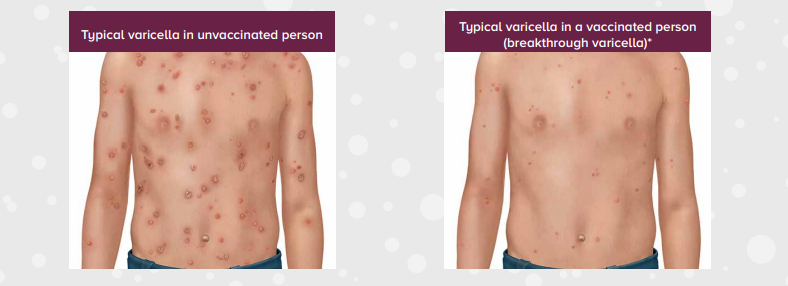
Six cases of chickenpox in youth have been confirmed within our jurisdiction.Laboratory confirmation of a chickenpox diagnosis is now strongly encouraged and increasingly important as healthcare providers have less clinical experience with the disease due to the overall decline in disease incidence in recent decades. The test method of choice for rapid diagnosis and confirmation of chickenpox is the varicella-specific nucleic acid detected by polymerase chain reaction (PCR). Please see the table below for testing information.
Vesicular fluid by swabbing base of vesicle; scabs, or lesion crusts.
As long as vesicles are present
Use synthetic swabs (e.g., polyester) and place in a sterile, empty tube (do not place transport medium in the tube); Crusts or scabs can be collected with a tweezer; placed into a sterile dry container
In Michigan, a health care provider can document chickenpox immunity in the Michigan Care Improvement Registry (MCIR) through either:
1) Laboratory confirmation, OR
2) An epidemiologic link to a lab-confirmed case.
Without this documentation, individuals should not be considered to have a valid history of the disease, as other illnesses may resemble mild chickenpox.
Chickenpox is a notifiable disease in Michigan, and cases must be reported to the local health department. For questions, contact your local office or email epihelp@bhsj.org.
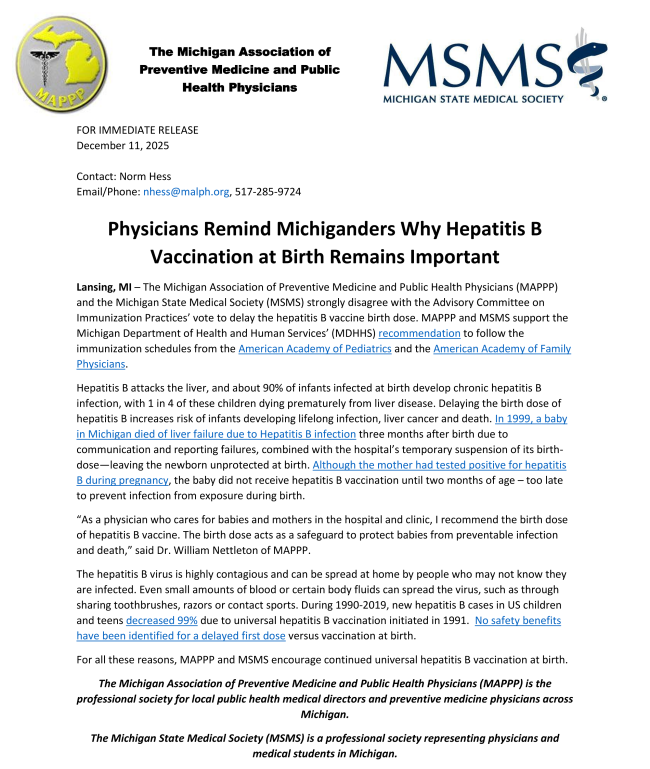
Our agency is following MDHHS immunization recommendations.The Michigan Department of Health and Human Services (MDHHS) has adopted the immunization schedules published by the American Academy of Pediatrics (AAP), the American Academy of Family Physicians (AAFP), and the American College of Obstetricians and Gynecologists (ACOG) as the standards of care for immunization practices in Michigan. Click here to view the MDHHS press release updated November 2025 for additional information.
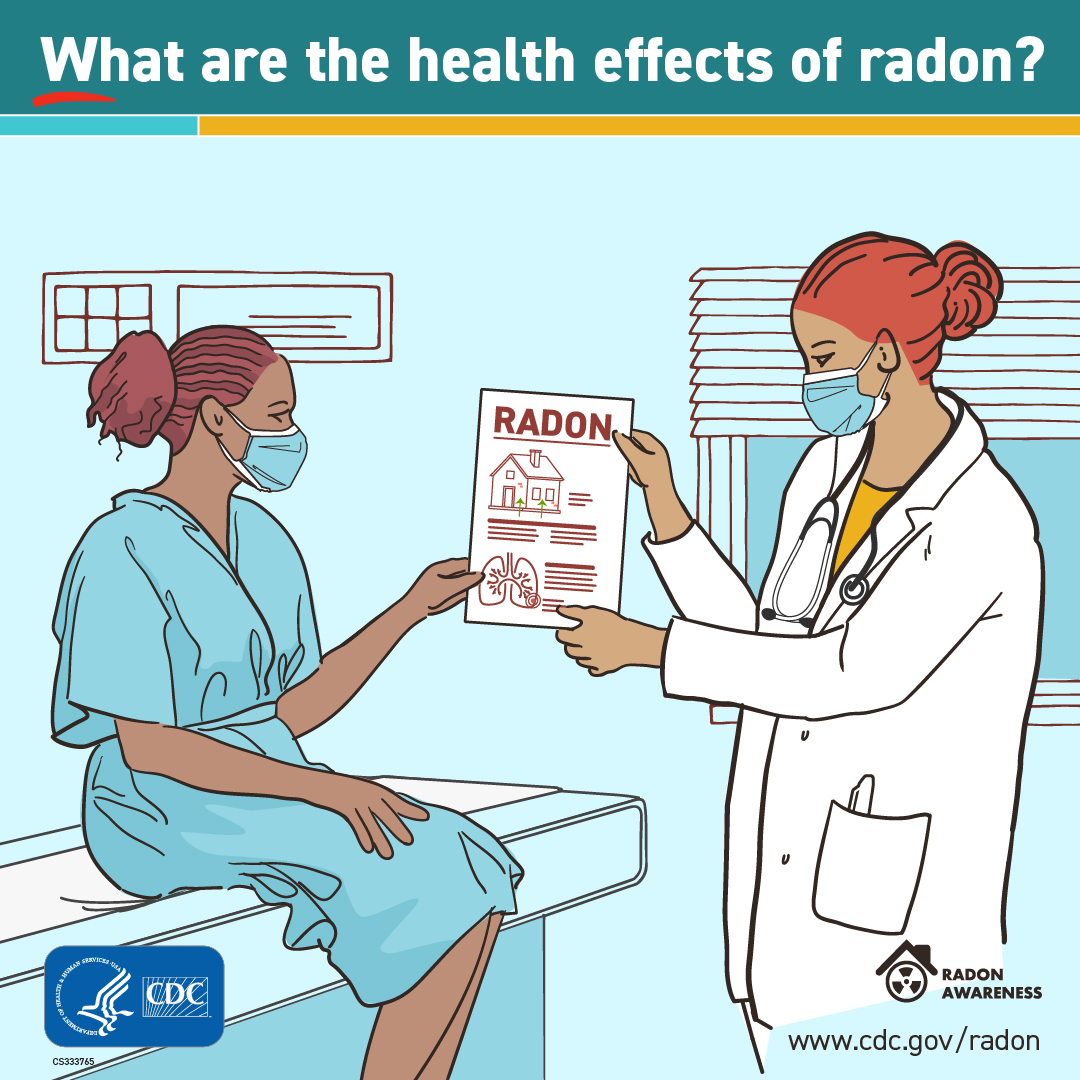
January marks Radon Awareness Month, a crucial opportunity to educate patients about the risks of Radon exposure and encourage proactive health measures. Our agency is committed to increasing awareness of Radon, a colorless, odorless gas that poses significant health risks, including lung cancer.
Radon is estimated to cause approximately 21,000 lung cancer deaths annually in the United States, making it the second leading cause of lung cancer after smoking. In the tri-county area, Radon levels can vary widely, emphasizing the need for residents to test their homes for this hazardous gas. Patients can obtain a free home testing kit by visiting any of our office locations. By fostering a collective commitment to Radon education and awareness, we can work together to reduce health risks and create safer living environments for all Michigan residents.
Watch the video below for additional educational information on radon for healthcare providers.
January 23rd: Maternal Health Awareness Day
Maternal Health Awareness Day (January 23rd) reminds us of the importance of ensuring every mother has access to the care and resources she needs. In public health, we are committed to health equity and culturally competent care to empower families in prioritizing maternal health.
The Women, Infants, and Children (WIC) program provides free nutritious foods, breastfeeding support, and connections to community resources. Based on 2025-2026 income guidelines, a family of four may qualify if the family earns up to $28.59/hour. Grandparents or guardians raising young children may also be eligible. Full eligibility details can be found at www.bhsj.org/wic.
Please encourage mothers and caregivers to apply for this program to support better maternal health outcomes. Participation in the WIC program is linked to improved birth outcomes, reduced infant mortality, and enhanced cognitive development in children. Additionally, WIC participation helps families purchase healthier foods, leading to improved diets for both pregnant women and children.
Click hereto access a PDF of our WIC flyer to share with patients.
In addition to the WIC program, our agency is committed to enhancing education about Urgent Maternal Warning Signs. Healthcare providers are essential for recognizing these signs early and preventing potentially life-threatening conditions.
The American College of Obstetricians and Gynecologists (ACOG) has created digital flyers to raise public awareness. Here are a couple of flyers that can be shared with patients:
February 14th to 21st is National Condom Week, aimed at promoting safe sexual practices and the use of condoms to prevent STIs, HIV/AIDS, and unintended pregnancies. We provide free condoms and information about testing and treatment services in all public restrooms at our offices. If you're interested in partnering with us to provide condoms or educational materials at your office, contact our Health Education team at 517-933-3019.
MDHHS We Treat Hep C: Newsletter for Clinicians Fall 2025