|
View as Webpage
Forest Service News Release
Contact Title: Laura Fitzmorris
(678) 780-0296
laura.fitzmorris@usda.gov
fs.usda.gov/conf
Winter Weather Advisory
Seasonal Road Closure
GAINESVILLE, Jan. 6, 2025—With impending winter weather forecasted for Georgia, including the Chattahoochee-Oconee National Forest, the Forest Service is issuing a Winter Weather Advisory to ensure the safety of visitors. Snow, freezing rain, and icy conditions are expected to create hazardous trail and road conditions. We strongly encourage visitors to avoid trails and recreation areas if winter weather becomes severe.
Additionally, high winds may increase the risk of falling trees and branches, especially in areas still recovering from Hurricane Helene’s damage in October 2024. Hazard trees remain a significant concern throughout the forest, particularly during windy conditions. Visitors are advised to exercise extreme caution along ridge lines, including those on the Appalachian Trail, where exposure to high winds and damaged trees presents an elevated risk.
Winter Road Closure in Effect for Conasauga Ranger District
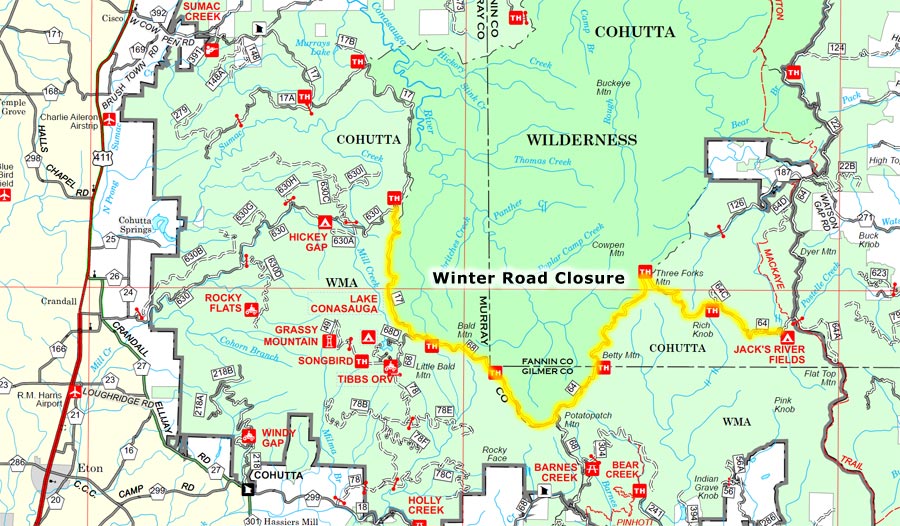
The Conasauga Ranger District’s annual winter road closure is now in effect from January 2nd through March 4th, 2025. This closure helps protect sensitive forest roads on the CRD during periods of heavy precipitation, freezing temperatures, and snow or ice accumulation. Please refer to the attached map to identify which roads are closed during this time.
Winter Hiking Safety Guidelines
For those planning to hike during cold weather, the Forest Service offers the following safety tips:
1. Check the weather Forecast: Always review the latest weather updates before heading out. Conditions can change rapidly in the forest.
2. Dress in Layers: Wear moisture-wicking base layers, insulating mid-layers, and waterproof outer layers. Avoid cotton, as it retains moisture.
3. Carry Proper Gear: Bring essentials such as:
- Insulated, waterproof boots
- Hats, gloves, and scarves
- Extra clothing in case of wet or freezing conditions
- Trekking poles for stability on icy terrain
4. Stay Hydrated and Energized: Bring plenty of water and high-energy snacks. Dehydration can still occur in cold weather.
5. Start Early: Daylight hours are shorter in winter. Aim to finish your hike well before sunset.
6. Know Your Limits: Avoid trails that are beyond your experience level, especially under snowy or icy conditions.
7. Carry Emergency Supplies: Pack a map, compass, whistle, flashlight, and fully charged phone. Consider a GPS device if you’re venturing into remote areas.
8. Tell Someone Your Plan: Share your itinerary with a trusted person and check in once you're off the trail.
9. Avoid Risky Areas: Steer clear of icy slopes, frozen streams, and areas with a high concentration of damaged or leaning trees. Be especially cautious along ridge lines like those on the Appalachian Trail.
10. Stay Aware: Keep an eye on changing weather conditions and be prepared to turn back if conditions worsen.
For updates on trail conditions, closures, and weather-related advisories, visit https://www.fs.usda.gov/alerts/conf/alerts-notices or contact the ranger station nearest your planned visit.
###
|