| | |
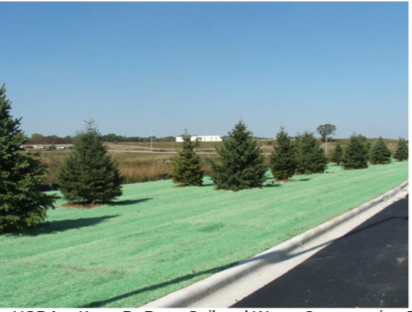
Yes, it's time to start thinking about stabilizing sites in preparation for winter!
| | | | | |
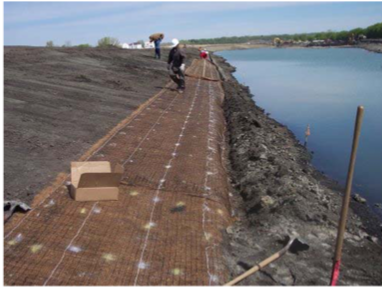
Each have their distinct purpose. Erosion Control Blankets (ECB) are primarily used for TEMPORARY soil stabilization, helping to retain moisture and seed while preventing erosion until vegetation is established. They are typically made of natural fibers and often have a net to hold the fibers together. That net can be plastic or biodegradable. ECBs generally last for a few months to up to a couple of years, depending on the material they are made of and the site conditions. These are suitable for moderate slopes or ditches where vegetation is expected to establish fairly quickly.
For a PERMANENT erosion control installation, Turf Reinforcement Mats (TRM) reinforce vegetation and offer higher resistance to shear stress and water flow for several years. TRMs are typically made of synthetic materials, or a mix of natural and synthetic components, designed for long-term durability. These are ideal for high flow channels, steep slopes, shorelines, where high water flow is expected or areas where establishing vegetation is challenging.
| | | |
Announcements!
Did you know that the IUM Website lists educational and networking events, as well as grant opportunities?
Let us know if you would like your event featured!
| | |
Illinois MS4 Permit ~ Updated Requirements
The Illinois Environmental Protection Agency (EPA) has released the updated Municipal Separate Storm Sewer System (MS4) Permit which became effective on August 1, 2025 (click here to view). Significant changes have been made to the draft permit based on comments received by the Illinois EPA. To help identify some of these changes, the IEPA has issued a response to comment document (click here to view).
| | | |
Communities will have 12 months to implement the new requirements, starting with an update of their local Stormwater Management Program Plan.
To help with this process, the Illinois Water Environment Association (IWEA) and American Public Works Association (APWA) hosted a virtual webinar covering the new and revised requirements of the Illinois EPA Municipal Separate Storm Sewer System (MS4) Permit. Presenter Dan Bounds, PE of Baxter & Woodman, shared an overview of the new requirements for public education, facility inventory and stormwater inspections, construction site inspections, staff training, annual reporting and more.
In-person workshops are planned for Mid-October ~ details will be posted on the IUM website as they become available.
| | | |
Winter Best Practices
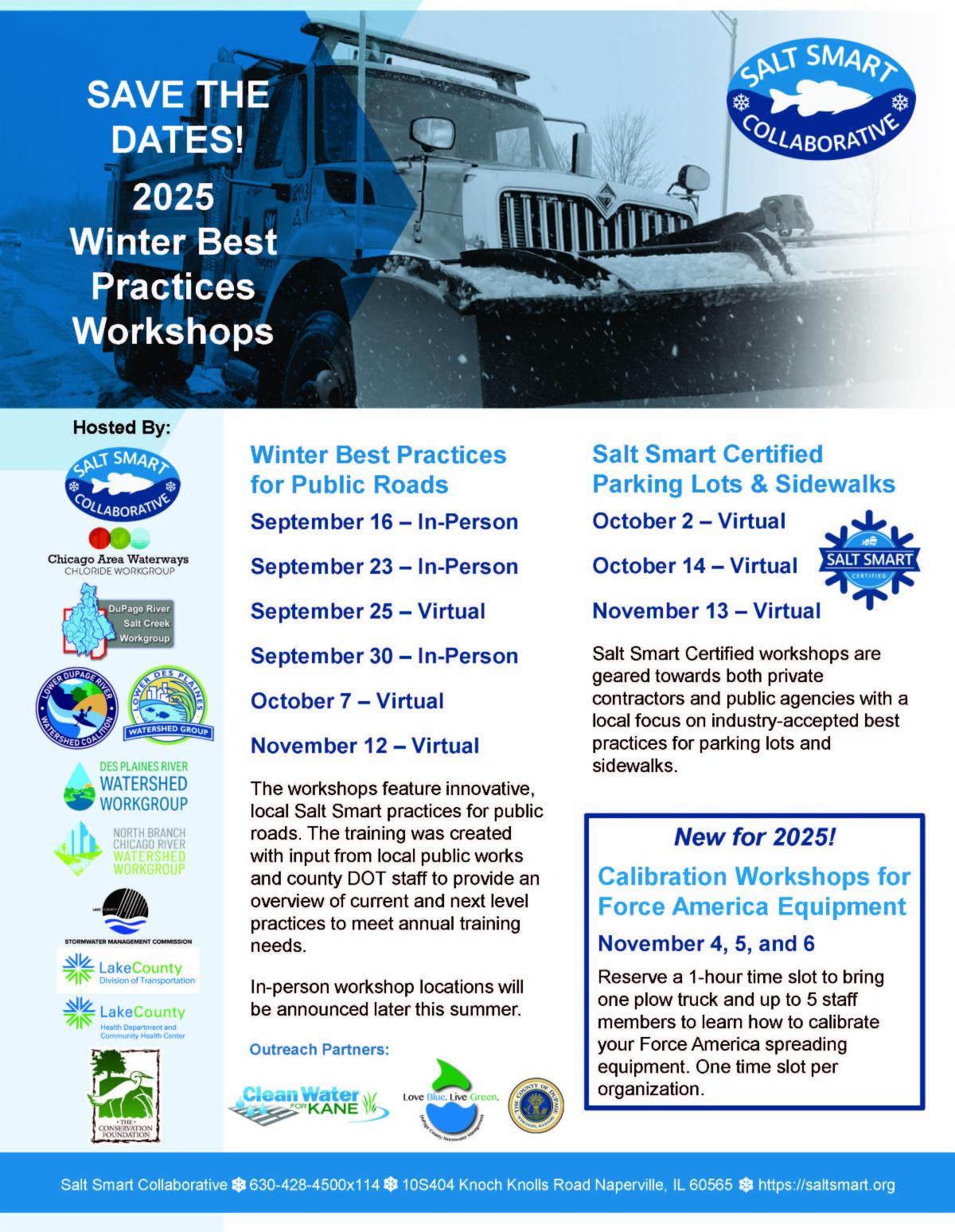
It's almost that time of year! Workshop schedules are showing up on calendars around the state - first one shared with IUM is from the Salt Smart team in NE Illinois.
| |
IEPA Water Quality Management Plan
Section 604(b) Water Quality Management Grant Program
Grants are available to Areawide Planning Agencies and other entities to carry out water quality management planning activities that protect water quality in Illinois. Projects must address water quality issues.
Grant funds can be used to determine the nature, extent, and causes of point and nonpoint source water pollution; develop water quality management plans; develop technical and administrative guidance tools for water pollution control; develop preliminary designs for best management practices (BMPs) to address water quality problems; implement administrative water pollution controls; and educate the public about the impact and importance of water pollution control.
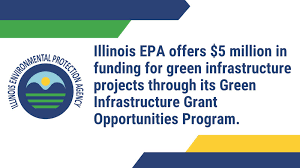
| | Applications accepted through October 8, 2025 | | GIGO utilizes funds distributed by the State of Illinois generated under the Build Illinois Bond Fund. Illinois EPA's Notice of Funding Opportunity includes $5,000,000 in funding for projects that will improve water quality in Illinois. GIGO has a set maximum total grant award of $2,500,000 with a minimum grant award of $75,000. No more than 50 percent of the program total, per funding cycle, shall be allocated to any one applicant or project. | |
Funding for Green Infrastructure Projects Now Available from the Illinois EPA
Deadline November 5th
The Green Infrastructure Grant Opportunities (GIGO) Program funds projects to construct green infrastructure best management practices (BMPs) that prevent, eliminate, or reduce stormwater runoff into Illinois' rivers, streams, and lakes. Projects that implement treatment trains (multiple BMPs in a series) and/or multiple BMPs within the same watershed may be more effective and efficient than a single large green infrastructure BMP.
NOTE: This is the last cycle of the existing GIGO program.
| |
EPA Announces Availability of $9 Million to Protect Drinking Water from Natural Hazards and Cybersecurity Threats
Grant funding for midsize and large water systems (target is public water systems serving 10,000 people or more) to help protect drinking water from cybersecurity threats and improve resiliency for extreme weather events. The agency is also publishing a report highlighting 10 recommendations to strengthen resiliency to cyberattacks in the water sector.
| | Funding opportunity will remain open for 60 days. | |
IEPA Overflow and Sewer Grant Program
The Overflow and Sewer Grant (OSG) Program seeks to address local governments' infrastructure needs for Combined Sewer Overflows (CSO), Sanitary Sewer Overflows (SSO), and stormwater management. Applicants must apply for a grant through the Grant Accountability and Transparency Act (GATA) Portal. Grants will be awarded until all $5 Million funds are expended or until January 1, 2027, whichever comes first.
| |
Lake County Accepting Proposals for Water Quality Projects
The Lake County Stormwater Management Commission is accepting request for proposals for the annual Watershed Management Board funded projects. Available to local watershed groups, landowners, homeowners associations, municipalities, townships, county governments, land conservancies and trusts, park districts, and other land management agencies. All proposals must be submitted electronically through the INFLOW proposal intake site by 2:00 p.m. on Tuesday, September 30.
| | |
Call to Action: Combating
Nonpoint Source and Stormwater Pollution
Sponsor Tomorrow's Environmental Stewards
UPDATE from 2025 Envirothon Nationals: Team Illinois (Richland County High School) placed 17th at Nationals in Alberta, Canada and took 2nd in Oral Presentations!
For 2026, Envirothon has chosen the environmental issue: Non-Point Source Pollution: it begins at home! Students will learn about NPS pollution and identify its origins in both urban and rural settings. They will conduct their own NPS surveys in their community and watershed. Additionally, they will research NPS mitigation strategies, which encompass actions at both the individual level - such as conservation, recycling, and responsible consumption - and the community level, including watershed planning, best management practices, nature-based solutions, water quality testing, and litter prevention initiatives.
Sponsors are critical every year to keep this program available so that teams of high school students can compete regionally in the areas of aquatics, forestry, soils, wildlife and the current issue in natural resources. If your mission includes pollution prevention, our Sponsorship Form is available now for 2026!
The Northeastern Illinois Envirothon is organized by local soil and water conservation districts for high schools in Boone, Cook, DeKalb, DuPage, Kane, Lake, McHenry, Will and Winnebago counties. See link below to find your regional SWCD.
| | Outside of NE Illinois, contact your local SWCD to sponsor your local Envirothon! | |
IUM E-News Sponsored By
Seeking Sponsors for your IUM E-Newsletter!
| | | Supporting residents, landowners, and businesses in Kane and DuPage Counties in Illinois by leading efforts to ensure healthy soil, clean water, sustainable land development and regenerative agriculture. | |  | | | |
Illinois Urban Manual News
Funding for this project provided, in part, by the Illinois Environmental Protection Agency
through Section 604 of the Clean Water Act
managed by
Kane DuPage Soil and Water Conservation District
2315 Dean Street
Suite 100
St. Charles IL 60175
Mon-Fri 8am - 4:30pm
illinoisurbanmanual.org
contact@illinoisurbanmanual.org
| | | | |