|
|
|
KAIROS CALL TO ACTION
Volume 6, Issue 1
January 8, 2025
| | |
'Wild Church': Where do you feel closest to God? | |
|
By the Rev. Daniel Cooperrider
Many of us, whether we participate in religion or not, feel closest to God or the sacred in nature. This is not surprising, as when we trace our lineages back, we find that we all come from ancestors who practiced earth-based spiritualties.
Did you know that there is a movement afoot to reconnect church and nature? The Wild Church Network traces its start to 2016, although the network speaks of itself as an “emergent” movement, meaning that it has been percolating in many places, popping up like wild mushrooms after a fall rain. At this time there are about 300 “wild churches” around the world officially associated with the network, although the number of communities experimenting with nature-based spiritual practice is larger than that. Some don’t use the language of “church,” but use words like “sanctuary,” and “community.” Others don’t use the world “wild” but call themselves “forest church,” (think of the forest school outdoor education movement), or evoke the name of their local watershed or ecosystem. Some are associated with Christian denominations, some consider themselves aligned with other spiritual traditions, others consider themselves post-denominational or interfaith. The common thread—growing in response to the climate/ecological polycrises of our time which are rooted in our human dis-rootedness from the web of life—is the desire to relocate and reweave spiritual community back into relationship and reciprocity with the more-than-human world.
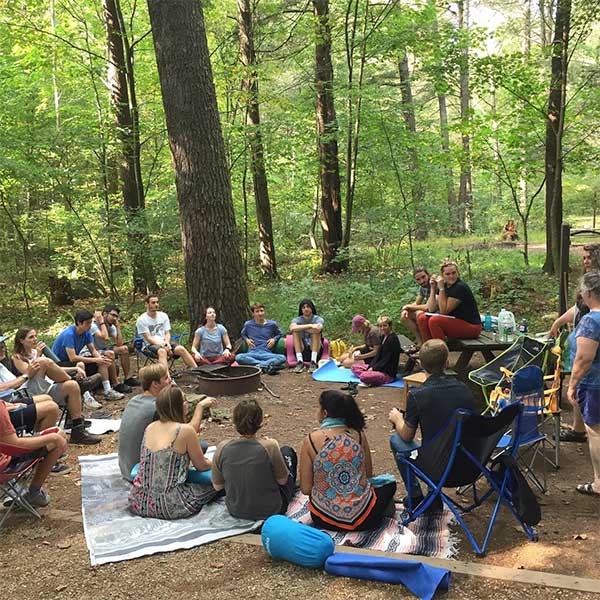
So what happens at Wild Church? Each community will have its own local traditions, but common elements include: meeting outside in a circle; moments for reflection on the season, poetry, scripture, song, ritual; a “Wild Wander”—this is usually in place of the “sermon” and is a 10–20-minute invitation to encounter and engage with the local landscape; closing council—participants return to the circle and share from their experience. Read more HERE.
| |
Could worshiping in nature resuscitate Christianity? | |
|
By Josiah Neufeld, July 29, 2021
One long-shadowed evening in June 2019, the setting sun and a horned moon shared the sky over a cone-shaped hill above the cornfields of southwestern Wisconsin. In a clearing on the hill’s shoulder, a circle of beings sat around a snapping bonfire. One by one, they introduced themselves:
“I am a sycamore tree in the Allsopp Forest, and I speak on behalf of all the trees in the Little Rock area.”
“I am honeybee. I speak on behalf of the bees and insects of the world.”
“I am the salmon of the Salish Sea.”
“I am giant kelp. I speak for the kelp forests of California.”
“I am the Appalachian Mountains and my body bears many scars.”
A few miles to the west, trees along the Mississippi River were up to their necks. The river was swollen far beyond its banks, and had been for two hundred days and counting. To the south, people were shoveling mud from their houses and farmers were writing off $4.5 billion worth of corn crops. The warming of the planet had contributed to the most catastrophic floods the Midwest had ever seen.
Around the fire, everyone knew things were off-kilter. “We meet in this council because our planet is in trouble,” said the leader, speaking with a solemn, measured cadence. “Our lives and our ancient ways are endangered. It is fitting that we confer, for there is much that needs to be said, and much needs to be heard.” The speaker, a United Church of Canada minister from Ontario, wore knee-length jean shorts and a floppy sun hat and had recently doused herself in vanilla-scented organic insect repellent to keep away the biting gnats. Read more HERE.
| |
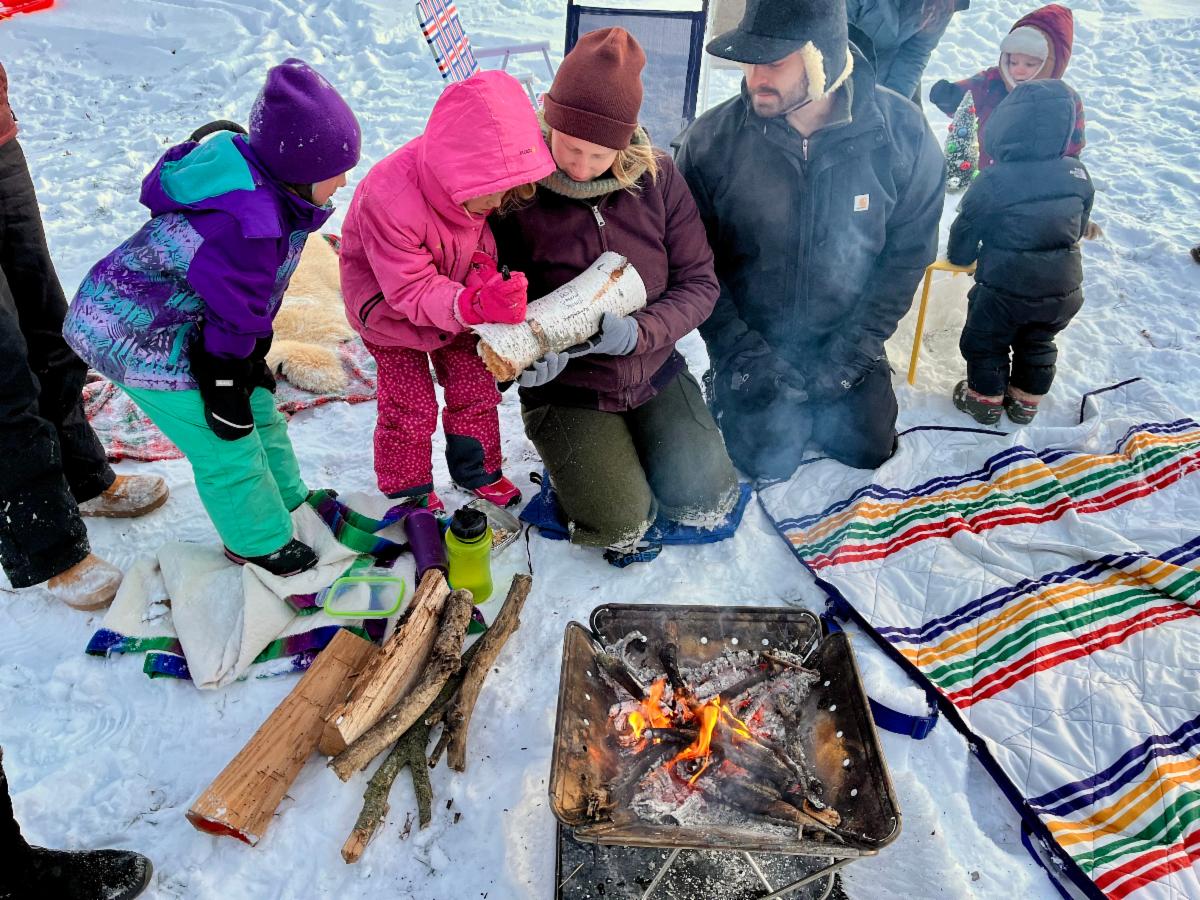
Flicker Wild Church Solstice gathering: Burning the Yule Log | |
Thank you for the 2023 Creation Care Grant | |
|
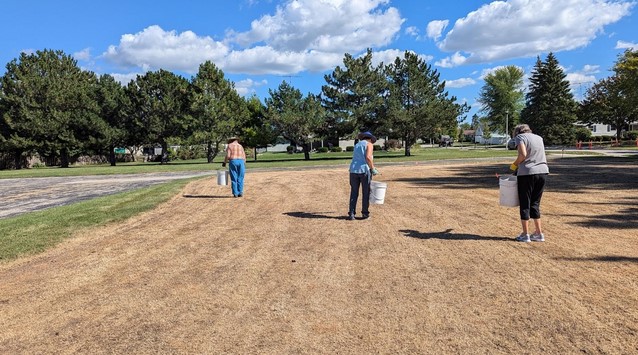
The $1,000 grant was just the catalyst the Green Team at Pilgrim UCC, Fond du Lac, needed to start a prairie garden.
Pilgrim church sits on 3.5 acres in a residential neighborhood. The GreenTeam had several discussions around the idea that we “mow too much grass,” but no one was knowledgeable enough in establishing a native planting to lead any effort. We needed an expert to help us make a decision.
Our grant application specifically stated that we would hire Consulting Ecologist, Neil Diboll, of Prairie Nursery in Westfield to do an on-site consultation. Mr. Diboll visited our church property in September 2023. With his expertise and passion, he encouraged us to go bigger and plant an 8,000 square foot area with a mixture of low growing flowers and grasses suitable for clay soils. He walked us through the steps for site preparation and planting. This input gave us the confidence and credibility we needed to proceed with a successful information and fundraising effort.
In June we signed a contract with Native Niche, LLC, of Campbellsport to prepare the site, plant the seed and maintain the area for at least 3 years.
| |
Can a Small Church Make a Difference on Environmental Justice? | |
|
by Jeanne Bringgold-Pro | published Oct 29, 2024, in the Pollinator
American anthropologist Margaret Mead once observed, “Never doubt that a small group of thoughtful, committed citizens can change the world. Indeed, it is the only thing that ever has.” This idea was tested out when New Spirit United of Church of Christ in Savage, Minnesota decided to ambitiously pursue a ministry of environmental justice through the UCC’s Creation Justice Church program, which guides congregations through a discernment process in seeking to make environmental justice central to their congregation’s DNA. The discernment program establishes within the congregation a firm commitment to recognize and embody our first biblical calling: to care for God’s creation.
Why should a tiny church, one that worships only 25-30 adults each week, decided to do all of the hard work necessary to achieve the Creation Justice Church designation? New Spirit was not intimidated by the task. It has done difficult things before. It has faced challenges from the beginning. It also has a track record of commitment as an Open and Affirming congregation that is deeply involved in LGTBQ+ issues. Our church leadership is collaborative and works very well together and is always open to new ideas and initiatives. When I proposed that the congregation work toward the Creation Justice designation, there was no dissent. Everyone agreed that it was a great idea. The process has been rewarding, although there have been challenges along the way. Read more HERE
| |
Third Annual Great Lakes Collaborative | |
|
The United Church of Christ and the United Church of Canada invite you to, SAVE THE DATE for the UCC Great Lakes Collaborative Retreat, August 24-26, 2025, at Tower Hill Camp and Retreat Centre in Michigan.
Be a Water Protector! Come to the shores of Lake Michigan in beautiful southwest Michigan at Tower Hill Camp and Retreat Center to continue the work of being a water protector for our Great Lakes. How do we begin the work of climate justice to protect these incredible sisters? Join us!
| |
|
This fossil fuel company has put communities in Puerto Rico in harm’s way for too long.
In 2018, New Fortress Energy, through its Puerto Rico-based subsidiary NFEnergía, began designing a terminal in San Juan Harbor to import liquefied methane gas (LMG) without approval from the Federal Regulatory Energy Commission (FERC). This violated federal law.
By doing so, NFEnergía evaded the typical process where FERC would assess the health, environmental, and public safety risks of gas and oil projects before they begin operating and inform the public so they can engage in any approval process. Read more.
| |
|
Urge the EPA to regulate a long-hidden source of PFAS
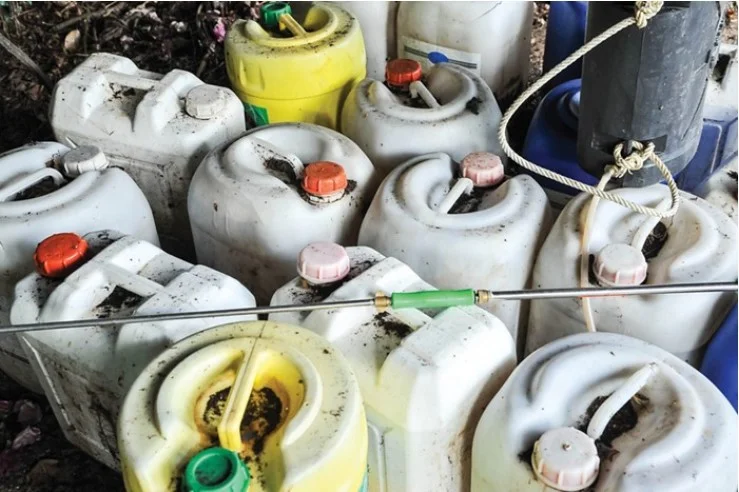
The Environmental Protection Agency (EPA) is taking steps to tackle a long-hidden source of PFAS. PFAS (per and poly-fluoroalkyl substances) are toxic “forever chemicals” linked to a wide array of adverse health effects at extremely low levels. PFAS are found in a variety of everyday goods and have been detected in the blood of 97% of the United States population.Today, hundreds of millions of plastic containers undergo a fluorination process that creates harmful PFAS that can leach into our products and make their way into our bodies. Tell the EPA to regulate this source of PFAS today. Read more and take action HERE.
| |
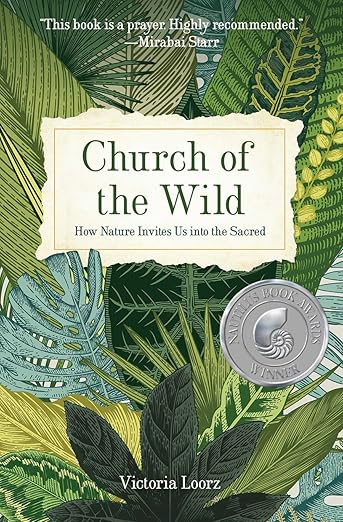
'Church of the Wild: How Nature Invites Us into the Sacred,' by Victoria Loorz | |
|
An excerpt from the Prologue
The time has come to lift the veil of fog and return to intimate relationship with the living world. More and more of us are taking our place, once again, as full participants in the web of life, which we remember is held together by love.
There are no magic words to incant, no spiritual laws to memorize, no ruby-slippered heels to click three times. . . . You simply need to learn how to listen. And allow your heart to be broken, just like you do every time you fall in love.
| |
Alaska tribes win legal fight against gold mine | |
|
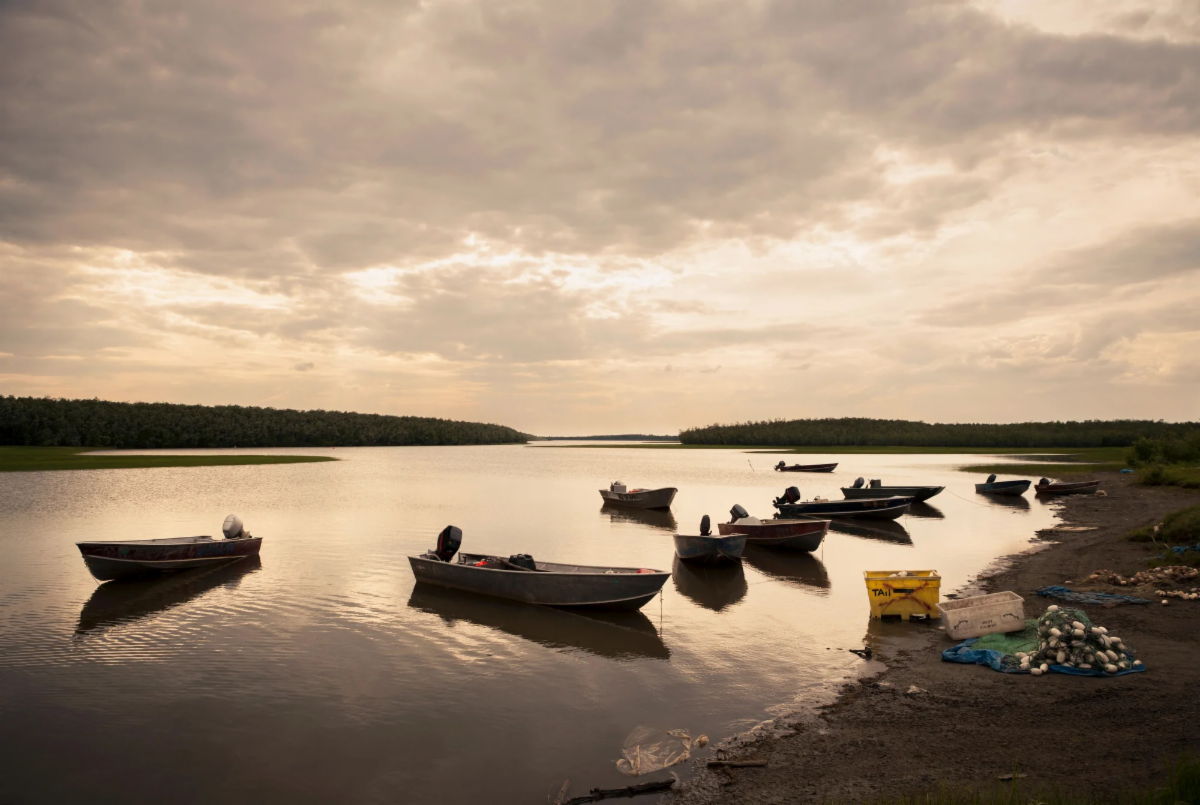
Pictured: Fishing skiffs tied up on the riverbank along the Kuskokwim River in the village of Akiachak, Alaska. (Design Pics Inc / Alamy)
Native Tribes just struck a blow to a proposal to build the world’s largest gold mine near the Kuskokwim River in Southwest Alaska, in a critical watershed that as many as 58 tribes rely on for their existence.
Represented by Earthjustice, six tribes challenged the mine’s permits in federal court in Alaska. On September 30, a judge ruled that the federal government broke the law when it approved the project without studying what would happen to villages downstream if a dam holding more than 500 million tons of toxic mine waste burst. Read more here.
| | |
View Franz Rigert's video Announcing the Wisconsin Conference UCC Kairos Call To Action and share with your congregation!
| |  |
Sign up for the Kairos Call to Action Newsletter to ensure you don't miss future issues!
| |
This newsletter is made possible by your contributions to Our Church's Wider Mission Basic Support. | | | | |