|
|
|
KAIROS CALL TO ACTION
Volume 6, Issue 2
February 2025
| | |
Regional Creation Care Meeting in Tomah | |
|
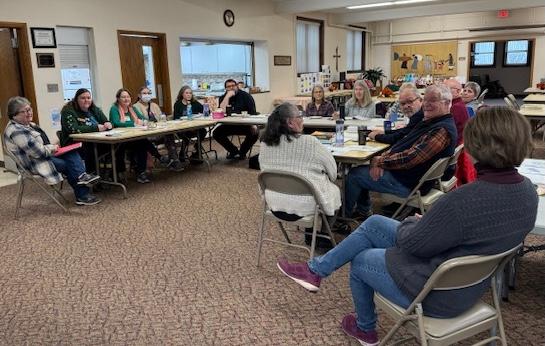
On Saturday, Nov. 23, our Tomah church hosted members of our team, representing seven congregations, along with members of First Congregational, LaCrosse, for a day of support, reflection and evaluation.
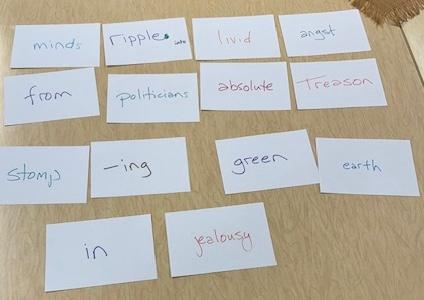
David Huber, pastor of Plymouth UCC in Eau Claire, led us in an interactive opening worship exercise that included constructing three-line psalms of lament that followed Biblical theologian Walter Brueggemann’s construct of “orientation/dis-orientation/re-orientation.” This experience set a tone for the day, as we brought with us our concerns about the threatening realities of global climate change in light of upcoming shifts in national policies toward sustainability.
| |
|
We then watched and discussed a video recording of Brian McLaren’s presentation to the Wild Goose Group, summarizing his recent book, Life After Doom: Wisdom and Courage for a World Falling Apart.
Following a delicious lunch provided by our Tomah friends, we dug into where we have been and where we need to go during the second half of this Kairos Call to Action decade. Our LaCrosse and Tomah friends said that connecting at Daycholah Center retreats in 2022 and 2023, coming together during recent Conference Annual Meetings, and participating in our webinars had been most helpful. It was also clear that these two congregations had been inspired by the Kairos Call to Action itself.
Ways to “turn up the heat” in our church’s mission to “turn down the heat” of our planet, included:
- Connecting with and supporting local high school environmental programs. (Heather Phelps, who does this work professionally, offered concrete ideas about how to do this.)
- Using the Conference Annual Meeting plenaries to reach a broader audience.
- Offering more regional, congregation-based, one-day gatherings around the state.
- Continuing to offer and promote Kairos grant.
- Leading worship and offering in-person “Green” messages/announcements in local settings by members of Green Teams, keeping the “fierce urgency of NOW” before our congregations.
| |
Wisconsin Conference Regional Gathering of Creation Caregivers | |
|
SAVE THE DATE:
March 15, 2025
Where: Pilgrim UCC
535 Stow St
Fond du Lac
Time: 10 a.m. - 2 p.m.
The Creation Care Team is inviting you to this in-person gathering. Please join us. Free!
Register here
| |
Creation Care is in their tradition! | |
|
By John Helt, Co-Chair
Wisconsin Conference Creation Care Team
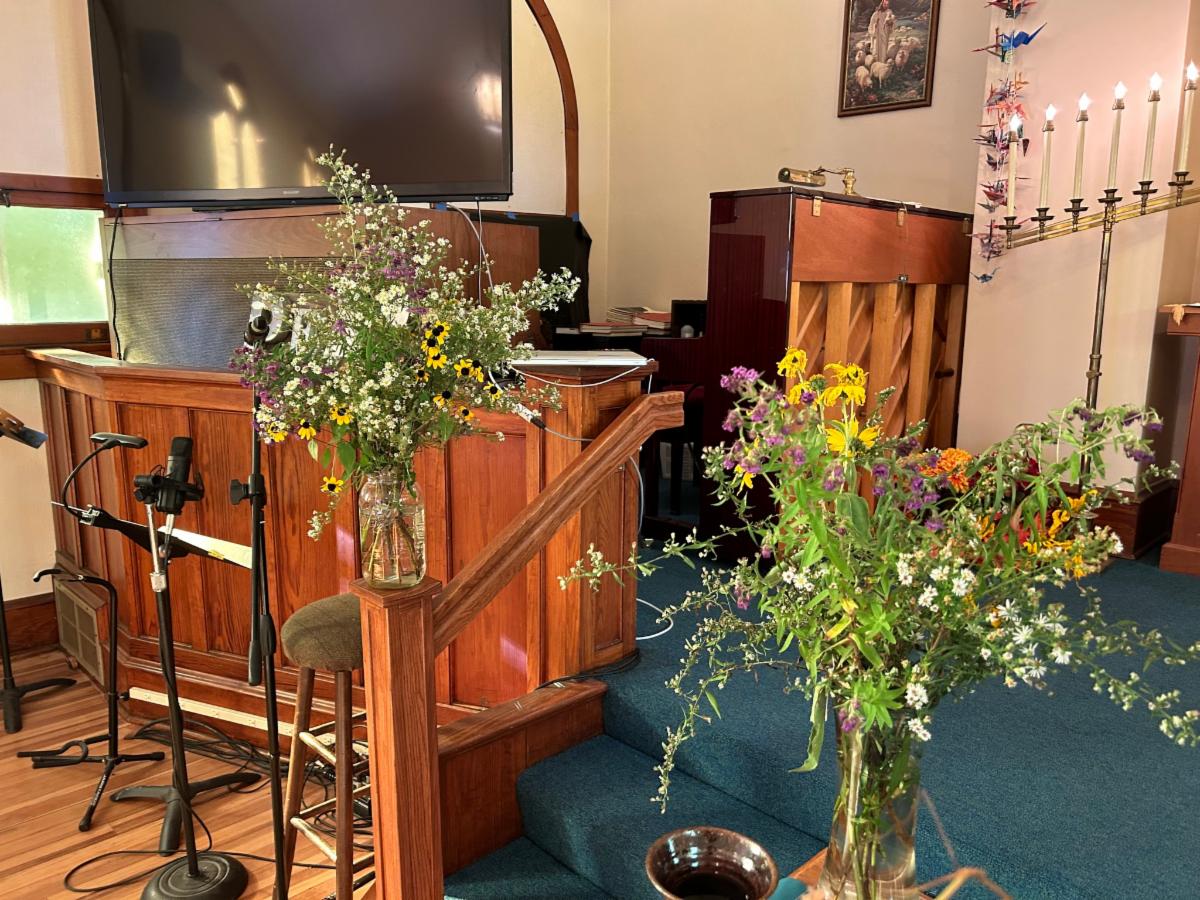
Zwingli UCC in rural Mount Vernon has designated one Sunday a month to highlight creation care in worship and with special projects to follow. The Sunday in October when I was their guest speaker, the liturgy and music were carefully crafted around environmental themes, and several church members spoke about their projects. A potluck lunch follows worship every Sunday, and everyone stays for it! Zwingli Church has a long tradition of implicit creation care, and now they have made it quite explicit and something to celebrate monthly, but I daresay that their care for creation is an every Sunday, and indeed, every day kind of thing.
Here are some reflections from their members.
| |
Lenten season: Green Lectionary Podcast | |
|
Looking for Earth-Centered Resources for Lenten Grounding? Check this opportunity from Creation Justice Ministries.
As we prepare for the sacred season of Lent in March, we invite you to deepen your reflection and renewal with the Green Lectionary podcast. Join us for thought-provoking conversations with faith leaders, theologians, and environmental advocates as we journey through Lent with a renewed commitment to God’s creation. Click here to subscribe and be notified when the first 2025 Lenten episodes goes live in mid-February. In the meantime, check out the previous Lent season!
| |
Kairos Call To Action Accomplishments | |
|
We are coming up to the halfway mark on a decade of commitment to the Kairos Call to Action. 2030 is bearing down on our planet that continues to get warmer. Yet here we are in the nation that leads the world in producing greenhouse gasses, and we have just elected leaders who are committed to once again pulling out of the 2015 Paris agreement, gutting the Environmental Protection Agency and going all out on “Drill, baby drill!” We need to reinvigorate our sense of “the fierce urgency of now.”
How will we use the next five years as a Creation Care Team for Wisconsin Conference, United Church of Christ?
In the last five years, we have accomplished the following:
- Encouraged the Wisconsin Conference to adopt the Kairos Call to Action in 2020.
- Established as our mission the connecting, resourcing and advocacy of our congregations to become ever more seriously involved in creation care ministry.
- Provided an active presence on the Conference website and in annual meetings of the Conference.
- Installed solar on the roof of the Trost Center in DeForest in 2019.
- Held and archived educational webinars on a wide variety of environmental topics.
- Developed liturgical and other worship resources for Earth Day and other times of creation care focus.
- Hosted in-person retreats at Daycholah Center in 2022 and 2023 and at Cedar Valley in 2024.
- Preached creation care sermons in congregations and encouraged all local pastors to do so.
- Worked with congregations to help form green teams and creation care programs.
- Published an online Kairos Newsletter, at first on a bi-monthly basis, and now monthly.
- Met monthly as a team, mostly online.
- Supported UCCI sites as special places dedicated to creation care.
- Gave 39 Kairos grants to 30 congregations in 26 Wisconsin cities for creation care initiatives, totaling over $35,000.
Given this history, how has any of this touched you?
What else has helped or hindered your creation care efforts?
What else needs to be done at the Conference level to help your congregation become more engaged?
John Helt, Wisconsin Conference UCC Creation Care Team
| |
|
We have officially launched the UCC's 2025 Climate Hope Art Contest for children and youth. Our theme this year is “Planting Seeds of Hope.” We’ll accept art submissions from February 2nd to March 14th. Like last year, we will have winners for different age groups and an overall winner who will receive an all-expense paid trip to visit Washington, DC, with a parent or guardian. (Last year's winner had two members of Congress personally ask her for a poster of her artwork, so that they could hang it in their offices!) The winning art will additionally serve as the logo for UCC Climate Hope advocacy work throughout 2025.
Register now for your church to participate!
We will send you a PDF of the art contest page on which artists will create their masterpieces. We are looking forward to seeing the amazing creativity and talent of our children once again.
| |
|
One Home One Future
Each of us, and our congregations, can take steps to care for our shared home, every day. We invite you to reflect on your own story and connection to creation to ground yourself and prepare for the work. The pathways to engagement include information, tools, and guidance on how to take individual and collective action.
Sign up to receive full access to tools, resources, training, community, and updates.
| |
Climate Solutions Advocacy with Policy Makers | |
|
Moving policy makers to tackle climate change can be a rewarding task. Your voice can make a difference. When officials hear from their constituents, especially from people of faith who bring a moral lens to their advocacy, they are moved to focus on certain issues. You can make climate change one of those!
- Climate solutions enhance your community. Equitable access to affordable clean energy, public and active transportation parks and greenways gardens create a beautiful and healthy environment.
- Government officials listen to their constituents. Your voice has impact with officials you can vote for and in districts where you pay taxes.
- Not every elected official is an expert on climate. Some know little about local climate problems and solutions, or what climate justice means. Help educate them.
- Building rapport helps, a lot. Ask questions and get to know your representatives and their staffs.
- All layers of government have a role in climate solutions. Create or join opportunities to address federal, state and local government officials.
- More voices help. A dozen or 100 people will generate more response than one or two. Join with family, neighbors, colleagues, your congregation and other groups around climate issues.
- Persistence, persistence, persistence. Public officials have staff who read their emails and answer phones to respond to constituent needs. Don’t reach out just once, be persistent.
- Staff are also important. Many may care quite a bit about climate issues and work on them directly with their bosses. Advocate with them, too, and share ideas and advice.
For more on what you can do visit Blessed Tomorrow Caring for Creation Today.
| |
|
A bill authored by Sen. Howard Marklein and Rep. Travis Tranel, who represent southwestern Wisconsin, would create a significant shift in how renewable energy projects are approved. The bill requires any wind and solar projects 15 megawatts (MW) and larger to have local—town, village, and city—approval before being considered. This change would cause a significant slowdown for growing businesses, impacting developers, landowners, and job creation across the state.
Current Wisconsin law is considered the standard. Here, larger projects require approval from the Public Service Commission of Wisconsin (PSC) while smaller projects, under 100 MW, fall under the county jurisdiction. It is a robust process and one that other states are copying when creating laws that deal with this issue. This bill would move us in the opposite direction, creating additional hurdles for approval that would stall the development of clean energy across the state.
Local governments currently have a significant role in the approval process. Many towns, villages, and small cities do not have the resources to take on decision-making requests related to utility-scale clean energy projects on their own.
RENEW Wisconsin has seen bills like this before and as has happened in the past, we will do all we can to block this bill. Our Government Affairs Director, Beata Wierzba, will continue to monitor the progress of the bill and RENEW will take steps to stall its progress if necessary.
| |
|
Has your Green Team found it hard to continue challenging your church community to change? Here are some Eco Tips that you can use in your church newsletter, pew bulletins and announcements. We encourage you keep ideas in front the congregation weekly.
- Did you know that most toilet paper comes from old-growth boreal forests in Canada, which take carbon pollution out of the air, and are homes to both Indigenous people and wildlife? Try recycled or bamboo toilet paper! Bamboo is a super-fast-growing plant–it can grow as much as 2.9 feet a day!
-
Did you know that you can get free money for things like insulation, heat-pump water heaters, and more from the HOMES program at Focus on Energy? See this rebate page. You many qualify for more than one rebate, or completely for free things.
- Did you know that an induction stove boils water faster than a gas stove? Induction technology uses magnetic currents to directly heat pots, and it provides quicker heat, precise control, and easy cleanup. Induction stoves are safer because they don’t involve flames, and don’t heat up the surface of the stovetop. They’re also better for your health than a gas stove because they don’t put carbon monoxide, methane, benzene, nitrogen dioxides, or volatile organic compounds into the air of your home.
- Did you know that only 3% of the Earth’s water is fresh water? And less than 2% of that is available for drinking water, because the rest is locked up in glaciers, ice caps, permafrost, or buried deep underground. One way we can protect our local fresh water is by not using herbicides or pesticides on our lawns.
-
You could also include questions that challenge readers or list where they can find more information to take the next steps. For instance on tip #1, list places where bamboo and recycled paper toilet paper are available in your community or where it can be ordered online. The complete Eco Tips list is found here.
| |
Good News: New Vista Sands Solar Project has multiple benefits for the Environment and Wisconsin | |
|
By Carol Phelps, Middleton Community UCC
The Vista Sands solar project in central Wisconsin was recently approved unanimously by the Public Service Commission. It will provide 1.3 Gigawatts of clean renewable power to Wisconsin. (That's 1,300 Megawatts, or well over a billion watts.)
The project is seen as a win for the environment, and had strong support from both lawmakers and voters, despite concerns about it being near endangered prairie chicken habitat. It is replacing farmland (potatoes, corn, and soybeans) which is depleting central Wisconsin's water; 56 high-capacity wells will no longer be needed. Currently there are 73,000 gallons of insecticide and 3 million pounds of fertilizer spread across this acreage every year, which will no longer be used there.
The area will instead be restored to native grasslands, and will provide habitat for native birds, small mammals, reptiles, and pollinating insects. The project will also fund two grad students to document the effects on the prairie chickens.
Another solar project from the same developer, this one in Indiana, hosts about 2,500 grazing animals, including sheep, alpacas, Kunekune pigs, and donkeys. Who says one can't have both solar and farming?
You'll enjoy this article about it.
The article goes into the tradeoff between solar and nuclear. We may yet see more nuclear power in Wisconsin (the current political climate is supporting a resurgence), but the Vista Sands project supplies about the same power as a nuclear plant (at a tiny fraction of the cost) so it can be considered one less nuke in our state's future energy lineup.
| | |
View Franz Rigert's video Announcing the Wisconsin Conference UCC Kairos Call To Action and share with your congregation!
| |  |
Sign up for the Kairos Call to Action Newsletter to ensure you don't miss future issues!
| |
This newsletter is made possible by your contributions to Our Church's Wider Mission Basic Support. | | | | |