|
Greetings, SBT Readers:
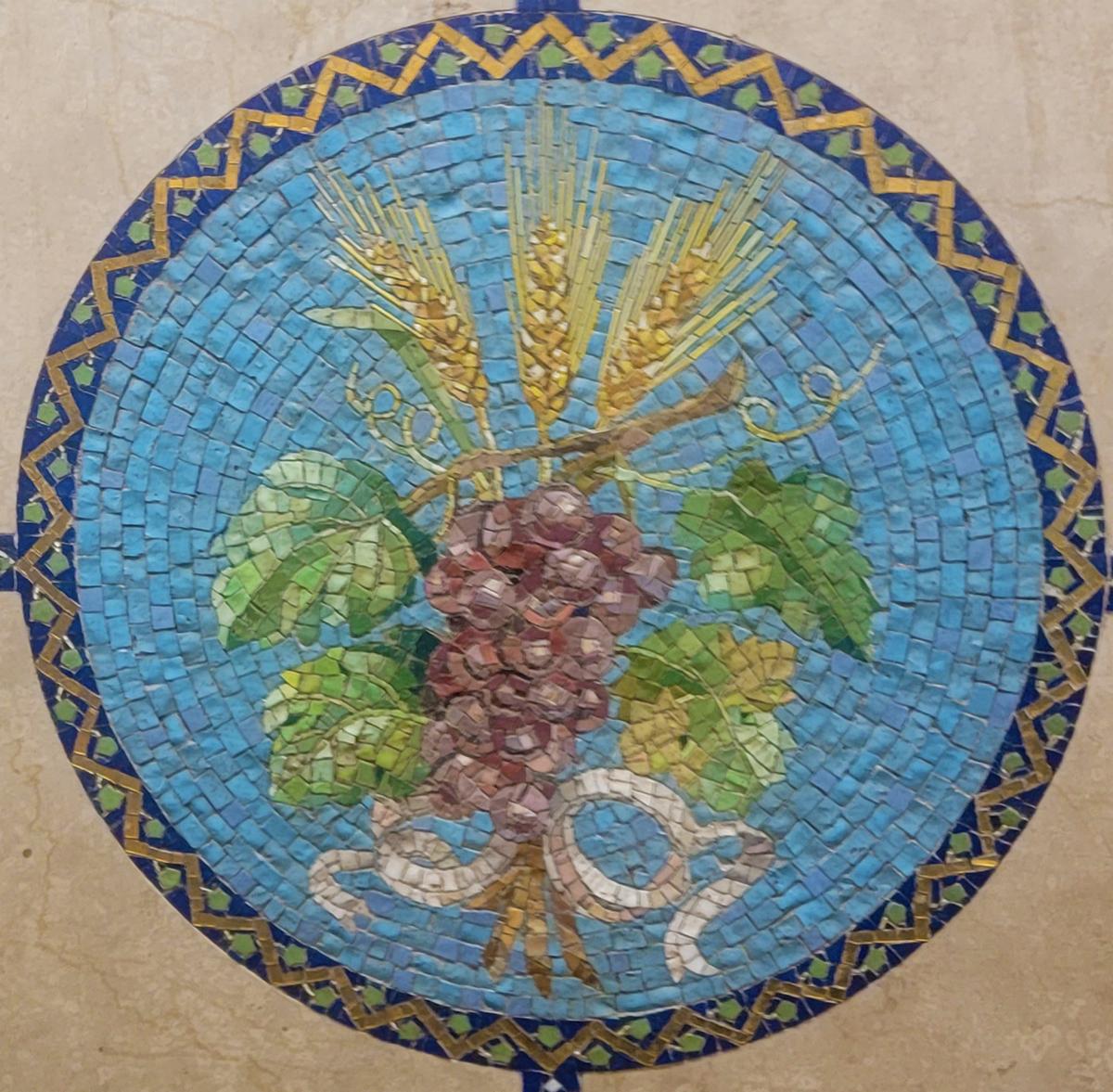
The pairing of Proverbs 9:1-6 with Jesus' words about the Bread of Life helps clarify what's on the table-- literally! Those who are wise
take their seats at Wisdom's feast, recognizing that the hungers of the human heart cannot be satisfied by material possessions, goals, achievements, or other attachments. It is neither what we "have" nor what we "do" that brings true happiness, but the life of the Spirit. The "way of understanding" is to forsake our cravings so we can enter Wisdom's House, freely and humbly.
How different this message is from what the world preaches! Those who feast at Wisdom's Table leave behind all desire to prove themselves, impress others, have more, be more powerful, and get to the top. Loving self, knowing self, not driven by ego but by the call of the universe, they desire nothing less than to build for future generations a better place, a better home, a more peaceful world…
They find all things in the company of the Holy One, the world in a grain of sand, humanity in a single embrace, eternity in a kiss and in the meeting of hearts...
The feast of fat foods and fine wines is spread; the meal awaits. Your place is set, and the Bridegroom comes...
Blessings!
Elizabeth
SCRIPTURE REFLECTION
Link to Sunday Readings
Jesus said to the crowds:
"I am the living bread that came down from heaven;
whoever eats this bread will live forever;
and the bread that I will give
is my flesh for the life of the world."
Jn 6:51-58
For those who paid attention to last Sunday's Gospel, this week's proclamation may bring with it a sense of déjà vu. As it turns out, this Sunday's Gospel begins with exactly the same verse that ended the Gospel for the Nineteenth Sunday in Ordinary Time (Jn 6:51); moreover, the last verse (Jn 6:58) also mirrors content we heard proclaimed last Sunday. Evidently, Jesus' message was so important that he stated and re-stated what he had to say, just in case his audience didn't understand him the first time. So shocking were his words that the people murmured and grumbled, taking offense at his claim to be the Bread come down from heaven and at his invitation to consume his flesh and blood. In fact, it almost seems as though Jesus deliberately provoked the crowd with his choice of words.
The crowd's reaction is understandable. After all, they not only knew Jesus' family but would also have found the very idea of eating his flesh and drinking his blood quite horrific and certainly not "kosher"! All we have to do is imagine ourselves in that crowd, listening to those same words without the benefit of sacramental theology to help us interpret what we are hearing: Wouldn't we, too, have cringed at the cannibalistic implications of Jesus' message? Wouldn't we, too, have been tempted to turn our backs on both Jesus and his teachings?
Without an understanding of the "Real Presence," "the Mystical Body of Christ," and the doctrine of transubstantiation, we would be just as confused as everyone else. Moreover, without the framework of the Last Supper as a prelude to Jesus' Passion, Death, and Resurrection, we, too, would be out of our comfort zone. Instead of understanding the spiritual implications of the "living Bread," we would remain stuck at a literal level, unable to move beyond the shock factor. Sadly, there are many Christians today who can neither stomach the literal level of the Eucharist nor grasp its spiritual dimension-- and this is most likely because of inadequate catechesis!
As a first-grader preparing to receive my first Holy Communion in the 1950s, I remember being instructed on not touching the Host and especially not chewing it.
"Why not?" asked one child.
"Because it may bleed," came the response.
"And how long does Jesus stay inside us?"
"As long as it takes to digest the host -- about 15 minutes," said the voice of authority.
"And what happens if the host gets stuck to the roof of my mouth?"
"Then leave it there till it melts," answered our teacher.
"And why do we have to stay at school overnight before we receive Jesus?"
"So you don't commit any sins after going to Confession -- that way you will be in a state of grace."
How many children had the misfortune to be exposed to this kind of formation? And how many grew up to teach their children and grandchildren what they themselves had learned decades before?
When the Eucharist is presented as a thing, as an object, instead of as an encounter with the Holy One, then what is lost is the experience of becoming host to the Host, of being in union and Communion with the living Christ, of becoming that which we receive. Lost, too, is the experience of becoming Christ for others, of being so immersed in Love that we can "wash the feet" of our brothers and sisters in need, transforming the world because we ourselves have been transformed. We feast so that our deepest hunger may be fed-- and that hunger is nothing less than the desire to be at one with the One who desires us!
+++
|