|
THE ROAD LOG
Palm Springs to Fresno: sandstorm on Indian Canyon crossing I-10, 60 mph headwinds in the Mojave, then thick fog rolling into Bakersfield. First night at a Harvest Host beside lavender fields and almond trees. Loved our host: she ditched an abusive husband, raised two daughters, and is now dating a 22-year-old. If she tosses him back in the pool, his next girlfriend will surely appreciate all her hard work.
Fresno to Redding: I got my switches mixed up and arrived with no power in the rig. We bailed to an RV park in the rain just before dark. But it’s a new day and Dorien and I are still speaking, which she says is all that matters.
Redding to Cottage Grove: left the hot water tank on and drained the batteries again. The freezer survived on portable power. We stayed at a vineyard and farm, where our evening neighbors, or baa-bors, were baby sheep. Dorien is still talking to me.
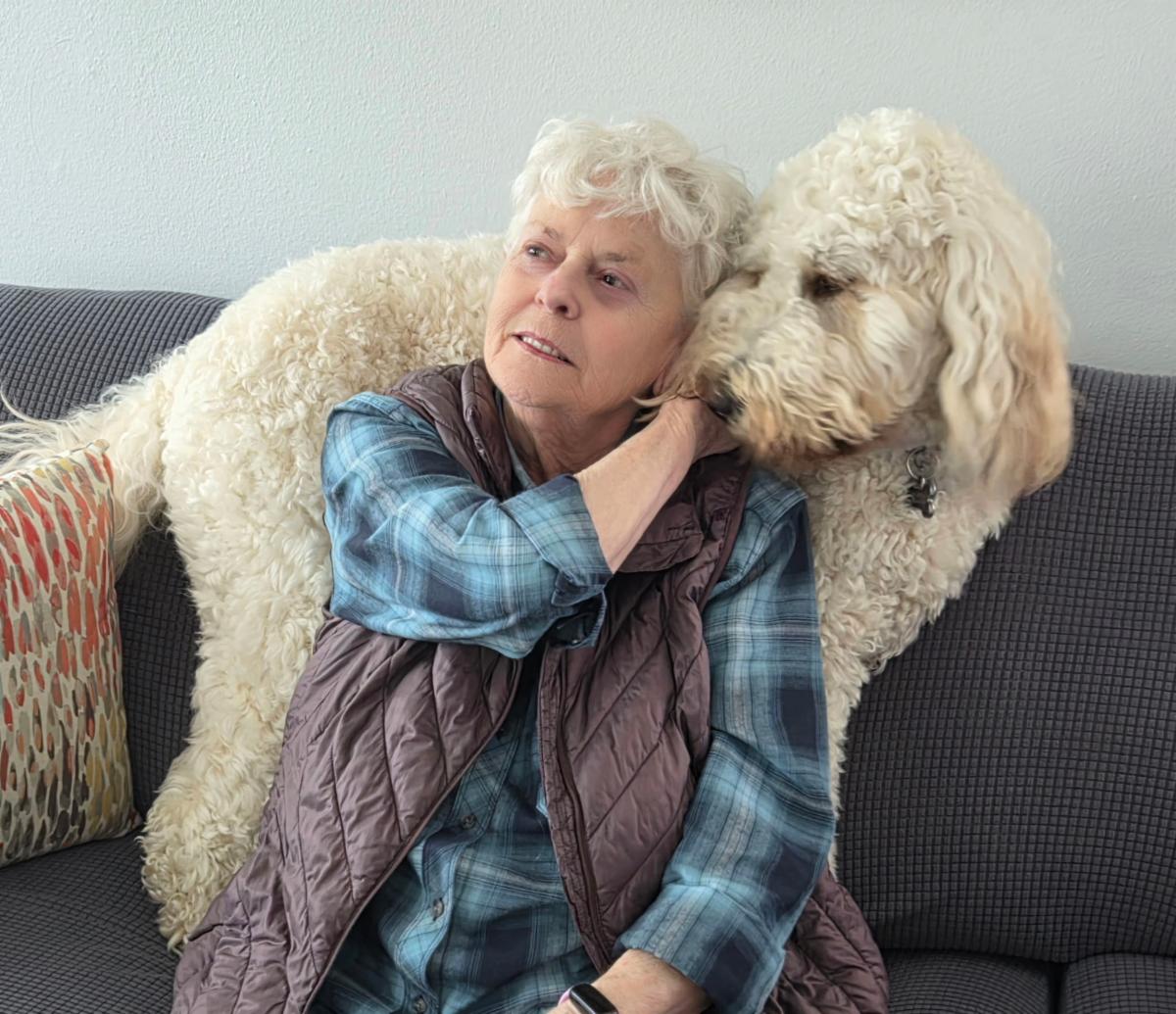
Cottage Grove to Edmonds: driveway camping at a friend’s house, where their golden doodle became deeply enamored with my wife.
FROM KIM
The Body Remembers What the Mind Has Outgrown
Marion Woodman quote landed like a hand on my sternum this week.
“Body is much slower to give up the past—old fears of not pleasing others, old eating patterns, old patterns of relationship.”
There it is. The thing so many of us have lived but could not quite name. The mind can have a revelation. It can read the books, go to therapy, understand the family pattern, name the wound, recognize the old survival strategy, and declare itself ready for freedom.
But the body is still on the old bank, clutching the luggage.
The body is slower because it remembers differently. It does not store the past as theory. It stores it as breath, appetite, posture, pulse, stomach, jaw, throat. It remembers the rooms where approval mattered more than truth. It remembers when silence kept the peace, when being useful felt safer than being honest, when love seemed to depend on being good, pleasing, thin, competent, undemanding, or small.
The mind may say, “I don’t have to please everyone anymore.”
The body says, “Are we sure?”
The mind may say, “I am allowed to say no.”
The body says, “Last time that cost us.”
This is the mercy and frustration of healing. Insight is real, but it is not instant liberation. We can understand a pattern long before we stop living inside it. We can intellectually yearn for freedom while the body still believes the old danger is waiting outside the door.
Woodman’s wisdom is that these patterns are not simply bad habits. They are embodied histories. The body did not learn pleasing, self-erasure, vigilance, overeating, undereating, or over-responsibility because it was foolish. It learned them because, at some point, they worked. They protected us. They kept us attached. They helped us survive.
Then, years later, the adult self wakes up. She sees the old bargain: I will be pleasing so I will be safe. I will be useful so I will be loved. I will be quiet so I will not be punished. I will need less so I will not be abandoned.
And she says, with every ounce of hard-won wisdom: I am done.
But the body, faithful old archivist, is not so easily convinced.
The body does not give up the past simply because the mind has filed the paperwork. It wants proof. It wants repetition. It wants to see that saying no does not end the world. It wants to discover that displeasing someone does not mean exile. It wants to eat without punishment, rest without guilt, speak without apology, and remain present when shame rises like smoke from the old ruins.
This is where Woodman’s insight becomes so tender. The body is not lagging behind because it is stupid. It is slow because it is loyal. Loyal to what once kept us alive. It will not release its old protections until it feels, in blood and bone, that the present is not simply the past wearing different clothes.
Many of us live from the neck up. We analyze, explain, narrate, interpret, and diagnose. We can describe our wounds with astonishing elegance while still flinching at the old trigger. We mistake articulation for freedom. But the body is not fooled by eloquence. It waits beneath the bright machinery of thought, holding the original evidence.
The body remembers the yes we said when everything in us was no.
The body remembers the meal we denied ourselves because hunger felt like failure.
The body remembers the anger we sweetened into politeness.
The body remembers the loneliness we buried under competence.
And because the body remembers, the body must be included in healing.
We cannot scold ourselves into freedom. We cannot shame the body for still being afraid. We cannot bully the nervous system into enlightenment. Healing is not the mind dragging the body across the river by the hair. Healing is the slow reconciliation of what we know with what we can finally bear to feel.
That work happens in ordinary moments. When we pause before saying yes. When we let someone be disappointed. When we eat the bread without turning it into a courtroom drama. When we rest before collapse. When we tell the truth imperfectly. When we stop making ourselves digestible for people who prefer us small.
For women especially, this can feel radical. We are trained early to read the room, soften the blow, manage the emotional weather, anticipate need, smooth conflict, and make ourselves acceptable. We are praised for being flexible, pleasant, resilient, and strong. Strong, of course, often means suffering quietly without inconveniencing anyone.
So the body adapts.
The shoulders rise. The jaw tightens. The stomach knots. The throat closes. The appetite rebels. The body becomes the private archive of public compliance.
Woodman’s sentence invites us to stop treating these responses as weakness. They are messages. Old survival songs still playing in the basement. The work is not to hate them into silence, but to listen, thank them for their service, and slowly teach them that a new life is possible.
The body says: I learned this for a reason.
The soul says: I know.
The body says: What if they leave?
The soul says: Then we will not leave ourselves.
This is the deeper healing. Not perfection. Not permanent calm. Not becoming so evolved that nothing hurts. Healing is the body gradually learning that self-abandonment is no longer the price of belonging.
It is learning that no is survivable.
That hunger is not shame.
That anger is information.
That rest is not failure.
That love which requires disappearance is not love, but negotiation.
Perhaps this is why Woodman’s words feel so alive. They give us permission to be patient with the lag between understanding and embodiment. There is no shame in still reacting from old fear. The body is not betraying us. It is asking to be brought along.
The mind may cross the river first. Insight lights the far shore. But the body must make the crossing step by step, breath by breath, choice by choice.
And one day, after enough small brave repetitions, the body discovers what the mind has been trying to tell it:
We are not back there anymore.
The luggage grows lighter.
The old bank is still visible behind us.
But we are walking.
One of those weeks, when I realized I sometimes beat myself up for not being able to integrate what I know into my behavior. Comforting to know it's a pretty human condition.
Kim
|