The Lake Forest II Woods

August 1st Update:

Survey Results

MAC Guidelines - Public Hearing

Tree Pests


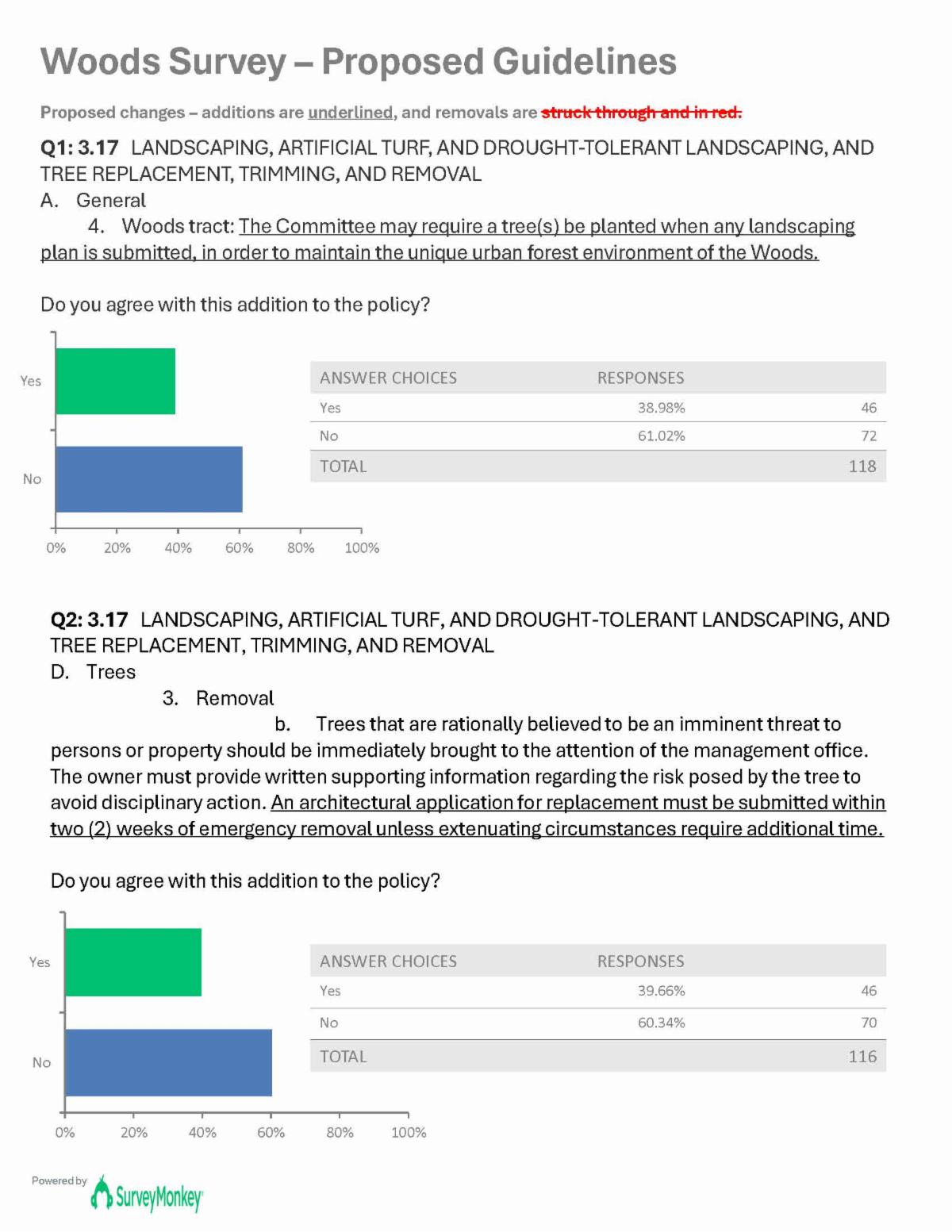
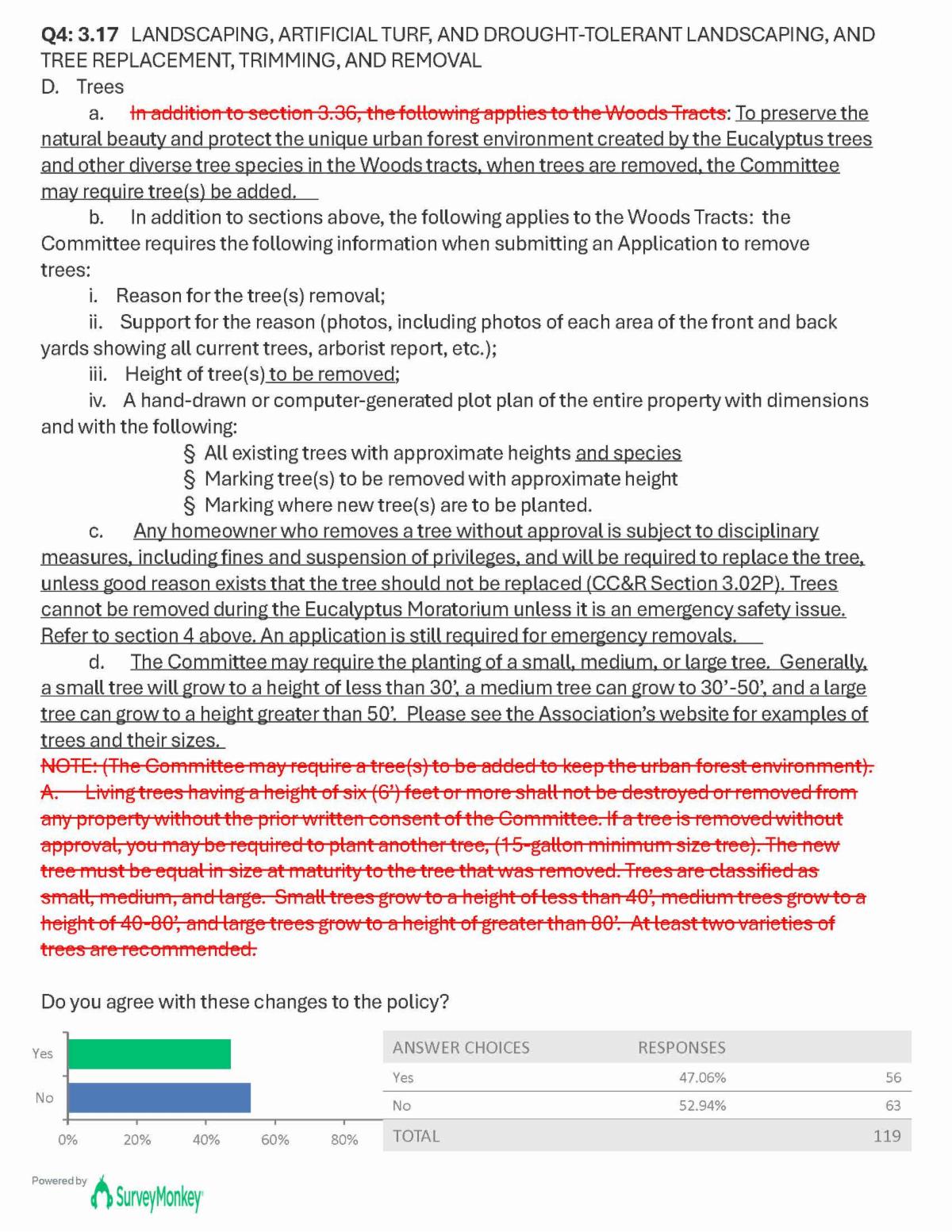
Survey Results

Thank you to everyone who took the time to complete the survey about proposed changes to the Master Architectural Rules and Guidelines. The MAC and the Board of Directors reviewed all the input that was received, and made some changes to the proposed rules as a result of the feedback received. They have been working on these revisions for more than a year, and reviewed the comments from the survey in great detail over the last few months. Please see a summary of the results below.

After review, the MAC and Board felt that some verbiage could be changed, based on comments received, to alleviate concerns. For instance, the first question on the survey asked residents, "Woods tract: The Committee may require a tree(s) be planted when any landscaping plan is submitted, in order to maintain the unique urban forest environment of the Woods. Do you agree with this addition to the policy?" In response to concerns that residents could be asked to plant trees when the lot already has many trees, the verbiage was changed to be more specific. The proposed guideline now reads: "Woods tract: Properties with two or fewer category B trees: When any landscape plan is submitted, the Committee may require planting up to two category B trees. If the Committee requires planting, the owner may request a meeting with the Committee at their property. (Category B trees are trees that will grow to a height equal to or greater than 41’.)" 

Public Hearing - Updated MAC Rules and Guidelines

After review of the survey results and changes to the suggested wording, the revised version has been posted as required by California Civil Code. A Public Hearing will be held Wednesday, September 4th at 6:30 p.m. at the Clubhouse for owners to share additional input prior to the Board voting. You can review a redline version of proposed changes by clicking here. Additions from the current policy are blue, deletions are in red, and verbiage moved is indicated in green.

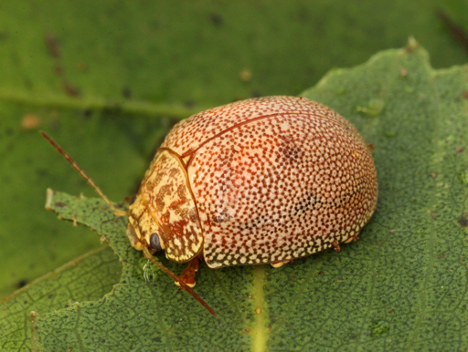
Dotted Paropsine Leaf Beetle

We continue to receive reports of the Dotted Paropsine Leaf Beetle in eucalyptus trees, as well as new information indicating they are not as picky as previously believed and are infesting other types of trees, and even rose bushes. Unfortunately, we don't have new information to report on these voracious eaters.


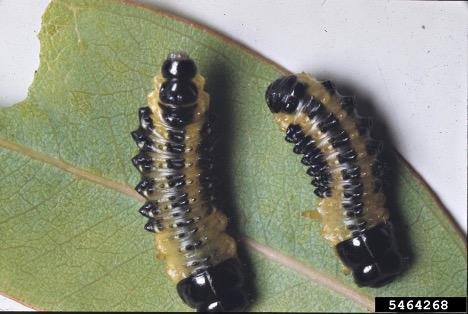
The Dotted Paropsine Leaf Beetle is a small, oval-shaped insect, measuring about 6-8 mm in length. Its distinguishing features include a yellow or orange body with black markings. The beetle’s larvae are typically green or yellow with black spots and can be found feeding on the eucalyptus leaves.


The life cycle of the Dotted Paropsine Leaf Beetle involves four stages: egg, larva, pupa, and adult. Female beetles lay clusters of eggs on the underside of eucalyptus leaves. Upon hatching, the larvae begin feeding on the foliage, causing significant defoliation. After several weeks of feeding, the larvae pupate in the soil before emerging as adults to continue the cycle.


There are indications that some insecticides are effective in reducing the populations, but we generally avoid pesticides due to concerns about beneficial insects, runoff to San Diego Creek, and general environmental health. If you have these pests in your trees and plants, it is strongly suggested to consult with an expert to review your options and determine what is best for your situation. Proper tree care, including regular pruning and removing infested leaves, can help manage beetle populations.


We continue to have multiple Arborists monitor our common area trees, and we have notified the California Department of Food and Agriculture about the invasive species. The don't have a monitoring program in our area yet, but are tracking the progression. As more is learned about the Leaf Beetles, we will provide additional updates.