WordPlay

The newsletter of the UCI Writing Project

Dear UCI Writing Project Community, 

We're in the thick of one of the busiest times for the UCI Writing Project, and many of you are a big part of all that is happening. The first session of the Summer Youth Project is underway at two sites (Aliso Viejo and Tustin), and Daniel and Tracy are busy getting ready for our second session in Irvine. We owe a HUGE thank-you to all our site coordinators who have been planning and implementing the programs (Deena Dela, Lisa Tarkoff, Gail McClain, and Dale Sprowl), as well as all of our fellows and other teachers who are too numerous to mention by name! You are the heart of this program and our impacts!


We’re also getting ready to launch into our Summer Institute this week. Our theme is “Adventures in Teaching” and we’re all super excited about starting on our journey to discover what’s at the core of the great writing instruction of our teachers! We have 17 fellows this year, and we couldn’t implement all of this without the hard work of the Writing Project Co-Directors (Marianne Stewart and Laseanda Wesson) and our Associate Directors (David Shelby and April Keller). They have been amazing!


In addition to all of the wonderful support from all of you, I wanted to also thank the staff who have been running things behind the scenes. Tracy Gov and Daniel Choi have been organizing everything for the Summer Youth Program and helping me figure out all of the logistical things for the Summer Institute. I’m not sure if everyone knows this, but Tracy and Daniel have had more on their plates than usual this summer because we’re a little short staffed. So, please thank them if you get the chance. They have been working their tails off!


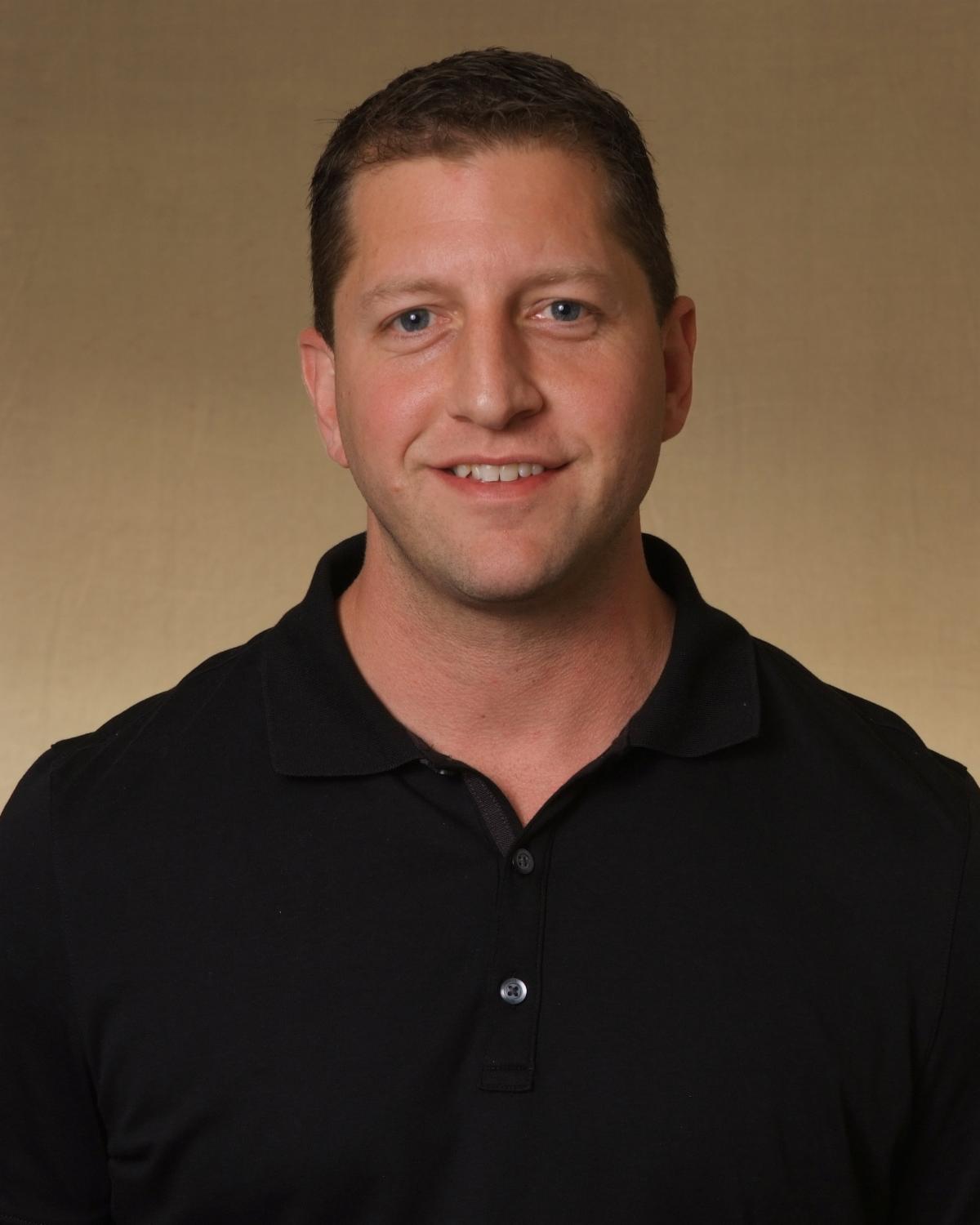
Michael Hebert, Ph.D.

Associate Professor

Director, UCI Writing Project

School of Education

University of California, Irvine

mhebert1@uci.edu

Office: (949) 824-5922


Dear Writing Project Friends,

June is a month when we often find ourselves saying “fond farewells:” to students who are graduating or just moving into new classes next year, and to colleagues who are moving on to new schools or positions. Over the last few months, several of UCIWP’s key support staff members have found new career opportunities that will unfortunately take them out of our orbit, and we include brief tributes to them in this issue of WordPlay. They will all be sorely missed, but we wish them well as they pursue their new adventures.


June is also, of course, a time for each of us to focus on rest, relaxation, and a recharging of our mental batteries. To help with all three, Carol Jago, a great friend of the Writing Project, has published a wonderful list of suggested summer reading. Having taken many of Carol’s suggestions over the years, I can vouch for the fact that you really can’t go wrong with any book she recommends. Here is a link to her blog which includes her summer reading list.  https://ncte.org/blog/2023/06/when-teachers-read/


Additional opportunities for professional growth and personal renewal may be found in the summer webinar series Write—Learn—Lead: RevitalizingTeachers and Teaching, presented by the WRITE Center and the National Writing Project, a link to which may be found in the Upcoming Events section below. Please check this out and consider signing up for one or more of the webinars in the series.


Here’s wishing all of you a summer full of rest, relaxation, and recharging.


As always, I encourage you to contribute to this newsletter. We are always happy to receive submissions. Please contact me if you have questions or ideas.


With best wishes

Liz Harrington

Editor

Fond Farewells

A Note From Michael

Unfortunately, we have had to say goodbye to two of our amazing and dedicated long-time members of the Writing Project Team, Eric Chansey and Sasha Stone, who both had wonderful new opportunities at UCI. Along with Daniel and Tracy, they were some of the first people I met at the Writing Project, and I found out quickly how valuable they were to the project. I’m sure most of you knew that already, though. Whether you were a part of the Summer Institute, Summer Youth Program, Writing Project II, Peer Partners, or the December Conference, it would be hard not to have been supported by Eric or Sasha in some way. Given that, I wanted to put a little spotlight on them to thank them for all of their years of service to the Writing Project.


I asked Tracy Gov to help me put together a little something on each of them, and we share that here. Please enjoy learning a little bit more about great friends and wish them well in their new endeavors if you get the chance!

Michael Hebert


Eric Chansey

Eric is a deep-rooted Anteater. He was first a student, then a student assistant, and then a graduate, before stepping into his staff roles. Eric came to the Writing Project in 1999 from the UCI School of Humanities, and most recently served as our Senior Finance Analyst, managing our diverse set of funding sources, financial processes, and budget needs.

He also importantly kept our Writing Project in compliance with all of the numerous financial practices, policies, and procedures of UCI. Of course, many of you already know that his work was meticulous, which was also recognized by UCI when he became the recipient of UCI’s highly respected Research Administration Management Program (RAMP) in 2009.

One of his most delicious contributions to the Writing Project was that he founded WP Lunchers Club, where members lunch together weekly to rate food, service, and fairness of price. I’ve had the fortune to be invited to join the Lunchers a few times, and they are total foodies! If you ever need a restaurant recommendation, you can skip Yelp and talk directly to Eric. You can’t go wrong! On a more personal note, Eric spends his free time running, hiking, traveling, and is an avid boba drinker and tea connoisseur.

 Eric’s newest role has taken him to UCI Human Resources, where is a Finance Analyst III as a senior member of the Business Services Team within the Office of the Chief Human Resources Office/Vice Chancellor, providing financial analysis and management, accounting management, payroll coordination, and coordinating a variety of special projects.

As we all know, they are lucky to have Eric, and we wish him all the best in his new position. Please wish him well.

Michael Hebert


Sasha Stone:

        Sasha joined the UCI Writing Project Team in 2016 as an Administrative Assistant and was with the project for nearly eight years. Many of you know Sasha as the do-it-all and save-the-day hero of the Writing Project, as she provided support on administrative programs for Writing Project II, Peer Partners, Summer Institutes, and grant related projects. At some point or another, she probably helped you get registered for events, get your books, register for credits, made sure you had parking, made sure you had delicious snacks, gave you directions, developed infographics you read, or lined up speakers that you went to see. If you did it, she probably had a hand in it. She assisted with coordinating the KFS system, onboarding, payments, reimbursements, and travel arrangements. In fact, she helped organize several of the things that are still ongoing and is still responsible for getting some of you paid in the future! 

        Like Eric, Sasha is definitely a “foodie” and she is still the current president of the WP Lunchers Club. Whenever Sasha makes a choice in where to go, everyone else just goes! And they’re happy they did!

        Sasha is also a pretty amazing person outside of work. She is a philosopher and a lover of the French language. She’s particularly fond of Paris and she would love to speak French with anyone who is willing to practice with her. One of her hobbies is learning French through DUO Lingo. Other hobbies include writing, reading, dancing, and traveling.

The Writing Project Community will probably love to hear that her favorite quote is: 

“I've learned that people will forget what you said, people will forget what you did, but people will never forget how you made them feel.” ― Maya Angelou           

It’s fitting, because I think that sums up how we probably all feel about Sasha, as well.


Sasha recently joined the UCI MIND team as an event specialist, assisting with the planning and coordination of both small- and large-scale events, including educational outreach, conferences, symposiums, and fundraising. She enjoys the creativity and challenge of event planning, as well as being part of such vital research. We wish her well and thank her for all that she has given to all of us at the WP.

Michael Hebert


Editor's Note: We were ready to go into publication when we heard that Abigail Lopez was also leaving us to join another team at UCI. Here is a "Fond Farewell" to Aby written by Carol Mooney.


Abigail Lopez

“Who can turn the world on with her smile?” This line from a classic sitcom long before Abigail Lopez was born doesn’t even begin to capture the power of Aby, whose contributions to the UCI Writing Project and its many manifestations—Summer Institute; Writing Project 2; December Conference; Summer Youth; UCI C3WP; the Write Center; Pathway—are indelible. Whether making sure parking passes were ready; coffee was ready; handouts were ready; we were ready, Aby ALWAYS offered the behind-the-scenes support and encouragement that ensure success. Her kindness, warmth, and genuine concern for all never faltered. And always with that smile. 

Writing Project Director of Research Huy Quoc Chung shares that Abigail “started as a student worker transcribing essays and was promoted over the past seven years to not only helping us prepare essays for holistic scoring, but she also managed payments, helped with the creation of tutorials…and most recently helped us create video clips for our course modules.” Huy goes on to state that while “the Writing Project has seen many assistants come and go throughout the years…Abigail will remain as one of the most memorable because she left a positive impression on everyone she has met or worked with.” And on a personal note, Huy adds, “Abigail is a thrill seeker and was training to jump out of a plane prior to the pandemic. She needs one more lesson to be certified to do so. She has bungee jumped, done white river rafting, and enjoys Universal’s Halloween haunted mazes. (She) is an avid reader who challenged herself to 52 books a year. She also enjoys scrapbooking and writing.”

Professor Emerita Carol Booth Olson, currently Principal Investigator, Pathway to Academic Success and Principal Investigator, WRITE Center for Secondary Students, sums up life with Aby in the following:

“Aby began working for the UCI Writing Project and then assisted Huy and me with the EIR Pathway to Academic Success Project for 8 years. She is an absolute gem—so bright, inquisitive, humorous, and caring. We both looked forward to her welcoming smile every day as we came into the office. She handled everything, from payments, to hotel logistics, to curriculum design, to helping with reading and scoring essays. And she had amazing patience for those of us who lack strong technical abilities, especially me. ☺ Aby has a strong commitment to contributing to the public good; so her new position in the Department of Medicine at the UCI Health campus is a perfect fit for her. She will be sorely missed!”

Aby, we wish you the best!

Carol Mooney

Feature Article

Where it All Begins: Universal Transitional Kindergarten


This past year, 2022-2023, I worked alongside Universal Transitional Kindergarten or UTK teachers as San Diego Unified School District more than doubled the number of classrooms providing instruction for children turning four as of the first of September. UTK is a spinoff of Transitional Kindergarten or TK and was renamed UTK due to the expanded enrollment date of September 1st, for which UTK students are now eligible to attend. Other districts TK’s enrollment date were extended as well but may have kept the TK label or chosen a different name for the grade level such as UPK or Universal Prekindergarten. 


TK began in California in 2012 to offer families whose children had fall birthdates (September to December) a school option as California moved its kindergarten enrollment date up a month each year from December to September to better mirror other states’ admission cut-off dates for kindergarten enrollment. Once the enrollment date reached the September threshold, TK did not go away but stayed on, offering students with fall birth dates a year of TK instruction prior to enrolling in kindergarten. Now, however, California has expanded the admission date to September 1st for TK students, allowing all age-eligible kindergarten children to enroll in a year of TK instruction the year before kindergarten.


Writing was one of the academic areas where I worked most with teachers. Historically, writing for this age group is often focused exclusively on name writing and recognition, usually beginning with students drawing pictures or using scribble-like letters or drawings to represent meaning, as explained in this 2017 NAEYC article. Our main goal was to help students understand that they were writers when they produced these early written artifacts. The instructional focus fostered language around these early writing experiences and encouraged letter-sound correspondence when appropriate. It was a magical year of learning for teachers and students around these concepts.

Allison Serceki


Mark your Calendar

Upcoming events


WRITE Center and National Writing Project 2023 Summer Learning Series

Write - Learn - Lead: Revitalizing Teachers and Teaching

The past three years have shown us that self-care is no longer a luxury. Teachers need

relief, encouragement, and healing from the impact of the COVID-19 pandemic on their

lives in and out of school. Current challenges to K-12 education also call for teachers to

tend to their well-being and to remember what inspired them to become teachers.


Based on the National Writing Project motto "Write-Learn-Lead," we invite you to write

together, learn together, and prepare to lead together as you explore self-care, revitalize

yourself and your teaching, and advocate for others with three leading scholars and

experts in the field: Brynn Saito, Yolanda Sealey-Ruiz, Cathy Fleischer.


Find out more, and register for all or part of the series at https://www.writecenter.org/webinars.html


Reading Corner

Book Reviews


High School

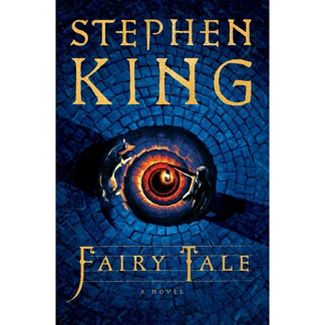
Fairy Tale

Stephen King


Imagine if fairy tales really did exist. All of the stories you heard as a child were based not on the imagination, but on a realm connected to our own. Stephen King’s Fairy Tale starts with meeting the main character, Charlie Reade. We learn about his difficult life. His life and the trajectory of the story is changed when Charlie meets his recluse neighbor, the ancient Howard Bowditch. After obtaining the keys to a secret shed, Charlie leaves his dreary world to explore a land of stories, a realm whose people are in danger and the leaders could destroy their own realm and possibly even ours. A seemingly ordinary young man is thrust into the role of hero, creating a story full of suspense and magic. 


A definite surprise, this book is one that will pair incredibly well with mythology or anything that is a hero’s journey. The first thing to know is that this is a book with a lot of rich detail and at 608 pages, this is literally not light read. For some this is a plus, for others this will not be. The next thing to know is that this book is rich with imagery, symbolism, and themes. This is not It or Pet Sematary or Carrie. Rather, this is a book full of rich imagination that might send some shivers down your back (like when there are giant cockroaches and their guts are being spilled), but the rich description brings more life than chills. 


As an adult reader, I feel some of King’s writing is a bit obvious (like the name Charlie Reade). There are other connections that do not seem as subtle as I would like, but that make it even more accessible to reluctant readers who often are not confident in their analyzing abilities. Pointing out the names, rule of three, allusions, imagery, and more will truly be an empowering activity for students who may often miss the subtle instances in other works of fiction.  


Lesson idea: 

Read a story referenced in Fairy Tale. Then read that section of Fairy Tale. Ask students to point out what seems similar to the story and what seems different.

Liz Taireh


Middle School

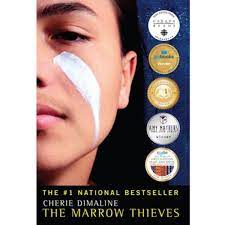
The Marrow Thieves Cherie Dimaline


In Cherie Dimaline’s The Marrow Thieves, the cautioned consequences of climate change have arrived. The Northern Ice has melted shifting coastlines inward, storms have become more powerful than ever causing numerous fossil fuel disasters, and populations have begun to cluster in larger areas, leaving small towns and communities behind.


Many people have lost the ability to dream and a believed cure lies within the bone marrow of First Nations people of Canada. Residential school-inspired compounds are reintroduced as the Indigenous population is hunted by white Canadians. The story follows Frenchie and a group of other Native Canadians as they hope to evade the “men in the white coats” by moving North through Ontario.


For a book that is just a shade over two hundred pages with a cast of nearly a dozen central characters, Dimaline executes her character development and world-building by including a handful of chapters written through individual viewpoints that detail each character’s lives prior to joining into this makeshift family. Through Dimaline’s writing, I found myself traveling back to sixteen and struggling to come to grips with an impending adulthood I was not ready for as well as coping with emotions and hormones that were completely out of my control.


The horrors of the re-opened “schools” and the experiments on the Indigenous people are revealed to the reader as the novel progresses and the characters gradually peek behind the curtain. Adding an element of mystery to an already compelling story helped me to devour this book in only a few sittings.


I think this would be a great novel to teach in an English or History classroom. It’s incredibly accessible in its writing style, so it is appropriate for many learners.

Megan Grint


Elementary School

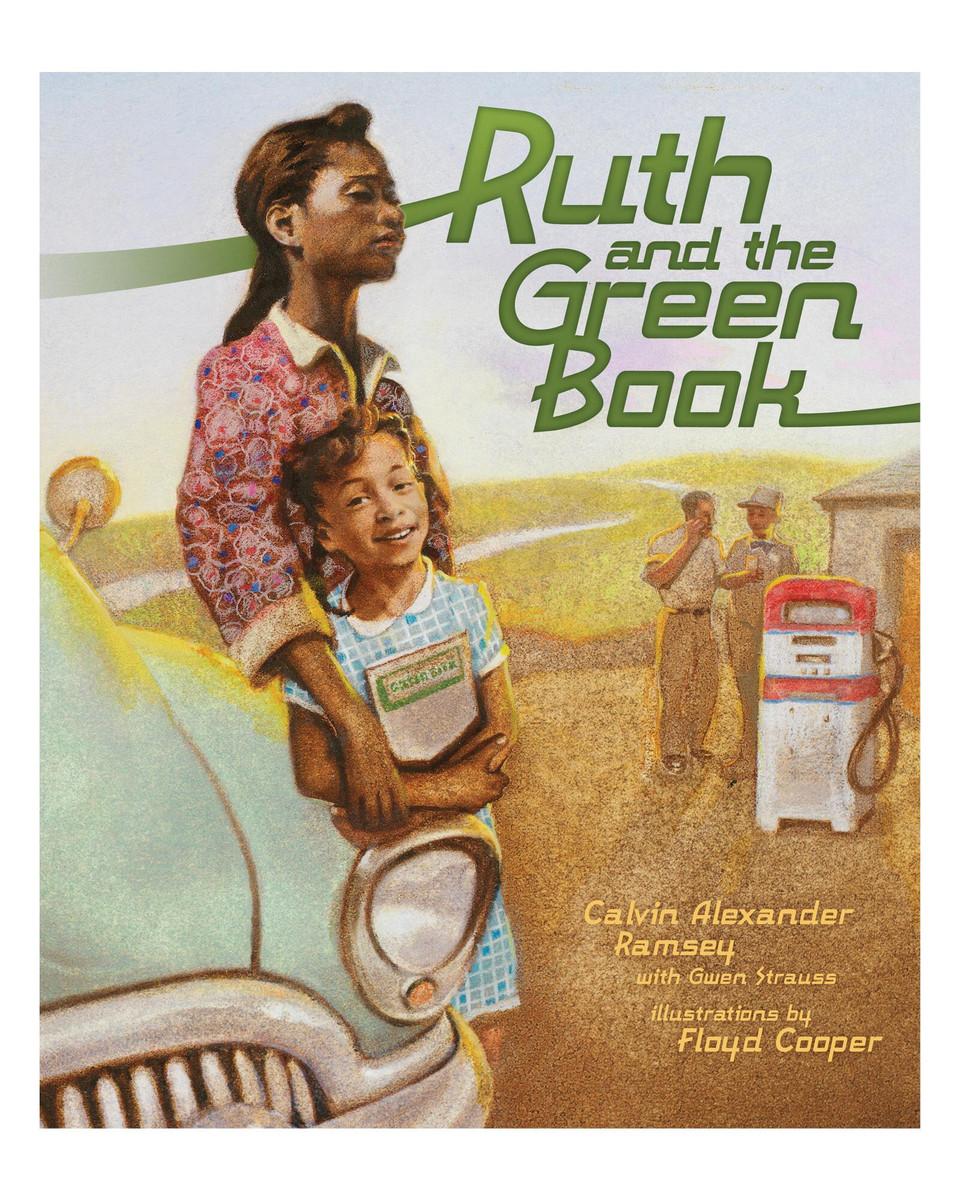
Ruth and The Green Book

Calvin Alexander Ramsey with Gwen Strauss

Illustrated by Floyd Cooper


Published over a decade ago - long before the Academy Award winning movie - this is a crucial story for raising awareness of the social inequities and racist policies that generations of African Americans faced and at the same time, offering a narrative of resilience and strength in community. Set in the 1940s, young Ruth narrates the story of the family’s first cross-country road trip in their new car. The author skillfully weaves the word-of-mouth traveler’s guide, The Negro Motorist Green Book, midway into the story and reveals what an invaluable asset it was to the black community during the Jim Crow era. 


For elementary teachers strategizing on how to teach honest history, historical fiction read-alouds like this are a natural route. Ruth and her family are relatable and the beautiful illustrations allow younger readers to make sense of a different era. Appealing to students’ sense of fairness, (“The man said we couldn’t use the restrooms because they were for whites only.”), this short read is sure to raise questions for further investigation or might serve as an introduction to a novel such as Roll of Thunder, Hear My Cry. The book delicately explores feelings like anger, embarrassment, and confusion and balances these difficult emotions with laughter, joy, and connection with fellow travelers and then family in the South. Available on YouTube as a recorded version and Teaching Books website offers a range of resources, including a “Meet-the-Author” recording where he shares the inspiration for the book. 


A timely selection for summer travel season and sparking younger readers’ interest in related historical fiction or narrative nonfiction titles as they add to their summer reading lists. 

Lynn Schaulis


Spotlight on a Classroom

Brianna McKiddy


Redefining Writing in My Classroom 

I applied to the UCI Writing Project in the Summer of 2018 because I was feeling a distinct lack of joy in my classroom. I had been teaching for two years and was quickly coming to realize that my own enthusiasm was not enough. I was leaving my classroom each day feeling defeated and I worried that my students were feeling the same. 

One of the most important things I gained from my time in the writing project is the permission to be creative, both for myself and my students. When a Project fellow presented on the multi-genre writing project, it opened my eyes to what I had been missing in my teaching practice. I was focusing so heavily on analysis-based writing that I was neglecting all of these other varieties and styles that make writing a language art. Since that summer, I’ve been working to incorporate assignments that ask students to demonstrate their authorial voices in more dynamic ways. Because I was surrounded by a community of talented educators who had a passion for improving their own practice, I was able to be vulnerable and reflect on my teaching in a constructive way. I was inspired by the other project fellows’ willingness to redefine themselves.

Before my summer with the writing project, I would have shied away from asking students to demonstrate their knowledge of Shakespeare’s Julius Caesar by composing a eulogy for Brutus, the tragic hero of the play. I would have never thought to have students envision themselves as central figures on their own Hero’s Journey and draft a narrative exploring those archetypes by reflecting on their 9th-grade year. But the writing project gave me the courage I needed to think about what writing is really meant to do for our students: create meaning in their lives.    


Staff List:

Liz Harrington, Editor eharring@uci.edu

Carol Mooney, Assistant Editor

Megan Grint, Staff

Lynne Pantano, Staff

Laseanda Wesson, Staff

Allison Serceki, Staff

Liz Taireh, Staff