|
Written by Kieran Delamont, Associate Editor, London Inc. | |
HIRING
It’s not just you ― job interviews are dragging on again
Nine rounds of interviews and no callback? The never-ending interview is back
| |
|
THE LABOUR MARKET has loosened a little bit from its pandemic peak, and that has given companies a bit more leverage to be picky when it comes to hiring. And much to the chagrin of jobseekers everywhere, that has meant the return of the dreaded, loathed, never-ending job interview.
“In the past, companies typically held one, two or maybe three interviews with a candidate before making a decision,” wrote Ask a Manager writer Alison Green. “But in recent years, many more rounds of interviews have become common, sometimes stretching into the truly absurd.” She cites one anecdote of a candidate sitting for a staggering 29 interviews ― only to be dropped in the end. Others in the job market have complained of lengthy and complex practice assignments (often unpaid).
Experts say it’s a course correction (or over-correction) from the loosey-goosey days of 2021, when jobseekers had leverage and were seeing offers extended even in initial screening interviews. “Hiring in 2021 was almost reactive: it was a gold rush, the most fierce battle for talent I’ve seen in my career. Companies hired willy-nilly,” said AT&T’s VP of talent acquisition Astad Dhunjisha. “They’re far more intentional now, making the assessment process much more stringent.”
But businesses may only hurting themselves with this level of pickiness, suggested Julia Steiner of PayPath. “Fact is, overly complicated hiring processes force quality candidates to go elsewhere, and righteously so,” she wrote. “Sixty-two per cent of professionals say they’ll walk away if they don’t hear back from the company within 10 business days. Most jobseekers aren’t willing to go beyond four interview rounds.”
HR experts recommend that businesses, even if they do want to be more selective than they were a couple years ago, should create “shorter, sharper, more strategic interview processes,” and should set hard deadlines for hiring.
Candidates, too, can help turn this tide by knowing when to walk away. “When you keep hearing weak, muddled answers on when the final-stage interview may be, and who it might be with, that’s when it’s clear there is confusion over the hiring,” pointed out recruitment executive Adam Nicoll. At that point, a good candidate might be best to look for greener pastures.
| |
ECONOMY
Time to break the glass
Think tanks, academics and governments are all sounding the alarm: Canada’s need to improve productivity has reached an emergency level
| |
|
THE BANK OF Canada’s senior deputy governor Carolyn Rogers made headlines in recent weeks, warning that Canada’s struggle with productivity is reaching a serious breaking point. “You’ve seen those signs that say, ‘In emergency, break glass,’” Rogers said at a recent talk. “Well, it’s time to break the glass.”
Productivity is a complex measure, but in a basic sense, Canada’s been experiencing a flatlining of GDP per capita, especially in recent years. Canada has lagged other G7 nations in this regard; only Italy has recorded larger productivity declines, relative to the United States.
Most Canadian economists believe that the core culprit is low investment by Canadian businesses. “Canada’s business investment per available worker has not only been on a downward trajectory for the past eight years, but has also fallen when compared with other countries,” wrote the Macdonald Laurier Institute’s Aaron Wudrick and Callum MacLeod.
It seems a good bet that we’re going to hear a lot more about productivity going forward. “I think the Bank of Canada, to their credit, brought it to the very forefront of the public policy dialogue,” said Scotiabank economist Derek Holt, speaking to the CBC. “If we don’t address productivity and start doing it very quickly, our living standards…will continue to decline.”
But flagging productivity is a problem that is easier to identify than it is to solve. Officials have started talking about ways to pump more investment into the economy, including by asking Canadian pension funds to do more domestic investing. Wudrick and MacLeod advocate for a ‘Canadian Productivity Commission’ (something countries like Australia have tried) to bring together non-partisan experts on the subject. Others have advocated for policies that would improve competition. Others still have suggested that we need to spend public funds on “instilling the virtues of pride in work as soon as kids start going to school.”
But none of these will be silver bullets. With pandemic-era inflation starting to subside, expect the economic conversation to shift to productivity. Policymakers will be keen to find approaches that improve labour productivity while still focusing on improving conditions for workers. But that is a tightrope, one that many mature economies are also struggling to walk right now.
“Canadians can take comfort in the fact that this problem is not unique to Canada, and that many other countries are also grappling with subpar productivity growth,” wrote Robin Shaban and Laura Adkins-Hackett. “Perhaps a path forward lies in working together with international peers to find solutions that bring prosperity to Canada and beyond.”
| |
|
|
Terry Talks: Leadership in times of stress
| It is no secret that the business world can be a demanding and high-pressure environment. And while many aspire to leadership roles, few truly understand the emotional toll they can take. Behind the polished facades and successful outcomes lie individuals carrying the weight of responsibility, making tough decisions and navigating a landscape of constant change. It's time we acknowledge and address these challenges openly. | | | |
CAREERS
Two ways to succeed
Shopify’s dual-track promotion scheme seems to be working ― and growing in popularity
| |
|
NOT EVERYONE WANTS to be a manager. But when it comes to career growth, there is often a sense that someone has no other choice if they want to move up the compensation ladder. But what if there was a better way?
Last year, Canadian tech company Shopify tried to remedy this, with the introduction of the dual-track promotion plan, where career paths would be split between individual contributors (“crafters” as Shopify calls them) and managers, but compensation would be the same regardless of which path one chose.
“The principle behind the dual-track promotion plan is straightforward yet revolutionary: create parallel paths for career advancement that honour and cultivate both managerial talent and specialist expertise,” wrote HulkApps’ Adel Rovcanin.
A year on, reports suggest that the scheme has had an instant impact. “Our crafters are more energized by their work and feel they have the opportunities to learn and develop new skills,” Shopify’s Atlee Clark told Digiday’s WorkLife recently. “It’s also been a draw for people who want to spend their days building products that will impact the future of commerce.”
Another company that introduced the concept is tech company Remote, whose co-founder reported that retention has improved because employees aren’t job-hopping nearly as much. “The benefit is really great to an organization,” said Job van der Voort. “It works really well.”
It tracks with a growing belief among experts that this creates positive incentives for the whole workforce, not just the ladder-climbers, and Shopify’s success is likely to be replicated at other companies moving forward.
“The ultimate result of dual career path is having motivated employees who will consequently remain with the organization for longer periods,” wrote KPMG’s Francis Rugangila.
“This is a better way of looking at career paths,” she continued. “The traditional career path presents limited chances for managerial progression and has resulted in loss of motivation ― it is clear that alternative career progression systems [are] vital for today’s organizations.”
| |
AI
Easy come, easy go
Sorry folks, the brief golden age of using ChatGPT to write your résumé is already over
| | |
|
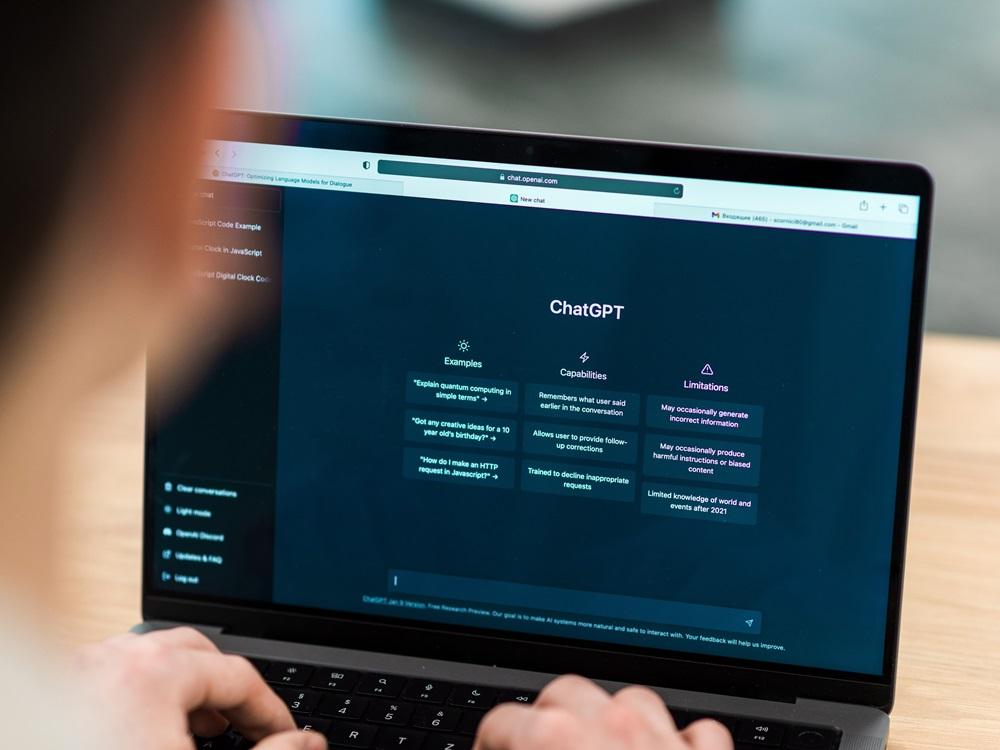
BAD NEWS: YES, recruiters and hiring managers can tell when your résumé and cover letter is being punched up ― or written wholesale ― by ChatGPT. That on its own might not be a problem, suggest some hiring experts, if candidates were using it in the right way. The problem is, they really aren’t.
“I was heartbroken to see that so many jobseekers were using these tools in exactly the wrong way,” said The Job Insiders’ Jeremy Schifeling. “They forgot that no matter how exciting this new technology is, humans are still in charge of the hiring process, which is why having a robot write your résumé is a recipe for disaster.”
One factor is that candidates now know that AI tools are being deployed on the other side, looking for keywords and buzzwords when they submit their résumé. In response, many are using AI tools to stuff résumés with these keywords, which is in turn making them exceedingly long. According to résumé builder LiveCareer, two-page CVs are becoming the norm, and candidates are increasingly lengthening their skills section.
But that is turning off the humans who have to sift through these résumés. “I don’t have time to sift through what is real and what isn’t,” said Randstad NV vice-president Katie Birkelo. “It’s either a maybe or a no, right away.”
AI tools are also flattening the content of these résumés. FlexJobs career expert Keith Spencer said that “the tool will lack your unique voice and first-hand perspective, meaning that the style and tone of writing won’t be reflective of your own and the content it includes could be factually inaccurate or highly exaggerated.”
Ergo, we can probably call an end to the brief golden age of using ChatGPT to write your résumé. Jobseekers, especially those playing the volume game, had a good run. As is the case with AI more generally, the era of feeling like you had a secret weapon is over now that everyone knows how to use it. The future belongs to those who know how to integrate it well.
“Overall, generative AI tools can make great job search assistants,” said Spencer. “But you shouldn’t count on them to do all the work for you.”
|
| | | | |