Wednesday Weblog for November 19, 2025 | | “Investing in training and development leads to the most significant return on investment a company can have.” J.P. George | | Leading Off: It Started with a Baton | | |
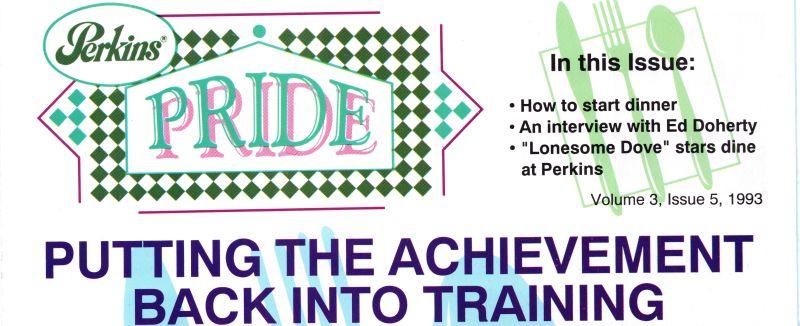
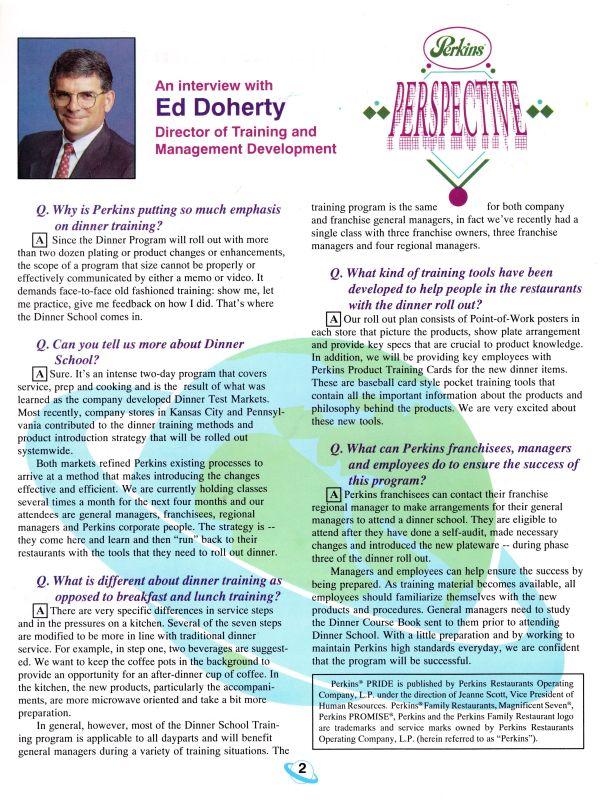
Many years ago I had the privilege of participating in a major concept revamp for Perkins Restaurant & Bakery company (as the Director of Training and Management Development). Recently I looked back at some newsletters produced during the time of a 'Dinner School' roll-out and was reminded that not all training is good training and not all training works. This is a story about some training that not only worked but helped to change a concept and a way of managing.
Since some of the details were fuzzy in my mind, I used artificial intelligence to search for a variety of topics related to this Weblog. Much to my surprise, 'World Class Training' was something ChatGPT found quite a bit of information about. The bulk of this story takes place in the 1993-1996 time frame, and the results shared at the end are the culmination of several years of effort in the Dinner program.
| | |
In the middle of my career, I moved from leading human resources at a large company based in Memphis, with restaurants located in nine southern states, across town to a company that was a national franchisor of about 450 restaurant/bakery locations, although none in New England.
About 3/4 of the stores were franchised and the remainder were company locations in a variety of mid-west markets.
Ostensibly (love to use that word in a sentence because I can spell it but not pronounce it), my ‘claim to fame’ prior to joining the company was my long experience in training. The new company didn’t need my HR experience.
I quickly discovered I had a great team of trainers, both in the corporate office and in the field, and I had also joined an organization that was hungry for innovation and effectiveness in training.
The training center was located in a building separate from the Corporate Office and shared with the Product Development team and a new Executive Chef. As trainers, we started meeting on a regular basis, and out of those discussions came the phrase 'World Class Training.'
What did we think World Class Training was? Well, it had to be training with high standards, done right, that was hard to criticize. It had to be something others would want to use, or copy. And in a corporate environment, it needed the blessing of those at the top. It was experiential so people learned by doing. It was validated: at every step there was confirmation that you either had it down right, or needed more practice. It was passed along from leader to follower over and over again. No one was trained by someone who hadn't done the task, in fact, in most cases, it was their supervisor doing the training.
The application of World Class Training all started one afternoon, at a restaurant in the building where our main offices were located. The Vice-President of Operations had me and my boss ‘trapped’ at his table and began drilling me on when I was going to produce something innovative that they could use. Not sure if this was a week, a month, or a quarter into the new job.
To him 'World Class Training' was only a phrase, since nothing had happened yet to bring it to life. I knew the organization was planning on introducing a whole new 'Dinner' program to shore up sagging sales at that daypart.
| | |
As he grilled me, out of my mouth popped the phrase ‘Dinner School’ followed by wide eyes from the others at the table followed by a directive to explain, so I did.
This chain was primarily known for breakfast and lunch and was a few years into the transformation to a restaurant and bakery concept but was still struggling in most locations with dinner.
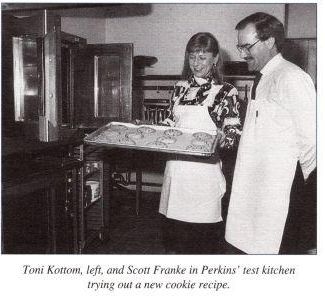
The new Executive Chef was developing dinner entrée ideas like there was no tomorrow. The organization was planning to implement the best ideas, but they had introduced new items in the past to less than standing ovations from the customers, the franchise owners, and the employees.
My suggestion was to create a Dinner School, where all leaders and managers were required to attend to learn how to correctly prepare and serve the new entrees and the upgraded ‘dinner atmosphere’ that the company was striving to achieve.
During this same time, some/many of the franchisees had expressed frustration at the things that were coming out of the training department as not adequate for their needs.
The combination of these two factors in the concept-dominated franchise community meant there was a resistance to new ideas from ‘Memphis’ and many owners simply didn’t follow the franchisor’s lead. They added more and more of their own menu items, ignored things from the corporate office and in general expressed the opinion that "they knew better."
Into this situation and at that table, I was thrust into an important role with the challenge to make a difference.
I emphasized my concept of Dinner School as a way to make sure that not only were the new menu items received well, but that they were prepared well, and served well. Go figure a trainer would have that perspective. I had seen too many half-assed roll-outs of new products or new concepts and I realized I had the chance to make a big impact with training.
| |
Before I had a chance to go in depth with ‘how’ I would help make that happen, they asked me about dealing with the franchisees who could opt in or opt out of a new large scale dinner program.
I still remember what I said when that question was posed, because I ended up repeating it over and over the next couple of years in both the training department and in the board room.
“Make them beg for it.” As a former franchisee myself, I knew how owners felt about things shoved down their throats. My concept was simple. I wanted the franchisees to be jealous of what the corporate stores were doing, and ask (or beg) to implement it in their own stores.
| |
Here’s what we did:
Experiential: We designed a learning experience where ‘learn by doing’ was king, supplemented by classroom work. We covered everything from cooking carrots in a skillet, to dating products in the walk-in to suggestive selling techniques to "two-bite checkbacks" after meals were served.
We explained the theories and then had the ‘students’ practice in the classroom, and then practice on real customers. Talk about pressure!
| |
Pass-Pass: I had been averse to the corporate training standard that still exists in many places today. I call it “Pass, Pass” meaning you just show up and you get the certificate or whatever. It is different from “Pass, Fail” and different from performance-based grading.
At the beginning of the roll out, almost all of the Perkins regional staff had to fly into Memphis to attend the course, and we had them come to the training center before the hotel with the promise that if they failed the Entrance Exam, they could go right back to the airport.
Consequently, people studied for the class and were totally engaged on the first day. No one failed. They also learned there would be a final exam that you needed to pass to get the piece of paper or certificate that said you did it.
| |
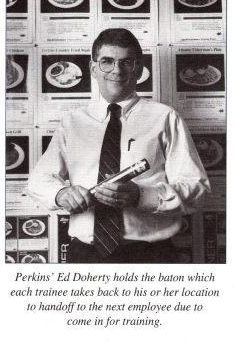
Relay Training: We had each level of the organization train the level below them. This is sometimes called ‘step-down’ training.
The trainers trained the President and the rest of the C-Suite. The President and the rest of the C-Suite trained the Zone Directors. The Zone Directors trained the Regional Managers. The Regional Managers trained the Managers. The Managers trained their employees.
When your boss is teaching you what to do, not only are you likely to pay attention, but your respect for her or him also likely rises a little bit. It impacted the culture of the company in many ways.
At graduation, you got a real honest to goodness Baton like they use in races. We were passing the training down.
| |
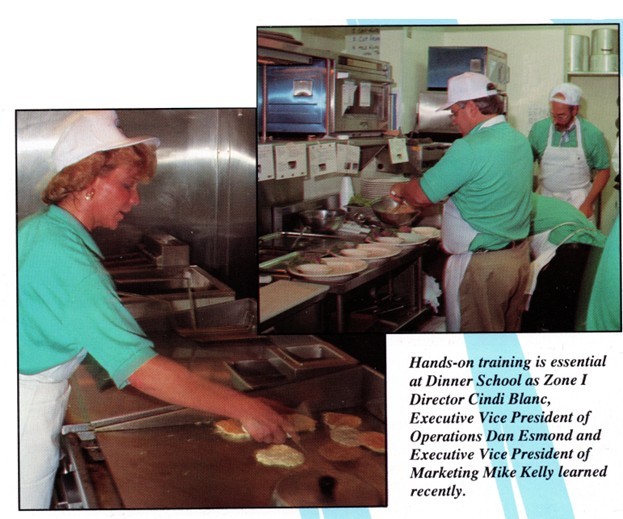
Immersion: Probably the biggest cultural transition of Dinner School was having the senior leaders and the regional staff in the kitchen at the grill sauteeing those carrots or grilling salmon for real customers. It changed things from a theoretical construct to a reality based world.
In fact, many of the leaders, during class decided that this procedure was too complicated or that procedure wasn’t strong enough, and we made changes on the fly in the early days that not only improved the roll-out, but enhanced the ‘ownership’ the leaders felt about the project.
| |
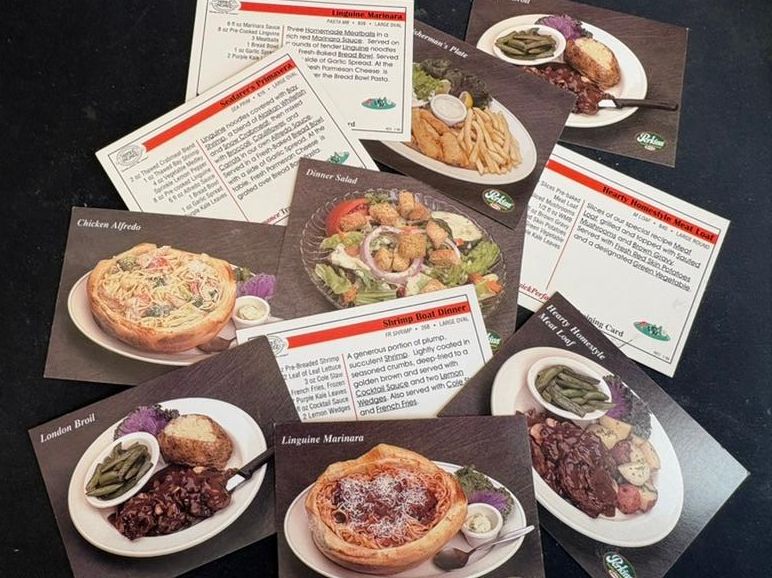
Trading Cards: Those two words probably surprised you? All restaurants have great four-color posters in the pantry area or on the cook’s line with descriptions of the products and ingredients and maybe even step by step directions.
We took it a step further: we created baseball-card like cards with a photo of a perfect entrée on the front, and details on the back and every server got a set of cards.
When a guest asked about a product, the server had the information on the spot instantly. Not only did guests like it, but the employees loved it because they weren’t on an island and had some ‘support’ from management when they were at the table.
| The rollout went through all corporate national, regional, and local management, and then, after they begged for it, to the franchise community. Nothing had ever been done like it before, and it had a couple of benefits. First of all, I had delivered on the innovation expected and received a couple of awards for my efforts. But more importantly, for Perkins Restaurant & Bakery the impact was significantly positive — it helped reverse years of declining dinner traffic and broadened the chain’s appeal beyond its traditional breakfast and lunch focus. | |
At the time of the roll out, Perkins was known mainly for breakfast and bakery items. Dinner sales were weak, and many locations saw declining evening traffic. When Perkins rolled out the revamped dinner menu, that could only be implemented after local management had attended Dinner School, the ‘homestyle entrees,’ upgraded food presentations, along with table service enhancements and better lighting made the restaurants more dinner-friendly.
The program featured entrees like country-fried steak, grilled salmon, chicken stir-fry, pot roast, and meatloaf with an emphasis on comfort food with quality upgrades (real mashed potatoes, fresh vegetables, bigger portions). Additionally, the company added new lighting, plateware, and menu design to make evening dining feel warmer and more upscale. The TV and print advertising campaign highlighted “Perkins — not just for breakfast anymore.”
| |
The results:
- Dinner traffic rose 10–15% within the first 6 months of rollout.
- Same-store sales increased 5–6% overall, driven largely by improved evening business.
- The average check increased by about $1.00, as customers traded up to higher-priced entrées.
- Franchisee participation exceeded expectations; more than 80% implemented the program within a year.
- The success of the dinner initiative became a case study in repositioning a day-part-dominant brand to drive all-day business.
- Perkins executives said dinner business had gone from “an afterthought to a growth engine.”
Industry publications like Nation’s Restaurant News and Restaurant Business at the time credited the dinner entrée overhaul as one of the main reasons Perkins stabilized and grew again in the late 1990s.
- The dinner upgrade helped Perkins post record sales in 1998–1999.
- It supported the chain’s expansion into suburban and travel corridor markets where dinner mattered more.
- The company later built on this with “Perkins Café & Bakery” prototypes and refreshed branding
I went to work for a franchised restaurant group in the middle of this roll out, so I was on both sides of the fence at different times.
I was proud to be a part of the success that really was a team effort. The executives, the trainers, the support staff all played prominent roles in the World Class Training experience that was Dinner School.
The best part for me? We proved that investing in training and development does have an ROI (Return on Investment). And doing it in a World Class way, produces world class results.
Blame it on the baton.
| | Surprise Photo at the End: | | Joe's Positive Post of the Week | | Join the Smart Subscribers | | If you are reading this on a social media platform, click below and you'll automatically receive a 'different' story every week on Wednesday. | | |
The Roll Call of states and countries where readers reside: Arizona, California, Colorado, Connecticut, Delaware, Florida, Georgia, Hawaii, Illinois, Indiana, Iowa, Kansas, Kentucky, Louisiana, Maine, Massachusetts, Michigan, Mississippi, Missouri, Montana, New Hampshire, New Jersey, New Mexico, New York, North Carolina, North Dakota, Ohio, Pennsylvania, Puerto Rico, Rhode Island, South Carolina, South Dakota, Tennessee, Texas, Vermont, Virginia, Washington and Washington DC, Wisconsin plus Canada, Conch Republic, Australia and the United Kingdom.
| | Refer a friend to Sign Up for the Wednesday Weblog | | |
Ed Doherty
774-479-8831
www.ambroselanden.com
ed-doherty@outlook.com
Forgive any typos please.
| | | | | |