TAI CHI PHILOSOPHY and THE TAO,
THE WAY OF THE UNIVERSE WITHIN ...
A few tips for students (and teachers) on the mechanics/dynamics of what drives so many of us to "drop out of Tai Chi." How we can have more fun, and
stick with it.
Below, read several useful insights into "why we drop out of Tai Chi" but
the essence, the core, the bouillabaisse of Why We Drop Out of Tai Chi is a lack of self-compassion. We know Tai Chi is great for us, yet we drop out. We criticize ourselves for not understanding something much too large to "understand." Like the Tao, the Way of the Universe, Tai Chi is too vast, too grand, to extraordinary to understand.
The Tai Chi journey makes us feel dumb, slow, uncoordinated. But, if we stick with it, we begin to "accept ourselves as we are" and we learn to not only "enjoy our bumbling path through Tai Chi" ... but also our sacred bumbling journey through our life ... seeing our journey as beautiful, precious, sacred.
This self-compassion that is required of us in order to take a Tai Chi journey ends up being the most sacred gift Tai Chi has to offer ... a far greater gift than even the vastly improve balance, immune function, respiratory function, brain function, and all the other manifest (and
scientifically proven) benefits Tai Chi offers. We start to realize that we were never dumb, slow, or uncoordinated ... but that we were growing, evolving, becoming something new, more expansive, more adventurous ... THIS is the Tai Chi wisdom, the Tai Chi insight ... the Tai Chi Way ... the Tai Chi journey. And in becoming more compassionate with ourselves ... we become so with the world because we realize we are part of the river of life ... not separate from it ... but part of the river, the flow, The Way.
-- Bill Douglas, Founder of World Tai Chi & Qigong Day
A Tai Chi SMILING Moment ...
Years ago, I was at a national conference, and was having lunch with a bunch of Tai Chi teachers. One teacher was lamenting about how his recent class had started with 30 people, and by the end of the mulit-week session it had dropped down to "3" students.
Another teacher chimed in excitedly, "THREE! Wow, that's GREAT!"
We all had a good laugh about that, and it took a load off of all our collective shoulders, knowing that student-drop out is a "universal issue," and not just our own problem.
|
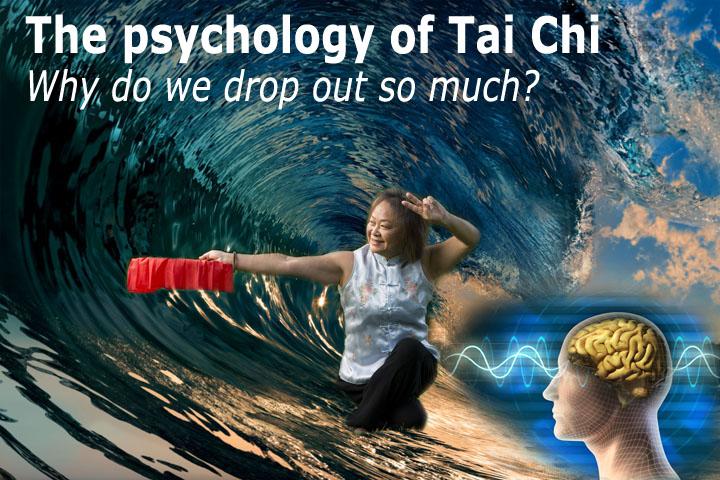
Why do we drop out of Tai Chi so much?
Given science's proof Tai Chi profoundly improves our life on many levels,
isn't it really
a bit crazy not to stick with, learn, and do Tai Chi all our lives?
SO WHY DO WE DROP OUT? If we can understand this it helps us come back to Tai Chi, stick with it, and change our lives. (It did for me).
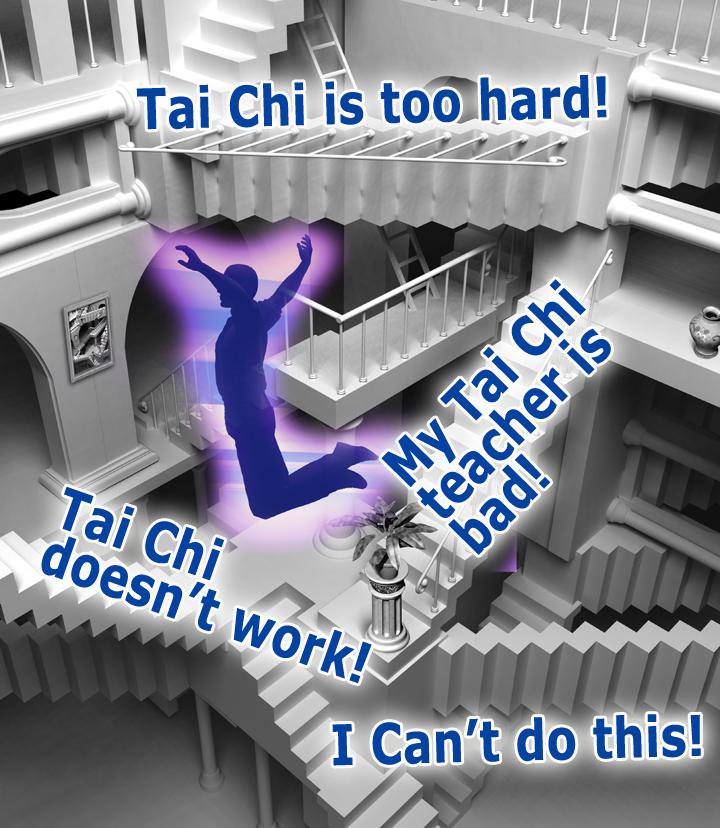
Education experts say the #1 reason we drop out is because we don't really think we can achieve it/the goal of learning Tai Chi and Meditation. This can manifest in many ways,
we can
put ourselves down, or
put Tai Chi down, or
put the teacher down, or whatever ...
but the end result is "we give up on something that science is showing us can profoundly improve our life on all levels."
TAI CHI CHALLENGE #1:
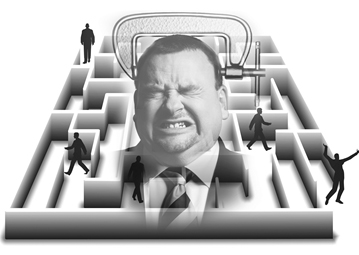
Tai Chi challenges our URGENCY in a fast paced URGENT world ...
Tai Chi is slow and mindful ... and our mind may spin and wander ... this can be irritating because we've been taught our whole lives that "fast is good."
|
"Nature does not hurry
yet everything is accomplished ...
To the mind that is still
the whole universe surrenders."
-- Lao Tzu, Tao te Ching
Rock legend, Bruce Springsteen (The Boss) had a great line on this subject, in a song he wrote about some girl ... he wrote/sang:
"Your life was one long emergency ..."
|
This "rush" or "urgency" you feel when Tai Chi slows you down is a microcosmic glimpse of how you live your life outside the Tai Chi class. IF you stick with Tai Chi, you will discover that your life does NOT have to be "one long emergency." You will learn to breathe, and relax, through your Tai Chi learning process, and your Tai Chi practice. And this will resonate out into and throughout your life, building a Zen quality to your daily life ... where you savor moments ... breathing ... relaxing.
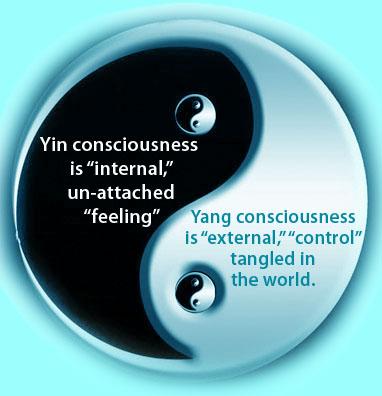
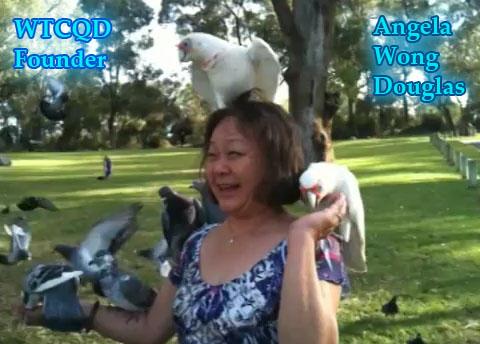
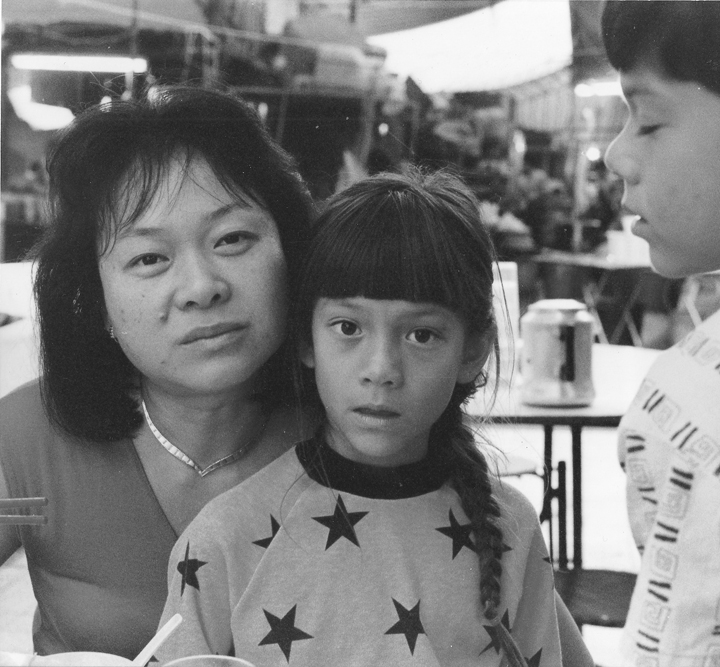
I had a wonderful Tai Chi learning environment because my wife, Angela Wong Douglas, was from Hong Kong and steeped in traditional Chinese culture. Her presence in my life ... her example ... her knowledge ... helped me understand why Tai Chi can seem so odd/foreign to Westerners (like me) ... and how to share these insights with my students struggling to grasp Tai Chi's mind-set or psychology. Over time I realized that we came from two worlds: me, the Yang Masculine Western world, and her the Yin Feminine Eastern world. (This isn't about sexuality, it is a way of approaching the world that can be exhibited by men or women, irrespective of gender. Lao Tzu was a man, but behaved in a very Yin-Feminine nature.)
I would see her ... taking time ... smelling the flowers ... observing the dynamics of nature ... and in time this expanded my Tai Chi journey, and I realized over the decades of her influence, coupled with my Tai Chi journey that there is "another way to live," a "yin way to live," and that my life did not have to be rushed ... did not have to be one long emergency. Yin is receptive, contemplative. Yang is dynamic, control.
She and Tai Chi showed me that there is an "internal world" that is a calmer center than the outside manifest Yang world. Western ideas of life are the "world
out there
" is the "real" world, and that
our internal experiences
, senses, and feelings are just unimportant interferences to our controlling and manipulating the "world
out there
." Angela's Eastern insights coupled with my internal arts Tai Chi journey, showed me that the contemplative Yin approach to life; feeling, observing ... was an option for living ... whereas prior to that I had been steeped in the idea that controlling the world out there was the only way to move through the world.
This internal world of the heart, mind, and internal energetic nature, sometimes referred to in Qigong as the "shining palace" had many secret passageways, ball rooms, studies, lounges, conservatories, hallways to explore and discover within ... but, my Western way of being had taught me that all of this "internal" experience was unimportant at best, and unreal at worst ... and that I was supposed to ignore all the rooms and passageways of this grand shining palace within ... climb up to the attic ... and stare out those 2 top windows ... because the only "real" world was the world "out there."
[Note: This isn't meant to indicate that ALL Chinese people grasp this, many are locked in the same modern Yang energy rush as Westerners are. But, Angela's mother was a Tai Chi player in Hong Kong, and her parents were traditional Chinese people who had been raised in a more mindful way of living, with traditional Chinese philosophy, etc.]
TAI CHI CHALLENGE #2:
Tai Chi challenges our balance ...
"Mastering others is strength
mastering yourself is true power."
-- Lao Tzu, Tao te Ching
|
This "Yin" internal, contemplative mindset that Tai Chi can cultivate enables us to see that the challenges to our balance are not us, and do not mean that "we are bad" or that "we are uncoordinated," or any of the self-defeating self-judgements that give us an out to quit Tai Chi ... no, this Yin approach is one of non-judgmental self-observation. We "experience" our balance challenges as "life experiences" and not opportunities to put ourselves down. Our Western Yang view of ourselves and the world is that we should "always be in control" and feeling our balance being off feels "out of control" and therefore "bad." A Yin approach is to be "entertained by the situation" or sensation, and not feel "threatened" by it.
We are not used to moving slowly, with weight on one leg, and we feel ourselves drifting in and out of balance. Here is what I remind new students when I see them getting frustrated by the balance challenge.
When we are sitting at home in our Easy-Boy-Recliner our balance is PERFECT.
BUT, it is getting worse and worse each day. When we do Tai Chi we often feel ourselves on the "edge of balance." That challenge we feel is actually "the sensation of our neural system sprouting new neural connections between the mind/body, left brain /right brain, and different parts of our body.
So, when you practice Tai Chi and that little voice in your head starts taunting you with "Your balance is bad! Your balance is bad! You can't do Tai Chi, because your balance is bad!" Tell that little voice to "Shut up! Because you are busy sprouting new neurons!"
The challenges and disorientation we feel learning and practicing Tai Chi is not a BAD thing, it is a GOOD thing. That is the sensation of new neural connections, that is what it feels like to GROW.
AND as we practice Tai Chi, and we practice breathing and relaxing around these challenges ... THE BIG BONUS ... is that it changes the way we handle other life challenges. We become more likely to "breathe" and "relax" around other challenges in our lives. The microcosm of Tai Chi and Qigong Meditation practices, give us a view of how we treat ourselves out in the larger world, in our larger lives.
The Tai Chi Qigong Meditation Journey gives us a safe laboratory to practice breathing and relaxing around the sensation of being challenged, and being kinder and more patient with ourselves ... so that out in the world we do this more as well, and become more adventurous and less self critical.
On the balance issue, I tell my students how I used to "berate myself" in the beginning about "how bad my balance was" until I had the big EPIPHANY. That epiphany was when I realized that that "disorientation" I felt with balance, etc. in Tai Chi ... was actually part of the ride ... as if Tai Chi were a carnival ride. When we go on a carnival ride we know going in, that we will feel our balance getting tossed around ... but we don't tighten and brace against it if we want to "enjoy the ride." Rather, we let go and let the ride spin us around ... the disorientation is part of the FUN ... and when we get that we stop squeezing and self criticizing ... and we spend more time going "Wheeee!" in Tai Chi and also in our lives.
TAI CHI CHALLENGE #3:
On Qigong Meditation ...
|
"He who knows others is wise.
He who knows himself is enlightened."
-- Lao Tzu, Tao te Ching
|
Often we think "I'm not meditating right." or "Meditation doesn't work on/for me." "My mind keeps spinning. I can't stop thinking."
THIS IS NORMAL ... YOU ARE NOT ODD ... and, something good is happening when you meditate and your mind spins ...
your psyche is actually unloading data and debris that has loaded up in your consciousness.
This has been causing you distress and stress that makes you feel uneasy, unable to sleep or sleep well, lowered immune function, irritability, not motivated by life, depressed, anxious, etc. etc.
When we meditate, we make space for stuff to ... unload ... from our psyche, mind, field. What do we do when our mind spins?
We don't get tangled up in solving problems or rehashing old battles ... we become aware as the tip of our tongue lightly touches the gum line behind our top two front teeth ... and we let our abdomen or lower lungs open to a full breath ... feeling the breath fill us all the way up to the chest ... and then as the entire body "lets go" and sighs that breath out ... our mind too can sigh and let go of its grip around the things flowing through our mind.
Those thoughts may come right back, but we just come back to the breath, the letting go, the mind sighing and unhinging ... over and over. We play at the art of "letting go."
WHY? Because this allows our psyche to unload ... people you live and work around begin to notice you aren't in panic mode as much, and are more enjoyable to be around. HOW?
When you look at a mud puddle on a hot summer day ... you see steam/vapor rising off the mud puddle. It looks like a consistent thing that isn't changing ... but if you stared at that puddle all day long, eventually it would dry up.
JUST LIKE WHEN MEDITATING ... AND WAVES OF THOUGHT COME AGAIN AND AGAIN ... YOU DON'T THINK ANYTHING IS HAPPENING AS YOU BREATHE AND LET GO ... but, in reality, your mud puddle of the mind is clearing, and it will be evidenced as positive changes in your health, life and with the people in your life around you.
HOW TO HANDLE SPINNING MIND ...
Accept that it is normal, worse sometimes, less worse other times. When doing Sitting Qigong or Moving Qigong mindfulness meditation, let your awareness sigh and let go ... and "open" to the sensations of the body in motion, the gentle massaging if your are doing Moving Qigong.
When the mind starts spinning with thoughts, just come back to the Tip of the Tongue touching the gum-line behind the top 2 front teeth ... feel the tactile sensation of the tip of the tongue touching there. This begins to take you out of the busy-yang-left-brain-control thinking ... and back into tactile, right-brain, yin, experiential states where you don't control ... you just feel. You don't try to feel, you just let go and feel.
Become aware of your breathing, how your lungs fill from the diaphragm up throughyour chest ... and sighing/relaxing the breath out of the lungs as the entire body, mind and heart "let go." Your awareness will once again be filled with the pleasure sensations of the body letting go, loosening, and being massaged if doing Moving Qigong.
This is how we get out of the left-brain-control-yang mind, and back into the Yin, experiential, right-brain mindful meditative mind. As we do this over and over again, playing at the "art of letting go" the mind and nervous system are "unloading" stuff they've collected. The streams of consciousness that come again and again are not static ... they are unloading ... as we come back to the breath, the sensation, the art of letting go.
If we practice regularly, this torrent of thoughts becomes less torrential ... and we become more adept at "losing ourselves" in the flow, the loosening, the sensations of being and motion. The end result is we sleep better, our high blood pressure goes away, perhaps our blood sugar levels become more stable, and on and on.
|
Dear WorldTaiChiDay.org,
Thank you so much for all your beautiful actions for
Peace and Beauty on our planet Earth.
Love
|
TAI CHI CHALLENGE #4:
UNDERSTANDING OUR "
RESISTANCE
" TO GROWTH ...
|
"When I let go of what I am
I become what I might be."
-- Lao Tzu, Tao te Ching
|
When we start Tai Chi we think, "Why, I don't have any resistance to growth. If I did, I wouldn't be here in a Tai Chi class."
However, that initial enthusiasm often dies a slow, silent, quiet death over the weeks of a Tai Chi class. My teacher often addressed this tendency, giving it a name, calling it "Our Resistance."
Resistance takes on many forms, but all the forms come from a common foundation, and that is that there is a part of us, as humans, that simply does not like change. As cool and sexy and exciting as new projects appear when we find them in the class catalogue ... the shine wears off when something like Tai Chi starts to put us through changes.
Tai Chi puts a human through more change than perhaps anything on the planet, challenging us mentally, emotionally, and physically.
Mentally we face several challenges; trying to memorize the Tai Chi movements, trying to reschedule our lives to make practice time, etc.
Emotionally it challenges us a great deal, when we realize our balance is not as good as we thought it was; our proprioception (awareness of our body in space) and dexterity aren't as good as we thought they were, etc.
Physically Tai Chi challenges us because the slow mindfulness of Tai Chi makes us acutely aware of ourselves at first, and we feel a bit clutzy learning new movements, and feel a bit off balance ... and this can cause earthquakes in the head, where we feel mentally and emotionally stressed and out of sorts.
So, our Resistance starts to kick in ...
Resistance can take many forms. When I started Tai Chi in the 1980s the TV series "MASH" was a big deal, and my Tai Chi class fell on the same night that MASH came on (no reruns back then, if you missed it, you missed it).
So, when driving home from work ... my Resistance (a little voice in my head) would say, "Bill, look, there's a liquor store right there on the corner ... if we stop and get a 6-PACK we can be back home in time for MASH and we can have cocktails with Trapper John and Hawkeye and the gang ... rather than going to that Tai Chi class thing, where we feel challenges and uncoordinated."
Many nights, my Resistance won out. Problem was that I didn't sleep as good that night, and didn't wake up refreshed and excited about a new day like I would have if I had gone to Tai Chi class instead.
So, over time, I was wise enough to figure out that Tai Chi was my best option, and eventually went to class 2 or 3 times a week, and really got into it, practicing at work during breaks, and when I got home from work so I could exhale and let go of some of the work stress from the day ... and have a more pleasant evening.
Now, after teaching for 25 years, I have seen Resistance take on all kinds of forms. I see students getting so frustrated because they can't remember movements, can't remember to practice during the week, and feel their balance and uncoordinated movement tripping that derogatory Resistance voice in their heads telling them, "Your balance is bad. You don't practice like you should. You should give up on Tai Chi."
But, as my teacher warned me many years ago ... Resistance is not always "internal." Students can "externalize" resistance and blame the teacher, the class organization, the Tai Chi style, or whatever for their challenges. When they do that it is hard to help students get through Resistance.
I've had students drop out of class because of "too many movements to fast" or conversely "not enough new movements fast enough." Or, "too much explanation," or "too little explanation." You see the pattern here ... it is always something.
When Resistance kicks into high gear ... it will find a way to talk us into dropping out of Tai Chi, and it doesn't have to make any sense at all, all it needs is to find an escape hatch.
Problem with fleeing is, we look back years later and realize we could have changed our lives in profoundly better ways ... if we hadn't let Resistance win.
I happened to run into an older woman at the university hospital I teach Tai Chi Meditation at. She had dropped out of my class 2 years before, and was flustered seeing my, trying to explain 'why she had dropped out.'
She stammered, "Hi, er, sorry, I had to drop out of Tai Chi. My balance was too bad."
I WANTED TO SLAM MY HEAD AGAINST THE NEARBY BRICK WALL ... :-) I'm exaggerating slightly, but not much. My brain was screaming in my head, OH, MY GOD, HOW FANTASTIC YOUR BALANCE WOULD BE TODAY IF YOU HAD BEEN DOING TAI CHI FOR THE LAST 2 YEARS ...
Resistance is a thief, robbing us of a life adventure ... and of profoundly beneficial health benefits.
Medical research has proven that Balance is by far best improved by Tai Chi. Nothing out there improves balance more than Tai Chi according to research. I have gotten patients referred to me by neurology departments and a neurologist who sent all of his patients dealing with balance issues to my Tai Chi classes because the neurologist knew the research on Tai Chi for balance.
Tai Chi is a game to play ... when we play a game; poker, gin, hearts, tennis, golf, video games, etc. etc. etc. ... we face challenges ... and that is the fun ... if there were zero challenges it would be the most tedious thing in the world.
What you will find if you stick with Tai Chi, is that the movements that gave you the most trouble and turmoil when learning them ... become the most satisfying experiences in your Tai Chi practice once you grasp them.
And Tai Chi's journey is a microcosm of your life. As you practice breathing, relaxing, and flowing into and through the challenges ... we start to do this in our larger lives. Our lives become less fearful and more adventurous. Life is short. Opt for adventure!
Resistance's main goal is to keep us planted in front of a TV in a recliner with a bag of chips ... facing no challenges ... no adventure ... seeking a sedateness that is ever elusive.
HOW DO TAI CHI & QIGONG WORK?
Its not just the movements, most research is showing that a mind-body mindfulness quality to Tai Chi produces best health outcomes in studies.
What is "mindfulness"?
This is when we "get out of our head" and allow our mind to be filled with the "sensations" of our body in motion. When we are "feeling" we are not "thinking," and visa versa.
Tai Chi & Qigong's mindfulness, total awareness of the "internal sensations" takes our brains out of the "Beta" busy-brain wave state, and into the "Alpha" meditative state, which is how all the chemical reactions and releases are triggered that have such profound affects on our health; mentally, emotionally, and physically.
Without the mindfulness and the Alpha wave shift, Tai Chi's benefits are more limited.
When we enter a state of mindfulness, we let go of left brain/linear thought "control" and we become "observers" or "passengers" witnessing the events or sensations appearing to us and passing through us.
This letting go of control, using full Qigong breathing, and visualizations of "letting go" or "sinking" (is the common Tai Chi term), we create Relaxation Responses that echo beyond our Tai Chi and Qigong practice into all aspects of our lives.
We often see High Blood Pressure normalize, we see A1c, blood sugar levels, normalize, we see immune system's Helper T-Cell counts increase dramatically.
But, we also mentally and emotionally begin to feel less isolated in the world, less alone. Some think this is a result of the brain changes that occur with the neuroplasticity Tai Chi and Qigong are shown to promote (neuroplasticity is the physical changes in the nervous system produced, in this case by Tai Chi and Qigong).
But, this may be putting the "egg before the chicken."
Because "when we let go" in the "sinking" in Tai Chi, and we allow the Tai Chi moves to "flow through us" as we "relax out of the way," we often have a sense of "losing our sense of self." In Zen terms, we "become the flow, or become the movement or force flowing through us."
This state only comes after repeating Tai Chi movements hundreds/thousands of times. But, it can be felt much more quickly in Sitting Qigong / Nei Gong Meditation, or in Moving Qigong meditation ... because these are simpler to learn, so you can move more quickly past the left-brain/memory/memorization to the state of letting go. Tai Chi moves, being more complicated, take more time to get familiar enough to let go around them.
But, when we achieve that state of "losing ones sense of self" for moments at a time, this is more than a hypnotic experience ... this is when we "merge with the field" from whence all things emerge from, and where all things are connected. When in this state, we are connected to EVERYTHING. Many Tai Chi masters would recognize this as "merging with the Tao," or "becoming one with the Tao." Other mind-body masters have associated this with Quantum Physics' "unified field" or "quantum field," an energetic field that permeates the universe ... some might call it "the vacuum." But, the vacuum isn't "empty" it is a field of potential energy, from whence all things in the universe, all atomic particles that make up the known universe emerge from.
The Tao that can be expressed is not the eternal Tao; The name that can be defined is not the unchanging name ...
The nameless [Tao] is the beginning of Heaven and Earth. The named is the mother of all things ...
These two are the same in source and become different when manifested.
This sameness is called profundity. Infinite profundity is the gate whence comes the beginning of all parts of the Universe.
-- Tao te Ching, by Lao Tzu
|
HAVE YOU SEEN THIS MIND BLOWING DOCUMENTARY?
The "Feedback Loop" our consciousness creates the universe we live in through.
I encouraged my Tai Chi students to watch this, and those who did were amazed, and moved, and excited by it. It stimulated a discussion on the commonalities between Physics, Chaos Mathematics, and Taoism (Tai Chi philosophy.)
I know some in the Tai Chi world repel away from considering the consciousness aspects of Tai Chi and Tai Chi's Taoist philosophy ... but if you look at it, it is not mystical but rather a high science.
We shouldn't be dissuaded from looking at science, because some people don't like science.
Some in the Tai Chi world are afraid of getting labeled "new agey" or other derogatory terms that may give us a "reputation."
Personally, I have heard all the terms slung at me by narrow minded teachers afraid of looking at data they haven't looked at yet. My philosophy is this ...
"If you haven't gotten a reputation yet ...
you haven't lived big enough."
-- Bill Douglas, Founder of World Tai Chi & Qigong Day
Don't let others define you, or limit your exploration of yourself and your relationship to the universe. Life is too short. We cheat ourselves out of too much life to remain small so that others won't make fun of us.
IMPORTANT SUGGESTION: If you watch the above documentary on Youtube, don't watch it on your computer IF you have a SMART TV. Rather watch it on your television screen so you can kick back and watch it like a movie. It puts your brain in a whole different mode ... watching on a computer is fast, work, a task ... watching it on your TV is relaxing, entertainment ... a wholly more "open" way to view this amazing documentary.
THE SOUND OF ONE HAND CLAPPING ...
A Zen Koan is a question that has no answer. They were designed by Zen masters to snatch the mind of students out of the Yang, linear, right-brain consciousness we live in ... in order to bring them into an altered state of greater possible insight.
When you start to look deeply into Quantum Physics' description/understanding of reality, you begin to find that our entire universe is a Zen Koan.
"Did you know that the electrons of the atoms making up the universe
only exist in form when they are being measured? Without human
consciousness observing them the electrons are everywhere all the
time, not a point or entity in space/time. If that isn't a Zen Koan,
I don't know what is."
-- Bill Douglas, Founder of World Tai Chi & Qigong Day
SUGGESTION: We recommend that you do NOT watch this documentary on your computer, but rather, if you have a SMART TV, watch this on Youtube on your SMART TV. Your consciousness is in a different state bending over your computer, than it is relaxing on your sofa watching TV. You want to kick back, relax, and let this wash over you.
Recommended reading ... to augment your Tai Chi & Qigong journey
|
|
|
|
|
|
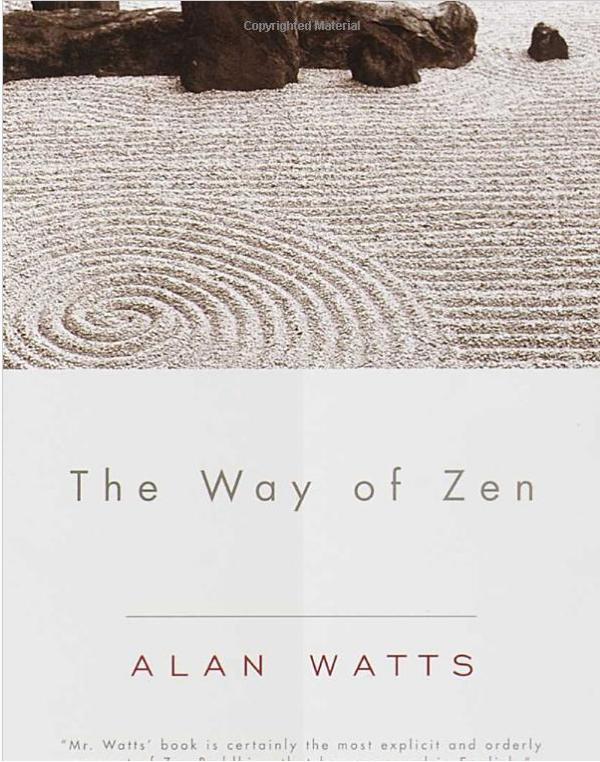
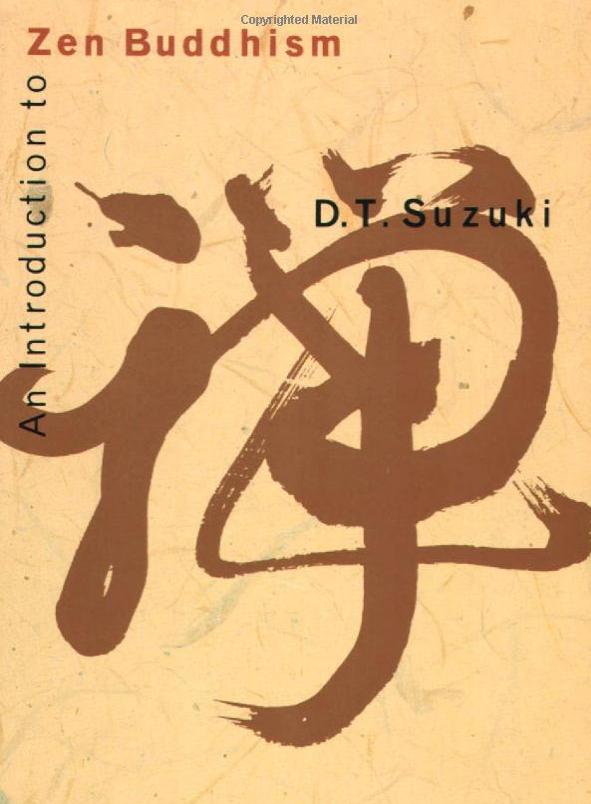
Zen Buddhism does not conflict with any religion ... for it does not worship deities... but rather is a mind-body science seeking the middle way to live ... |
by Alan Watts