|
|
World trade declining as U.S. faces 'tsunami of meat'
|
|
The U.S. Meat Export Federation (USMEF) recently marked its 40th anniversary during its Strategic Planning Conference in Carlsbad, Cal., and while significant changes from the past have come to fruition, the organization is looking to the future.
"This week, there will be many remembrances of what we've accomplished in this organization over the past 40 years, and everyone here should take great pride in that, but for most of you, it's not the past that drove you to attend this meeting. It's about what we're going to do today, tomorrow and into the future," Philip Seng, USMEF president and chief executive officer, told attendees.
|
|
HATCH donates more than 29,000 eggs, kicks off Kroger match
|

HATCH for Hunger announced today that is has donated 293,760 eggs to 17 different food banks across the Midwest to help nourish the food insecure. Additionally, HATCH and Kroger Co. announced that all donations made at the Kroger checkout, online or via text-to-donate from now through the end of 2016 will be matched by Kroger.
"HATCH is innovation and collaboration at its best," said Carmen Cumberland, executive director of Community Harvest Food Bank of Northeast Indiana. "Eggs are one of our most requested items, and we are always in short supply. HATCH is a new way that brings together the egg farmer, grocery stores and consumers to find ways to fund and supply the quality nutrition we want to provide our families in need."
HATCH is an organization seeking to help consumers provide high-quality nutrition and protein - through the package of an egg - to undernourished people. HATCH is made possible by partnering with grocery stores, farmers and local food banks. Kroger, Rose Acre Farms and Elanco Animal Health launched HATCH in April 2015 in 65 Kroger stores in Indianapolis, Inc. The program has since spread and is serving more than 17 food banks across all of Indiana and parts of Michigan, Illinois, Missouri and Ohio.
|
|
Dairy checkoff launches partnership with Yum! Brands
|
|
Building on its successful partnership to help grow sales and trust for dairy in the U.S. , the national dairy checkoff announced a partnership Nov. 3 with Yum! Brands to grow U.S. dairy sales internationally, specifically in the Asia-Pacific as well as Latin America and the Caribbean.
Yum! Brands, the parent company of Kentucky Fried Chicken (KFC), Pizza Hut and Taco Bell, with nearly 43,000 restaurants in 135 countries and territories, is the global leader in the chicken, pizza and Mexican-style restaurant food categories.
The dairy checkoff's international partnership focuses on pilot programs with KFC and Pizza Hut.
The pilot program with KFC aims to grow U.S. dairy sales in Latin America and the Caribbean by exploring innovation opportunities like cheese sauces and pairings to complement KFC's signature international products, such as chicken sandwiches.
Read more
|
|
DMI's Gallagher outlines consumer trust plan
|
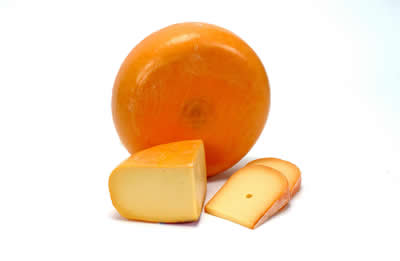
Growing sales of dairy here and abroad and increasing consumer trust highlight dairy checkoff priorities Dairy Management Inc. (DMI) chief executive officer Tom Gallagher delivered during the 2016 joint annual meeting of the United Dairy Industry Assn., National Dairy Promotion & Research Board, and National Milk Producers Federation in Nashville, Tenn.
Speaking to more than 800 dairy farmers and industry representatives, Gallagher unveiled how DMI, which manages the national dairy checkoff, will partner with Yum! Brands, the parent company of Kentucky Fried Chicken (KFC), Pizza Hut and Taco Bell, to bring U.S. dairy to international markets.
Gallagher said this is another example of how dairy farmers and importers benefit by working "with and through" powerful foodservice partners to sell more dairy. He said checkoff partners such as McDonald's, Domino's, Taco Bell and Pizza Hut have helped move more than 5.5 billion lb. of additional milk over the last 52 weeks through domestic cheese sales.
|
|
Meat, poultry industries improved safety records in 2015
|
|
The incidence of non-fatal occupational injuries and illnesses in the poultry sector, which includes slaughter and processing, remains at an all-time low, according to the "2015 Injury & Illness Report" released Friday by the U.S. Department of Labor's Bureau of Labor Statistics (BLS).
"Clearly, the positive trend of the past two decades continues, with overall industry rates improving slightly," the North American Meat Institute (NAMI) said regarding the change from 5.5 cases per 100 full-time workers per year in 2014 to 5.4 cases in 2015. "We don't expect large improvements at this point, given how far we've come, but it is gratifying that actual results continue to trend in the right direction. The 2015 meat industry safety results reflect the lowest rates on record," NAMI said.
The total recordable poultry processing illness and injury rate for 2015 was 4.3 cases per 100 full-time workers per year - the same rate as 2014 and lower than the 2015 rate of 4.7 for the entire food manufacturing sector. The 2015 rate for poultry processing represents an 81% decrease from 1994 (the oldest data available on the BLS website), when the recorded rate was 22.7, demonstrating the enormous progress the industry has made in improving safety for its workforce.
|
|
Two large foodservice firms commit to slower-growing broilers
|
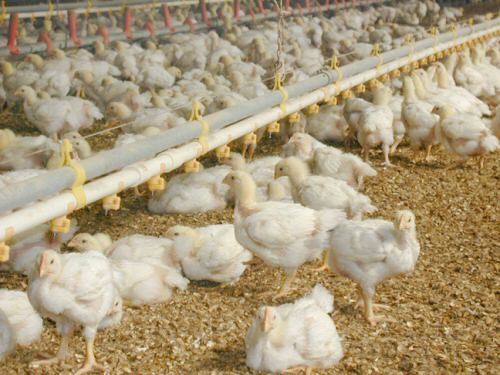
Compass Group USA and the animal welfare certification program Global Animal Partnership (GAP) announced Nov. 3 what they call "a historic and unique" animal welfare partnership in which Compass became one of the first foodservice companies to commit to slower-growing strains of chickens, improved living conditions and more humane slaughter. The announcement marked GAP's first-ever partnership with a foodservice company. Aramark also made a similar announcement on the same day with The Humane Society of the United States (HSUS) and Compassion in World Farming (CIWF).
"A cornerstone of our corporate responsibility platform is a long-standing commitment to sustainable sourcing with a priority on the well-being of animals raised by our independent suppliers," said Scott Barnhart, Aramark's senior vice president of global supply chain and procurement. "That commitment is constantly evolving and serves as the foundation for what we expect from our suppliers."
|
|
|
|
|
|