|
"Even a broken clock is right twice a day."
-My Dad
| |
|
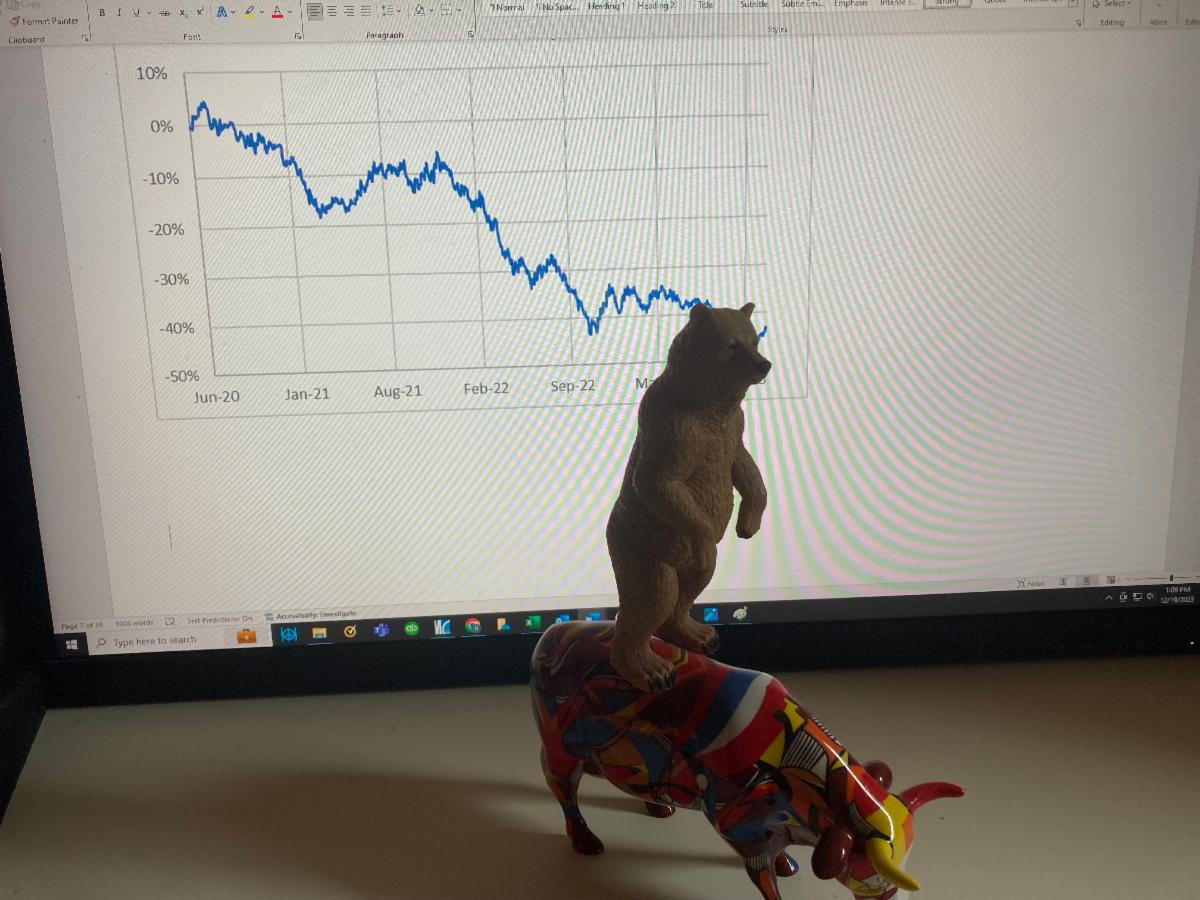
Yes, I've been cautious on the market for a while now. In 2022, I was a genius as falling stock and bond prices barely touched us. But in 2023 we've studiously avoided the small group of stocks that have risen precipitously and held onto T-Bills paying 5% and dividend paying stocks.
As 2023 comes to a close we have a very expensive market, inflation doggedly hanging around, an election year that is sure to be, um, contentious and a long lit of geopolitical hotspots around the globe. Let’s look at what’s happened and – maybe – what’s to come.
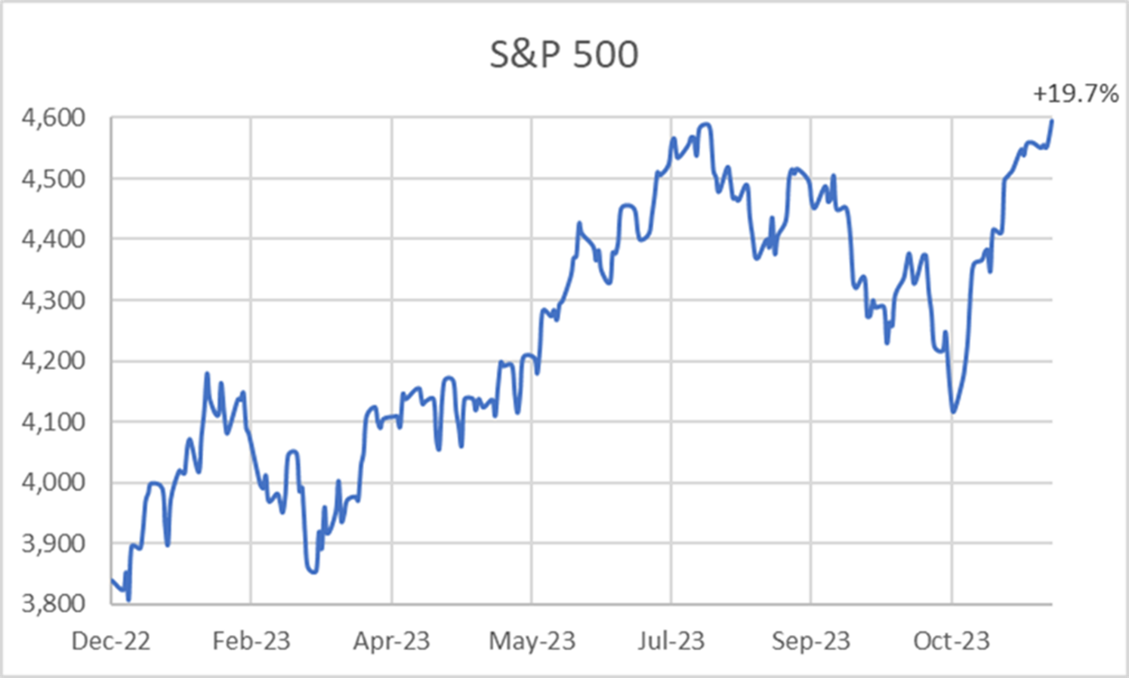
First off, the broader market, as measured by the S&P 500 is no bargain trading at a P/E ratio of 24.5.
So, yes, after a lousy 2022, the S&P 500 has had a nice year, notching about a 20% gain through the end of November.
| |
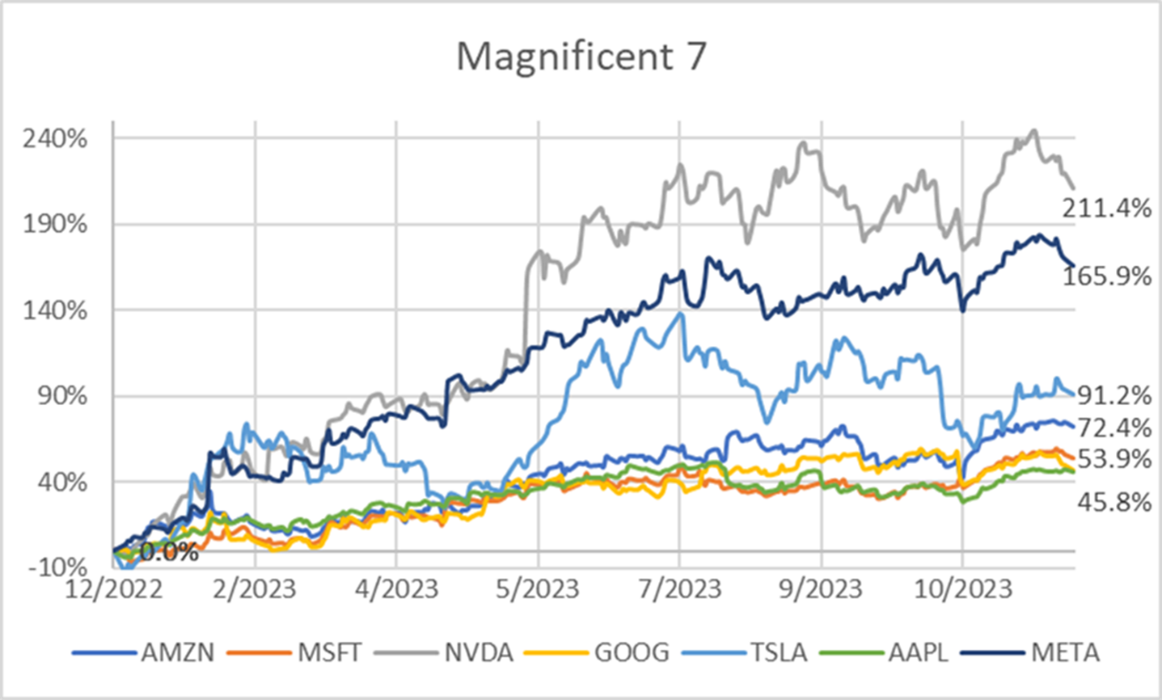
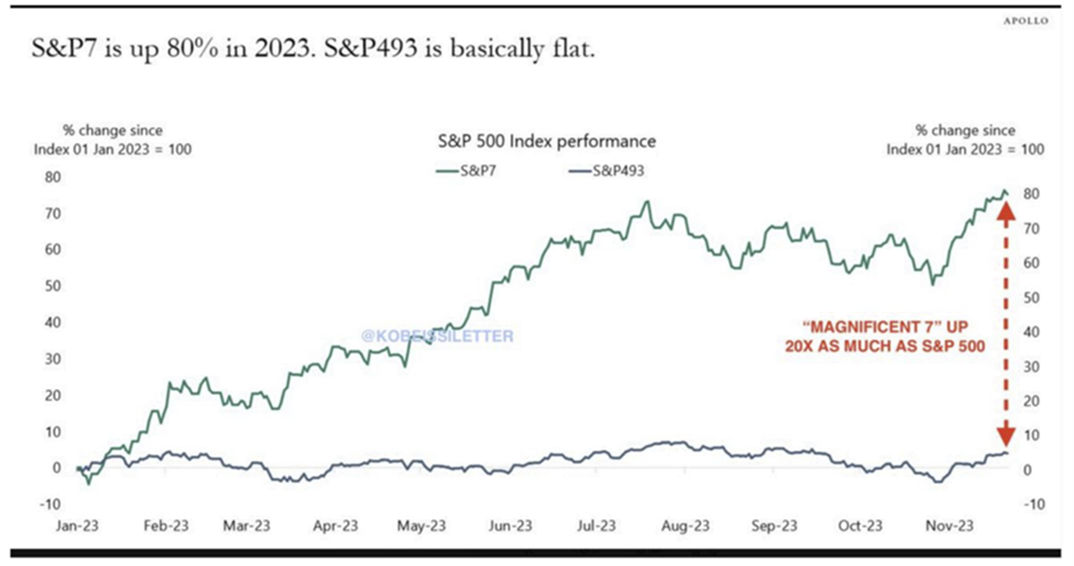
However, that gain hasn’t exactly been shared across the board. Earlier this year I wrote about the “Magnificent Seven,” and how they are single handedly (seven handedly?) pushing market averages to record territory. That has continued into the 4th quarter: | |
If we were to split the S&P 500 into the S&P 7 and the S&P 493, a much clearer picture of the 2023 investment landscape appears: | |
|
So, Magnificent Seven is up about 80% and everyone else is about breakeven for the year.
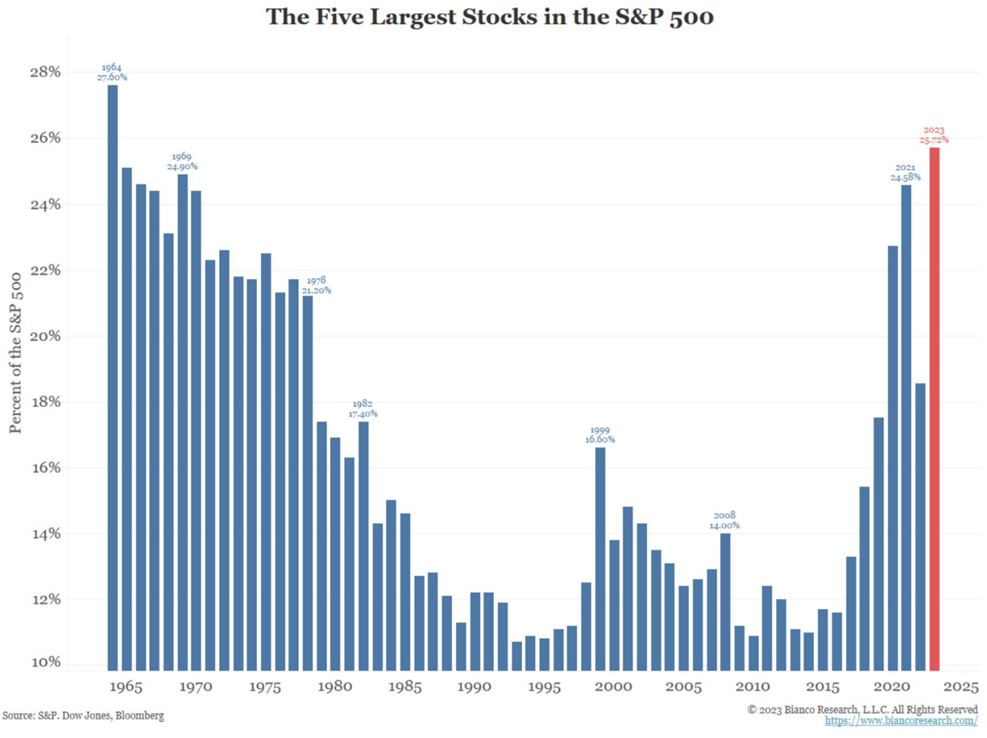
While markets routinely have leaders and laggards, this instance of extremely narrow market leadership hasn’t been this pronounced since 1964. The below chart shows the combined percentage of the 5 largest components of S&P 500 every year going back to 1964.
| |
|
But having this huge division between a few market leaders trading at nosebleed valuations and everyone else has created more than a few opportunities. For example, let’s take a quick look at Tesla and Stellantis. While you may not know Stellantis, you probably know the brands under their umbrella: Alfa Romeo, Chrysler, Dodge, Fiat, Jeep, Maserati, Opel, Peugeot, Ram and others.
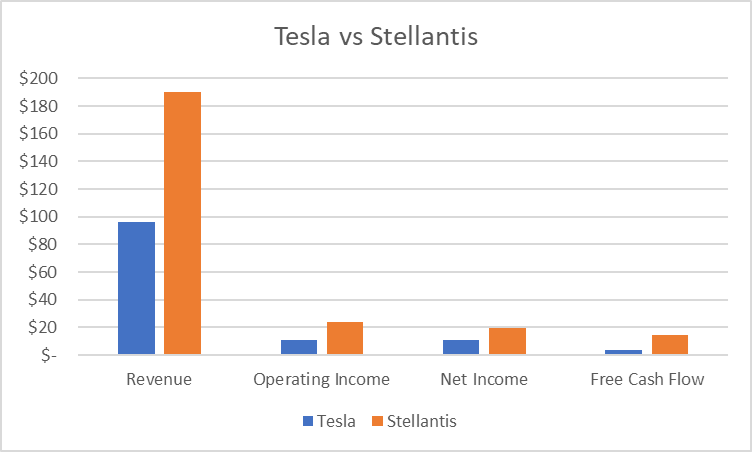
The last year’s financial results of the two companies look like this:
| |
|
In addition to beating Tesla substantially in revenue, income and cash flow generation, Stellantis also sports a 6.3% dividend to Tesla’s 0%.
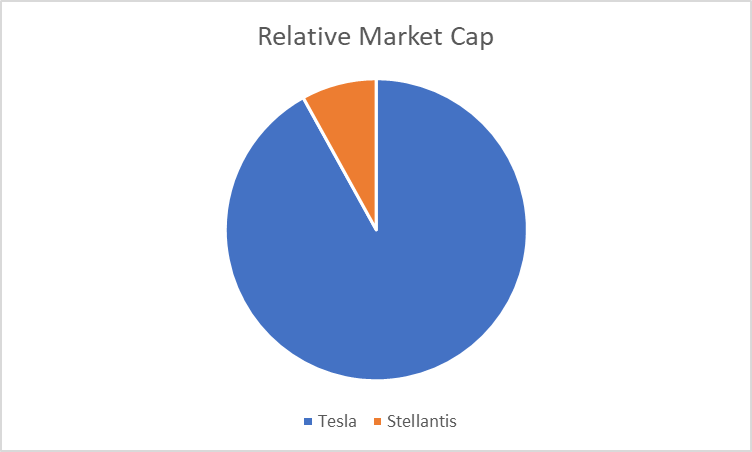
Mr. Market, however, forgetting for now that revenue, income and cash flow matter, has rewarded Tesla with a market capitalization (# shares outstanding x price per share) of $766 billion, more than 10 times that of Stellantis.
| |
|
Tesla currently trades at a P/E ratio of about 75 compared to Stellantis at 3.4. This disparity, while irritating to me and many others, creates an opportunity if there is a market retreat from current levels.
And Stellantis isn't the only one:
· Verizon is trading at a P/E of 7.8 and has a forward dividend yield of 7.1%.
· Verizon competitor, AT&T trades at a P/E of 6.5 and sports a dividend yield of 6.75%
· Former Covid-era highflyer PayPal is trading in the low 60s, down from over $300 in the Summer of 2021. During that time their revenue has climbed from $6 billion to $7.5 billion.
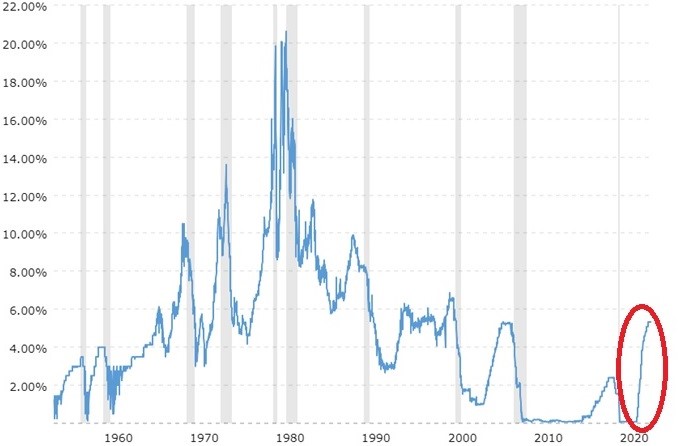
Of course, the big question mark hanging over the economy has been inflation and the Fed’s response. Starting in early 2022, The Fed took rates from zero to over 5% in just over a year and a half. Other than a wild ride in 1979-1980, this is the steepest series of rate hikes in the last 80 years.
| |
|
So now the question Wall Street is asking, along with Main Street, is “are they done?” It seems the answer is an unequivocal “probably.” And IF the fed is done raising rates, what comes next? Looking at the end of previous rate hike cycles reveals a few relevant points.
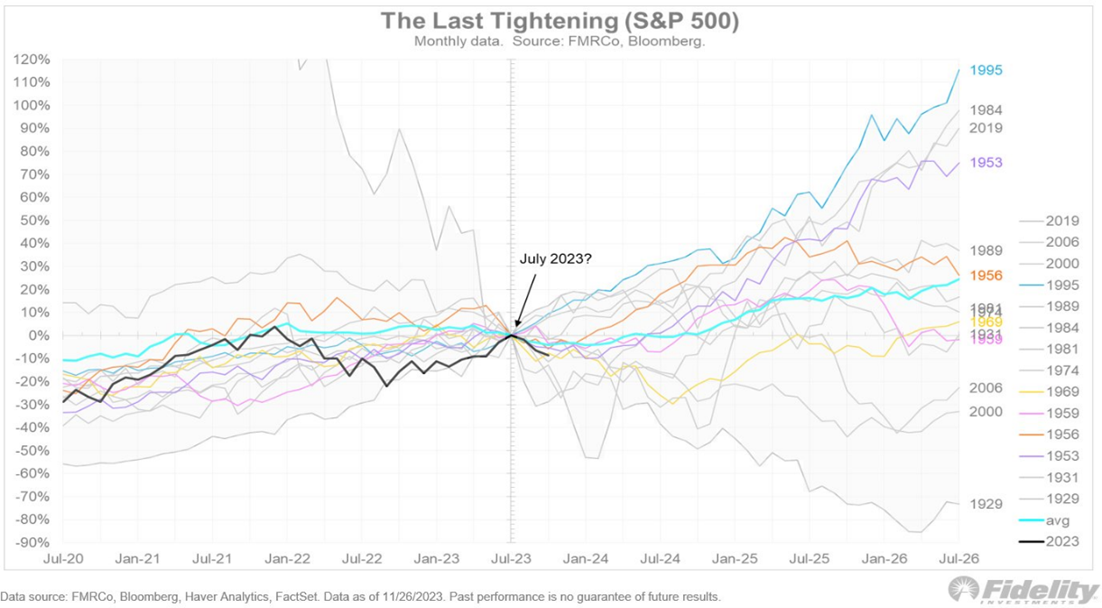
Q. When the Fed stops raising rates, what happens to the stock market?
| |
|
A. Just about everything. The ensuing 3-year period after the Fed stops raising rates has seen the market fall 80% (1929), rise 120% (1995) and everything in between. In other words, this isn't a very predictive data point.
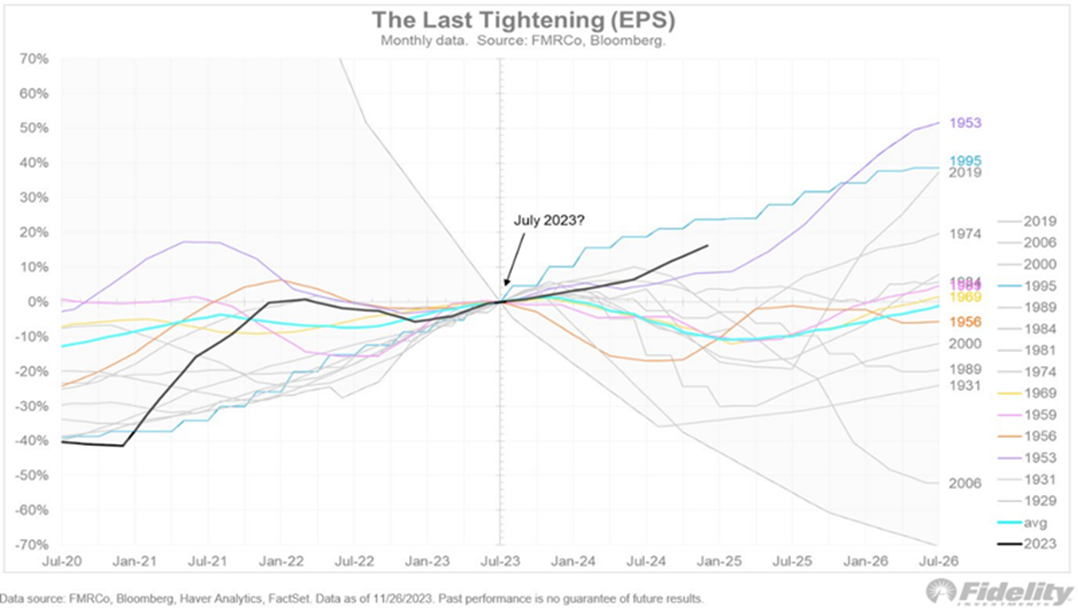
Q. What happens to corporate earnings in the 3-year period after the Fed stops raising rates?
| |
|
A. Earnings tend to decline slightly but occasionally rise. Again, no strong trend has been established in prior cycles.
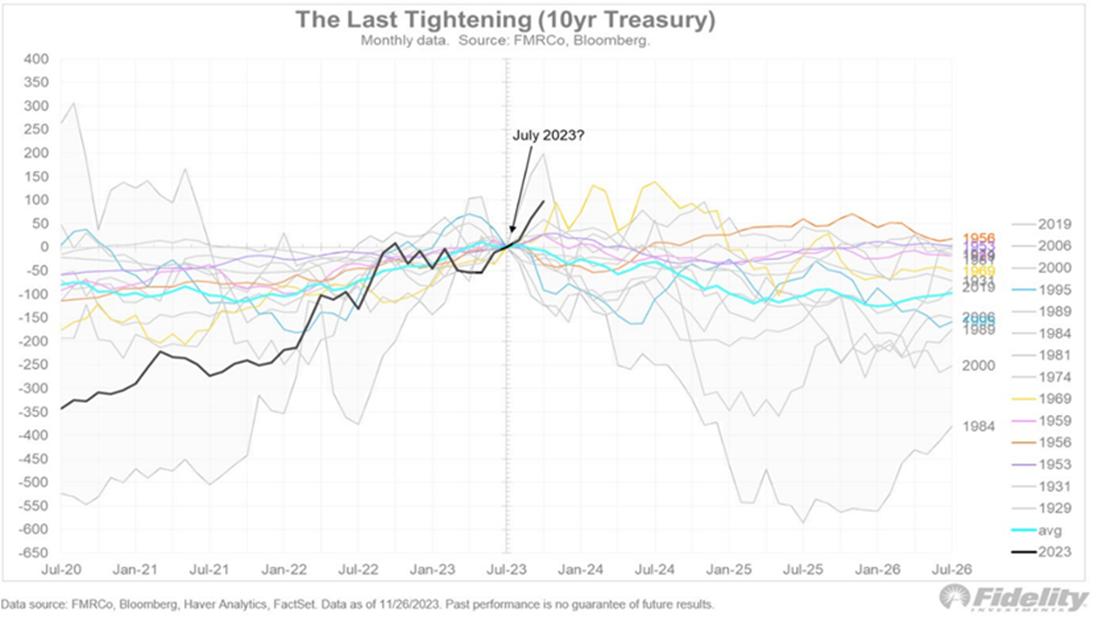
Q. What happens to bond yields after the Fed ends a tightening cycle?
| |
|
A. They stop rising. Finally, some information we can use. If the Fed is done raising rates, there’s a pretty strong case to be made for extending maturities and duration, i.e. shifting from short term T-Bills into longer term bonds.
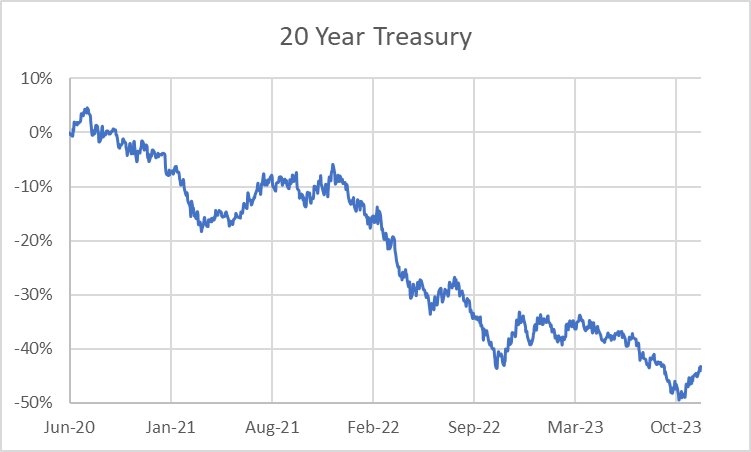
While it’s common to follow the ups and downs of stock prices, there’s been quite a bit of volatility in the long-term bond market the last few years.
| |
Yes, a US Treasury will pay off principal and interest in a timely manner…but that doesn’t necessarily insulate the holder from huge swings in price. After this massive pullback, this may well represent good value. Especially if the Fed is done hiking. | |
|
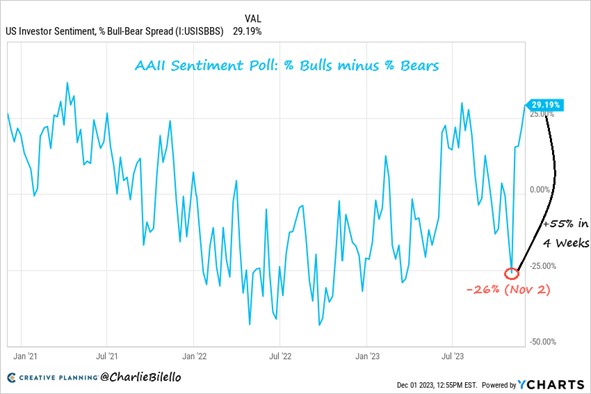
One of the most common signs of a market top is investor sentiment. The American Association of Individual Investors (AAII) publishes the results of its poll on a regular basis. The headline from their December 14th release reads:
AAII Sentiment Survey: Optimism Rises to Highest Level in Five Months; Pessimism Falls to Lowest Level in Six Years
Historically, individual investors have a remarkably strong track record of buying high and selling low. With pessimism at a six-year low and optimism swinging sharply upward (see the chart below) there is reason to tread lightly where equities are concerned. You can read the full AAII article here.
| |
|
The graph above just serves to underscore the AAII survey result as well as making clear this upswing in investor confidence has been very large and very quick.
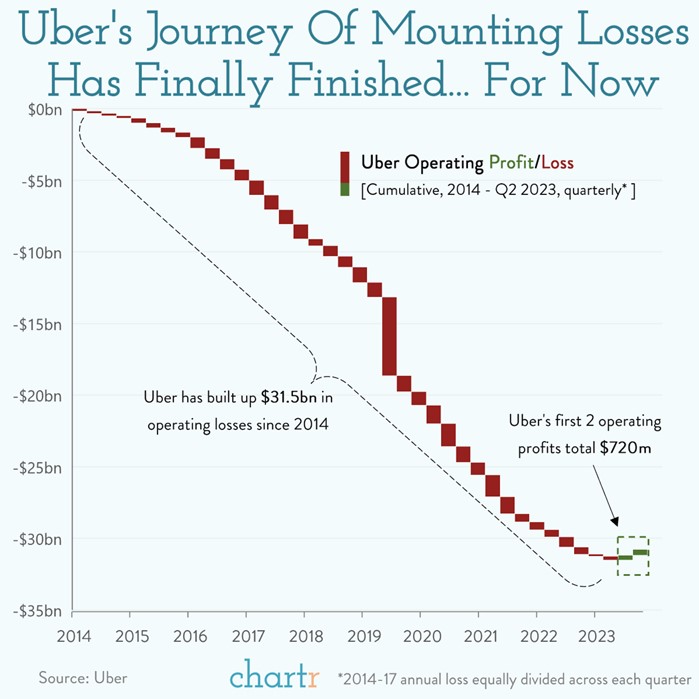
And just for fun, one more bit "Holy Cow, That's Expensive," outrage. Uber, with a market capitalization of just over $127 Billion, has finally made its first profit... after tallying $31 Billion in operating losses over the past decade.
| |
With this modest profit, Uber can now rightfully claim to have a P/E ratio. Unfortunately Uber is still laughably expensive at a P/E of 119. | |
|
So, to sum all this up:
- Markets, lead by a small band of extremely expensive companies, are due for a pullback.
- There are great values to be had so we will be adding a few new positions while we continue paring back ones that are a bit extended.
- If the Fed is done tightening, there is probably an opportunity in longer - 5 to 7 year - bonds
- We're not going to buy Uber, or Tesla, or Nvidia.
- I'm not sure how USC in the Big 10 is going to work out but I'm looking forward to seeing Wisconsin, Penn State, Nebraska at the Coliseum.
I wish all my friends and clients a happy holiday season. We're looking forward to a couple days off next week and starting off 2024 ready for a challenging year.
Thank you all for your patience, ideas, snarky asides, great jokes and, most of all, the trust you've placed in me to manage your assets.
Best regards,
Bob McClure
| | | | |