Connected Communities


Year of Progress for Connected Communities Projects

As we approach the end of 2024, I am reflecting on all the progress that the inaugural cohort of teams from the U.S. Department of Energy’s (DOE) Connected Communities (CC) initiative has made this year. Most of the projects have completed analysis of the distributed energy resource (DER) packages they intend to implement and have developed evaluation plans for assessing the success of project outcomes. Berkeley Lab, in their role as the CC National Coordinator, has published new research around CC business models and control architectures, topics which were presented at energy efficiency conferences.Two successful summits were held in New York and Utah that featured valuable peer exchange across the project teams, as well as panel discussions with industry stakeholders.We are excited to begin sharing success stories and cross cutting case studies as these projects move into their implementation phases. 


Please visit the Connected Communities website to keep up to date on these projects and the new resources being developed to support their progress. 


Cecilia Johnson-Hayman

Technology Manager

U.S. Department of Energy Building Technologies Office


Highlights from the Western Connected Communities Summit

In May of this year, the U.S. Department of Energy (DOE) convened the Connected Communities Western Summit hosted in Salt Lake City, Utah by Pacificorp, a lead partner on a CC project. The Summit brought together more than 70 attendees including DOE staff, CC project team members, and regional stakeholders.


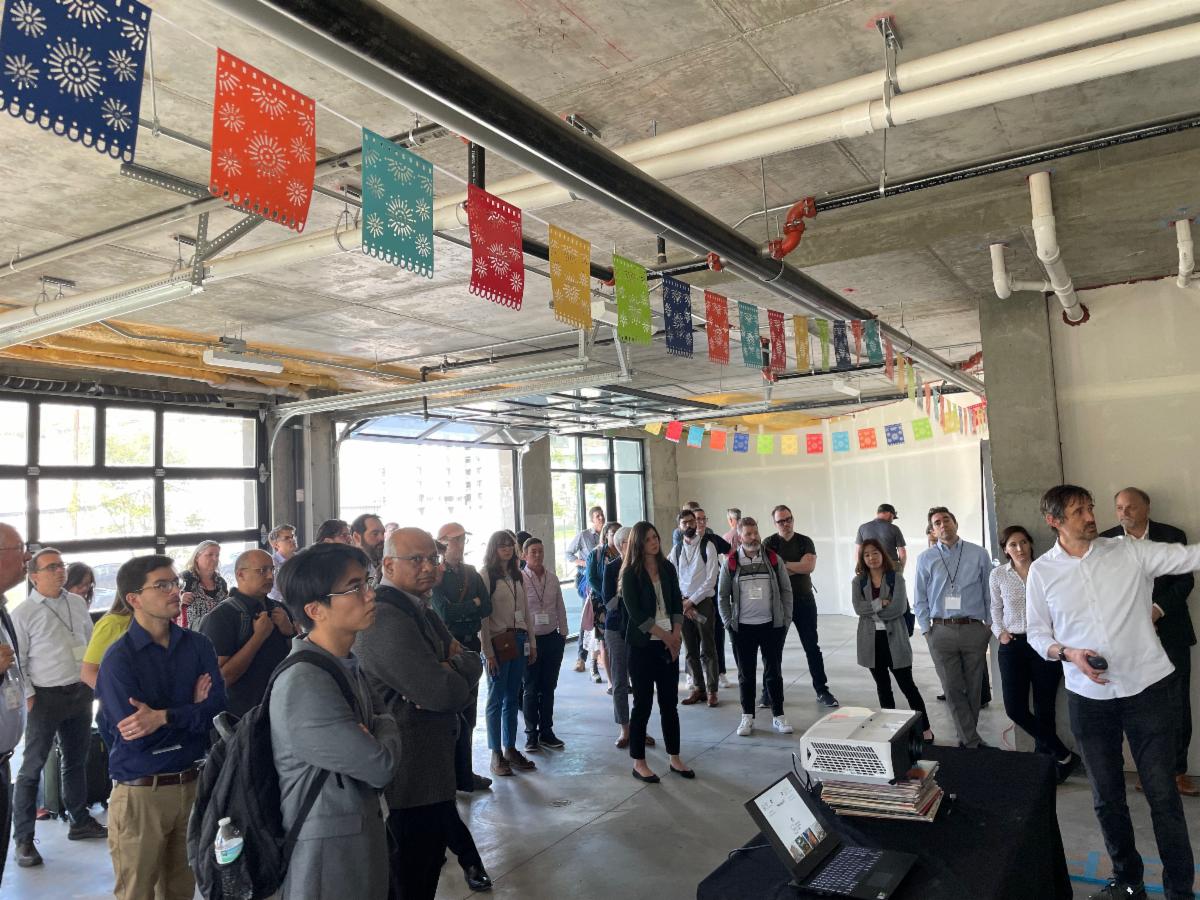
Day one included project updates and a discussion on issues and lessons learned from PacifiCorp, Edo Energy, Portland General Electric, Electric Power Research Institute (EPRI), and SunPower. The afternoon included a presentation from the California Energy Commission on the Electric Program Investment Charge (EPIC) Challenge projects as well as two panel sessions with staff from utilities, stakeholder advocacy groups, and a technology provider. The first panel, Connected Communities Scaling/Accelerating Distributed Energy Resource (DER) Deployment, explored areas that have momentum in the industry, the barriers that still exist, and how regulatory support can accelerate deployment. The second panel, Connected Communities Resilience, focused on how a connected community can support resilience, with specific emphasis on underserved communities. The first day concluded with a site tour of one of the Pacificorp project’s affordable multifamily apartment complexes called Citizens West, hosted by the Giv Group. Attendees saw electric vehivle charging/car share stations, battery and maintenance, and electric hot water heating.


Day two consisted of a half day of sessions among project teams, presenting insights from past pilot demonstrations as well as a presentation on the Basalt Vista, CO, a past community demonstration project. Two breakout sessions were also conducted, one focused on risks for project scaling and the other on testing and validating technology solutions.


“These community-driven programs are extremely valuable. The first-hand lessons and challenges shared at the summit inspire a collective and iterative process whereby we can work together to identify implementation strategies and best practices to advance replication and scaling.”

-Cammie Peterson, Deputy Director of Energy Systems, Innovation, and Strategy in the Energy Research and Development Division from California Energy Commission


[Photo: Western Summit attendees tour the Basalt Vista, Colorado community demonstration site]


Next Era of Connected Communities Expands Focus to Industrial Loads and Smart Vehicle Charging

This past July, DOE announced the Connected Communities 2.0 funding opportunity to demonstrate and validate grid-edge technologies in buildings, industry, and transportation sectors. CC 2.0 builds on successes and lessons learned from the first cohort of CC launched in 2020, which focused on integrating distributed energy resources to support a more variable electric grid. The new funding opportunity aims to foster development of new technologies that focus on distribution and grid planning strategies, in addition to accommodating increasing electric loads from vehicle charging, data centers, and industrial electrification.  


Up to $65 million of CC 2.0 funding is being issued by the Building Technologies Office, in collaboration with the Vehicle Technologies Office, Solar Energy Technologies Office, Industrial Efficiency and Decarbonization Office, and Geothermal Technologies Office. Submission deadline for applications is October 10, 2024, with selection notifications expected in Winter 2024/2025.


Technical Analysis: Distributed Energy Resource Management System Landscape

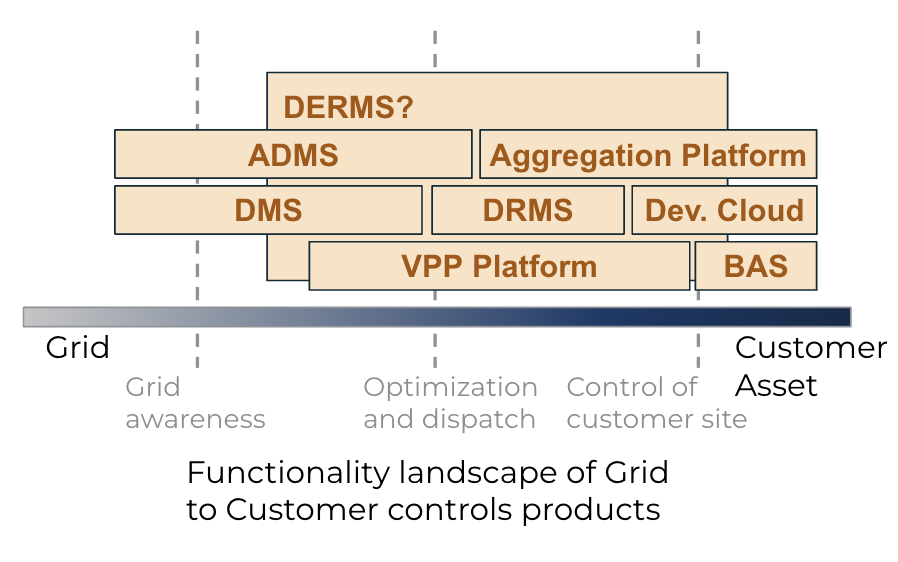
Many Connected Communities project teams are utilizing Distributed Energy Resource Management System (DERMS) technologies as part of their solution set to enable demand flexibility across various distributed energy resources (DERs).Not only can DERMS help manage these resources, they can provide critical data about DER performance and help identify potential problems with the grid. 


This fall, Berkeley Lab is conducting research around existing commercial DERMS platforms and their capabilities. The Lab is interviewing several DERMS providers to understand the current landscape of products, the grid services they support, and the types of integration available to DER aggregators, utilities, and customers. This research may uncover opportunities for DERMS providers to expand their future product offerings as the landscape for such products evolves to meet Connected Communities and similar project needs.


Connected Communities Research Presented at 2024 ACEEE Summer Study in Buildings

Several members of Berkeley Lab’s CC National Coordinator team attended the biennial Summer Study on Energy Efficiency in Buildings in August at Asilomar Conference Grounds to present research findings emerging from CC project teams. The conference brings together professionals from around the globe to collaborate and advance the technologies, practices and research necessary to decarbonize the buildings sector. 


Lazlo Paul presented a paper accepted into the Smart and Grid-Interactive Buildings track titled “Architecting the Future: Exploring Coordinated Control Frameworks for Connected Communities” that summarized the types of coordinated control architectures which have evolved in the CC program, influenced by the stakeholder use cases, existing market conditions, and the types of buildings and energy resources integrated. The authors have developed a framework of these architectures, including their use cases, benefits, and potential implementation challenges.” Access to the full paper can be found here. 


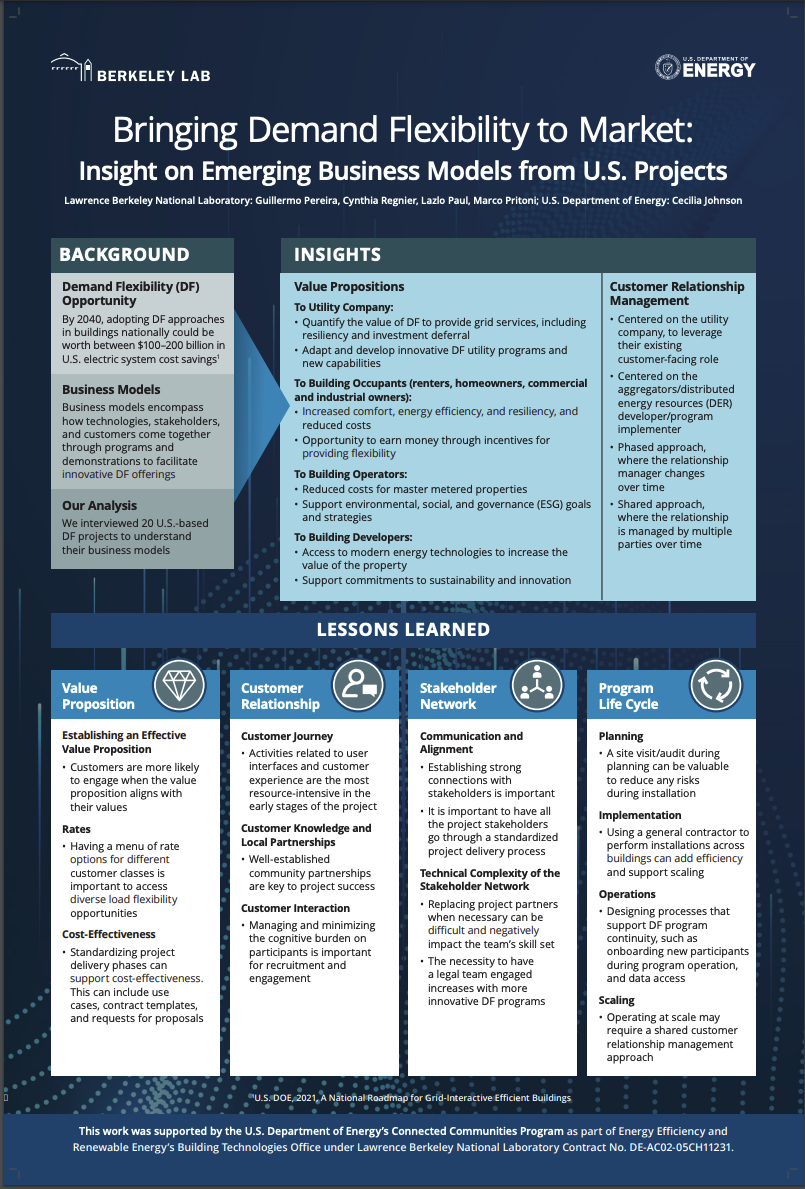
Guillermo Pereira presented a poster on demand flexibility business models titled “Bringing Demand Fl0exibility to Market: Insight on Emerging Business Models from U.S. Projects.” It presented insights from 20 interviews with demand flexibility project developers. The insights shed light on the demand flexibility value propositions for various industry stakeholders, including utilities, building occupants, building operators, and building developers. The authors also characterize a range of approaches to managing customer relationships when deploying demand flexibility programs. Additionally, it provides a summary of lessons learned to enable effective value propositions, customer relationships, stakeholder network management, and program life-cycle management, including program planning, implementation, and operations. View the poster here.

Building Technologies Office’s Peer Review 

This fall, all ten CC demonstration teams and the National Coordinator were invited by DOE’s Building Technologies Office (BTO) to be peer reviewed in Arlington, Virginia. BTO hosts Peer Reviews, which are open to the public, to generate robust feedback from independent industry experts and ensure its projects’ mission alignment, impact, approach, progress, and future work. This feedback helps to inform the direction of current and future initiatives.


Resources

The National Association of Regulatory Utility Commissioners (NARUC) published a report called “Aggregated Distributed Energy Resources in 2024: The Fundamentals” for policymakers to make informed decisions around grid services strategies and priorities.  


Connected Communities project lead Ohio State University published a journal article titled “Review of data-driven models for quantifying load shed by nonresidential buildings in the United States” that assesses baseline models that help building operators quantify demand response for participating in customer programs.


To learn more about Connected Communities and resources related to load management, distributed energy resources, and grid services, visit

connectedcommunities.lbl.gov

Subscribe to Newsletter