Graphic by Ariella Mayer ('23)

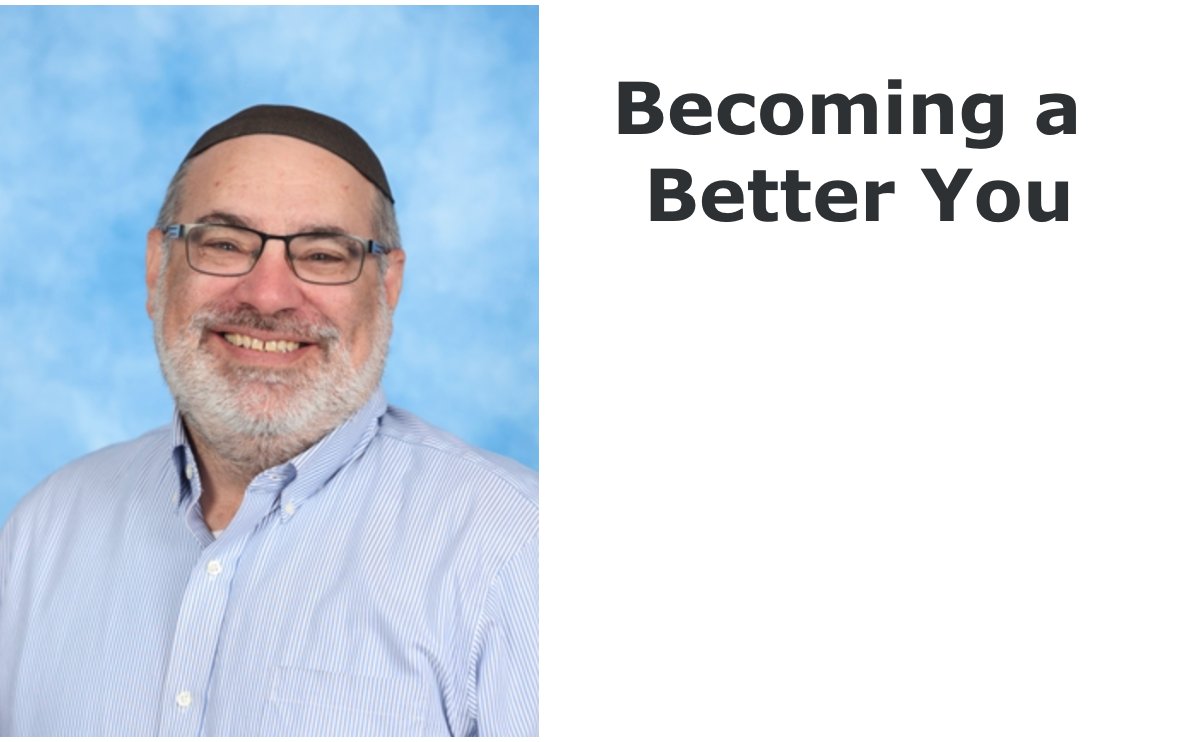
Of the 74 mitzvot mentioned in parshat Ki Teitzei (the most of any parsha!), one of them led to some great debates among Jewish philosophers. We are told that before we take the eggs that are in a nest we are required to first send away the mother bird. Some commentators suggest that we do this because we have mercy on the mother bird and we don’t want her to suffer by seeing her babies taken in front of her. Other commentators say that it is hubris for humans to ascribe reasons for mitzvot; we cannot possibly know what specific reason Hashem had for a particular mitzvah. 


The approach of the Ramban has always resonated with me. He explains that while it is true that we cannot know the exact reason for why Hashem commanded us to send away the mother bird, there is something that we can learn. We need to inculcate the lesson that Hashem wants us to be merciful people, that we need to act empathetically towards others. 


The Ramban stresses that this is true about all of the mitzvot that we perform. Hashem has given us these mitzvot not merely as an obligation to carry out and fulfill, but to refine us and make us into better people. 


Through tefillah I can learn to be more grateful and humble. By celebrating Shabbat I can learn to refocus my priorities. By saying brachot I remind myself of all the good things Hashem has done for me and for the world. 


On the one hand it is comforting to know that the actions we do are not just religious acts that we must accomplish. We should not be just mindlessly going through the motions. Rather, through the actions I do and the thought I give to them I can bring more meaning to and enrich my life. This also comes with a great responsibility as well. I need to invest more in the mitzvot than the simple performance of them. I need to think, reflect, and educate myself. What meaning do I find in this particular mitzvah? How does it enrich my life? How does it make me a better person? 


May we take the time this year to not only perform mitzvot, but also to let them truly impact our lives.


Shabbat Shalom,

Rabbi Horowitz

Terrific Torah and

Tasty Treats

Students Learn and Enjoy at the First

Night Seder of the Year

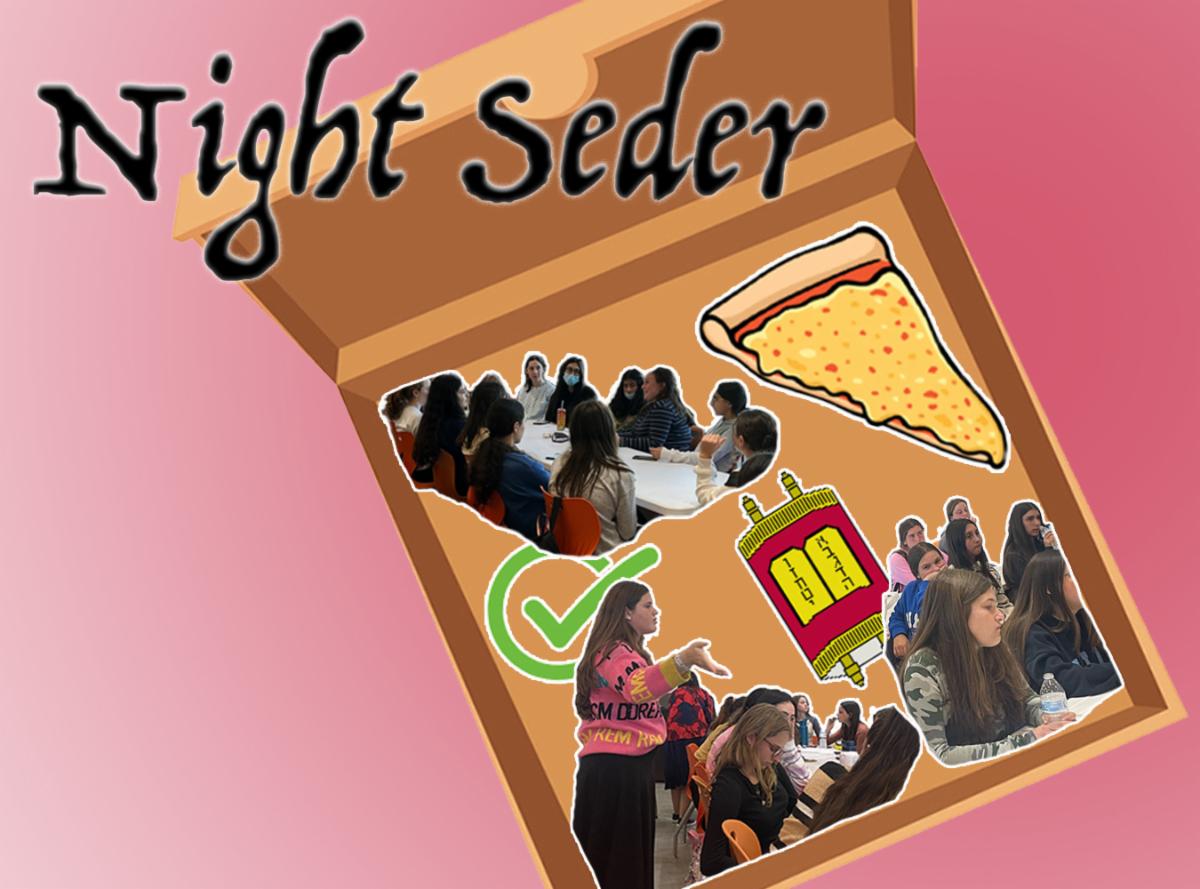
Graphic by Rivka Reich ('24)


This week marks the first weekly Night Seder learning of the new school year. Night Seder on Wednesday evenings is a great way for students to add meaning to the middle of the week and spend time with friends in a growth-oriented setting. Also, the pizza doesn’t hurt. 


The first Night Seder of the year was a great opportunity to get in the rhythm of after-school learning and to reconnect with friends. As Rabbi Horowitz, who supervises the boys Night Seder, said, “it’s important to do more than what is just required, and learning Torah after school is a great way to add onto the required learning being done in school itself.” 


What makes Night Seder so special is being in a room learning together with others who have also chosen to dedicate some of their free time to extra Torah study. Like Yonah Greenberg (‘25) said, “being together with friends while learning helps us to connect with each other and with the Torah we are learning.” Night Seder provides the perfect environment to share a meaningful experience with friends.


Night Seder starting up again this week is one of the bright spots in what have been an amazing first two weeks of school. If you’ve never experienced the Night Seder experience, you should give it a try this Wednesday after school!


Article by Elisha Horowitz ('25)

Seniors' College Application Journey Begins

College Night Gives Class of '23 a Map to

the College Process

Graphic by Shoshana Weinstock ('24)

This past Wednesday night, KYHS seniors attended college night hosted by Mrs. Michelle Harris, Mrs. Randee Groveman, Mrs. Noa Bejar, and Mr. Lawrence Wolf. Students had the opportunity to learn more about the college application process, financial aid opportunities, and Israel programs. It was all very well organized, interesting and informative to hear.


The night began with presentations from Mrs. Perl, Rabbi Hochman and Mrs. Harris. Everyone was given folders with all the information spoken about. After general presentations, the group split into four different rooms where they rotated through different presentations on various topics like college essays, the actual application, and Financial Aid. We ended the night with a Q&A organized by Mrs. Harris. 


The college counselors continued to stress the importance and significance of attending an Israel gap year program after we graduated. Whether it be Yeshiva, Seminary, or any other program, there is a place for everyone. Josh Belheson (‘23) remarked, “the college counselors were very informative about the material we needed to better our futures and help us with an easier transition to adulthood.”


Overall, this night was very productive and we thank all the people who made it possible. Every senior should be relaxed, organized, and confident as they embark on their college admission journey.


Article by Marielle Askenazi ('23)

First Week as a Freshman

A Fresh Perspective on Adjusting to

Life in High School

Graphic by Eitan Kaminetzky ('25)


As freshmen get acclimated to high school, we wanted to check in on how they feel the year is going so far and see what it is like to come to KYHS as a new student. To get the inside scoop, Leila Samuels (‘25), interviewed Kira Berley (26’) on her experience thus far. 


Leila: What was the best part of the first day of school?

Kira: Getting to see my friends that I hadn’t seen since the end of the last school year.”


Leila: Were you excited for the first day? Or more nervous? Why?

Kira: “I was really nervous at first, but also really excited. I wasn’t sure I would be able to handle the workload, or easily make new friends, but I was really excited to have the opportunity to challenge myself and branch out a little.”


Leila: How is high school different from middle school for you?

Kira: “There’s a lot more people and a lot more work. It’s weird not knowing everybody you go to school with. The building is also a lot bigger, and it feels like I’m older now.”


Leila: Do you ever get lost in the building?

Kira: “It was a little difficult in the beginning, but I think I’ve found my way around pretty well.”


Leila: How are your classes? Are you enjoying the new learning environment?

Kira: I’m really liking my classes. It’s crazy that there is a real science lab. Everything just feels so professional here.”


Leila: Your grade is much bigger than your used to, how has it been adjusting to all the new people? 

Kira: “A little overwhelming at first, but in the end I like having a bigger grade with so many different kinds of people.” 


Leila: How has it been getting to know your new teachers? 

Kira: “All the teachers are so nice and helpful. I can tell they really care about our grade.” 


Leila: What are you most excited for this year and high school in general?

Kira: “I’m so excited for the shabbaton and color war!”


Article by Leila Samuels ('25)

Kahane's Kolumn

Olivia's Opinion on the Upcoming Split

Gender Shabbatonim

Graphic by Orly Dimont ('23)


With the impending Shabbaton the school is stormed with mixed opinions on whether it should or should not be divided by gender. As KYHS has drastically grown in numbers, we are unable to have a shabbaton with all four grades. Therefore, the Shabbaton was divided by two grades at a time. However, Wednesday night the student body was hit with an email that this year’s shabbaton will be divided by gender.


As the shabbaton can be an amazing opportunity to bond with fellow classmates, many students are infuriated that they will not be with their friends. Moreover, students believe that as a coed school we should have a coed shabbaton. Therefore, students have started a petition to have a coed shabbaton, and have been emailing the administration.


While I understand the stance of a coed shabbaton with our peers who we are in classes with and our friends of the opposite gender, I believe a single gender shabbaton can benefit the student body. The weekend is not only filled with fun activities like Universal, but is filled with Ruach. I believe that each gender will be more open to growth, and building relationships without the opposite gender present. Moreover, it will give the boys and girls time to bond with upper and lower classmen, and the lower classmen will have the chance to get to know their upperclassmen and be inspired by them.


Although the coed Shabbaton has been a blast in the past, the single gender shabbos help broaden the friendships, relationships with teachers, and spiritual growth of each student. Moreover, there are plenty of opportunities for grades to connect with the boys or girls in their grade such as grade nights and lunch periods, and as the shabbaton’s main goal is growth, I believe that the most potential can be reached by having separate genders.


Article by Olivia Kahane ('23)

Highlites Staff