Graphic by Rivka Reich ('24) | |
|
In this week's Parsha, we witness a powerful tale of reconciliation and personal growth as Yaakov faces Esav after years of separation. This encounter teaches us valuable lessons about the complexities of relationships and the transformative power of forgiveness. The Parsha begins as Yaakov, preparing to meet Esav, is filled with anxiety and uncertainty. He sends Esav gifts, uses flattering words in his message to him, and divides his camp into two. Whereas Rashi emphasizes the strategic nature of Yaakov’s preparations, Ibn Ezra suggests that this division reflects Yaakov’s fear of complete loss and illustrates the psychological complexity of his mindset.
Using Ibn Ezra’s ideas as a springboard, we can infer that the anticipation of the encounter forced Yaakov to confront both his past actions and the consequences of his choices. By the end of the story, it becomes clear that Yaakov has transformed from the deceptive younger brother who tricked his sibling out of the birthright to a man who wrestles with an angel and emerges with a new name, Yisrael. Ramban, explaining the spiritual significance of the name change, indicates that it is this fundamental shift in Yaakov’s character that allowed for a true reconciliation with his brother.
The reunion between Yaakov and Esav is not without its challenges, but it ultimately ends with a powerful display of forgiveness and love. When the two finally meet, Esav embraces Yaakov and the brothers are able to move forward, leaving behind the grievances of the past. This act of forgiveness is a beacon of hope, demonstrating that even the deepest wounds can heal with time, reflection, and a genuine desire for reconciliation.
If we focus on the transformation that Yaakov underwent over his twenty years in Lavan’s house and that culminated in his encounter with the “Ish,” we are reminded that personal growth is a continuous journey. It requires self-reflection, the willingness to confront our flaws, and the determination to become better individuals. Parshat Vayishlach invites us to emulate the example set by Yaakov and encourages us to embrace personal growth and reflection as a means to actualizing our true potential.
Shabbat Shalom,
Mrs. Perl
| |
|
Don't Do Drugs
KYHS Students Learn About Drugs and Their Harmful Consequences
| |
|
Graphic by Esti Distenfeld ('26)
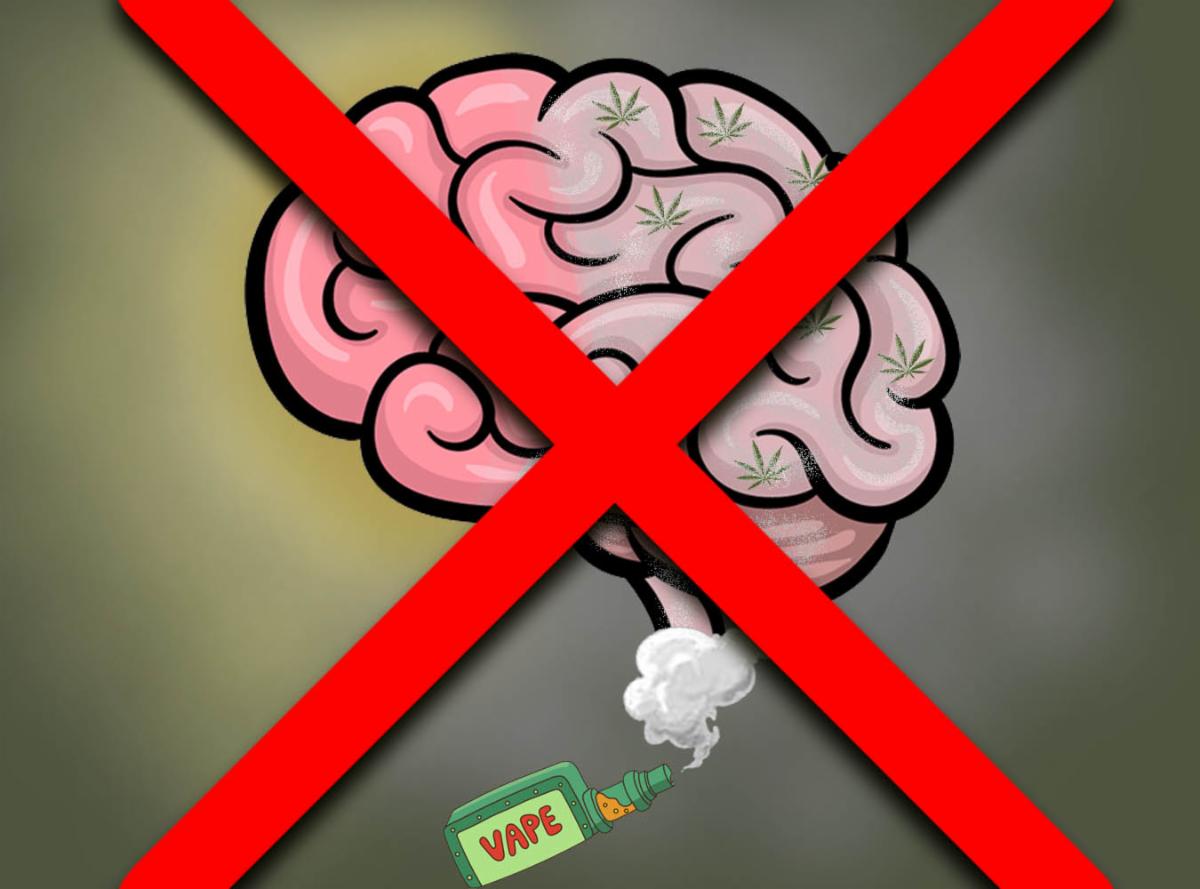
In an effort to prioritize the well-being of the students in our school, our school recently had a comprehensive drug awareness program this past Monday and Tuesday, teaching students vital knowledge about the perils of substance abuse. This program marked a crucial step towards making a safer and more informed community.
The program delved into the many dangers associated with drug use. The speaker provided invaluable insights, debunking myths and misconceptions that we have about drugs, and shedding light on the physical, mental, and societal repercussions of substance abuse.
One of the program's notable features was its emphasis on interactive learning. Students actively participated in discussions, gaining a deeper understanding of the factors influencing drug-related decisions. Stories were told to us during the session as reminders of the real-life consequences that can come from uninformed decisions.
The program didn't only focus on the risks of making these bad decisions; it empowered the students with strategies to resist the very real peer pressure and make decisions that will benefit us for the future rather than put us at risk. The workshop helped us learn that it is okay to ask adults for help when going through anything related to the serious matter of substance abuse and we should not be afraid to seek it.
As a school, we recognize that education is a powerful tool against the appeal of substances. This drug awareness program not only strengthened our collective understanding but also increased our commitment to maintaining a supportive and drug-free environment. Moving forward, we are looking to integrate these lessons into our school life, building a community that looks out for health, well-being, and informed decision-making that wouldn’t be possible without programs like these.
Article by Keren Lazar ('25)
| |
|
Inspirational Trip to the Holyland
Our Very Own Mrs. Stein Went on a Mission to Israel
| |
Graphic by Ezra Dimont ('25) | |
|
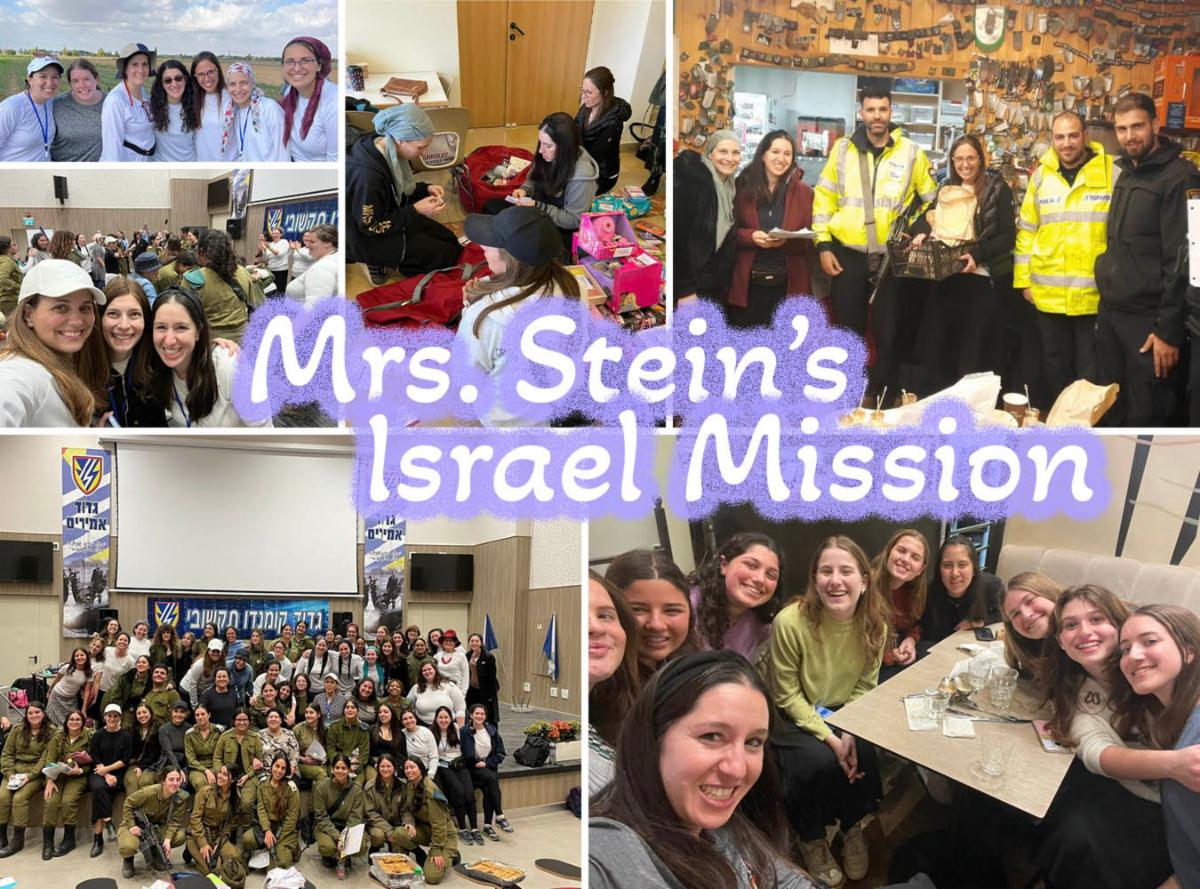
Last week, I was blessed to have the amazing opportunity to go to Israel as part of the Matan Bellows Eshkolot Educator’s Mission. On our first night, we heard from Moshe Shapiro, father of Aner z"I, who was one of the victims on Oct. 7th. Moshe told about his son's bravery of throwing grenades from the shelter he was hiding in from outside the music festival. He continued with messages of hope and moving forward in another incredible he shared- They found out his son was killed late on Thursday and extraordinarily managed to bury him on Friday since the burial date would coincide with his sister’s Bat Mitzvah next year, and they didn’t want her milestone to be associated with her brothers funeral. This is the resiliency of Am Yisroel - looking to the future even when in the depths of mourning.
The next day, we went to the Ramada hotel, which is housing Sderot refugees, and we were privileged to speak to survivors of the Oct. 7th attack. The volunteer coordinator arranged for us to visit rooms housing Gan and speak with the children. We also heard from two inspiring women; one of whom has been living in Sderot for 63 years and despite all previous attacks, never left until now. Another woman, a mother of 7, went in detail about her experience on October 7th, which she refused to call “Black Shabbat” since Shabbat is not a dark day. She recounted the miracles that protected her family that day from the terrorists surrounding them. She reflected how special a place Sderot is and how heartbroken she is that they will most likely never return due to the immense trauma associated with it.
We had the opportunity to perform the mitzvah of Hafrashat Challah together and then bring the bread we baked to the soldiers at the Pina Chama in the Gush. The chayalim were so appreciative of the food and the notes we brought to them from our students. One soldier was wearing his tzitzit out so we asked him about them. He shared that he is a recent Baal teshuva and has been wearing tzitzit for the past four months, and emphasized the appreciation and importance of the tzitzit we are providing to the chayalim. The group continued to bring sufganiyot to the police officers who served with Rose Lubin Z”L. I separated and met up with almost 20 students who are studying in seminary. It was SO good to see them and reconnect. They are doing amazing and feel so privileged to be in Israel during this critical time for Am Yisroel.
The next day, we helped a farmer in the South remove weeds and plant garlic. He was incredibly grateful to have our help, despite our limited experience. Then, we went to an army base with a large female presence. Since videos are released of volunteers dancing with Chaylaim, we intentionally went to a base with many Chayalot. We danced with them and handed out gifts. The letters were the first thing the soldiers removed from the gift bags to read, demonstrating their appreciation for them.
Finally, we had our closing ceremony where באנו לחזק ויצאנו מחוזקים- we came to give strength and left feeling strengthened- applied to all of us. I am still processing the trip: the people we met, the stories we heard, the things we saw, and the many tears we cried. I saw the pain of the Jewish people but I also saw our resilience. Soldiers sing “מי שמאמין לא מפחד”, while displaced families talk of returning home and rebuilding. I learned how much our Chayalim really love and appreciate our support from חוץ לארץ from something as simple as a letter. This is a challenging time for all of Am Yisroel- for Jews globally. But our continuous prayers, tears, hope, and most importantly our unity will get us through because Am Yisroel Chai! May we hear בשורות טובות.
Article by Mrs. Stein
| |
|
Bella’s Un-Bella-Ievable News
Tips to Combat Florida Weather Haters
| |
|
Graphic by Technical Staff
Winter Winter Chicken Dinner
As half the world starts donning their winter apparel, Florida remains in its not-so-blissful heat. I find that the out-of-staters tend to use this against us Floridians, as if we decide the weather here. Winter is barely here, and the New Yorkers are already bragging about their gorgeous weather. We Floridians need to develop some defense for when the topic of our unrelenting sun comes up. If the conversation of weather does come up, here are some useful phrases you might want to use:
Them: “Wow, the weather is so nice and cool here in (insert any place besides Florida), I don’t know how you are still managing with the heat.”
You: “Yeah, well at least I can maintain a year round tan.”
Them: “I’m so excited to go ice skating and/or skiing soon.”
You: *staring the culprit straight in the eyes * “my pool will never freeze over.”
Them: “I’m getting such cute boots for the winter.”
You: “Ya, but they can’t warm your heart.”
Them: “I’m so happy I got a snow day off from school!”
You: “Well I got a hurricane day off, so we’re even.”
If you find any of these too sardonic, you clearly have not lived in Florida long enough. Seriously though, I do think that the constant heat allows us to appreciate the few nice days we have here. This week’s weather has been a literal breath of fresh air, and I think we are all extremely thankful for it.
Article by Bella Srugo ('24)
| |
|
It's Hot And It's Cold
KYHS Students Debate When the Weather is Nicer: Summer or Winter
| |
 | |
Graphic by Josh Haik ('24)
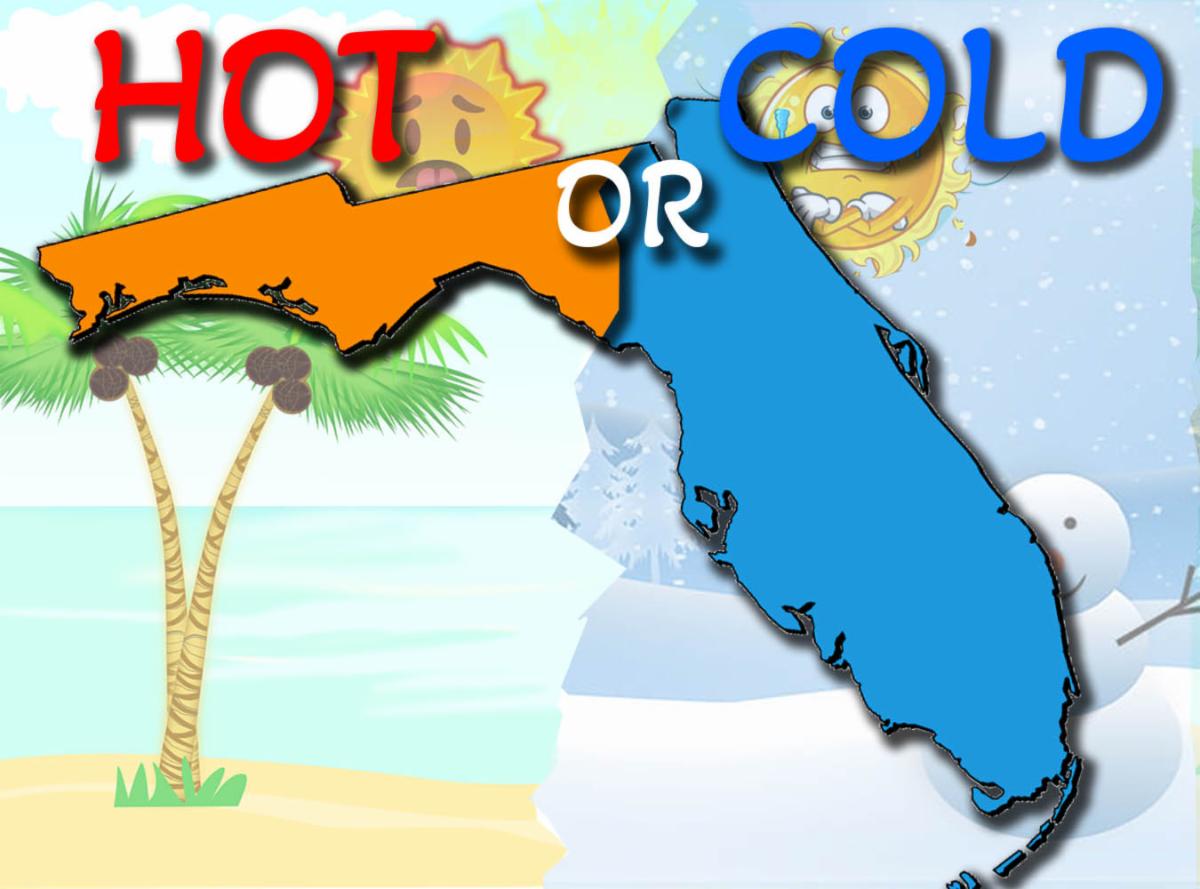
In the midst of perpetual summer, Katz Yeshiva High School of South Florida is flirting with an unexpected chill, courtesy of La Niña and El Niño's weather trends. This deviation in temperatures can be attributed to the atmospheric shift between La Niña and El Niño. One pattern of either La Niña or El Niño typically lasts nine to twelve months with one being active while the other lies dormant as it waits for the next shift. As of June of 2023, the shift turned to El Niño. While La Niña typically brings warmer conditions to South Florida, El Niño tends to bring cooler winters just like this one. El Niño, which means Little Boy in Spanish, comes from South American fishermen who first noticed periods of unusually warm water in the Pacific Ocean in the 1600s. El Niño has a strong effect on marine life as it brings warmer temperatures to the Pacific Coast. The warmer waters bring tropical species, like albacore tuna and yellowtail into areas that are too cold during a La Niña shift.
Floridians and students, who are initially puzzled by the sudden appearance of this unseasonable cold, are beginning to appreciate this break from the relentless heat that defines our climate. I’m not one who enjoys unbearable freezing temperatures, but this weather is far from uncomfortable and something that I prefer. The drop in temperature is far from enough to create snow, but enough to momentarily protect us from Florida’s usual heat and unbearable humidity. It’s especially refreshing for the students to enjoy lunch outside and be met with a nice cool breeze after sitting in classes for hours. Overall, as a native Floridian along with many of my peers, El Niño receives a 10/10 and I hope that his weather lasts longer than just a year.
Article by Joshua Reich ('25)
| | | | |