Graphic by Aaron Newman ('24) | |
|
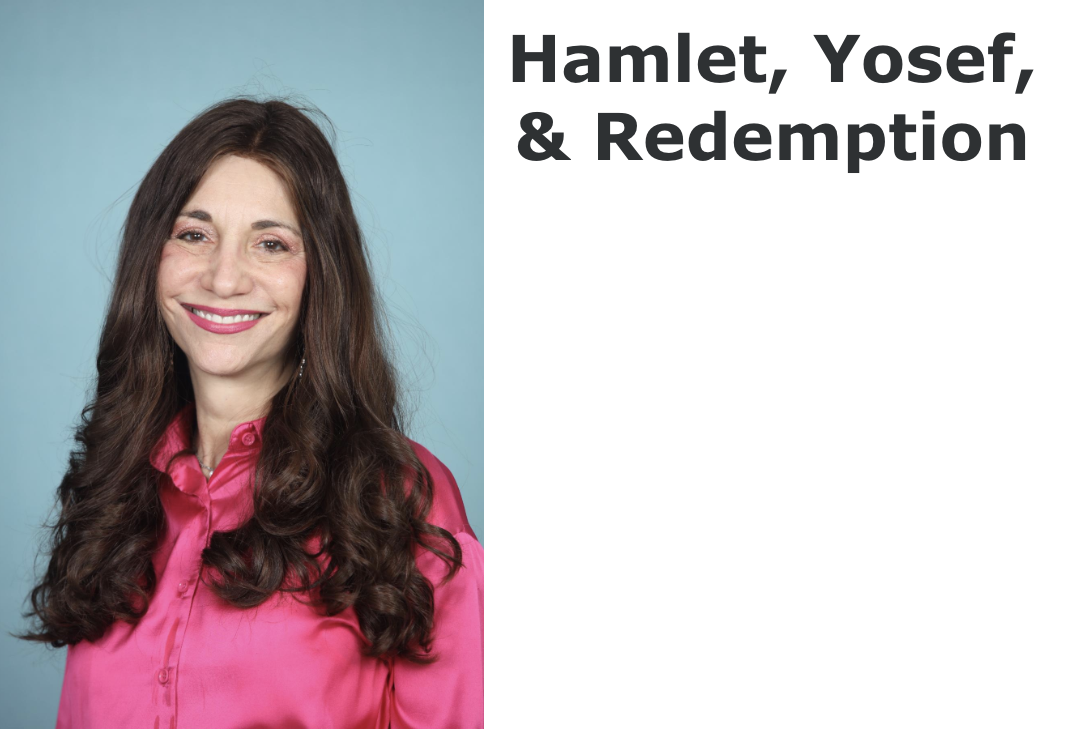
In Shakespeare's opus Hamlet the central dialectical tension is within the mind and soul of Hamlet. In such Ancient Greek tragedies as Oedipus Rex, mistakes lead inexorably to tragic results-- the characters' fate sealed forever the moment the tragic mistake is committed. However, in Hamlet, Hamlet's conflict is patently psychological--whether or not to forgive, whether or not to recognize that a "Divinity has shaped [his] ends"--and it is through Hamlet's unique capacity to ultimately take a spiritual approach to his life and to forgive that his fate is not irreparably doomed but rather becomes one reflective of hope, renewal, and spiritual freedom. It is for this reason that Rabbi Sacks likens the play Hamlet to Parshat Vayechi.
Several meaningful and instructive moments occur during Parshat Vayechi. Yaakov blesses his children in one room, something unprecedented and suggestive that despite the fractures and resentments of the family in earlier parshiyot; the family must heal and achieve loving cohesion to receive the Torah and become a people. Hence, the love of family and the love of Am Yisroel are paramount in Judaism. Yaakov then does something equally revolutionary: he raises his hands to bless his grandsons. This is the only time in the Torah we see an interaction between a grandfather and grandson, suggesting the significance of what is to follow. Yaakov switches his hands, conveying the bracha of the first born Menashah to the younger son Ephraim. This act is initially mystifying, especially considering that he was responsible for his father Yitzchak switching his bracha, Yaakov lived his subsequent life in pursuit of achieving personal integrity and truth, even wrestling with the Sar of Eisav to expiate his prior duplicity and remaining vestiges of sibling rivalry. One possible reason for Yaakov's switch has deep thematic meaning. The name Menashah means "forgetting," and Menashah was named by Yosef as he was finally settling comfortably into his new home and role in Pharaoh's court, no longer haunted by the trauma of his past. The name Ephraim however connotes "For G-d has made me fruitful in the land of my affliction." With this name, Yosef was realizing that despite how seemingly beautiful and easy his life in the diaspora of Mitzrayim was--no diaspora, albeit how pleasant, can ever be truly considered our home. This idea is reiterated when Yosef swears to bring his father to Israel for burial, despite the risk incurred should the request offend Pharaoh. Through Yosef's request, he is, as Rabbi David Forman suggests, concretizing again his father-son relationship with Yaakov, something that had been lost during the years Pharaoh had assumed the role of a pseudo-father through cloaking him, reminiscent of Yaakov's gift, and bequeathing to him the leadership promised in his dreams.
Moreover, Yosef's promise brings to fruition a vision that Hashem had sent to Yaakov: “Do not be afraid to go down to Egypt, for I will make you into a great nation there. I will go down to Egypt with you, and I will surely bring you back again. And Joseph's own hand will close your eyes.”
But perhaps the most meaningful moment, the one that serves as a culmination to all of Bereshit and the one closely aligned to Hamlet, occurs when Yosef reiterates his forgiveness to his brothers.
Last week, Rabbi Goldberg poignantly suggested the startling parallel between Yosef's forgiveness of his brothers, an act reflective of a transcendent level of emunah, with the letter Iris Haim sent to the IDF. Iris Haim's son Yotam was abducted by Hamas terrorists from Kibbutz Kfar Aza on Oct 7, and he was one of the three hostages who were mistakenly identified as a threat and tragically killed by an IDF troop. In her letter to the troop, Iris Haim, whose level of 'Gadlut' is Biblical in nature, wrote the following: "I wanted to tell you that I love you very much, and I hug you here from afar. I know that everything that happened is absolutely not your fault, and nobody's fault except that of Hamas...I want you to look after yourselves, and to think all the time that you are doing the best thing in the world, the best thing that could happen..." Similarly, Yosef reframes his brothers' actions, and in so doing, metaphysically rectifies the acts of sibling rivalry and hostility that permeates all of Beresheis. He tells his brothers: "[d]on't be afraid. Am I in place of G-d? You intended to harm me but G-d intended it for good, to accomplish what is now being done, the saving of many lives." We see from Mrs. Haim and from Yosef, and from literary examples of forgiveness such as Hamlet, not only the profound kedushah implicit in forgiveness but also its role in personal, familial, and national redemption. The notion that spiritual growth, ascension and the bringing in of Hashem's forgiveness is impossible without it. As Rabbi Sacks teaches us, Bereshit, "a book replete with tensions, hatred and competition, ends with forgiveness. This closing is essential to the biblical drama of redemption, for if brothers cannot live together, how can our nation survive?" Moreover, as Rabbi Sacks avers, if you want to know the meaning of a book, you need to examine its ending, and thus, from Parsha Vayechi, the culminating ending to the book of our beginnings, we come to see Bereshit’s possible ultimate meaning: forgiveness and the reframing of painful events is what allows us to create a meta-narrative and meaning to our lives, and can lift us to our highest self.
Shabbat Shalom,
Mrs. Levine
| |
|
Books, Books, and More Books
KYHS English Department Shares its Love of Literature with Students
| |
Graphic by Esti Distenfeld ('26) | |
|
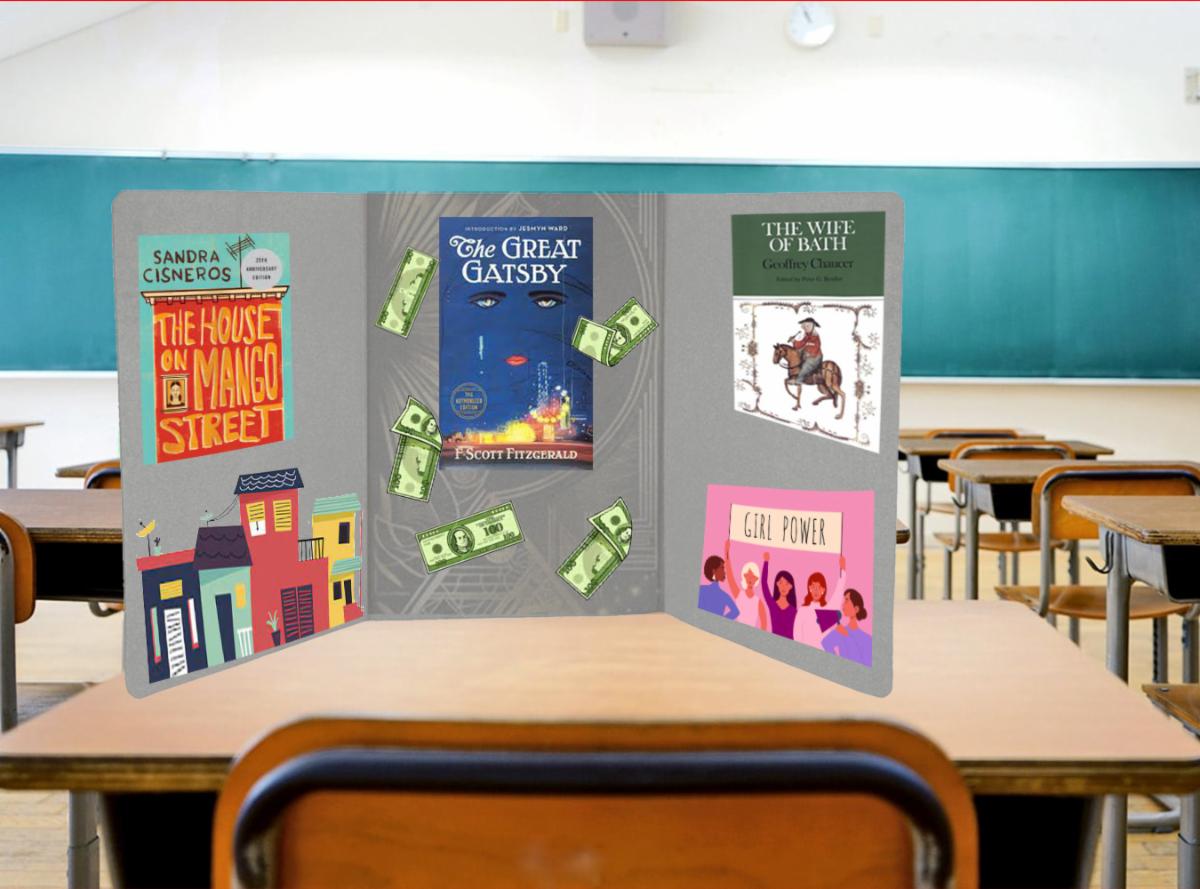
It’s always interesting to hear from your peers about the books they are reading in class. In KYHS there are so many different classes and I had the opportunity as a journalist to learn about three different books from kids in different grades and levels including: The Great Gatsby, The Wife of Bath’s Tale and Prologue, and The House on Mango Street.
The first student, Raquel Cohen ('26), is in Mrs. Hochner’s 10th grade class, reading the Great Gatsby by F. Scott Fitzgerald. She described this book as “wonderful” and “enjoyable.” This book is about Gatsby, a wealthy and young man who throws colossal and extravagant parties and tries to get a status in life. His wealth and high status isn’t enough because his love interest, Daisy, can’t be bought with money.
The second student, Gabriella Asher (‘25), is in Ms. Prochak’s 11th grade class, reading the Wife of Bath’s Tale and Prologue by Geoffrey Chaucer. It is an excerpt from the Canterbury Tales, a fictional compilation of stories that people told on their pilgrimage to Canterbury, England. The prologue and tale takes place in the medieval times and it’s about a woman who gets married 5 times!
Last, but not least, Jojo Flajsing (‘27), is in Ms. Prochak’s 9th grade class, reading The House on Mango Street. It’s a book that takes place in Chicago with Esperanza, the main character. She is embarrassed of her broken down house on Mango Street, of her name (it is too Mexican), and of her poverty. She has a dream about a nicer house and a nicer life, but it’s not reality.
These are just a few of the stories being read in all these classes, but I encourage everyone to go around and ask your friends what stories they’re reading.
Article by Emma Seghi ('25)
| |
|
'Tis the Season to Learn Torah
Our Annual Yom Iyun of Learning Extra Torah
| |
Graphic by Rivka Reich ('24) | |
|
This Monday was a Yom Iyun: a day designated to learning. The day included various programs, such as a speaker, shiur rotations, and a raffle. KYHS students had the pleasure of hearing speaker Dr. Danny Aghion, father of Gavi (‘27) and Golan (‘26) Aghion. Dr. Aghion stayed in Israel after the October 7th attack. He heroically volunteered as a doctor, and worked with Hatzalah in the ambulances. Dr. Aghion toured the Nova Music Festival site after the tragedy. He documented his experience with videos and photographs and shared it with the students to remind them that it may be rebuilt, but it will never be forgotten. He emphasized the importance of leaving a digital footprint and not allowing even the possibility of people trying to deny what happened and erase history. Additionally, he met with soldiers to help them with food and shelter.
Dr. Aghion had the privilege to return to Israel but explained that the environment had changed. He explained that the base he went back to was almost like a mini market for the soldiers. It provided food, shelter, and anything to lift the spirits of the soldiers. He described the kindness and giving that was pouring out of Israelis’ hearts for the soldiers. Many opened their homes for the army without hesitation. They did it as if it was for family, showing the strength and unity of our nation. The emotive account of Dr. Aghion’s speech palpably conveyed the resilience and will power of the Israeli people.
The students also had a teacher rotation. Mrs. Mirzoeff delivered a speech on authentic holiness. It gave students insight on how to not be too genuine or too holy, but just enough of both. In this day in age many are so obsessed with innate traits that they overuse it and repurpose it as an excuse for their poor habits. Her speech proved that you need to accept your flaws, but then strive to do better.
To end off the day, there was a raffle, with the amazing prize of $50 Amazon gift cards. Kira Kornbluth (‘25) was seen sprinting across the parking lot when her name was called, showing the excitement amongst the students to have a chance at the prize, a great way to end the Yom Iyun!
Article by Abby Tache ('25)
| |
|
A Storm Hits the Storm
We Mourn the Loss of Our Tent After it was Struck by the Storm
| |
|
Graphic By Joshua Reich ('25)
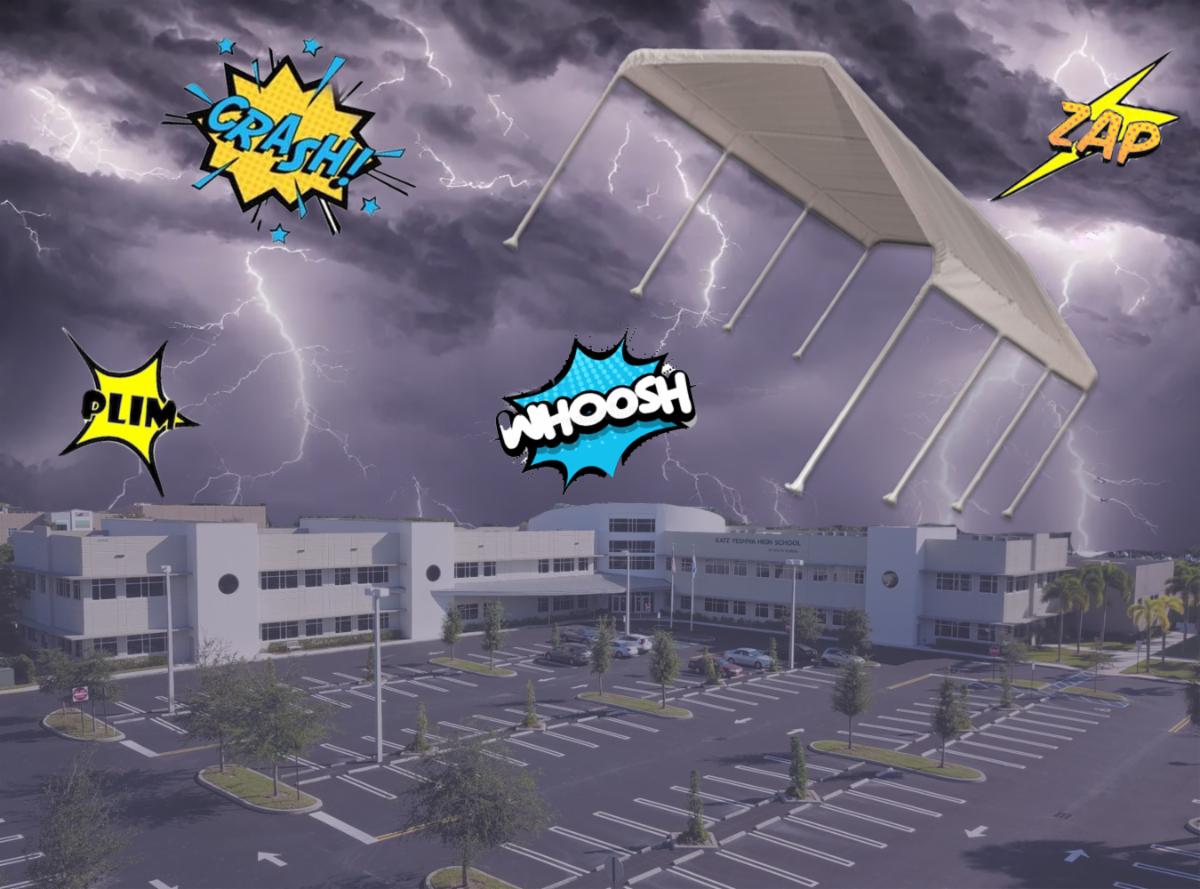
A savage storm struck KYHS. Many mourned the loss of our beloved tent. Everyone cherishes the fond memories they had eating lunch in the shade. Abby Tache ('25) remarked that “The tent would always hold a special place in my heart. It always provided shelter when we were banished out of the lunchroom.” Most couldn’t have pictured a world without the tent offering them shade and comfort. Kira Kornbluth ('25) fondly recalls watching the junior boys attempt life-threatening acrobatics on the railing of the fallen tent. It not only supported their weight, but everyone’s love. The tent will be remembered. Nevertheless, there are some who choose to look at the bright side, literally, of the situation. Without the shadow of the tent people are free to enjoy their food while tanning in the sun. Additionally, the picnic feel of the benches is enhanced without the tent’s protection.
While naysayers will defend the tent being put back up for protection from the elements, like rain, others find the beauty in going to class with squeaky shoes and soggy clothes. Some have chosen to migrate their eating to inside the cafeteria, however nothing can replace the warmth of the sun one experiences when eating by the benches without the tent. Additionally, the fallen tent did demonstrate the potential dangers of crashing into trees during extreme weather conditions, and will hopefully serve as a warning to students to remain inside during tropical storms. The tent’s sacrifice will be remembered for years to come, but we as a school will persevere. Thank you tent for your service, lunch will never be the same without you. But it will be significantly sunnier.
Article By Leila Samuels ('25)
| |
|
Rabbi Mechanic's Workshop
11th Grade Girls had the Zechut to Hear from a Renowned Speaker
| |
|
Graphic by Ezra Dimont ('25)
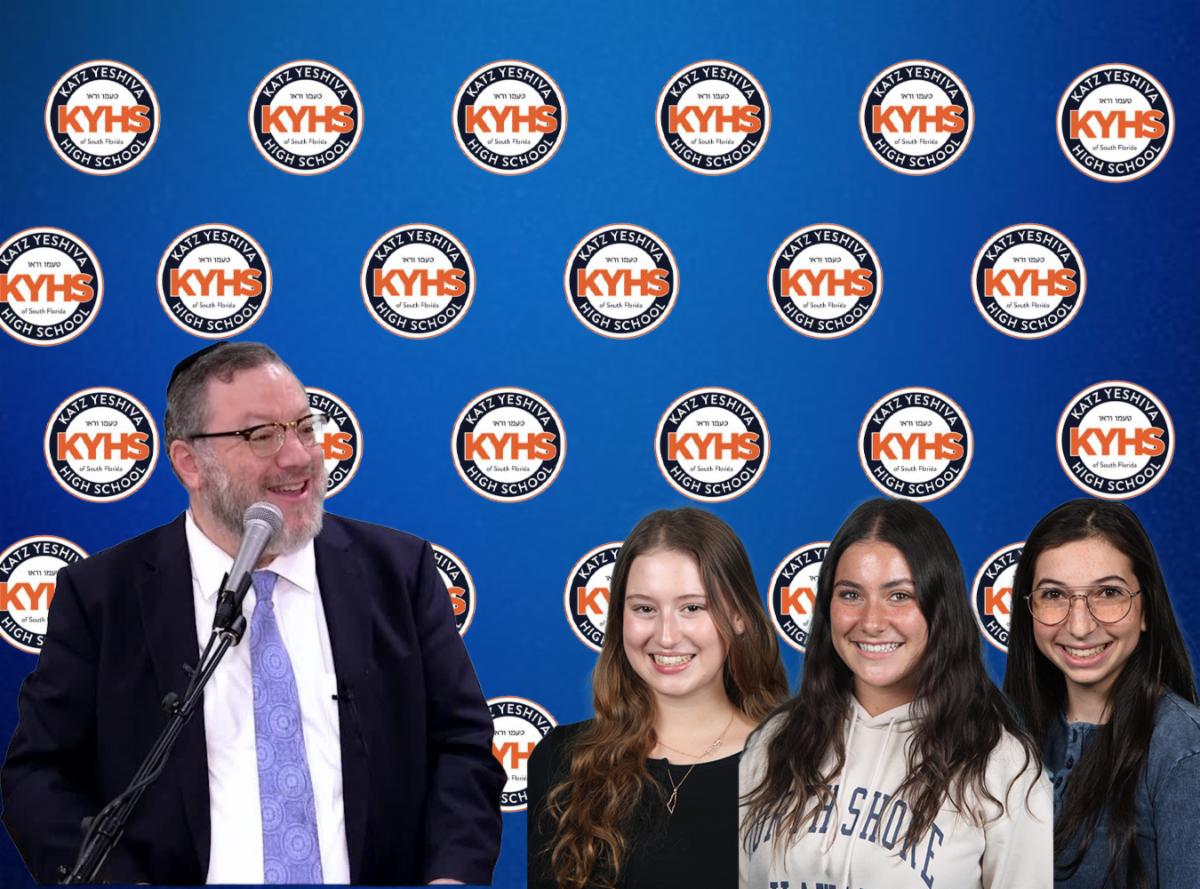
This Wednesday, the eleventh grade girls had the opportunity to hear from renowned Rabbi Mechanic. His two and a half hour drasha flew by with his energy, charisma, and humor. Rabbi Mechanic both entertained a room of teenagers with his wild anecdotes and inspired the girls to grow in their religiosity through the lens of Emunat Hashem, trusting that He has our best interest in mind, especially during times of struggle. A strong takeaway from the highly informative lecture was to focus on how to take the pain in our life and find ways to help others with similar suffering, rather than dwelling on the unanswerable question of why Hashem allowed us such pain. Many of the girls viewed this lesson as powerful and eye opening, as they look forward to implementing this mindset into their daily lives.
Rabbi Mechanic created an intimate setting with a circle of chairs, allowing for questions and enabling an interactive conversation. Amira Kahn ('25) noted that “Rabbi Mechanic answered many questions that are relevant in our lives by bringing in personal stories, engaging us for the extended period of time. It went so quickly because of the way he captured us with his words and made us laugh!” Many girls felt comfortable opening up to Rabbi Mechanic and asking their personal questions regarding Judaism. Overall, it was a wonderful environment full of comfort and laughter that embodied KYHS values. Hopefully, he will return, as we couldn’t get enough of his cholent jokes!
Article by Aliyah Harow ('25)
| | | | |