|
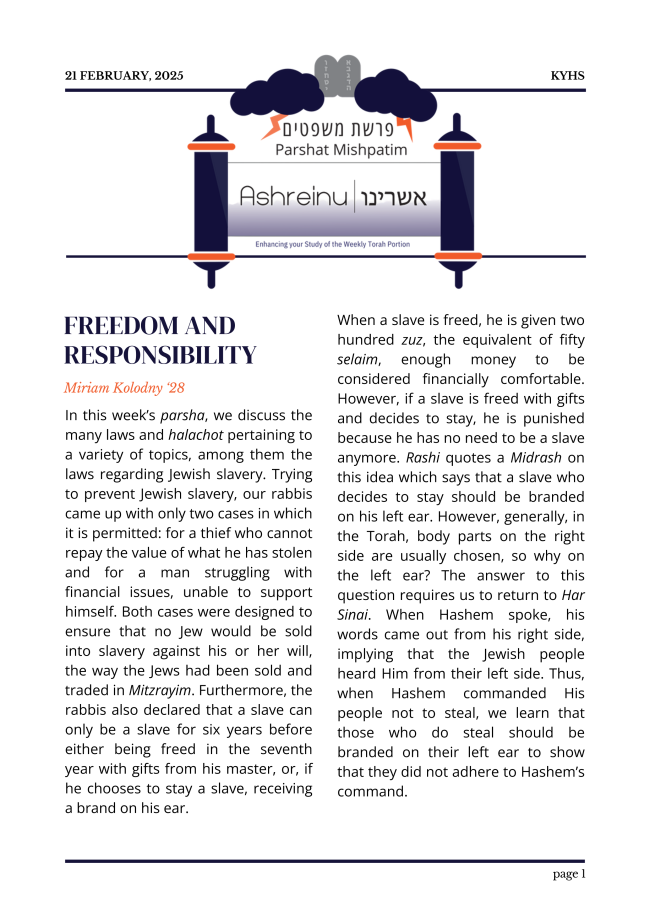
Parshat Mishpatim comes right after Matan Torah, where Bnei Yisrael received the Ten Commandments. This parsha focuses on civil laws, how to treat others fairly and with kindness. This teaches us that serving Hashem isn’t just about big spiritual moments; it’s about how we act in everyday life.
One important pasuk in this parsha says:
"You shall not oppress a stranger, for you know the soul of a stranger, since you were strangers in the land of Egypt."
Hashem commands us to be kind to converts and outsiders because we once experienced what it was like to be mistreated in Mitzrayim. The Torah repeats this idea many times, showing how important it is. But why does Hashem use our suffering in Egypt as the reason?
One answer is that our experiences shape who we are. When we go through hardships, we can either ignore others who are struggling or use our pain to develop empathy. Hashem is teaching us that challenges are not just for us, they are meant to help us grow and become better people. Since we know what it feels like to be an outsider, we should make sure no one else feels that way.
This lesson applies to us today. Whether it’s a new student in school, someone who feels left out, or a person who is different from us, we have the opportunity to welcome them and make them feel included. The Torah teaches us that kindness and fairness are not optional, they are the foundation of a just society.
We all have moments where we feel alone or out of place. If we remember how that feels, we can use it as a reminder to treat others with warmth and respect. This is what it truly means to live by the Torah, not just keeping mitzvot between us and Hashem, but also treating people with dignity and care.
Shabbat Shalom,
Hanna Cik ('27)
|