Graphic by Mikaela Gottheil ('26)

Upcoming Events:


Pesach Break

Mar. 29 - Apr. 12

When Rav Chaim Shmulevitz was a young man, he once visited his uncle, Rav Avraham Yoffen. One evening in the beis medrash, he asked a simple question: “Who is the best student in the yeshivah?”


Rav Yoffen began pointing out different talmidim. One had the sharpest mind. Another had incredible recall. A third excelled in depth, while a fourth had remarkable breadth.


“So which one is the best?” Rav Chaim pressed. “The best?” his uncle smiled. “None of them.” Confused, Rav Chaim waited as his uncle pointed to a quiet bochur sitting in the back.


“Do you see him? He is the best. He is the greatest mevakeish—the one who wants the most. He burns with a desire for Torah and growth. He would sit there all night if I let him. The one who truly wants, that is the greatest student.”


That young man, we are told, was none other than Yaakov Yisrael Kanievsky, the Steipler Gaon zt’l.


This idea is captured in the opening of Parshas Tzav: “Esh tamid tukad al hamizbe’ach, lo tichbeh”—a constant fire shall burn on the altar; it shall not be extinguished. The Torah of the olah is the Torah of elevation, of a fire that never goes out.


The fire is not only about what we do, it is about what burns inside us.


The great tzaddik Rebbe Shlomo of Karlin zy’a lived this idea. He taught that even when one is not actively learning, the inner fire must remain. Like a flame that constantly reaches upward, a Jew is meant to carry a quiet, steady yearning—to grow, to connect, to rise. And yet, that flame is anchored. It is held by the wick, grounded in reality, in consistency, in the day-to-day. True growth is not a burst that fades, but a fire that lasts “all night until morning.”


However, there are moments in life when that fire is tested.


The Bobover Rebbe zy’a, Rebbe Shlomo Halberstam, rebuilt an entire world after the devastation of the Holocaust. His Sedarim on Pesach night were legendary, filled with song, joy, and a deep sense of dignity and renewal.


But in the final year of his life, everything was different. Weak and confined to a wheelchair, unable to eat or drink, he could no longer perform the mitzvos of the Seder. His family gathered around him, heartbroken. The contrast to years past was overwhelming. Some began to cry.


The Rebbe looked up and said softly:


“My dear children, it’s true—I cannot make Kiddush. I cannot drink the four cups or eat the matzah. But I thank Hashem for giving me another year to experience the freedom of Yetziyas Mitzrayim. Teiyereh Yidden, sweet friends and family, let us begin the Seder.”


In that moment, the fire was still burning.


Not the fire of perfect performance, but the fire of desire. Of gratitude. Of connection.


Rav Soloveitchik zt’l describes the Seder not as an intellectual exercise, but as an experience, a night of encounter. A moment where a person meets Hashem, perhaps for the first time.


Pesach is not just about the details—the preparations, the plans, even the mitzvos themselves. It is about something deeper. It is about the fire.


It is about remembering that beneath everything, this night is a rendezvous—a meeting between us and Hashem. A chance to rediscover who we are, where we come from, and what it means to be free. We relive the journey from constriction to redemption, from darkness to light. And in doing so, we reignite something within ourselves.


This year, not everything may feel perfect. There are challenges, distractions, and even heaviness. There is war at home. There is running for a miklat and red alerts at all times of the day and night. It is far from perfect.


But the message of the esh tamid remains:


The greatest thing is not perfection. It is not even accomplishment. It is being a mevakeish.


It is the quiet, steady fire of someone who wants—who longs—to grow, to connect, to come closer. So wherever we find ourselves, and whatever our Seder looks like, we can hold onto that fire. We can thank Hashem for another opportunity to begin again.


And with that, we can say:


Teiyereh Yidden—let us begin the Seder.


Gut Shabbos and Chag Kasher V'Sameach,


Rabbi Nachbar

It Was Mayhem — KYHS Felt The Sting

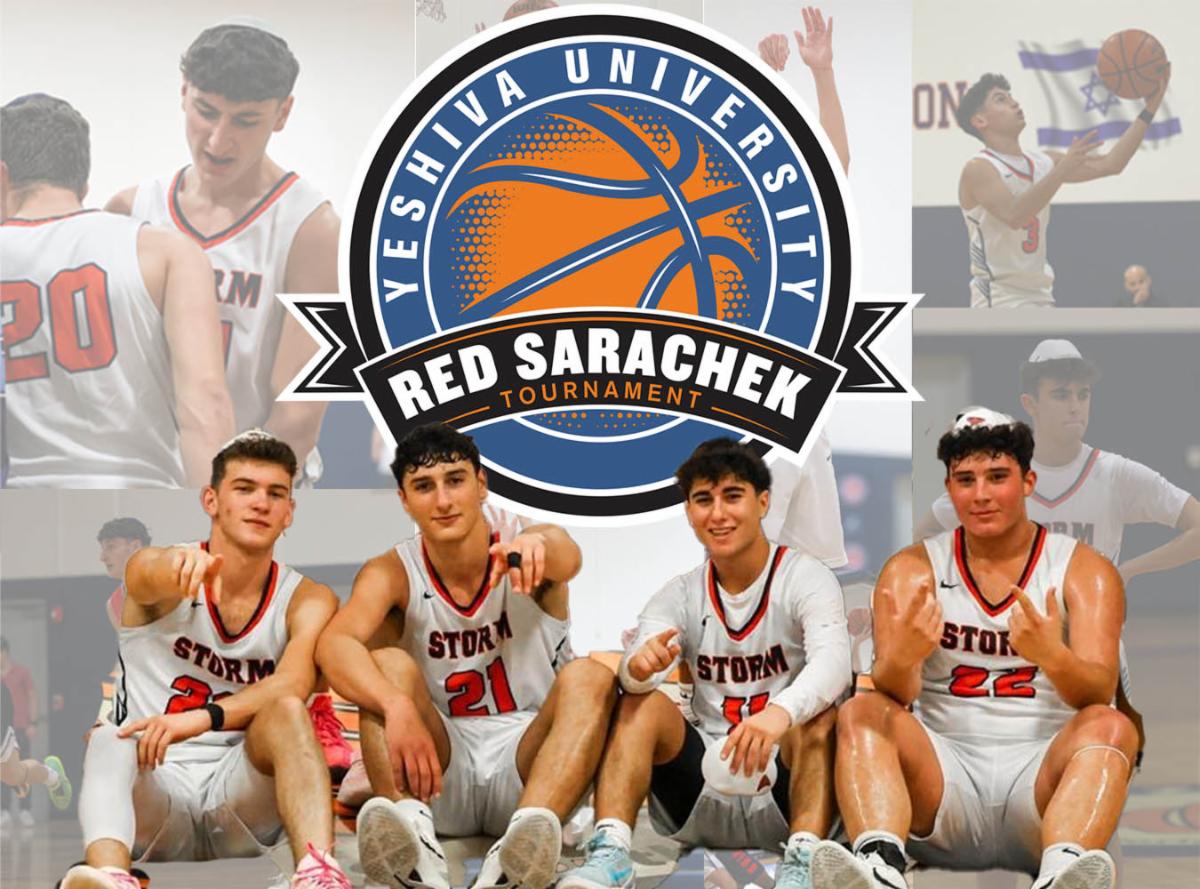
KYHS Varsity Boys Basketball Participates an Annual Basketball Tournament At YU

After a season of hard work, dedication, and motivation, the KYHS Boys Varsity Basketball team flew to New York to participate in the annual Sarachek Tournament hosted by Yeshiva University.


As many know, the KYHS Storm saw plenty of success this season. After becoming the #1 team in the district, the team felt ready, confident, and excited to take on whoever came their way at Sarachek. But still, we couldn't help but think, “How would we compare to the Yeshiva League teams?”


While the team packed their bags to fly out, many seniors did the same. About 35-40 seniors flew out to cheer on their heroic KYHS Storm (aka to be part of the electric social scene that Sarachek is also known for). After multiple flight delays and cancellations, we were finally on our way, ready to show the Yeshiva League what the Storm was all about.


After a long Thursday filled with basketball games and nonstop excitement, it was time for the Storm to take on the SAR Sting (the Hive 🐝) at 4pm. The energy and vibes were high, but none of that mattered once the ball tipped. Would the #11 seed pull off the upset against the #6 seed?


While it hurts to say, the game felt over almost as soon as it began. SAR was splashing threes left and right—they simply could not miss. Although KYHS made a small run in the first quarter after a massive block from phenom Nir Ovaknin (‘27), the Sting maintained control. The Storm eventually fell by a hefty margin, 75–51. I’ve never been stung by a bee before, but after this game, I definitely felt the sting.


After the loss, KYHS dropped to Tier Two to face the Fuchs Mizrachi Mayhem on Saturday night. The game was back-and-forth from start to finish: we hit a three, then they scored an and-one; we grabbed a steal, then lost possession right back. It was neck and neck the entire way, but KYHS ultimately fell just short by losing 40-46. While it was difficult to watch the Storm lose once again, spirits remained high. Many seniors continued cheering and bringing energy for other “out-of-town” teams that didn’t have as many fans.

Although KYHS didn’t come away with any wins, both the team and the seniors who traveled made a true Kiddush Hashem, spreading positivity, sportsmanship, and kindness throughout the tournament.


Thank you to everyone who made it such a fun and unforgettable experience. And don’t forget…


GO KATZ GO 🏀🔥


Graphic and Article by Avi Harris ('26)

KYHS Annual Journal Dinner

Graphic by Technical Staff


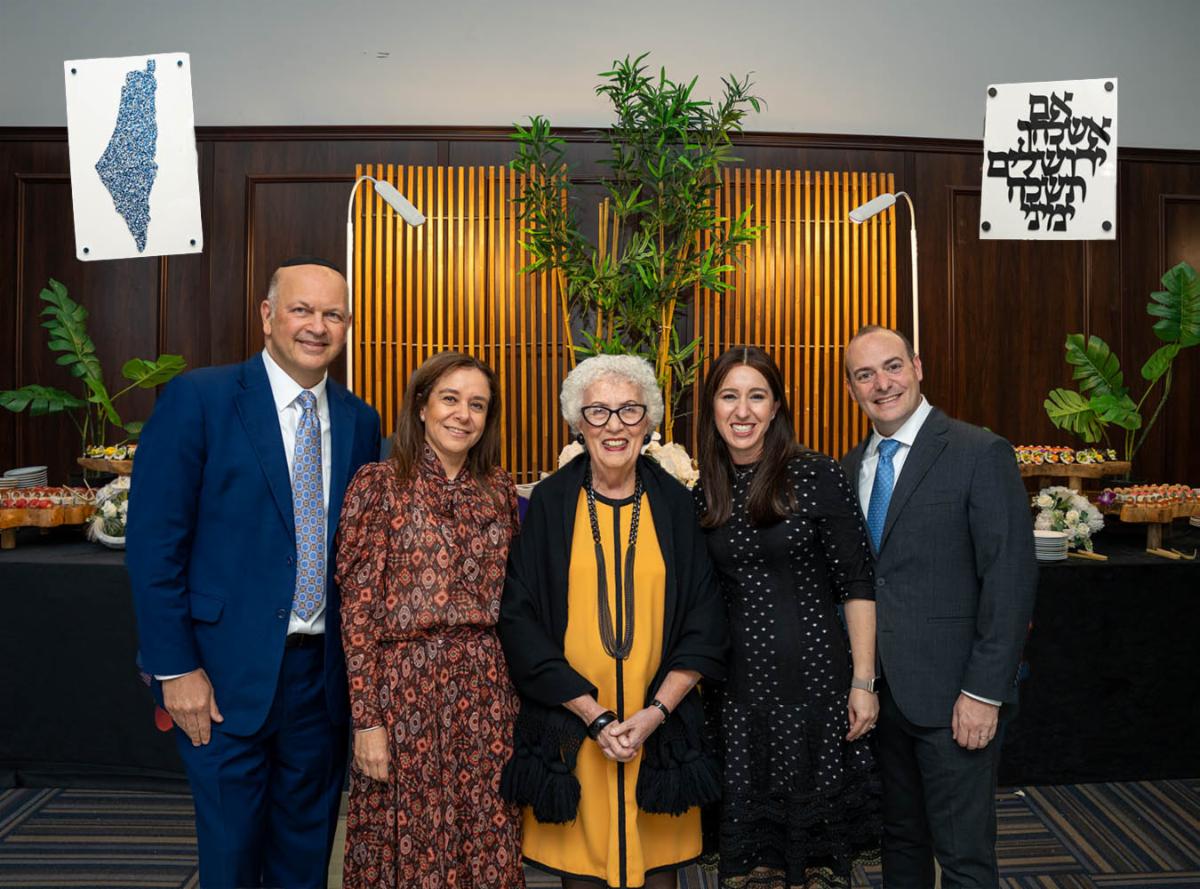
This past Tuesday night, the KYHS Beit Midrash was transformed into a stunning banquet hall for the KYHS Annual Journal Dinner. This cherished annual fundraiser brings together community members, faculty, families, and friends to celebrate the dedication, growth, and shared purpose that sustain and strengthen KYHS.


The evening honored individuals whose commitment has made a lasting impact on the school. A special tribute was paid to the first graduating class, the Class of 2001, in recognition of the 25th anniversary of their graduation. A heartfelt video featuring alumni, along with founding Head of School Rabbi Perry Tirschwell and founding Principal Mrs. Ora Lee Kanner, highlighted the remarkable growth and evolution of KYHS over the past 25 years.

Guests of honor David and Miriam Attias were recognized for their longstanding involvement and deep investment in KYHS, including the meaningful distinction of having sent all four of their children to the school.


In addition, a Distinguished Service Award was presented to Mrs. Rochel Berman for her extraordinary dedication in bringing “The Final Journey” program to KYHS. This initiative has had a profound and lasting impact on the senior class.


It was truly an honor for my husband, Gil, and me to be recognized as well. We are deeply grateful for the opportunity to share how much KYHS has meant to me personally and professionally, and to our family over the past 17 years. Thank you to the entire KYHS community for giving us the chance to express our appreciation before we make Aliyah this summer.


The evening was filled with laughter, tears, inspiration, and, of course, delicious food. More than a celebration of past achievements, the dinner looked ahead to the future, leaving attendees with a renewed sense of purpose and optimism. All who were present departed feeling inspired to continue building, supporting, and strengthening the KYHS community for years to come.


Article by Mrs. Lysee Stein

Want to see the videos for the Honorees?


Click here to see Class of 2001


Click here to see David & Miriam Attias


Click here to see Rochel Berman


Click here to see Gil & Lysee Stein


Click here to see the Photo Gallery from the incredible night

Purple Day

KYHS Partners with Shalom Task Force to Raise Awareness for Domestic Violence and Abuse in Our Community

Graphic by Eitan Perl ('28)


Last Wednesday, KYHS partnered with Shalom Task Force, an organization that raises awareness about domestic violence in the Jewish community. The Fellows emphasized that survivors are never alone, highlighting the organization’s free 24/7 hotline as well as its free legal support and guidance.


To promote awareness, the Junior Purple Fellowship Ambassadors organized a school-wide Purple Day. All of the students and staff wore purple—the color representing the fight against domestic violence—while the entrance of the school was decorated with purple balloons, streamers, and confetti. Informational poster boards were also displayed, covering topics such as recognizing healthy and unhealthy relationships, identifying signs of abuse, supporting someone in need, and understanding different forms of abuse.


At breakfast, the Fellows gave out Shalom Task Force merch, including stickers, fidget toys, and claw clips. During lunch, Shalom Task Force CEO Mrs. Keshet Starr spoke about the importance of healthy relationships. Later in the week, Mrs. Groveman spoke about her experience as a survivor of domestic violence.


Overall, Purple Day was a meaningful and impactful success, helping to educate the KYHS community and reinforce the message that no one facing abuse is alone.


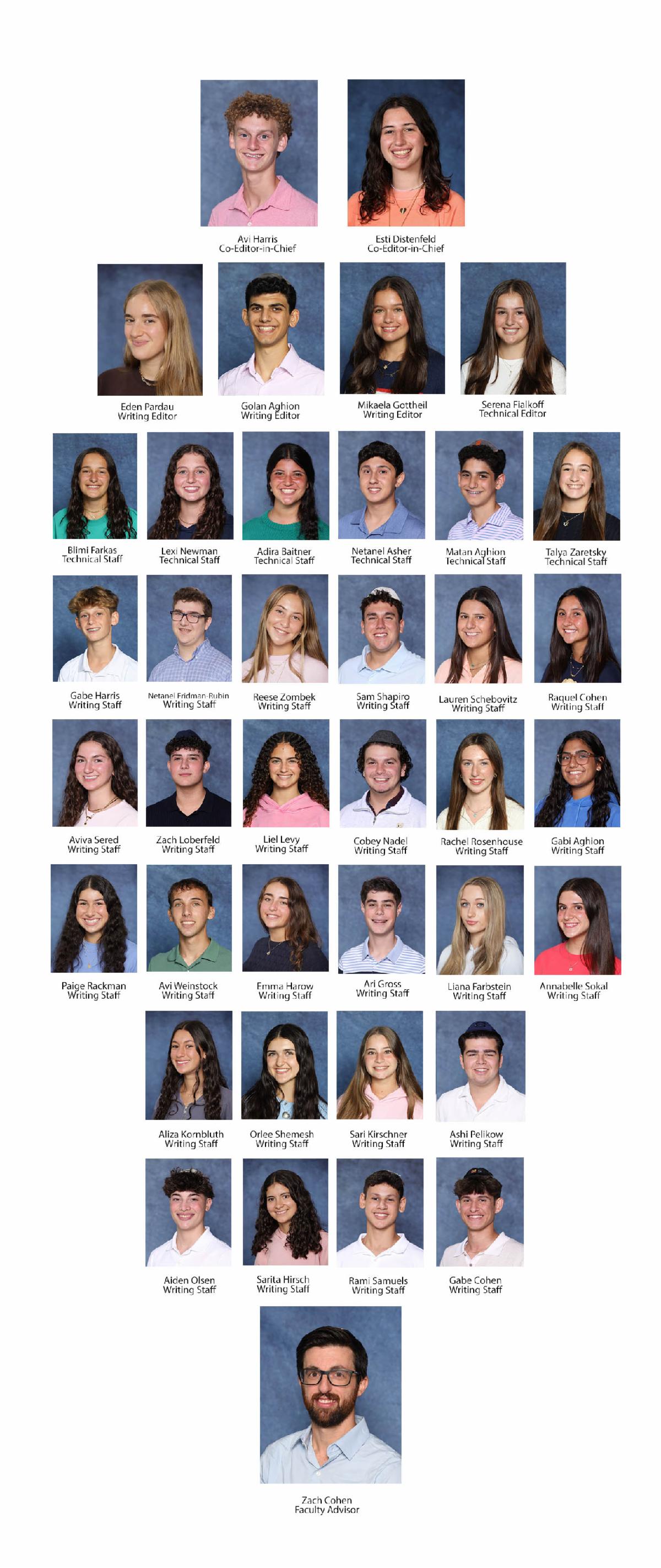
Article by Writing Staff

Student Standoff

Going Away or Staying Home for Pesach?

Graphic by Lexi Newman ('28)


Let’s be honest: staying home for Pesach can feel less like a break and more like a week full of chores. Between cleaning, cooking, and constantly washing dishes, it’s a lot of work. And let’s not forget the craving to eat a cookie but being stuck with a potato starch ladyfinger that makes my mouth dry just thinking about it.


Pesach programs are the complete opposite. Instead of stressing about food and prep, everything’s done for you, with tons of options and even 24-hour tea rooms with food so good you don’t even miss chametz. Plus, you’re surrounded by friends, so instead of being bored at home, there’s always something going on.


Another big advantage is the chance to actually get away. Yes, sleeping in your own bed is the best feeling ever, but instead of pacing around your house for the fifth time looking for something to do, you’re in a completely different place. You’re traveling, experiencing new things, and meeting new people left and right. It’s a lot more exciting than just sitting at home, reading a few books, and talking to the same people every day.


With pools, gyms, and a full range of resort amenities, Pesach programs basically turn the holiday into an exciting and relaxing vacation instead of a job.


Argued by Sam Shapiro ('26)

Although many people choose to go out during Pesach, staying home can be a very fulfilling experience. In Florida, the spring season is a change, as the days become more pleasant and the evenings more comfortable, creating a nice atmosphere for Yom Tov. One of the biggest advantages of staying home for Pesach is the opportunity to become more involved in the preparations, which is a big part of the Pesach experience. It is not only about the beautiful seder, but about the journey to getting to that final product. This includes checking for chametz, cooking, and preparing for yuntif yourself.


The other advantage of staying home during the holiday is the opportunity to create a more personal experience for the seder night. While out, you are forced to operate how the location you go to chooses to run the seder, but at home, you can create the atmosphere you want, at the pace you want, and with the emphasis you want. You can focus on different parts of the Seder and dwell on topics and conversations with no rush. There is a level of comfort that you feel at home, which makes the experience more genuine and personal. Having a personalized seder at home is the most meaningful part of the holiday.


The other advantage of staying home during the holiday is that you avoid the pressure and stress of traveling. By staying home, you are guaranteed to have a beautiful holiday since it is all in your control. You can spend time with family and your greater community, in a place that is comfortable for you. Also, many people come and visit Florida for Pesach, so there are so many people to hang out with!


Argued by Reese Zombek ('26)