Graphic by Technical Staff | |
|
Upcoming Events:
President's Day (No Classes)
Feb. 17th
| |
|
Good & Welfare:
Alumni Mazel Tovs:
Sam Cohen (‘21) on his engagement to Naomi Wiener from Woodmere, NY
Adi Brener (‘21) on her marriage to Micha Avihod from Jerusalem
Ilana (Rindsberg ‘17) on her marriage to Nathaniel Diamond from New Milford, CT
Faculty Mazel Tovs:
Mrs. Sarah (Barrocas ‘14) and Rabbi Avi Warman on the birth of a baby boy
| |
|
Taken from the words of my dear Rebbe and friend, Rav Judah Mischel.
Rebbe Shlomo Halberstam, the Bobover Rebbe, zy’a, of the post-Holocaust era, revived his community with love, resilience and faith. The Rebbe restored kavod to thousands of survivors and helped them rebuild their lives, and was the paradigm of fatherly love, chein v’chesed, grace and righteousness. Family weddings in Bobov were majestic; thousands joined the Rebbe to share in the celebration, dancing into the wee hours of the morning. For all the survivors, their families and the community, s’machos uplifted them with a sense of victory, affirmation, continuity, faith and celebration. At one particular wedding, at the height of the dancing and fervor, the Rebbe took a breather and stood at his shtender. Scanning the thousands of revelers, the Rebbe caught sight of an elderly chasid dancing, his arms on the shoulders of a taller chasid in front of him in the circle. The Rebbe called over a young man who was nearby and whispered to him, “Ti mir a toiveh, please do me a favor: go stand between that elderly Yid and the tall fellow in front of him, so that this older chasid need not exert himself and have to stretch uncomfortably during the dancing.”
Amid such rejoicing and jubilation, the Rebbe not only perceived the possible discomfort of another person, his mind computed and communicated a solution. At the height of his spiritual bliss, the Rebbe remained aware of the seemingly minor need of another.
In this week’s parsha, Hashem tells us in His Torah:
ויאמר אל משה אני חתנך יתרו בא אליך ואשתך ושני בניה עמה
He sent word to Moses, “I, your father-in-law Yisro, am coming to you, with your wife and her two sons.” (18:6)
Chazal describe Yitro as a spiritual seeker who traveled the world, experiencing a multitude of paths, faiths and idolatrous practices. Rav Simcha Zissel, the Alter of Kelm, describes what drove Yitro’s search-until he came in contact with Yiddishkeit, Yitro had understood the goal of spirituality to be transcendence and escape from the day-to-day reality of this world. True spirituality was an experience which removed a person from the mundane of the “daily grind”.
Rashi notes that Yitro’s comment to his son-in-law Moshe reflects the life-changing insight he’d learned from taking in the Torah perspective: “If you will not come out for my own sake, come out for the sake of your wife; and if you will not come out for your wife’s sake, come out for the sake of your two sons.” (Rashi on Shemot 18:6). Yitro reminds Moshe that Yidishkeit is not just about our own transcendence. Being a leader and teacher of Klal Yisrael cannot come at the expense of ‘normal’ social, cultural and familial responsibilities.
A "holy moment" or "spiritual person" often evokes an upward, inward focus, while engaging with the mundane or being a "people-person" involves an outward, horizontal focus. Though these seem mutually exclusive, Yiddishkeit demands both—deep inner connection and full engagement with the world.
And this is why truly holy people, even amid their ‘biggest’ moments, notice little things. Even when our service of Hashem and fulfillment of mitzvos is flowing with passionate devotion, intensity, and focus — we can still remain aware of the needs and wellbeing of those around us. For instance, the text of tefillah doesn’t actually take us out of the world — it awakens us to the needs of the world and focuses our devotion on taking responsibility for others. This reminds us that our ‘vertical’ striving is not in conflict with our ‘horizontal’ connectivity. Our upward reach toward our Father in heaven should not come at the expense of our reaching out to our brethren down on earth.
God is found within people and between people — within all of our relationships.
The first discourse that the Lubavitcher Rebbe delivered, upon accepting the mantle of leadership of the Lubavitch movement, was a ‘statement’ that the three loves — love of God, love of the Torah and love toward a fellow Jew — are all one, completely intertwined. They are in no way three competing values; they are two complimentary sides of one coin. The Alter Rebbe zy’a explains that the mitzvah of V’ahavta l’re’acha kamocha (You shall love your neighbor as you love yourself) is a commentary on the commandment V’ahavta es Hashem Elokecha (You shall love the Lord your G-D). Two loves functioning as one.
May Yitro’s reminder to Moshe Rabbeinu serve to refocus our own attention on those who are closest to us. And may we all draw close to Hashem, together.
Shabbat Shalom,
Rabbi Moshe Nachbar
| |
Hamas Postpones Hostage Deal, Sparking Warnings from Israel and U.S. | |
|
Graphic by Technical Staff
This past week, the situation in Israel has grown even more complex. Hamas announced a delay in the planned release of Israeli hostages, which had been originally set for this Saturday. The delay suspended the ceasefire agreements that had been in place. Hamas blamed Israel's failure to meet commitments, such as the return of civilians to northern Gaza, as the reason behind the postponement. In response, Israeli officials warned of the potential for continued “intense fighting” in Gaza if the hostages are not returned soon. On Monday Feb 10th, President Trump commented on the situation stating that if all the hostages are not released by this Saturday at 12 o’clock then “all bets are off and let hell break out”.
Meanwhile, the Israeli Defense Forces (IDF) launched strikes against Hezbollah targets in Lebanon, including a smuggling tunnel along the Syrian border. These military actions have only increased tensions in the region. Prime Minister Benjamin Netanyahu reportedly sought U.S. President Donald Trump’s support for extending the IDF's deployment in Lebanon. However, U.S. officials have indicated a preference for sticking to the previously agreed upon deadline for Israeli withdrawal, which is set for February 18.
Lastly, the IDF has confirmed the tragic death of 85-year-old hostage Shlomo Mantzur z”l, who was killed on October 7. In addition, the family of twins Gali and Ziv Berman received the bittersweet news that their sons are alive, though they are being held separately. The family of hostage Omri Miran also received news that a released captive had seen him in July. These recent developments highlight the ongoing turbulence in the region and the difficult decisions being made, with expansive consequences for both Israeli security and international relations.
Article by Liana Farbstein ('27)
| |
|
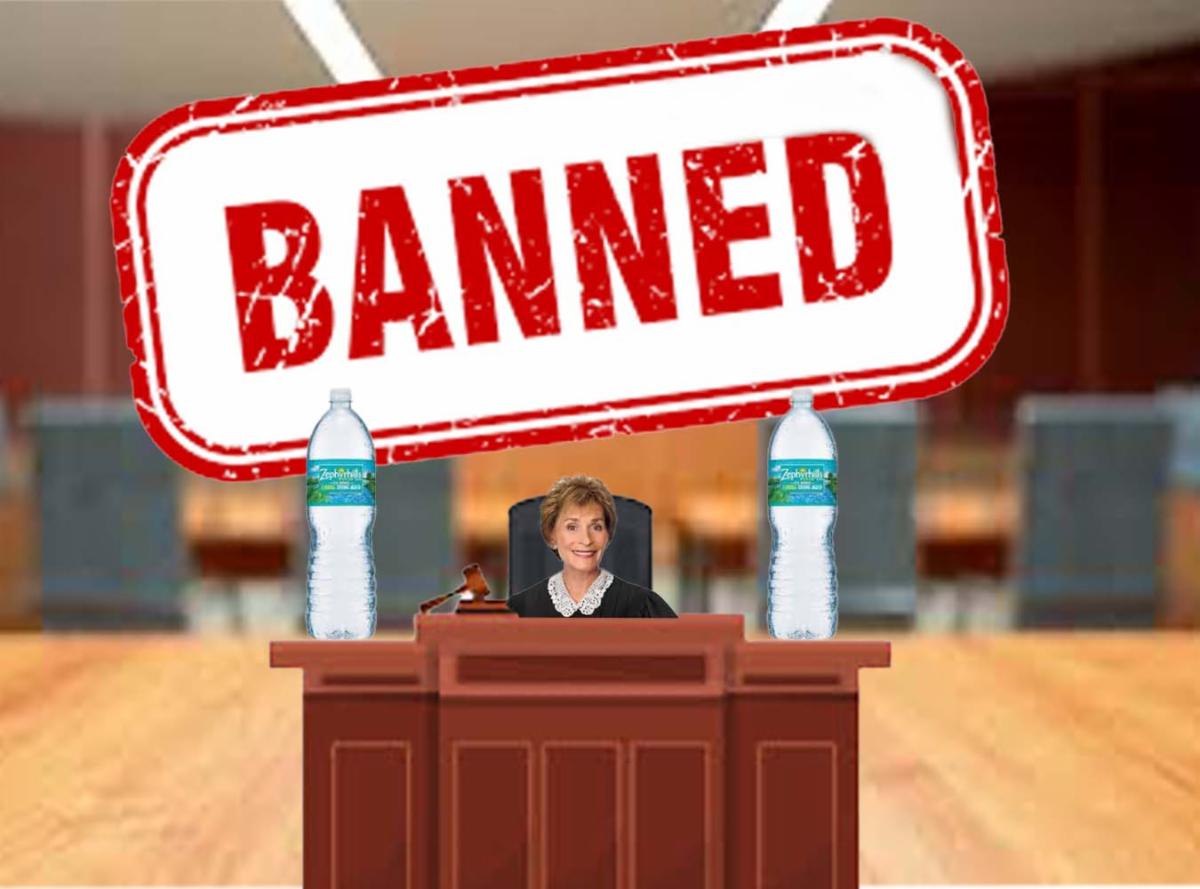
The Great Plastic Bottle Debate
Should Plastic Bottles Be Banned?
| |
|
Graphic by Netanel Asher ('28)
| |
|
Affirmative Side: Eden Pardau ('26)
If the VSCO girls could figure it out in 2019, why are we still using plastic water bottles in 2025? It’s time to take that mindset seriously and ditch plastic water bottles for good. I’m sure you all remember the VSCO girl movement: Hydro Flasks, metal straws, and the famous "sksksk save the turtles!" weren’t just a social media trend—they highlighted a real environmental issue. Plastic bottles are one of the biggest contributors to pollution. Every year, billions of them end up in landfills and oceans, taking hundreds of years to decompose. Marine animals, especially turtles, often mistake plastic for food, leading to devastating consequences. Even recycling isn’t a perfect solution, as most plastic bottles never actually get recycled. Beyond pollution, plastic bottles are shockingly wasteful. In fact, it takes three times the amount of water to produce a plastic bottle than the water it actually holds. The production process also relies on fossil fuels, worsening climate change and environmental destruction.
When reusable options exist, why continue wasting resources on something meant to be thrown away? Plastic bottles also pose health risks: many contain BPA and other harmful chemicals, which can leach into water when exposed to heat. Over time, consuming these chemicals can negatively impact hormonal balance and overall health. Stainless steel or BPA-free reusable bottles are safer and more sustainable choices. Some argue that plastic bottles are convenient, but let’s be honest—reusable bottles are just as easy to use and much better for the planet. Brands like Hydro Flask, Stanley, and Owala have made sustainable water bottles both practical and stylish and the switch is already happening. Look around our school—almost everyone has a reusable metal bottle now, even the teachers! Let’s be real, not a single day goes by without hearing one of them crash to the floor with an echoing CLANK that makes the whole room jump. While they may be loud, they’re still infinitely better than single-use plastic. Banning plastic water bottles isn’t just an environmental trend—it’s a necessary step toward a cleaner, more responsible future. Let’s take action, reduce waste, and save the turtles—for real this time.
| |  |
|
Negative Side: Yosef Dahan ('28)
Plastic water bottles should not get banned! Firstly, banning plastic water bottles will result in millions of people worldwide losing their jobs. According to a 2024 article by the ILO, globally, an estimate of over 6.9 million people work in recycling, and, according to the IBWA, all plastic water bottles are made to be recycled.
Many people believe that banning plastic water bottles would result in less damage to the environment, but they would be wrong. According to a 2019 article by KQED, after the University of Vermont instituted a ban on plastic water bottles on campus, shipments of plastic bottles increased by 20%, because students and staff simply bought other plastic bottle beverages. Furthermore, switching to non-plastic water bottle alternatives may seem more environmentally friendly, but heavier options, such as glass or metal, use up more energy during shipping, which results in more fossil fuels being burned, and more pollution being created.
Plastic water bottles are also much cheaper than their metal or glass counterparts, and they provide a clean source of water to 2 billion people worldwide who rely on water as their sole source of clean water, as they have limited to no access to clean, drinkable water.
Overall, plastic water bottles are an easy, cheap, and light way to get clean drinking water, which is essential to human life.
Sources:
https://bottledwater.org/recycling/ (IBWA, 2024)
https://www.kqed.org/education/532653/would-banning-plastic-bottles-help-or-hurt-the-planet (KQED, 2019)
https://bmjgroup.com/urgent-rethink-of-bottled-waters-huge-and-growing-toll-on-human-and-planetary-health/#:~:text=Some 2 billion people around,often healthier than tap water (BJM Group, 2024)
| |
Rabbi Weil Breaks Down the Middle East for Upperclassman Boys | |
|
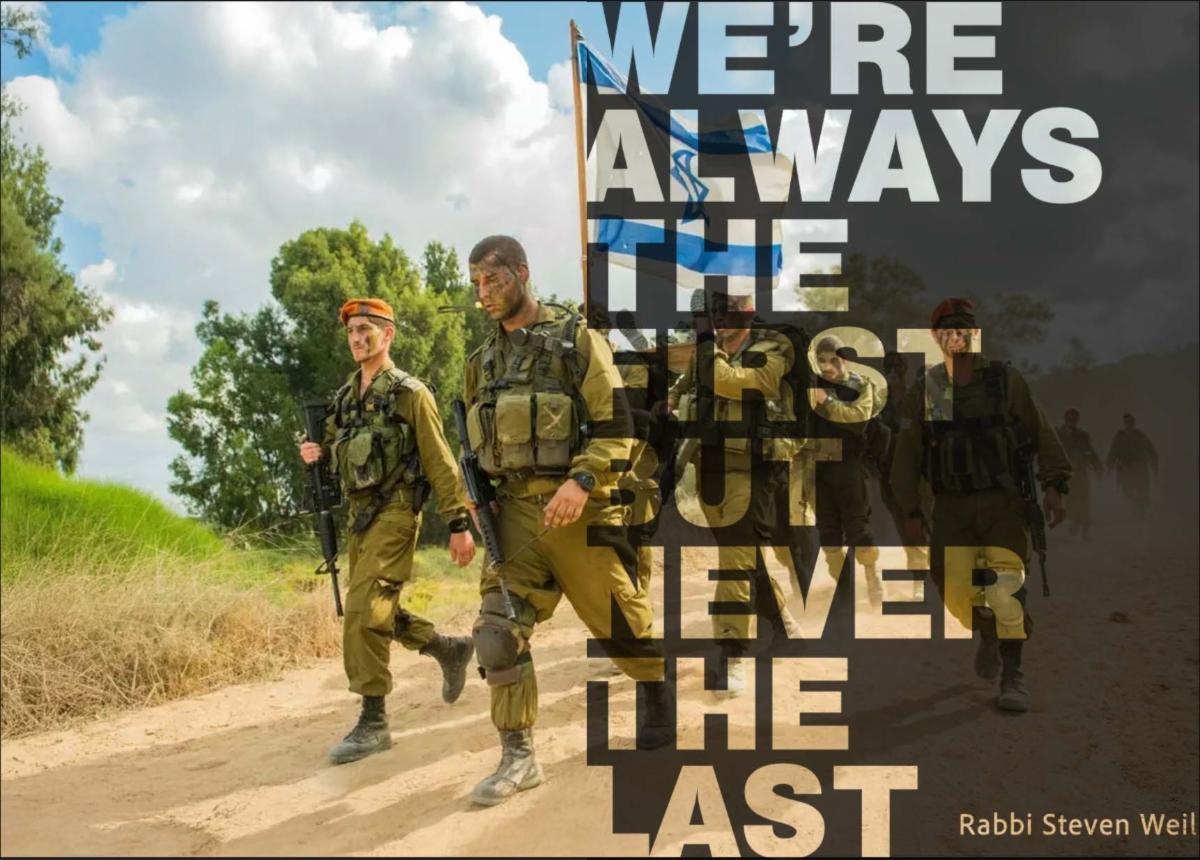
Graphic by Ezra Dimont ('25)
Last Friday, Rabbi Steven Weil came to speak to junior and senior and boys about the ongoing conflict in the middle east, and the influence of Shia muslims in funding an array of different groups surrounding Israel. He explained how Iran, and the IRGC, a powerful force parallel to the weaker Iranian Military, send money and weapons to groups like Hamas, Hezbollah, the Houthis, and other groups like minority Shia muslims settling western Iraq.
Rabbi Weil spent the first half of his speech explaining the “ring of fire,” the organization of these Shia groups that form a circle around Israel. He explained that Israel is the first line of defence against a Shia revolution throughout the whole Middle East, with the goal of conquering the holy cities of Islam, removing Western influence from the region, and securing the vast reserves of oil in Saudi Arabia. He explained that historically, Israel and the Jewish people are “always the first, but never last,” and compared our position to the “canary in the coal mine.” Rabbi Weil described that Israel is the first domino in that wider Shiate fight against the west and Sunni Islam.
Rabbi Weil then discussed the precarious situation Israel faces, due to the sheer magnitude of its enemies, and their reserves of missiles, ballistic and otherwise. He explained the financial cost of intercepting rocket after rocket, as well as the harsh reality of the triaging Israel has to do in its missile defense.
However, Rabbi Weil ended with a positive and hopeful tone, and explained that the only way Israel continues to survive is because of miracles that Hashem performs for us and our people even in modern times.
Article by Elisha Horowitz ('25)
| |
|
The Highlites Podcast:
BEHIND THE BLACKBOARD
| |
With Hostesses Rebecca Freedman ('25)and Rhyan Rackman ('25)! Thank you to Aaron Rosenhouse ('25) for filming and editing! | |
Click on the image to read more! | | | | |