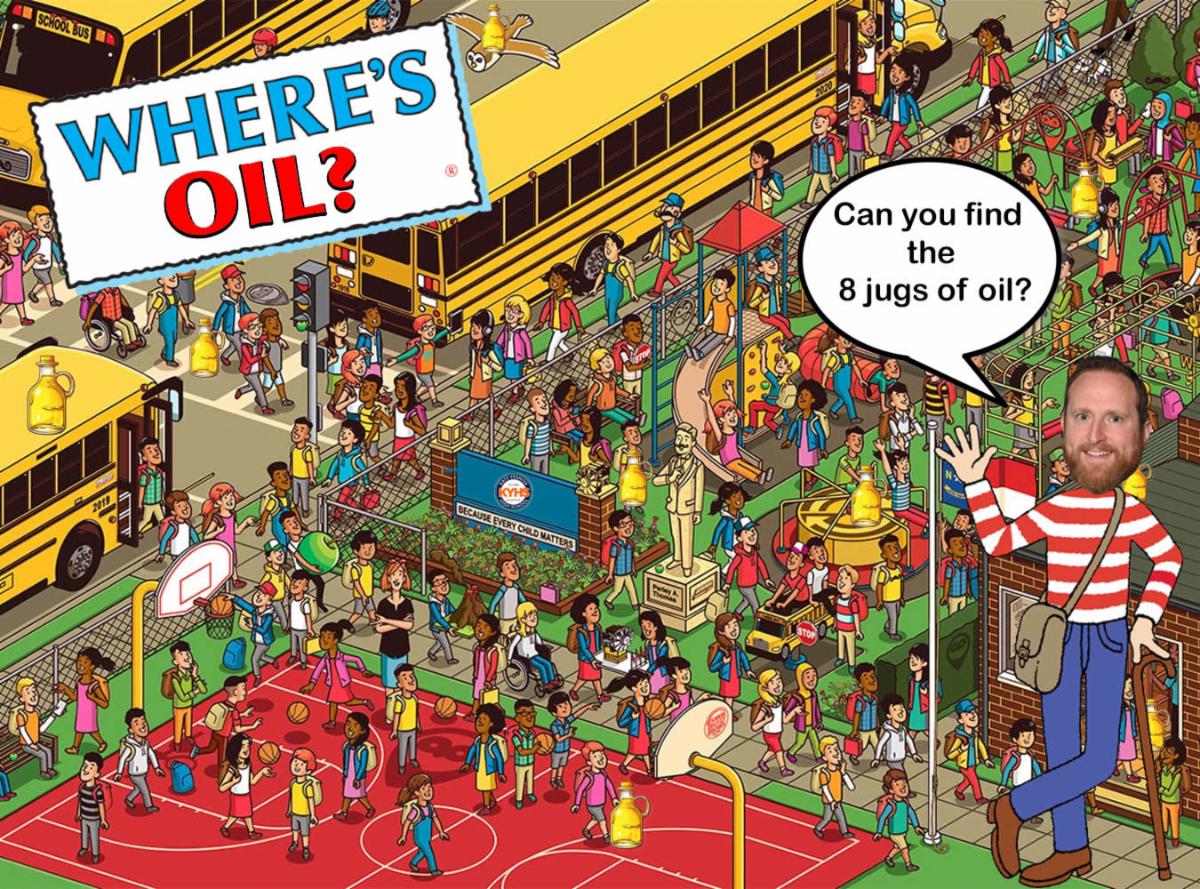
Graphic by Mikaela Gottheil ('26) | | |
Upcoming Events:
Chanukah
Dec. 15 - Dec. 22
No School Monday
Dec. 22
| |
| |
Good & Welfare:
Births:
Mollie (Markowitz ‘14) & Ari Wertheimer on the birth of a baby boy
Ori (‘06) & Andi Matilsky on the birth of a baby girl
Gabey (‘13) & Kayla Baratz on the birth of a boy
Engagements:
Dalia Baum (‘22) to Josh Farkas from Cedarhurst, NY
Sivan Mussafi (‘20) to Benjamin Givner from Miami, FL
Condolences to:
Josh Bierman (and Dr. Debbie Friedman), Ezra ('26) and Aryeh ('29) on the passing of their beloved father and grandfather, Michael Bierman Z'L
| |
| |
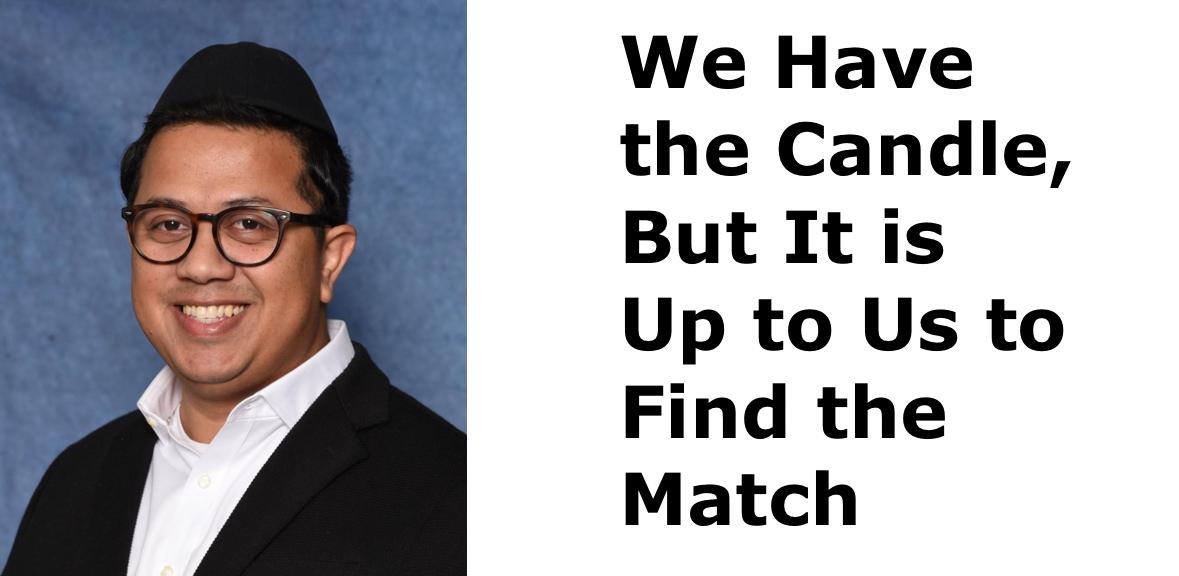
The Honorable Yehudah Avner, z’l, was a towering figure in modern Jewish history — a diplomat, ambassador, and trusted adviser to Israeli prime ministers across generations, including Menachem Begin, z’l. A man deeply involved in shaping the destiny of the Jewish State, Avner also maintained a close relationship with the Lubavitcher Rebbe zy’a, whom he visited many times for private meetings.
In one such yechidus, after hours of wide-ranging conversation, Avner asked the Rebbe a simple but searching question: “What is it that the Rebbe seeks to accomplish?” The Rebbe gestured toward a shelf. “What do you see there?” “A candle,” Avner replied. “No,” said the Rebbe gently. “That is only a lump of wax with a string inside. It becomes a candle only when a flame ignites it.” Then the Rebbe explained: the wax is the body, the wick is the soul, and the flame is Torah and mitzvot. Only when the soul is ignited by that flame does a person become what they are meant to be, a living candle. As the meeting ended and dawn approached, Avner asked one last question: “So… has the Rebbe lit my candle?” The Rebbe answered quietly, “No. I can only give you the match. You must light your own candle.”
That image — a candle waiting to be lit — lies at the heart of both our Parsha and the days of Chanukah.
Shlomo HaMelech teaches: “Ner Hashem nishmas adam” — “The light of Hashem is the soul of man.” Our sages note something remarkable: the word nefesh can be read as an acronym; ner (the vessel), pesil (the wick), and shemen (the oil). Each of us carries within ourselves everything necessary to shine. And yet, without ignition, even the finest candle remains dark.
Halacha reflects this truth. For Shabbos candles, we are careful to use refined oils and proper wicks, materials that will burn cleanly and steadily. The light of Shabbos represents an elevated, structured holiness, one that requires preparation and readiness.
Chanukah, however, is different.
On Chanukah, even oils and wicks that do not burn well are acceptable. The first Gerrer Rebbe, Rav Yitzchak Meir Alter, also known as the Chidushei HaRim zy’a, explains that Shabbos and Chanukah represent two distinct spiritual lights. Shabbos is lofty and radiant, but not everyone is yet able to fully internalize its depth. Chanukah, by contrast, shines for every Jew — regardless of where they stand.
The Chanukah Menorah is supposed to be lit below ten tefachim, lower than the space where the Divine Presence is usually revealed. Its light descends into the lowest places, illuminating even moments of spiritual distance, fatigue, or confusion. It touches a place in the soul that remains awake even when other lights feel dim.
In this week’s Parsha, Yosef rises to power in Egypt and prepares the world for years of famine by storing grain during years of plenty. When Yaakov sends his sons to Egypt, he says: “Buy for us from there, so that we may live and not die (v’nichyeh v’lo namus).”
Reb Nosson of Breslov zy’a teaches that Yosef’s strategy is not only economic, it is spiritual. In times of strength and inspiration, we are meant to store light within ourselves, to gather spiritual reserves that will sustain us when energy wanes. Chanukah is such a time. Each night we add another flame — mosif v’holech — building light slowly, deliberately. And yet, as the final nights approach, we sometimes feel the shadow of what comes next: the long winter (even in Florida…), the return to routine, the fear that the inspiration will fade.
But the candles teach otherwise.
The heilege Rebbe Shlomo of Karlin zy’a once chose to light Chanukah candles with thick wax rather than oil, even though his beautiful silver Menorah was designed for oil cups. When questioned, he explained that wax leaves a mark. It stains the surface. It doesn’t disappear without a trace. He would say, “Chanukah must leave an impression on the whole year!”. One year, a candle scorched the wall near the menorah. The Rebbe rejoiced. That burned wall would remind him of Chanukah all year long.
The message is profound: Chanukah is not meant to pass cleanly. Its light is meant to leave an impression on our homes, our habits, and our inner world. When we light the menorah, we are not only kindling flames outside of ourselves. We are lighting the nefesh within. And while the candles burn for eight nights, the soul of a Jew remains lit always.
The Lubavitcher Rebbe was indeed right: no one can light our candle for us. But we have been given the match.
Every mitzvah, every moment of learning, every act of kindness is another spark. If we allow Chanukah to leave its mark — even a small one — then its glow accompanies us long after the candles are gone.
Hashem should bless us that we merit to carry that light forward, v’nichyeh v’lo namus — not merely to survive, but to live fully, illuminated from within, all year long.
A gut Shabbos and a lichtege Chanukah,
Rabbi Moshe Nachbar
| |
| |
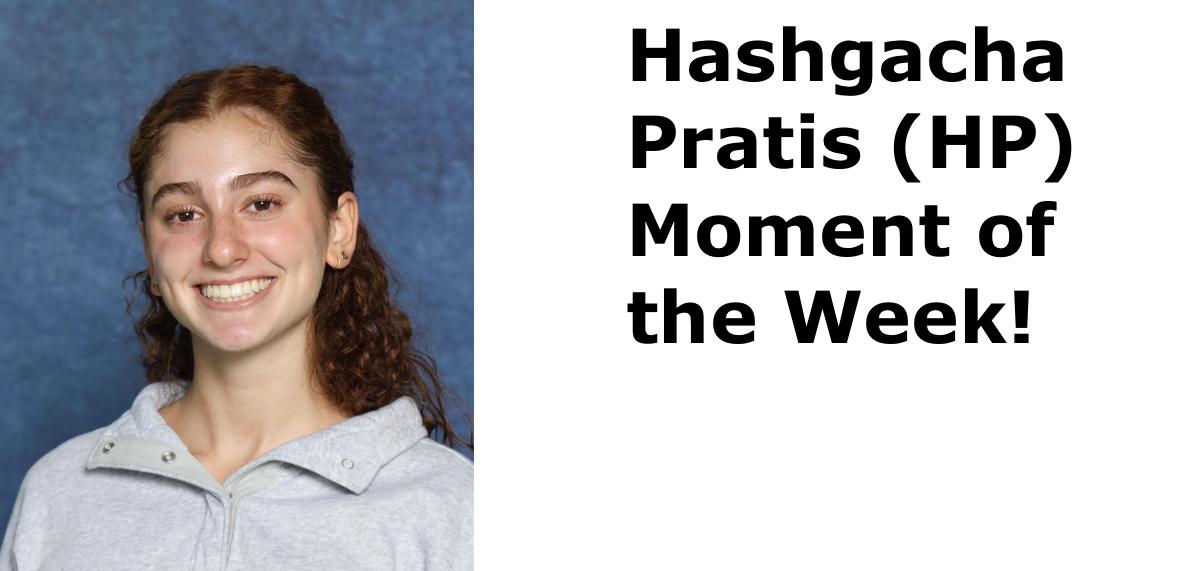
After months of studying, practice tests, and stress, the day of my final ACT test had arrived. I had signed up weeks earlier and was told the test would be held at KYHS—just about ten minutes from my house. Everything was set and I felt ready.
That morning, I went to print the admission ticket that I would need to enter the building. At first glance, everything looked fine. My school’s name was listed on the paper. But, it all went downhill when I clicked on the link for directions and was redirected to South Plantation High School, a completely different school almost 45 minutes away from my house. My heart dropped. At that point, the test would be starting in less than half an hour, with the doors closing at 8:00 a.m. sharp.
I panicked and called my dad, trying to figure out whether the test was in Boca or Hollywood, convinced there had been some kind of mistake. He told me to drive to school anyway—just in case. So I did. When I arrived, the KYHS campus was completely empty. No students. No proctors. No test. Standing in the parking lot, everything I had worked for felt like it was slipping away, and I completely broke down. I called my dad and asked him to come get me.
Without hesitation, he picked me up and drove as fast as he could to South Plantation High School. When we arrived, it was already around 8:25. The doors were supposed to be locked. This could’ve been the end of my ACT story.
But by some miracle, the doors were unlocked.
The doorman had stepped away just moments before we got there, and there was a girl my age standing by the entrance. She should have been in a testing room, but she wasn’t. We asked her to open the door, and she did. We ran down the hallway, opened the first classroom door we saw, and by another miracle, it happened to be my testing room.
My dad quickly explained the situation to the proctors, and just as I stepped inside, the doorman came rushing back, telling my dad that parents weren’t allowed inside. But that didn’t matter anymore. I was in. And the craziest part of it all was that the test hadn’t started yet. It was 8:25. Everything that should have gone wrong ended up working out; Hashem was looking out for me.
Later, I learned that ACT testing locations change all the time if there aren’t enough students booked. Looking back, the timing of everything feels impossible to ignore: the unlocked door, the girl standing there, the delayed start, my dad being with me. Every single detail lined up perfectly.
Reflecting on that rollercoaster of a day, I realize how deeply I felt Hashem’s presence. What initially felt like chaos turned into a moment of true Emunah and connection to Hashem. I truly believe I was meant to take the test that day, and that Hashem was guiding every step and was with me through it all—even when I couldn’t see it at the moment.
In order to tap into this connection with Hashem, we simply have to believe that He’s there. Sometimes, He’s like a door left open just long enough for you to walk through and be embraced by His open arms.
Good Shabbos,
Noa Schwartz ('26)
| |
| |
Winning White Out
The KYHS Storm Face Their Arch Nemesis, the Donna Klein Eagles, in Triple Header
| |
|
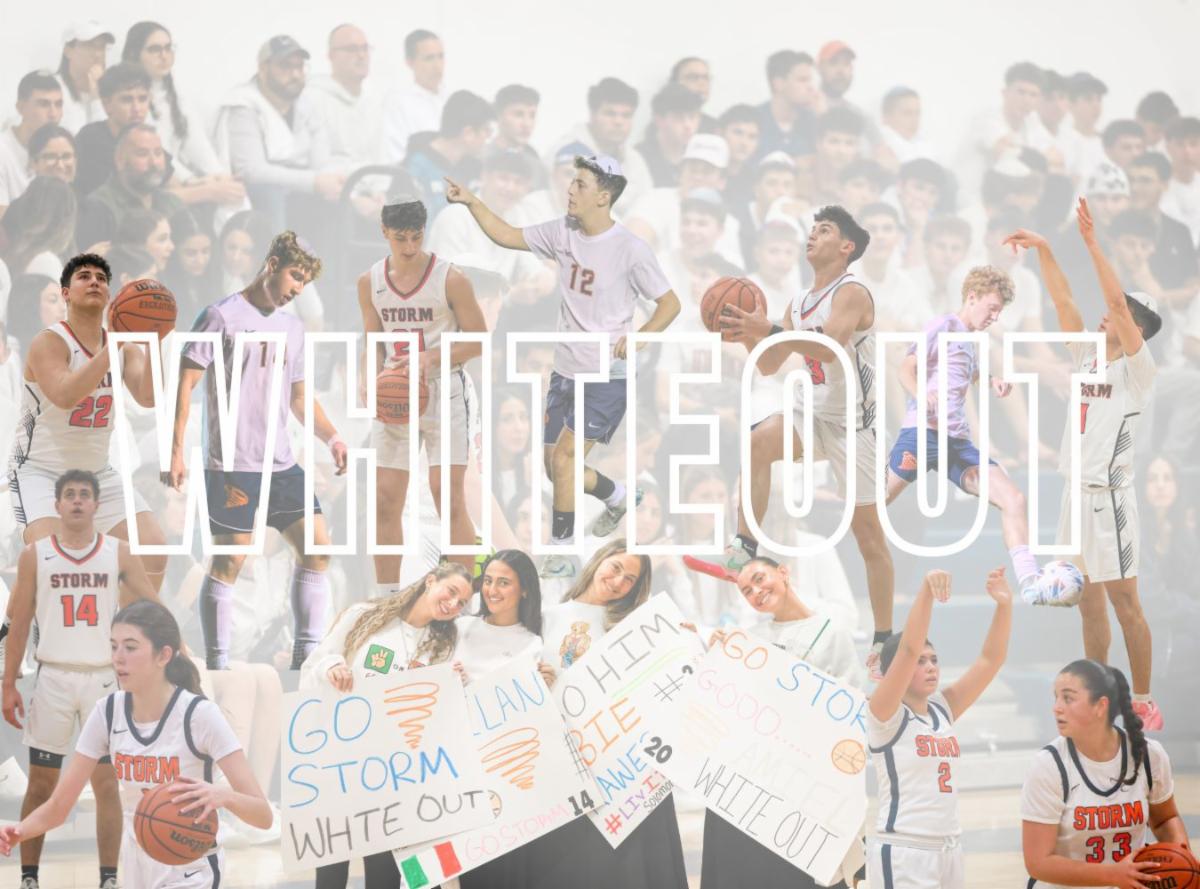
Graphic by Blimi Farkas ('26)
Nothing in sports is better than a classic school rivalry. Tensions high, fans cheering, intense energy. This past motzei Shabbat, KYHS had their annual "white out” game; a triple header varsity night against our cross-campus rival, Donna Klein. To start the night, the boys soccer team played a rainy away game. However, the unlucky weather didn’t stop the Storm from taking the win back down the street. Our boys won the game 5-2 with Daniel Frisch (‘28), Aiden Meyers (‘26), Avi Bloom (‘26), and Eitan Lasry (‘26) each scoring at least one goal. After the win, Avi Weinstock (‘27) remarked that seeing “everyone come out and support the team was meaningful and motivational.” Simultaneously, the girls basketball team was playing on our court. This was the second meeting between the Storm and Eagles, with the first matchup ending in a KYHS victory. Fueled by a loud and packed gym, the result this time was the same as the Storm blew out Donna Klein 66-24. Emma Harrow (‘27) said “the atmosphere was shocking” and that it “shows our fans passionately support us.”
Arguably, the highlight of the night was the boys varsity basketball game. Last year's white out game did not go in our favor, but this year was different; the Storm could not miss. Whether it was a tough drive to the basket or it was a contested corner three, the shots kept falling. Star big man, Nir Ovaknin (‘27), scored a cool 26 points to lead the storm to an exhilarating victory. Nir said that he had “a hard time focusing because the crowd was so loud.” Senior Abie Kaweblum (‘26) said the team had extra motivation to win ”because of last year's loss and couldn’t disappoint the crowd”. Besides the entertaining games, the white out night had free merch and a food truck for the fans to give everyone a memorable night. Each team has their own intense games approaching, but this night added to their momentum.
Go Storm!
Article by Zach Loberfeld ('27)
| |
|
Ms. Crowther Sings?!
The Girls' Annual Chanukah Talent Show Continues to Be a Highlight of the Year
| |
|
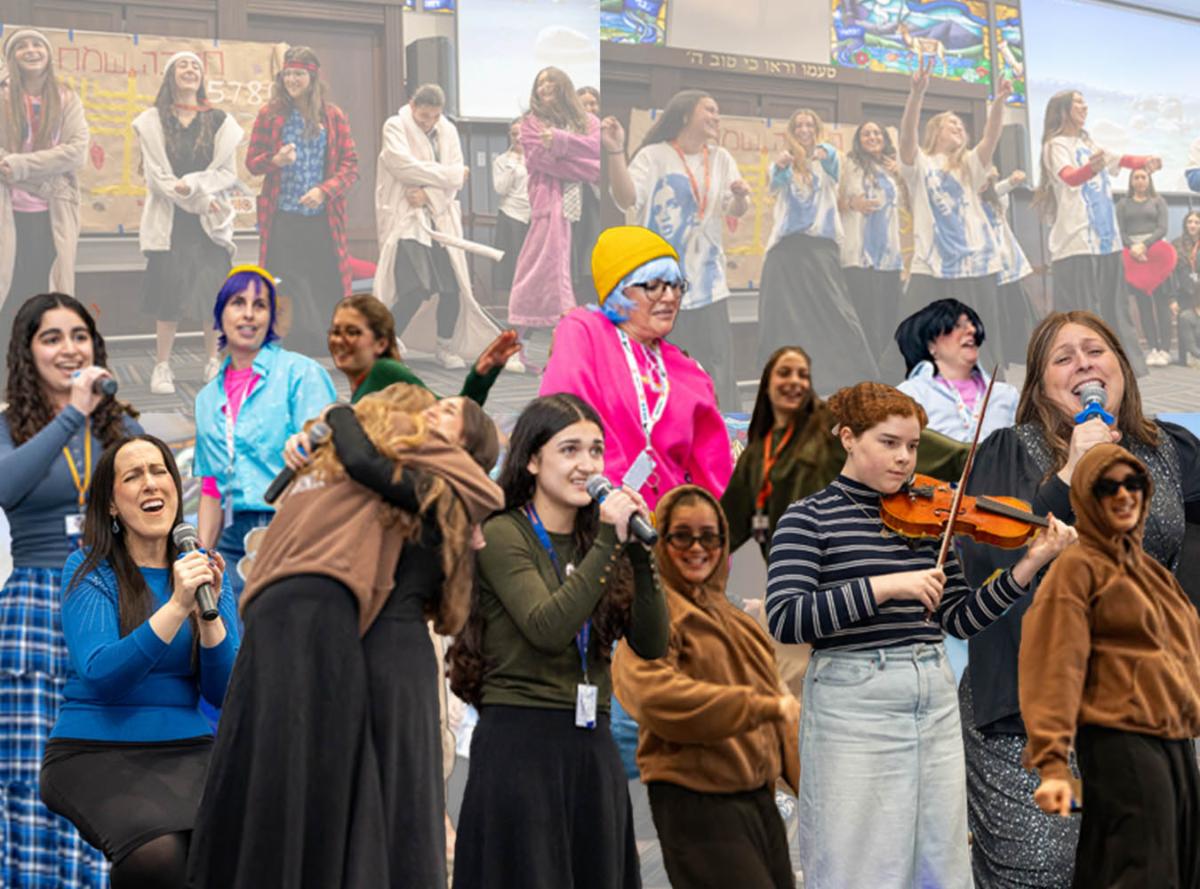
Graphic by Adira Baitner ('26)
This Wednesday, students gathered for the annual Chanukah Girls Talent Show, where students from all grades performed and demonstrated the incredible amount of talent in our school.
“The talent show is definitely a favorite program that everyone looks forward to on Chanukah,” said Sarah Leff (‘27). The show opened with a fun performance by our faculty members, dressed as the “K-Pop Demon Teachers,” who performed their parody dance, “My Little Lanyard Top.” After Izzie Gately (‘26) captivated the crowd with one of one of her unreleased songs, she later performed an unplanned duet of her song “Tissues” alongside Mrs. Crowther. Continuing a tradition, Stella Flasterstein (‘27) played violin for the third year in a row and energized the crowd with “Bohemian Rhapsody.” A special moment of the talent show came from alumna Mikayla Fried (‘25), who, while spending the year at Tiferet in Israel, sent in a surprise video of herself singing and playing the piano, which left the audience feeling inspired. Sivan Goldenholz (‘27) and Avia Kesler (‘26) followed with an incredible duet. Orlee Shemesh (‘28) performed “No Place Like Home” from Wicked, which served as a sequel to her last year’s performance of “Popular.” Mrs. Crowther, head of the English Department, once again impressed the students with her powerful voice. Additionally, several ninth graders amazed the audience with their talent show debuts, including Nava Haik, Leah Kotler, and Hannah Lynn. The show concluded with the seniors’ annual talent show dance, where they took the audience through the different trends and styles that defined their high school years.
Article by Annabelle Sokal ('27)
| |
|
Choose Your Sport!
KYHS Boys Enjoy Another Year of Competitive Sports Games in Honor of Chanukah
| |
|
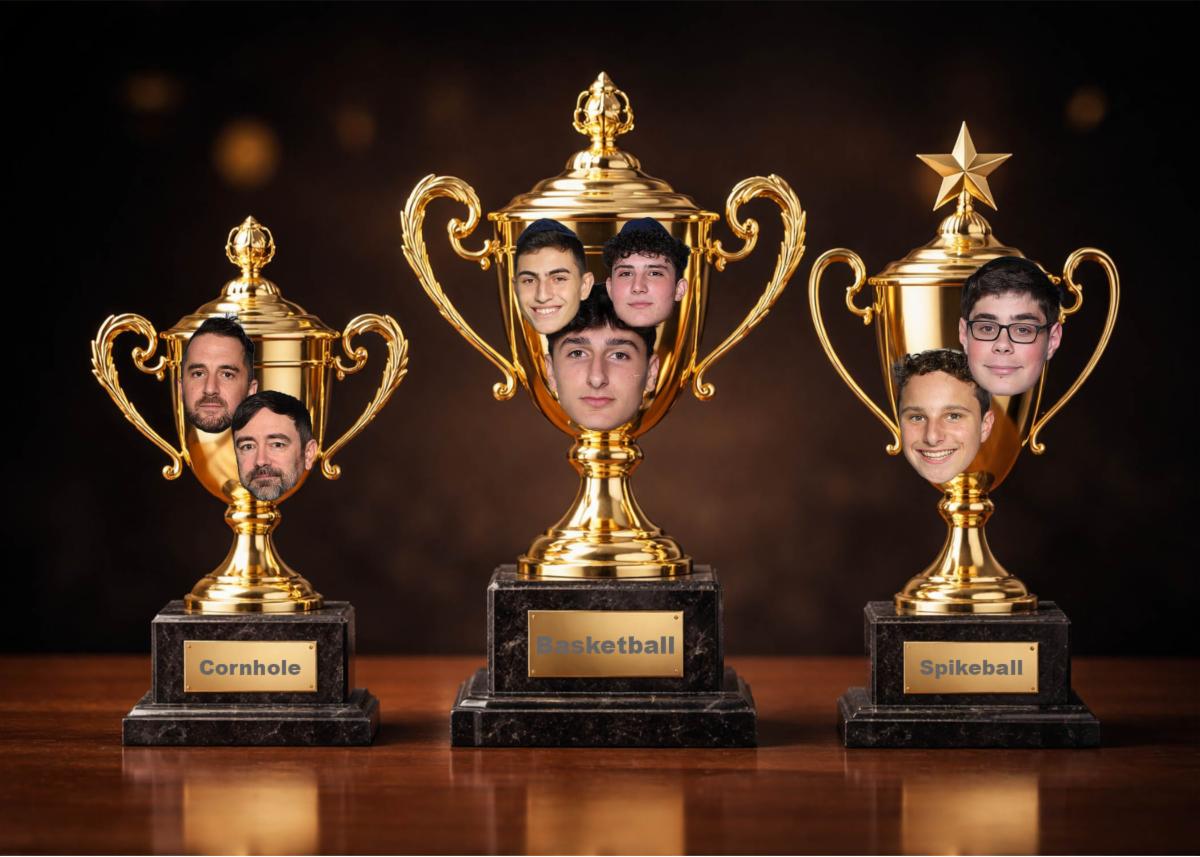
Graphic by Matan Aghion ('29)
On Wednesday, the 3rd day of Chanukah, the boys had the opportunity to participate in a huge and exciting sports tournament in celebration of the Chag. Us boys got to choose from chess, pickleball, basketball, cornhole, pingpong, spikeball, and foosball. All week, we were hyped up for the tournaments (especially because Rabbi Wolk sent a minimum of three reminder emails).
Finally, the day of the tournament came, and it was all you heard in the halls. When the bell rang for Period 3, the girls ran to get ready for their talent show while the boys rushed out the doors eager to play and hopefully win their tournament. Shooting hoops and making goals, players were fully focused on winning their games. Every boy, no matter if he was playing or not, displayed KYHS hyped-up Ruach. Asher Meyers (‘29) said, “It was so fun being able to play and watch my friends compete in this tournament. I think it was almost as hype as Stormania!”
The most notable championship of the day was the cornhole match. Mr. Levin and Mr. Sulzner (the History Buffs) faced off against Akiva Lanner (‘26) and Rabbi Lanner (the father som duo of the century) in an intense and heated matchup. At one point, the History Buffs were 1 point away from winning, but after overshooting, they were knocked back down to 15 points. Ultimately, the teachers took the win.
Thank you to all of the faculty that made these tournaments possible. Having these tournaments helped me connect with others I have never talked to before, and helped create a positive and fun environment which is what Chanuka is all about!
Article by Matan Aghion ('29)
| |
| |
How to Fight For What We Stand For
KYHS Hosts Speaker From StandWithUs
| |
| |
Graphic by Technical Staff
Last Wednesday, Rabbi Horowitz’s twelfth-grade Jewish History class had the privilege of hearing from a speaker from the StandWithUs organization. Her presentation was truly impactful, pushing us to think more deeply about Zionism and Israel. She explained Zionism in a clear and meaningful way, helping us understand it as the Jewish people’s connection to and right to a homeland, rather than the negative and false ideologies that are often spread today.
What stood out most, however, was her focus on practical ways we can use our knowledge about Israel and Zionistic ideas to combat antisemitism. She emphasized that education is one of the strongest tools we have, and that understanding the historical facts about Israel allows us to respond calmly and confidently to misinformation. Instead of reacting emotionally, she encouraged us to educate others, ask thoughtful questions, and share accurate information.
Her message made me realize that even as students, we have both the ability and the responsibility to stand up for ourselves and our community by being informed and respectful. Overall, her talk was educational and empowering, and it showed me how learning Jewish history in a classroom setting can truly make a meaningful difference in the world and for all of Am Yisrael.
Article by Adira Baitner ('26)
| |
| | | |