|
"If you take care of the birds, you take care of most of the environmental problems of the world."
Thomas Lovejoy
| | |
~News and Upcoming Events~
-
EARTH DAY ~ Wednesday, April 22nd ~
BONUS Program! ~ Live Bird Presentation with The Peregrine Fund's World Center for Birds of Prey
This special program will be at the UU Fellowship 160 9th Ave E, Twin Falls at 2:00 PM on Wednesday, the 22nd.
-
Saturday, April 25th ~ Orton Botanical Garden Spring Clean-up.
-
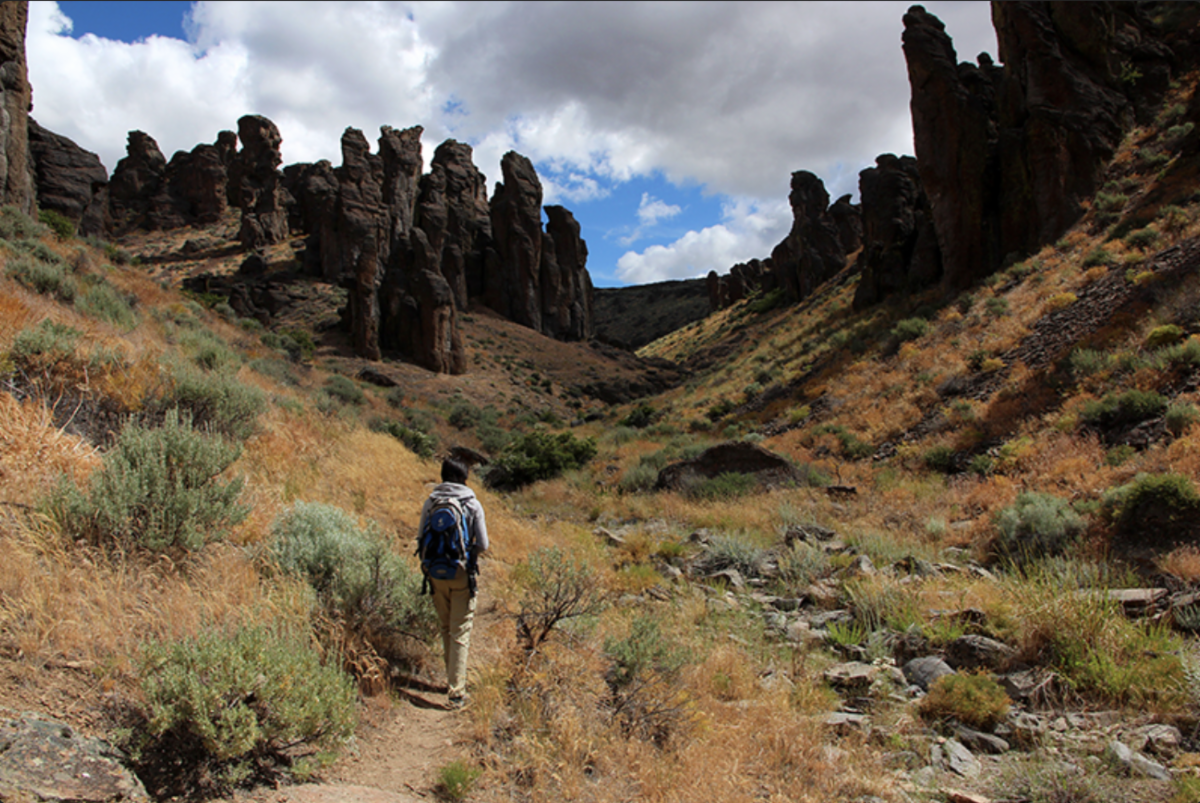
Friday, May 1st ~ FIELD TRIP ~ Little City of Rocks north of Gooding, ID
| | |
EARTH DAY 2026
April 22nd ~ BONUS Program!
Live Bird Presentation with the
The Peregrine Fund's World Center for Birds of Prey
This special program will be at the
UU Fellowship
160 9th Ave E, Twin Falls at
2:00 PM on Wednesday, the 22nd
Please invite friends, family, grandchildren to this special presentation. There will be plenty of room and who does not want to see a live falcon?
| | |
Chris Parish, president and CEO of The Peregrine Fund, and Stephanie Ashley, Curator of Birds at The Peregrine Fund’s World Center for Birds of Prey in Boise, along with a live falcon, will visit Twin Falls on Wednesday, Aprill 22nd. We’ll hear about the incredible work they do to keep birds of prey soaring worldwide and meet and learn all about the ecology and biology of one of their educational birds - Chiku, a Taita Falcon, or Schmidt, a Peregrine Falcon!
The Peregrine Fund, founded in 1970, is responsible for saving Peregrine Falcons from extinction through its captive breeding and release program and ultimately its removal from the Endangered Species List. They spearheaded efforts to increase the population of California Condors from just 22 individuals to a population of over 560 today. Between 300 and 350 of those birds are flying free in California, Arizona, Utah, and Baja and The Peregrine Fund’s World Center for Birds of Prey in Boise is one of four facilities that breed California Condors for release, contributing 16-20 young birds per year. Overall, the Center has raised over 270 birds, accounting for over half of the total wild population. But Condors, and other scavengers continue to struggle due to lead poisoning caused by ingestion of lead bullet fragments found in carcasses. To that end Chris Parish and The Peregrine Fund are working to remove lead from the food chain by encouraging the use of non-lead ammunition to prevent lead poisoning in condors and other wildlife. This is going to be a great program! You will not want to miss it!
| |
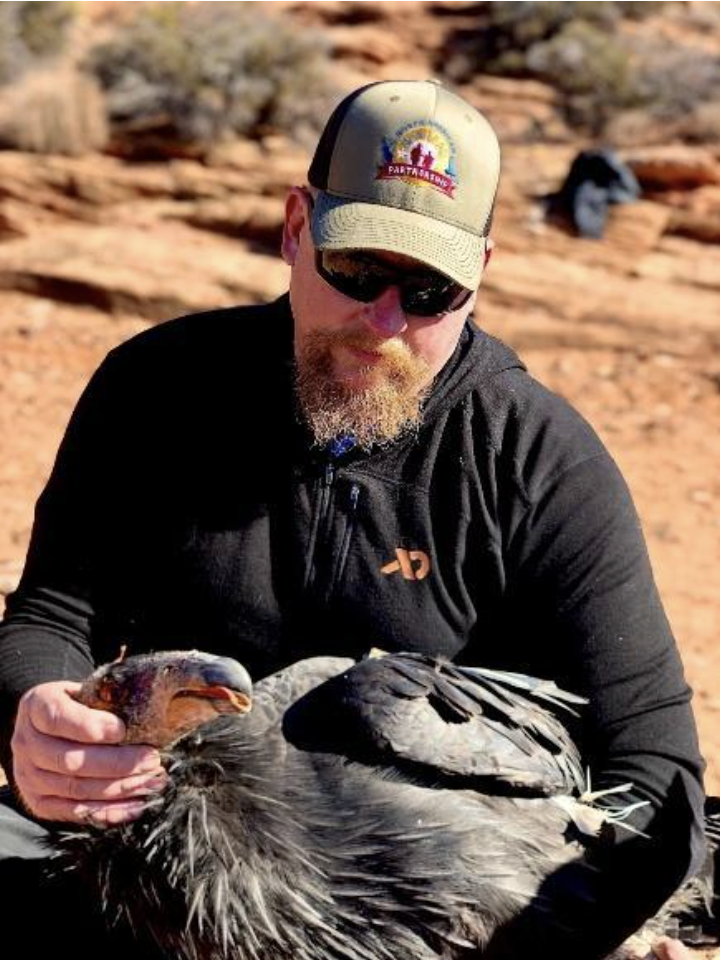
| |  | Chris Parish, Peregrine Fund President and CEO: Chris grew up in the southern San Joaquin Valley of California, the grandson of sharecroppers who migrated there following the Dust Bowl. His strong work ethic and drive were shaped by childhood immersed in athletics, farm labor, and a deep pride in his heritage. Chris received an athletic scholarship to attend Northern Arizona University, where he earned his B.S. in Biology with an emphasis on Fish and Wildlife Management. He began his career with the Arizona Game and Fish Department, working on the Black Footed Ferret Reintroduction Program before transitioning to Condor Project Coordinator in 1997. Chris joined The Peregrine Fund to direct the Condor Program in 2000. Throughout his tenure with TPF, Chris has developed extensive leadership experience in wildlife conservation, which includes co-founding the North American Non-Lead Partnership in 2018 to address lead poisoning in scavenging wildlife, the primary impediment to Condor Recovery. He was promoted to President and CEO of TPF in 2021, where he continues to lead global conservation efforts focused on birds of prey and biological ecosystems. Chris enjoys hunting, hawking, and fishing with friends and family – anything that allows him to enjoy the great outdoors. He spends some of his time in Arizona but resides in Kuna, Idaho, with his wife, Ellen, with whom he shares two children and one grandchild.
|
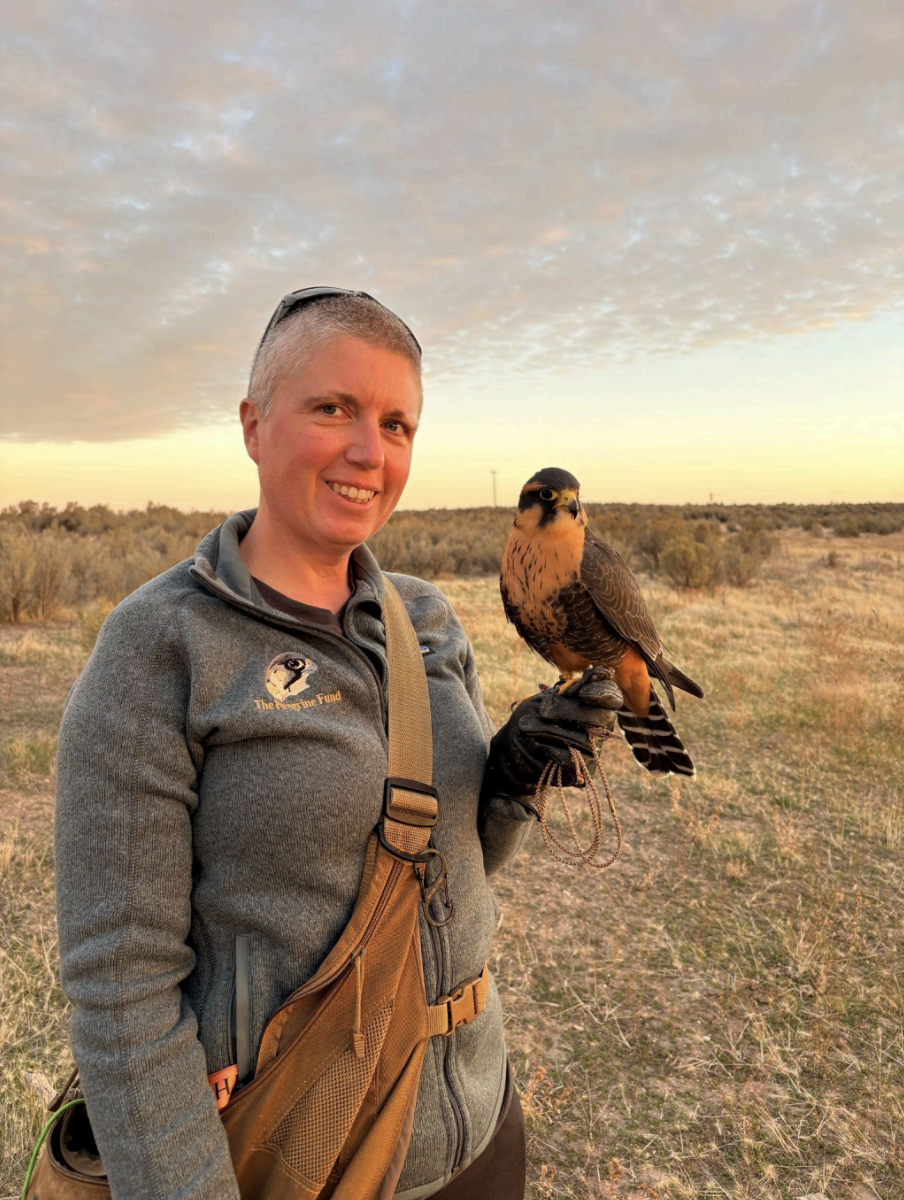
| | | Stephanie Ashley has been privileged to work with over 50 raptors across 27 species over the past two decades. She started her career as a volunteer at both Utah’s Hogle Zoo and Tracy Aviary. She was quickly hired on as staff at Tracy Aviary’s bird show, ultimately advancing to Lead Trainer over the following eight years. After leaving Tracy Aviary, Stephanie became a licensed falconer and earned an AS in Wildlife Biology at Western Wyoming Community College and a BS in Fisheries and Wildlife Sciences at Oregon State University. She participated in several field projects, including a self-led research project to document the effects of scavenger diversity on carrion decomposition in high desert sagebrush steppe and a falconry initiative to identify, trap, and relocate sheep-depredating Golden Eagles in southwest Wyoming. Stephanie has been the Curator of Birds at The Peregrine Fund’s World Center for Birds of Prey in Boise since 2021. She enjoys birding, camping, hiking, and fishing and is licensed as a Master Falconer in the state of Idaho where she is currently pursuing quail with her 3-year-old Aplomado Falcon, Inti.
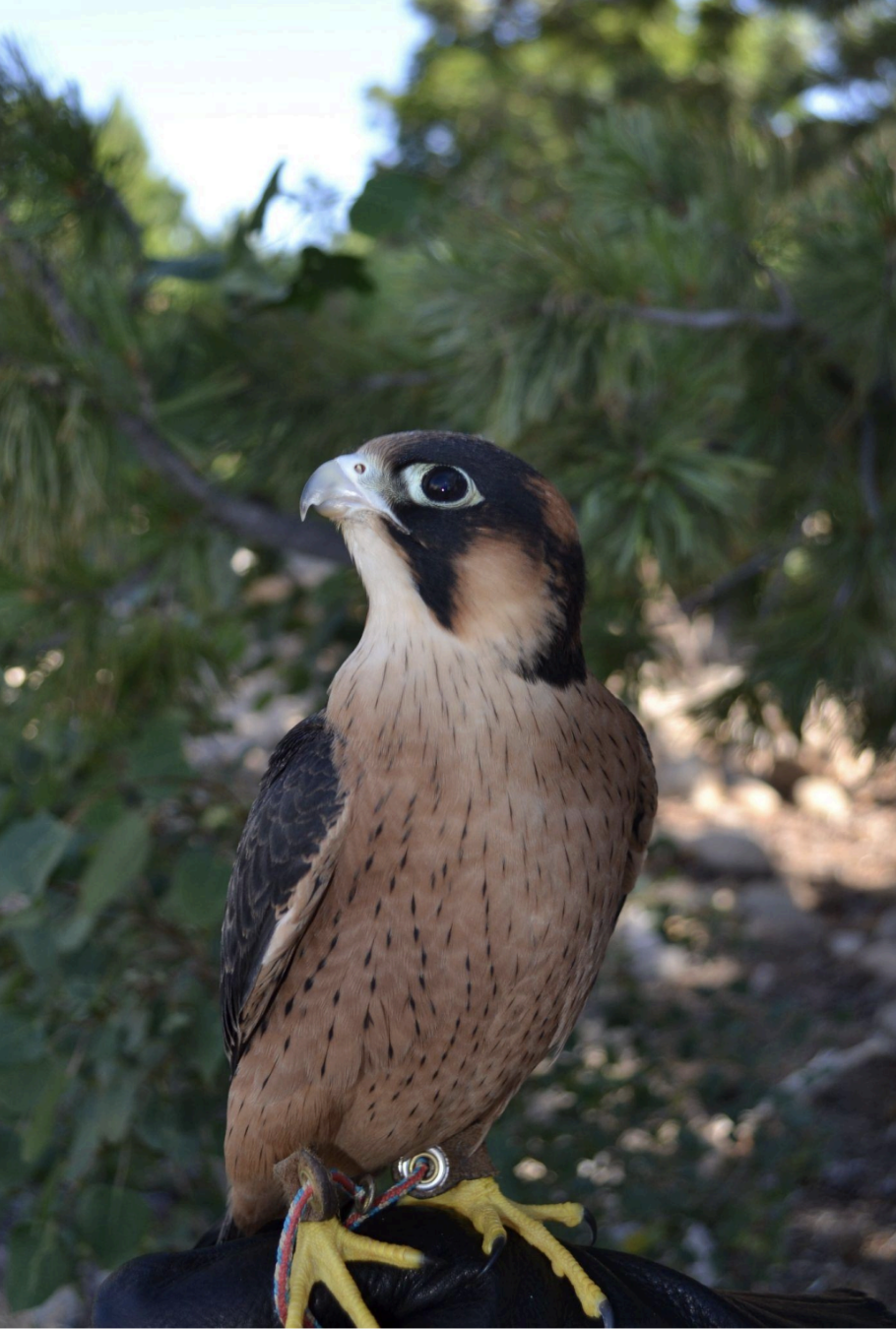
| | Chiku is a 4-year-old Taita Falcon. He was bred at the World Center for Birds of Prey in Boise. We had hoped that Chiku’s parents would raise him themselves, but they were inexperienced and unable to care for him on their own. For his safety, our propagation team removed Chiku from his parents when he was only a few days old and raised him by hand. He has been a popular ambassadors ever since. Taita Falcons are found in eastern Africa. They are listed as “Vulnerable” by the IUCN due to small, rapidly declining populations with limited distribution. | | |
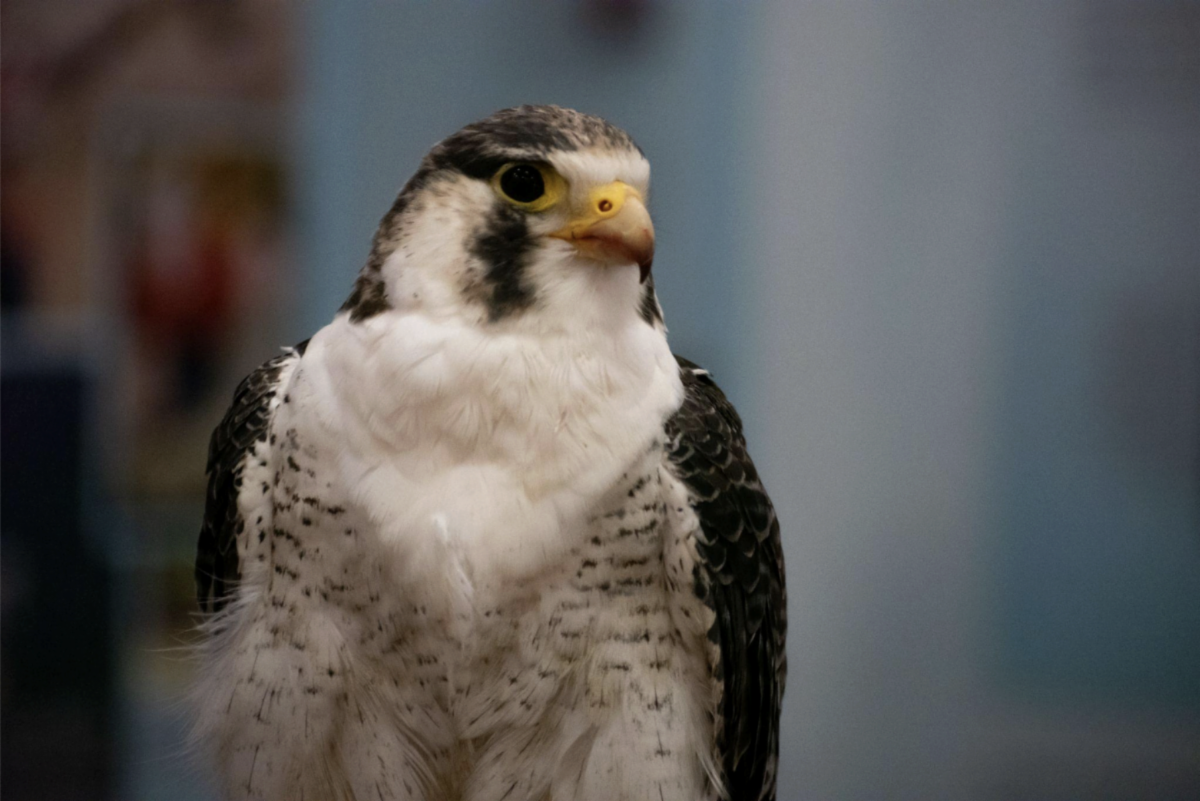
Schmidt is an 8-year-old Peregrine Falcon. He was donated to The Peregrine Fund as an ambassador when he was less than one year old. There are 19 subspecies of Peregrine Falcons in the world. Schmidt is a pallid, or pale, color morph of the cassini subspecies from Patagonia. This color variation is so distinct that these birds were once thought to be a separate species! Peregrine Falcons are considered to be “Least Concern” worldwide following their dramatic recovery at the end of the 20th century. However, some local populations, including populations of pallid South American Peregrines in Tierra del Fuego, could be vulnerable due to deficient data and lack of current monitoring.
Lead it Go Short Film
| | |
Volunteer
Opportunity
Spring Clean-up at
Orton Botanical Garden
867 Filer Ave W
Twin Falls, ID
Saturday, April 25th
7:30 - whenever
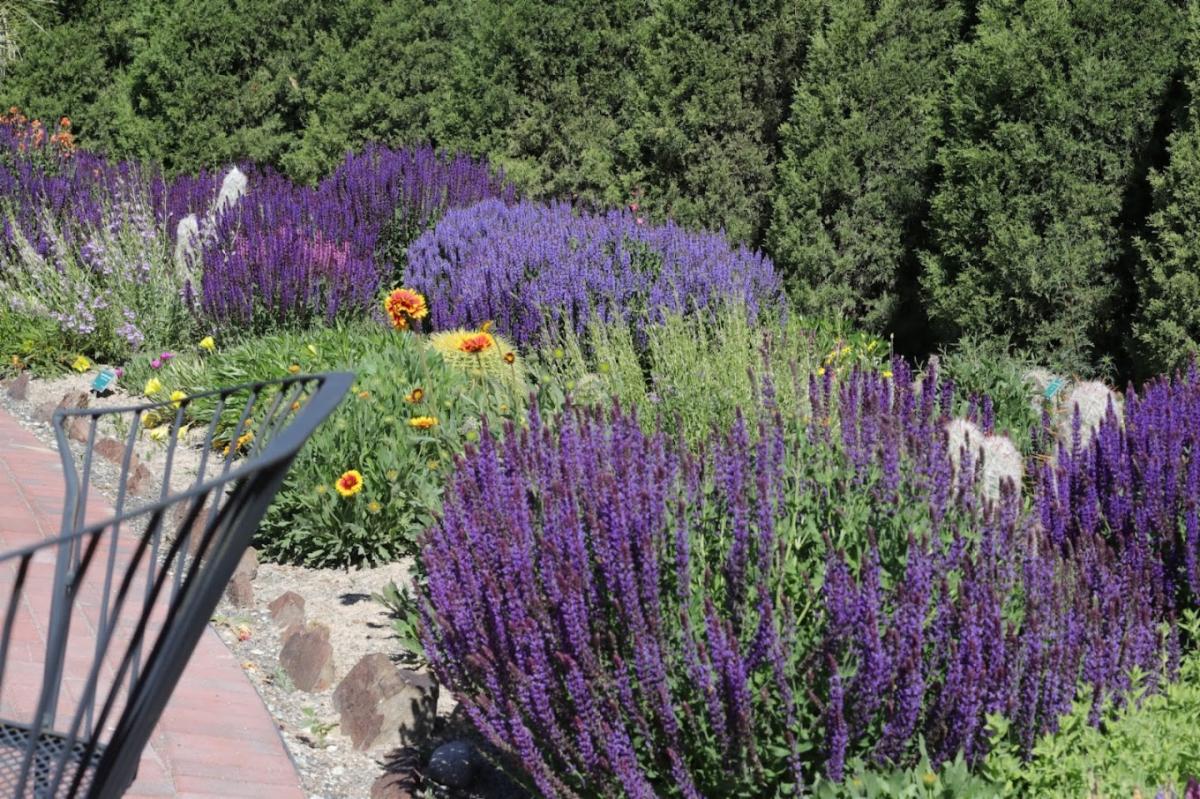
Volunteers needed to help clean up the garden before May Plant Sales.
Enjoy good coffee, birthday coffee cake (Melody Asher's Early Birthday), birding, and conversation as we help in the garden.
- Arrive at 7:30 for a cup of coffee and birthday coffee cake. Lamar and Rosalie will provide instructions while we fortify ourselves. We'll then do a short walk around the Garden with binoculars to do a quick survey of birds. As we walk the Ortons will point out areas that need special attention, and help us understand what is, and is not, a weed.
- The garden will have trowels, pruners, and some gloves available, but members are encouraged to bring their own gloves and tools. One set of knee pads, and two low stools are available, but for those with mobility concerns it is highly recommended to bring knee pads or to ask for tasks that allow for standing.
- One side of the green gates for the parking area will be open on Filer Ave W. with additional parking on Filer Ave W. itself.
Plant Sales:
May 17 & 18 and 24 & 25
| | |
Little City of Rocks Field Trip
FRIDAY, May 1st
8:00 AM - 12:00 AM (??)
Two Meeting Spots:
Meet up at 8:00 AM in Twin Falls in the southwest corner of the Barnes and Noble parking lot or....
Meet up at 9:00 AM in Gooding at the McDonalds (2440 Main St, Gooding, ID). Coffee. Last toilet.
We'll carpool to Gooding, then head north to the Little City parking area. The turnoff for the Little City of Rocks is located 12.5 miles north of Gooding, Idaho on Highway 46 and marked by a BLM sign. You will find the turn at N43° 06.391 W114° 40.271
The parking area/trailhead is located about two miles down a graded dirt road suitable for most vehicles. Given our very dry winter, the road should be dry and not too terribly rough.
Plan to marvel at the unique rock formations while looking for birds. We should see Chukar, Rock and Canyon Wren, Brewer's Sparrow, Sage Thrasher, Horned Lark, Western Meadowlark, Golden Eagle, Common Raven, and more. Rattlesnakes, Gopher Snakes and a variety of lizards are also very common in the area, so we'll keep an eye out for those too!
We will walk about one and a half miles through the center of the canyon past towering hoodoos. There are many amazing sights to see from the trail and opportunities to explore even more formations off the trail as well. The trail leads along a small creek that must be crossed a few times, but will most likely be dry when we visit. At the 1.5 mile mark, the trail splits into two canyons. Some trail maps show the route as a loop that can be accessed from either canyon but hikers must be willing to scramble off trail to complete the loop. We will be turning around at this point to avoid going off trail.
Things to consider: There is little shade on this hike and it can get very hot in the summertime. Bring plenty of water, sun screen, maybe some mosquito dope, and snacks (or a lunch). Wear boots, light-weight long pants, and a good sun hat. Don't forget your binoculars and a camera.
Little City of Rocks Geology Explained (2.5 min long)
Little City of Rocks Bird Checklist
| | |
Seven Simple Actions to Help Birds
From the Cornell Lab of Ornithology
Click the link above to read the full article, watch some great little videos, and be inspired to do some good in the world to help out the birds
| |
Equity, Diversity and Inclusion Statement
Prairie Falcon Audubon, Inc. fully supports
National Audubon Society's statement on
Equity, Diversity and Inclusion
Prairie Falcon Audubon, Inc. believes that everyone has the right to enjoy birds, the outdoors, and a healthy and safe environment. In order to fulfill our mission to educate the general public about birds, bird watching, and preservation/improvement of the environment that birds and bird watchers share, we will work to include everyone, no matter their race, gender, sexual orientation, religion, political affiliation, age, or disability. We are committed to building an equitable, diverse, anti-racist, accessible, fun, and inclusive organization that supports birds, and the people who watch them, in our community.
| |
CHECK THIS OUT!
Cornell Lab of Ornithology
An incredible resource for anyone (young to old) who wants to learn more about birds!
"Whether you’re a bird lover, an educator, or a student, interactive courses and multimedia-rich resources will lead you into the fascinating lives of birds, from birding basics to comprehensive ornithology."
| |
Learn More About Birds with These Courses
FREE - $130
Start at your level.
Go at your own pace. There’s something for every bird enthusiast.
| |
Watch a Short Video
FREE
A curated collection of educational videos from Cornell Lab
| |
Play games Powered by Birds
FREE
Birds are awesome. Play games that explore flight, song, dance, feathers, and so much more.
| |
Listen to a Lecture
FREE
Keep learning with this curated collection of videos from the Cornell Lab. Each is about an hour long.
| | | | |