Metal Market Update - November 2026 | | | |
Greetings!
We trust this email finds you well, and we hope this information adds value to your busy day. We appreciate the opportunity to connect with you and your Team in all facets of the business cycle, so please don't hesitate to call us at (704) 568-3001 or email us at sales@wardve.com if we can be of any assistance.
Don't forget, we LOVE manufacturing heat exchangers too!
Here's a quick peek — special thanks to the Metal Market Update contributors.
| | |
Before we dive into the numbers, here's a bit of lighthearted ASME Code fabricator humor.
Did you hear about the man who decided to take a welding class with his new date?
It was quite the bonding experience.
Now buckle up, we're off to the races with the latest industrial manufacturing news and information.
| | |
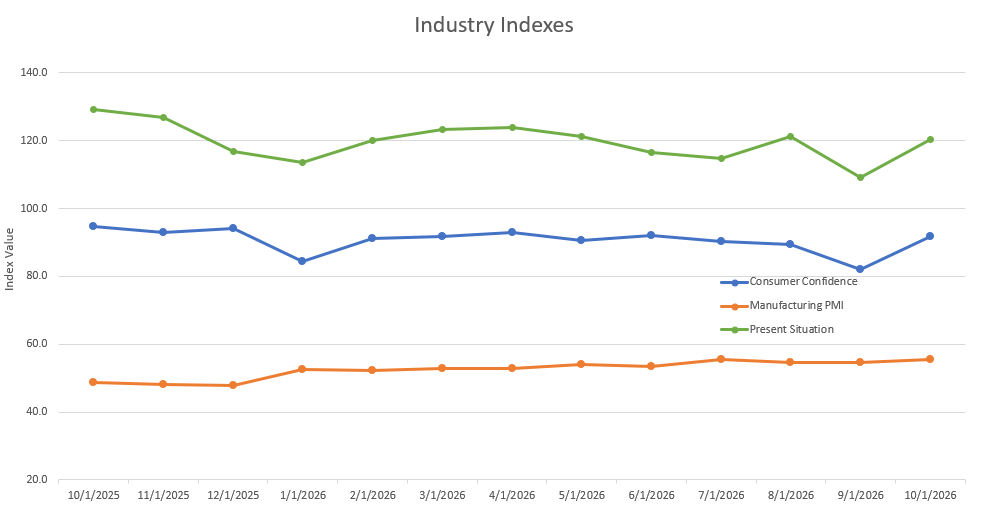
Manufacturing expanded again in October, with the ISM Manufacturing PMI climbing to 55.5 percent, up a full point from September's 54.5, marking the tenth straight month of growth in the sector and the 24th consecutive month of overall economic expansion. Consumer confidence rebounded sharply after a steep September drop, climbing 7.5 points to 91.7 following a slide into the low 80s the month before. October inflation data could not be compared year over year because of last year's government shutdown, but we do know prices rose 0.4 percent for the month, more than expected. Crude oil pulled back to around 91 dollars a barrel as tension between the US and Iran showed some signs of easing, while the US oil rig count climbed to 604, up 6 from last month and up 56 from a year ago. Material surcharges increased in September, and alloy surcharges are now trending lower heading into October and November, which should provide some relief in the coming months.
Lead times remain under the most pressure on carbon steel plate and two piece constructed heads at 10 feet in diameter and larger, driven by data center demand. The data center market continues to be the clear outlier in our industry, running at a pace we have not seen anywhere else. The broader petrochem market remains soft, while pharma and oil and gas continue to outperform petrochem, though neither is close to matching the data center pace.
Tariffs remain the story of the year, and the picture is largely set. Section 122 is gone. Section 232 and Section 301 are the law of the land. The Section 301 forced labor tariff challenge was argued before the Court of International Trade on September 30, and the judges sounded skeptical of the government's position, though no ruling has been issued and the tariffs remain in effect in the meantime. A separate USTR investigation into excess manufacturing capacity across 16 countries is underway, with a determination due by March 2027. The US and China trade truce, originally set to expire November 10, has been extended to January 10. We are also watching a proposal to add heat exchanger component parts to the Section 232 derivative tariff list at a 25 percent rate. Comments on that closed in late August, and no final decision has been made as of this writing.
| |
Industrial Manufacturing News
| | |
Economic activity in the manufacturing sector expanded in October for the 10th consecutive month, say the nation’s supply executives in the latest ISM® Manufacturing PMI® Report.
The Manufacturing PMI® registered 55.5 percent in October, 1 percentage point above the September figure of 54.5 percent. The overall economy expanded for the 24th month in a row. (Important data point reference: A Manufacturing PMI reading above 50 percent indicates that the manufacturing economy is generally expanding; below 50 percent indicates that it is generally declining. A Manufacturing PMI above 42.5 percent, over a period of time, indicates that the overall economy, or gross domestic product (GDP), is generally expanding; below 42.5 percent, it is generally declining. The distance from 50 percent or 42.5 percent is indicative of the extent of the expansion or decline.)
The Conference Board Consumer Confidence Index® rose by 7.5 points to 91.7 (1985=100) in October, up from 84.2 in September (a slight upward revision).
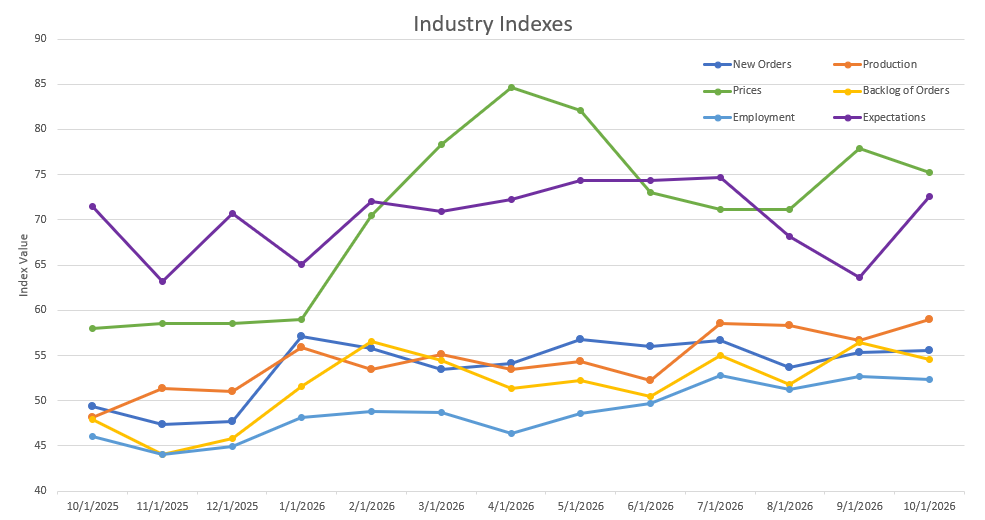
Please see the graphs for other notable indexes related to our industry.
| | |
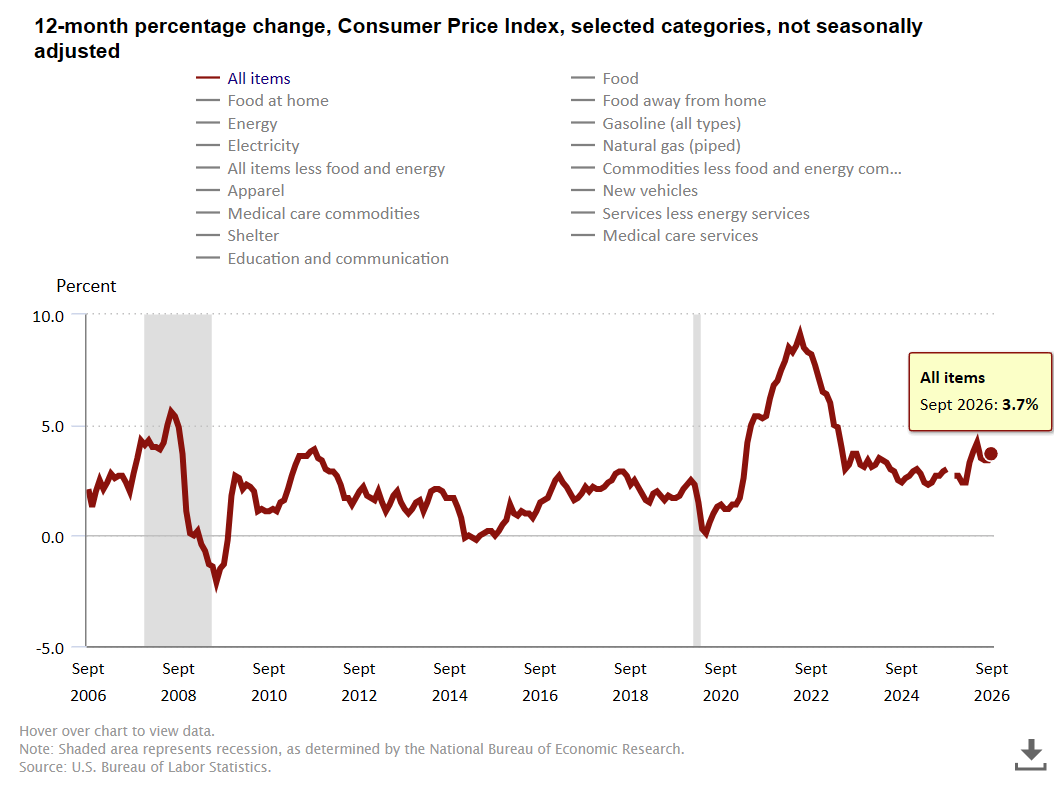
The Consumer Price Index (CPI, otherwise known as our "inflation" friend) wasn't updated with October 2026 year-over-year data. Because of the 2025 lapse in appropriations due to last year's government shutdown, we can't report year-over-year comparisons this month. We do know that consumer prices rose 0.4% in October, more than expected, which complicated the Fed's inflation fight.
CPI tracks the rate of change in US inflation over time, and the following shows the trends over the past 20 years.
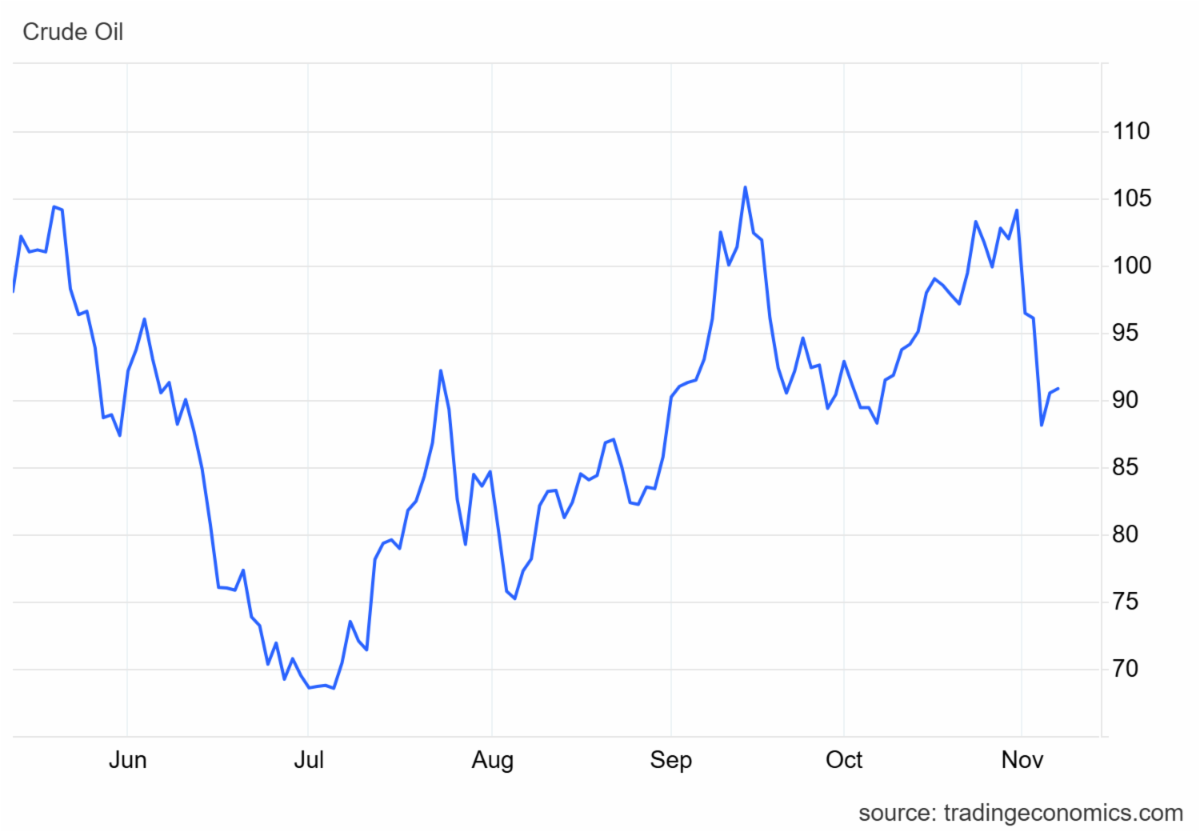
| | Crude oil rose to around $91 a barrel on Friday, erasing earlier losses as investors weighed the risk of renewed US-Iran military escalation against prospects for a diplomatic breakthrough. Investors are assessing whether the end of the US midterm elections could pave the way for renewed action against Iran, potentially threatening Middle East oil supplies. Iran reported attacks on oil tankers in the Strait of Hormuz on Thursday, while UKMTO data indicated vessel attacks were continuing at a near-record rate. Hopes for a diplomatic resolution emerged after Iran reportedly sent a nuclear proposal to Washington through Qatar. Significant obstacles remain over Iran’s nuclear program, with the US demanding that Iran give up its nuclear capabilities. Meanwhile, Iran demands the lifting of the US naval blockade, sanctions relief and the release of frozen assets before fully reopening the Strait of Hormuz. Crude plunged nearly 12% for the week. | | |
The online US Oil Rig Count is currently reported as 604, which is ⬆️6 compared to last month's report and ⬆️56 from November 06, 2025. This key and leading indicator shows the current demand for products used in drilling, completing, producing, and processing hydrocarbons, which we all use every day as fuel sources and finished products.
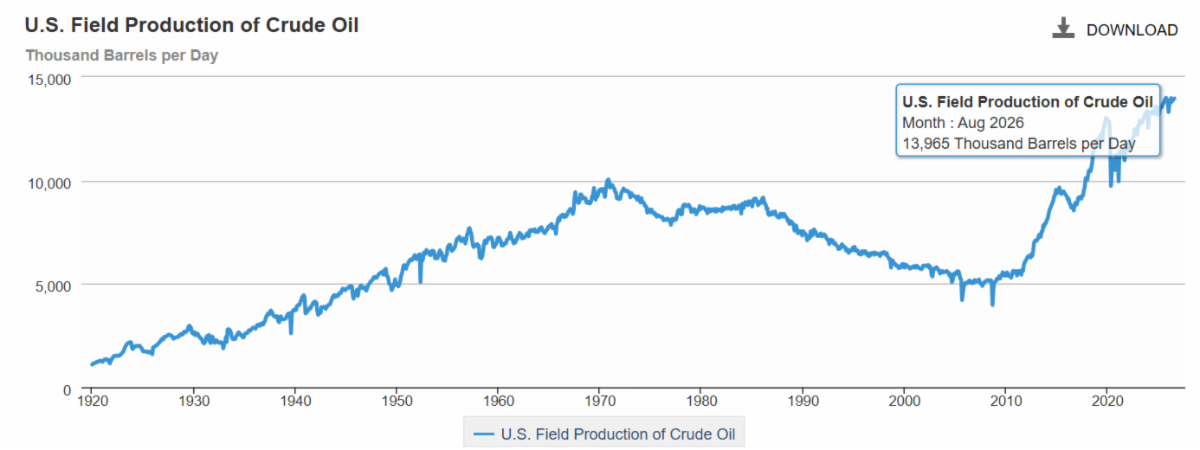
The number of rigs conducting oil and gas drilling in the United States remains stagnant, but efficiency has increased significantly over the years, as shown in the chart below. We continue to drill at record production levels. However, this trend of fewer rigs still reflects the priority of drillers to focus on efficiency and enhancing shareholder returns rather than expanding production through capital investments due to the previous administration's desire to move away from fossil fuels. This philosophy might change now that the Trump administration is entirely behind fossil fuels. To provide context, in 2019, 954 rigs were drilling for oil and gas in the US, and, in 2014, there were 1609 rigs before oil prices dropped below $20 per barrel at the end of that year.
| | |
Tariffs have tightened, loosened, and will keep evolving as the Trump administration navigates global negotiations.
Whew... There's still A LOT to unpack here, so hold on for the roller coaster ride.
A little background on where this all started and what it means. Tariffs are duties placed on foreign goods, paid by domestic importers to Customs and Border Protection at ports of entry. President Trump introduced tariffs on select Chinese goods in his first term in 2018, and President Joe Biden later maintained them, along with duties on steel and aluminum from most countries. In February 2025, Trump reinstated tariffs (10% higher on Chinese imports, bringing them to 35%, and 25% on Mexican and Canadian goods (except oil, taxed at 10%)). Since then, the environment has been ever-changing, with tariffs fluctuating month to month based on negotiations with other nations.
Tariff Update as of November 2026.
The tariff framework that has been taking shape all year is now largely set. Here is where things stand as of this month, with no major changes since last month's newsletter, and what it means for you.
Section 122 Is Gone. Section 232 and 301 are the Laws of the Land.
As we reported last month, Section 122 expired by statute on July 24th, and Section 301 forced labor tariffs took effect at 12:01 am ET on July 24th.
Please refer to our prior newsletters for details on Sections 232 and 301. You can also find them on our website (click here).
Section 301 Is Being Challenged, and the Court Sounded Skeptical.
The challenge to the Section 301 forced labor tariffs, brought by small business importers and 25 states, was argued before the Court of International Trade on September 30th. The judges questioned both sides but appeared mostly skeptical of the government’s position. No ruling has been issued, and the court has not said when it will rule. The tariffs remain in effect until a court orders otherwise. Any relief could be limited to the named plaintiffs, as it was in the Section 122 case, and any ruling would likely be appealed. We will update you as soon as the court rules.
One More Section 301 Track to Watch.
The Office of the United States Trade Representative (USTR) is also investigating structural excess manufacturing capacity in 16 economies, including China, the EU, Japan, Korea, Mexico, and India, across 21 manufacturing sectors. A determination is due by March 11, 2027. Nothing has been decided. Any tariffs that come out of it would be a separate action from the forced labor tariffs.
China Update.
The U.S. and China trade truce, which was set to expire November 10th, has been extended to January 10th. Existing Section 301 tariffs on China remain in place and still stack with Section 232. If any portion of your supply chain has Chinese content, that exposure is real and worth understanding in detail.
One Process Change Worth Noting.
The petition-based inclusion process, which previously allowed domestic manufacturers and trade associations to formally request that specific HTS codes be added to the Section 232 scope, has ended. Going forward, Commerce and USTR will adjust product coverage on a rolling basis at their own discretion. There is no longer a formal submission window.
That rolling process is already at work. In August, the Commerce Department’s Bureau of Industry and Security (BIS) asked for public comments on adding 14 more derivative articles to Section 232, including parts of heat exchange units. Most would be taxed at 25% of full customs value. Comments closed August 27th. As of November 10th, we have not seen a final decision, and no effective date has been set. When BIS last added products, in August 2025, the change took effect within days, so there may be little warning. This would cover component parts imported separately, not the finished heat exchanger.
That means if you believe imported finished pressure vessels and heat exchangers should be explicitly covered under Section 232 derivative tariffs, engage directly with your elected officials. Not a petition. A phone call. A meeting. A letter.
As pressure vessel and heat exchanger fabricators, we need to keep pushing for protection for steel product manufacturers, not just domestic raw-material suppliers. We encourage every customer and partner in this industry to make that contact.
What This Means for Ward.
We continue to purchase 80 to 90 percent of our material domestically depending on the project. Our total material spend has increased approximately 15 to 30 percent since Section 232 tariffs were enacted, resulting in a 10 to 20 percent overall unit price increase after labor. We are absorbing what we can. We are passing through what we must. And we will continue to monitor the evolving situation and update you each month on the latest developments.
| | The administration has published several tariff fact sheets on the White House website (click here) as the tariff topic has evolved. | | News & Insights on Materials | | |
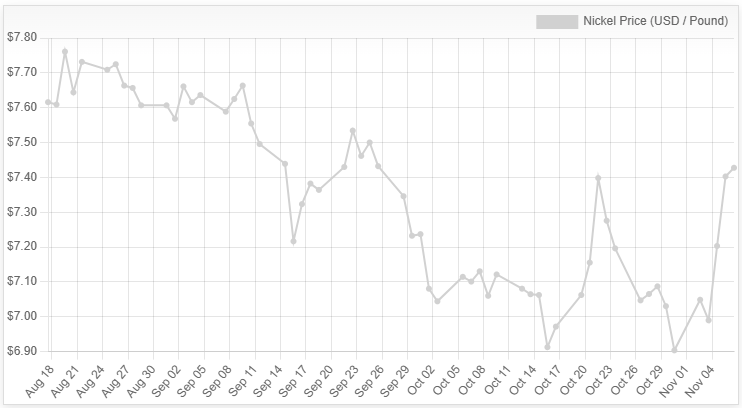
Nickel traded around $7.3709 per pound, extending its rebound to a two-week high as expectations of tighter Indonesian supply improved the market's longer-term outlook. Indonesia, the world’s largest nickel producer, is considering more aggressive production quota cuts for 2027 through its annual RKAB approval system, following concerns that excessive output has contributed to a global surplus estimated at approximately 800,000 tons by Indonesian officials. The National Economic Council has also backed supply restrictions, while authorities indicated that future quotas would account for global market conditions and domestic smelter capacity. Additionally, potential production cuts by major producers, including Huayou and Tsingshan, could help moderate supply growth amid elevated exchange inventories. However, persistent oversupply, expanding nickel processing capacity, and slower-than-expected growth in battery demand continue to weigh on the market.
Plate mill plate lead times (weeks):
Domestic:
Stainless & Duplex: 12 to 13
Nickel Alloys: 12 to 18
Carbon steel: 13 to 32
*Keep in mind, some plates will exceed the estimated ranges depending on the mill’s production schedule and slab availability. *
Welded tubing lead times (weeks):
Domestic:
Carbon: 44+
Stainless: 14 to 16
Nickel Alloy: 14 to 22
Import:
Carbon: 22 to 30
Stainless: 16 to 30
Nickel Alloy: 16 to 42
Seamless tubing lead times (weeks):
Domestic:
Carbon: 10 to 16
Stainless: 8 to 14
Nickel Alloy: 8 to 14
*Lead times are accurate if bar is in stock. If not, lead times can increase to 44 weeks as most bars are of foreign melt. *
ASME head lead times (weeks):
Domestic:
Stainless: 7 to 22
Nickel Alloys: 7 to 22
Carbon steel: 7 to 25
*Keep in mind, some heads will fall outside the listed ranges depending on the alloy and size/thickness. Some head vendors stock common sizes (under 72” OD) and alloys, allowing them to ship next day. *
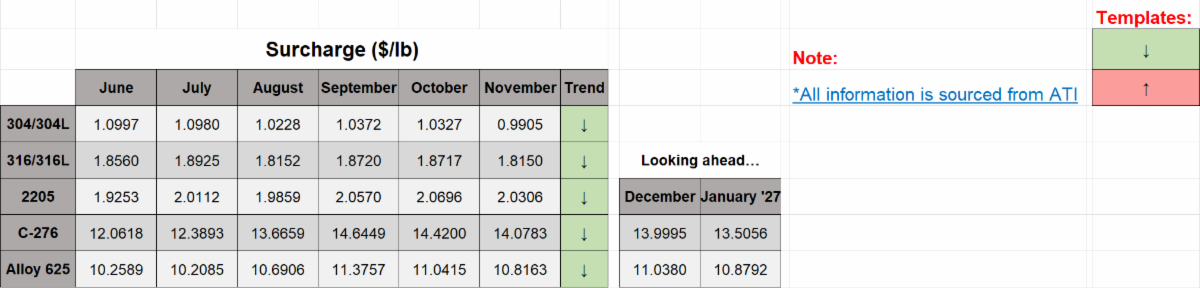
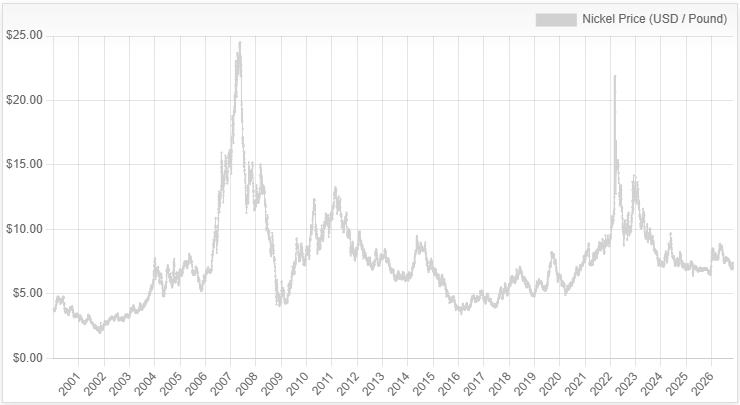
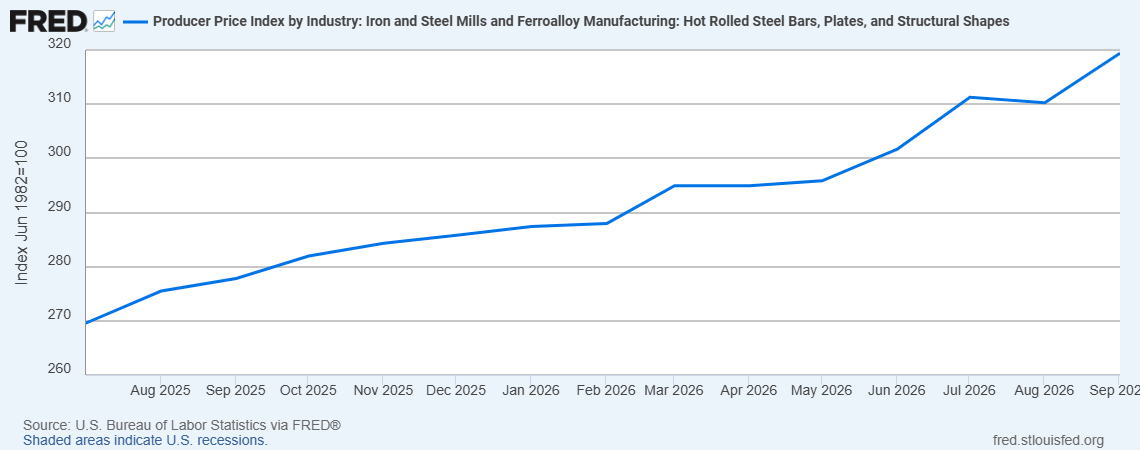
| | Material Surcharge History | | 90 Day Nickel Price Trend | | Historical Nickel Price Data | | Nickel Prices have had an interesting ride over the past three decades, with a low of $2.20/lb. in October 2001 (following the September 11 events) and a high of $23.72/lb. in May 2007. Surcharges trail Nickel prices by about two months, so they would have been lowest in December 2001 (304 was $0.0182/lb.) and highest in July 2007 (304 was $2.2839/lb.). | | Price Index: Hot Rolled Bars, Plate, and Structural Shapes | | |
"Forged In Focus"
A Podcast Focused on the Issues Facing American Manufacturing
| |
We’re proud to announce the launch of our new podcast, Forged in Focus. In each episode, our CEO, Jon Ward, sits down with leaders and innovators across our industry to explore the people, ideas, and forces shaping our future.
Green Beret and Objective Secure author Nick Lavery shares his remarkable story of resilience, from serving in Special Forces and surviving a devastating attack in Afghanistan to becoming the first above-the-knee amputee to return to combat as a Special Forces operator. The conversation explores resilience, discipline, purpose, and the system Nick uses to turn ambitious goals into achievable missions, offering a powerful perspective on staying focused and moving forward when the path ahead seems impossible.
You don't want to miss this episode.
Below is a link to our latest episode. We invite you to tune in, share, and join us as we continue moving forward, together.
| ASME Code, TEMA and API Facts - Did you know? | | |
When Is a Vacuum Rating Required?
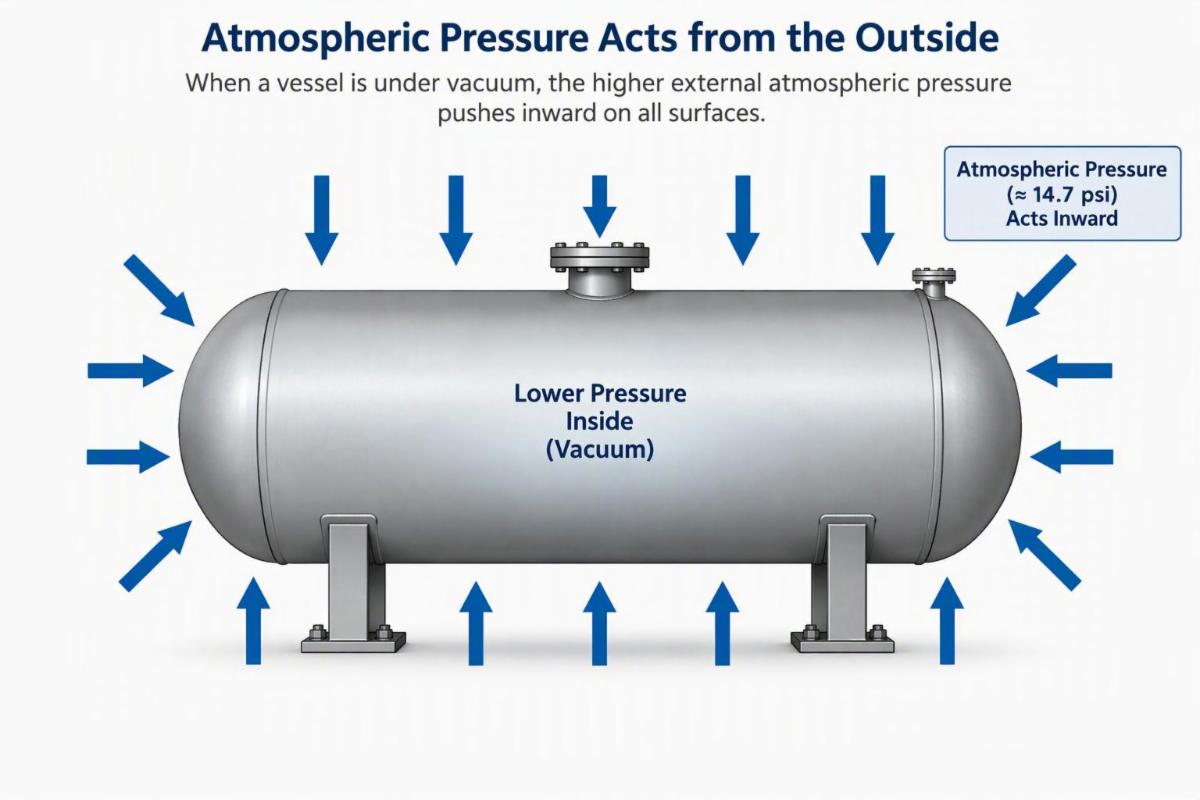
Most pressure vessels are designed for internal pressure, but many will see a vacuum at some point in their service life, sometimes unintentionally. A vacuum inside the vessel means atmospheric pressure is acting on the outside, so the shell and heads must resist up to 15 psi of external pressure. External pressure can cause failure by buckling, and a vessel that is thick enough for a high internal pressure can still fail under a relatively small vacuum. Common causes of a vacuum include steam-out or steam cleaning, where the vessel is blocked in while full of steam and the steam condenses as it cools; draining or pumping out liquid with the vents closed; hot vapors condensing after shutdown; and process upsets such as a sudden cool-down of the contents.
The Code requires each vessel to be designed for all conditions expected in service, and the rules for external pressure design are given in UG-28. However, it is the owner’s responsibility to identify any possible vacuum conditions and include them in the design conditions given to the fabricator. Specifying full vacuum (FV) on new equipment is often a low-cost addition, but on larger or longer shells it may require thicker components or stiffening rings. Vacuum breakers can be used for protection instead, but they must be properly sized and maintained to be effective. When a vessel is rated for external pressure, the rating is shown on the nameplate.
| | Benefits of a Specialty Turnkey Service Provider | | |
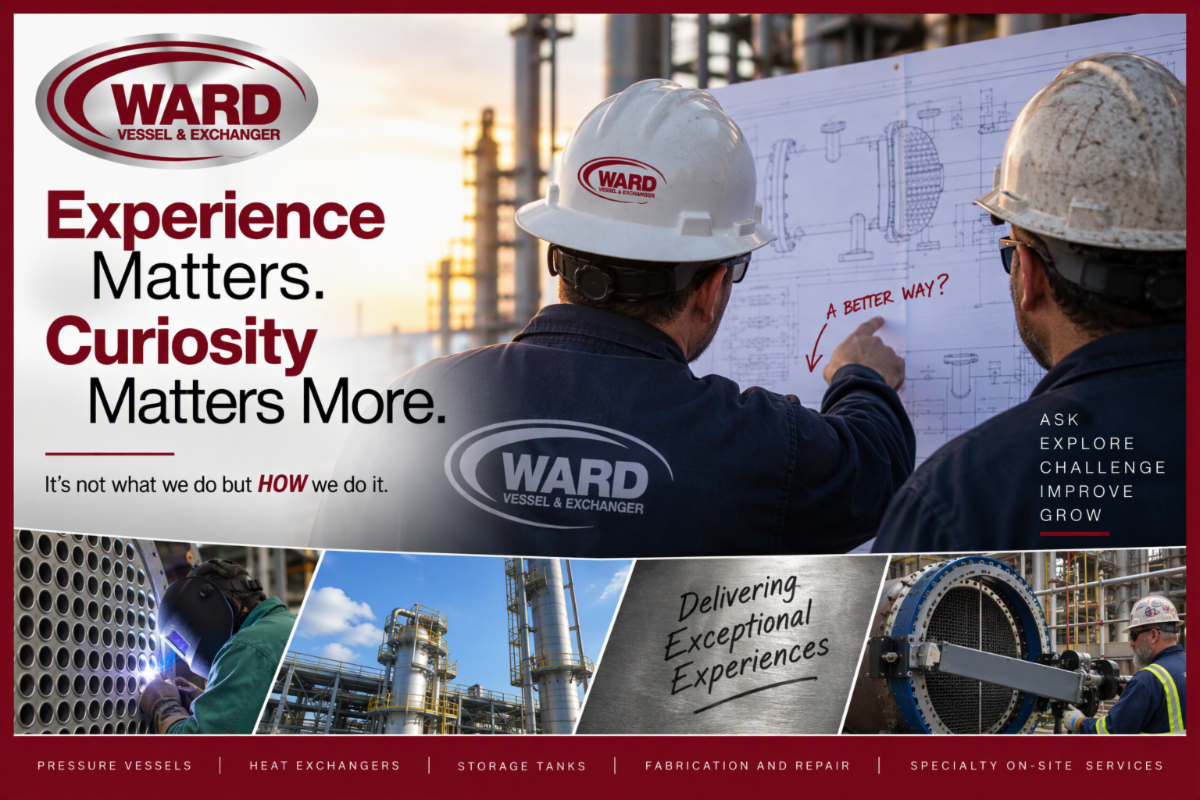
Experience Matters. Curiosity Matters More.
Experience is one of the most valuable assets any organization can have.
Experience helps us recognize patterns, avoid mistakes, work efficiently, and make better decisions. It's why we seek out mentors, value seasoned employees, and learn from those who have spent years mastering their craft.
All that said, experience has a hidden risk: When we're not mindful, experience can convince us that we already know the answer.
We've all seen it happen. Someone describes a problem, and before they finish speaking, you're already formulating a solution. A new idea is proposed, and our mind immediately starts explaining why it won't work. A challenge appears, and we reach for the same playbook we've used for years.
Often, that's exactly the right thing to do. Even more often, it’s not.
The industrial world is changing faster than most of us realize. New materials, new technologies, new regulations, new workforce challenges, and new expectations are forcing all of us to adapt. The solution that worked ten years ago may still work, but that doesn't mean it's the best solution today.
The people and organizations that continue to thrive are usually not the ones who know the most. They're the ones who never stop learning.
Curiosity is what causes an experienced engineer to ask one more question. It's what drives a maintenance manager to explore a different approach. It's what encourages a salesperson to better understand a customer's business instead of simply selling a product. It's what allows leaders to recognize opportunities that others miss. In many ways, curiosity is what keeps experience valuable.
Experience tells us what has worked before. Curiosity helps us discover what could work better next.
The best professionals I've met possess both. They have the confidence that comes from experience and the humility that comes from knowing they don't have all the answers. That's a powerful combination, regardless of industry, role, or title.
As we look to close out another year and begin thinking about the challenges and opportunities ahead, it might be worth asking ourselves a simple question:
When was the last time we changed our mind about something? The answer may tell us less about what we know and more about how willing we are to keep learning.
| | The Tubular Exchanger Manufacturers Association (TEMA) | | |
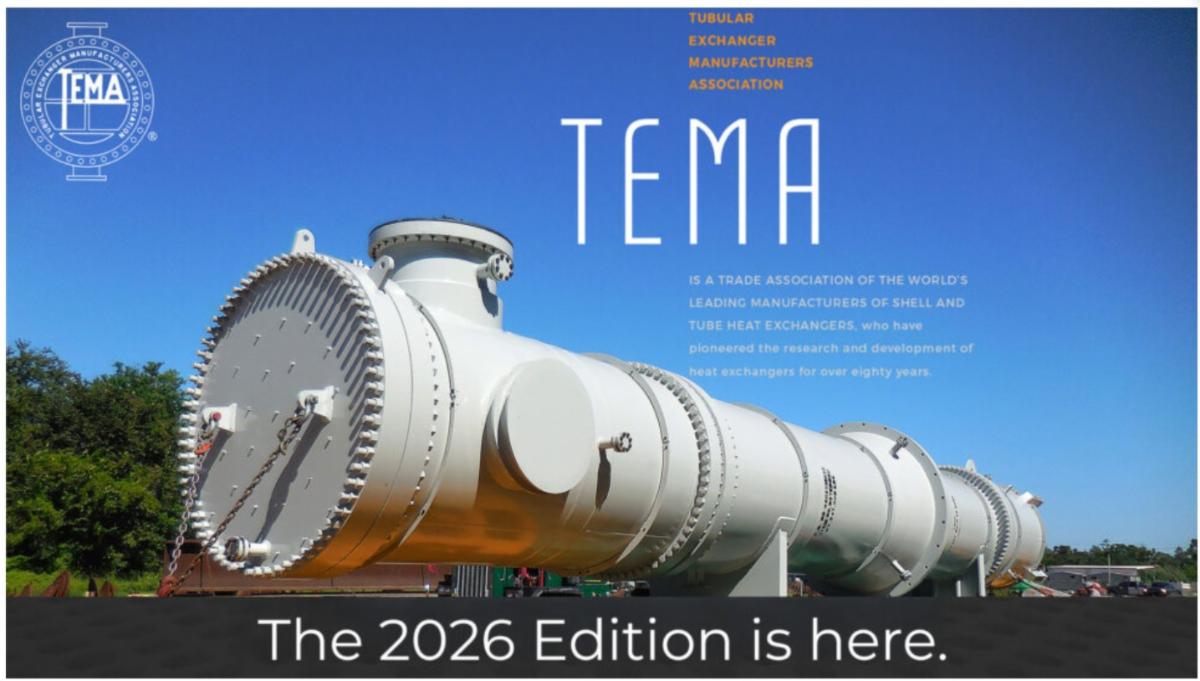
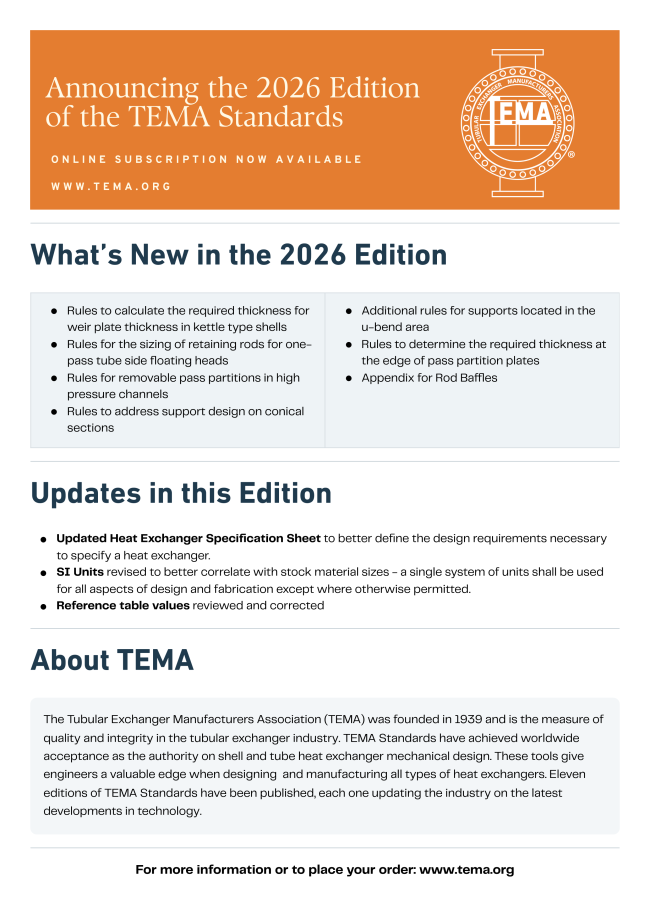
The updated 2026 Edition of the TEMA Standard is now available (subscribe here)
| | | | |