| |  | | |
The Rates of Hormuz
The first quarter of 2026 opened with a significant shift in macro conditions, as escalating geopolitical tensions involving Iran and disruptions in the Strait of Hormuz introduced increased volatility into global energy markets. Oil prices moved higher, and with it, inflation expectations began to re-accelerate. As a result, the much anticipated interest rate cuts expected at the start of the year have largely faded, reinforcing the “higher for longer” rate environment. This dynamic continues to have broad implications across the economy, including consumer behavior, capital markets, and real estate valuations.
Within multifamily, these conditions are continuing to have an impact on the workforce housing segment. While the underlying demand for rental housing remains intact, affordability constraints persist as residents navigate the cumulative effects of inflation and rising non-housing costs. That said, we are beginning to see early signs of stabilization in bad debt and delinquency trends across portions of the portfolio. While not uniform, we believe this reflects a combination of modest improvement in resident payment behavior and more disciplined execution around collections and screening.
At the capital markets level, we are beginning to see early signs of a shift that has been anticipated for some time. Lenders who spent the past two years offering short-term extensions are increasingly beginning to capitulate. Extensions are becoming more selective, additional capital is increasingly being required, and more situations are moving toward resolution rather than deferral. With an estimated $806 billion in multifamily debt maturing between 2026 and 2028—including roughly $300 billion this year alone—fatigued sponsors are being forced to recapitalize or sell assets. While this has not yet translated into a broad-based wave of forced sales, it does represent the early stages of true price discovery and capital structure realignment across the sector.
| | |
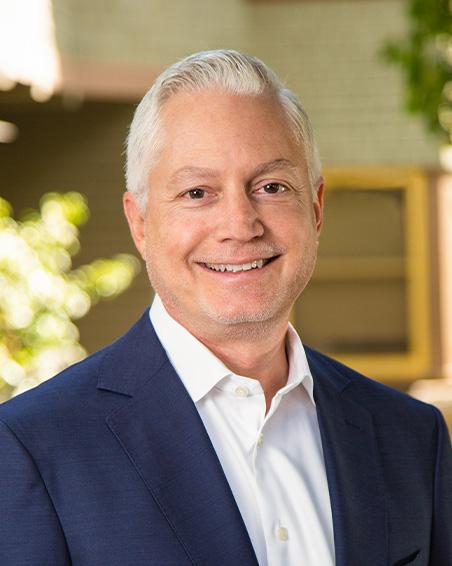
Edward M. Aloe
President and CEO
626-229-9057
| | | |
We are currently under contract on a 98-unit community in the highly desirable Overland Park area of Kansas City.
For more information, please contact Greg Blix at Greg.Blix@calcap.com or
805-896-8500.
| | |
| | Welcome to the Real Estate Wealth Podcast, where we explore real estate as the most proven way to financial freedom. Join us for insights with leading experts and discover how vibrant health and an abundance mindset are keys to true wealth. | | | |
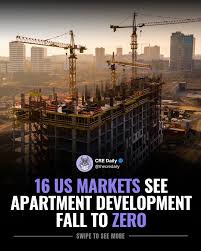
Apartment Construction Vanishes in 16 Markets
Apartment construction has not just slowed in some markets; it has disappeared altogether, even as occupancies remain tight and rent performance, in several cases, is among the strongest in the country. For investors trying to read the next phase of the cycle, the concentration of "no‑build" markets alongside high occupancies and mixed rent growth is an increasingly important and complicated signal.
RealPage Market Analytics has compiled the list of markets with no apartment units under construction. They are Atlantic City-Hammonton, NJ; Champaign-Urbana, IL; Columbus GA-AL; Eugene-Springfield, OR; Flint, MI; Fresno CA; Little Rock-North Little Rock-Conway, AR; Lubbock, TX; McAllen-Brownsville, TX; Midland-Odessa, TX; Mobile-Daphne, AL; Salinas, CA; Salisbury-Seaford-Ocean Pines, MD-DE; Springfield-Greenfield-Amherst Town, MA; Urban Honolulu, HI; Youngstown-Warren-Hermitage, OH-PA.
Taken as a group, these markets span a range of geographies and demand profiles but share one defining characteristic: no units under construction as of year‑end, despite being among the nation's 150 largest apartment markets.
View Article Here
| | | |
|
South and West Markets Lean Harder on Concessions as New Supply Mounts
Concession usage rose across all four national regions in January, underscoring how operators are responding to a slower leasing period amid elevated new deliveries. The South once again led the country, with concessions in use on 20.5% of stabilized units, followed by the West at 16.2%.
By contrast, operators in the Northeast and Midwest were far more restrained, even though they also stepped up discounting, with concession usage reaching 12.8% and 10.7%, respectively.
Those regional splits align closely with where the development pipeline has been most active over the last several years and where lease‑up competition is bleeding into stabilized stock.
In the South and West, operators are using short‑term giveaways to protect published rent levels and preserve longer‑term pricing power in markets where headline growth has already cooled.
In the Northeast and Midwest, lower concession penetration suggests comparatively tighter fundamentals or at least less urgency to chase demand with upfront offers.
View Article Here
| | | |
|
Senior Living Investors Bet on Tighter Cap Rates as Recovery Deepens
After a sharp turnaround in 2025, senior living cap rates appear headed even lower this year—a sign of strengthening valuations and renewed investor confidence across the U.S. senior housing market, according to Cushman & Wakefield's Senior Living and Care Investor Survey and Trends Report.
About 71% of the 75 industry leaders surveyed said they expect cap rates to keep decreasing through 2026, more than double the 33% who held that view a year earlier. Only 16% foresee no change and 13% expect an increase, suggesting most investors believe valuations have bottomed. Cushman & Wakefield noted that, unlike other property types, senior living cap rates have tended to move in line with interest rates, leaving additional room for compression.
Valuations have already rebounded, rising 10% year-over-year as cap rates compressed by 25 to 50 basis points in 2025. Stabilized occupancy reached 90% by the end of last year—the highest since 2017 and the culmination of 20 consecutive quarters of growth. Annual rent growth averaged 4.7%, down from the 2023 peak of 6.1% but still well above inflation.
View Article Here
| | | | |
About CALCAP
California Capital Real Estate Advisors (CALCAP) is a Pasadena-based real estate investment firm founded in 2008. The Company sponsors and manages alternative investment opportunities focused primarily on workforce and attainable housing in growth-oriented U.S. markets.
Since inception, CALCAP has navigated multiple market cycles with a disciplined, research-driven approach centered on capital preservation, operational execution, and long-term value creation. The firm partners with both individual and institutional investors and currently oversees approximately $650 million in assets under management.
CALCAP’s strategy emphasizes selective acquisitions, conservative underwriting, and active asset management designed to deliver durable, risk-adjusted returns across varying market conditions.
To learn more visit www.calcap.com.
Social Impact
CALCAP CARES is the firm’s 501(c)(3) private foundation, created to support the communities where we invest and operate. The foundation encourages team members to give back locally and contribute to causes that strengthen neighborhoods and families.
A primary focus of CALCAP CARES is supporting organizations that serve individuals and families affected by autism. Through financial contributions and community engagement, we aim to make a meaningful difference in the lives of those navigating the challenges associated with autism while reinforcing our broader commitment to community impact
| | |
LOS ANGELES
The Sanborn House
65 N. Catalina Avenue
Pasadena, CA 91106
SAN DIEGO
12626 High Bluff Drive, Suite 360
San Diego, CA 92130
PHOENIX
7014 E. Camelback Rd, Suite B100A
Scottsdale, AZ 85251
| | |
Edward M. Aloe
Founder & CEO
(626) 229-9057
ed.aloe@calcap.com
Patrick A. Wakeman
Executive Managing Director
(858) 764-4890
pat.wakeman@calcap.com
Drew Buccino, President
(602) 419-3381
drew.buccino@calcap.com
Greg Blix, Managing Director
(805) 896-8500
greg.blix@calcap.com
| | |
Mark A. Mozilo
Executive Managing Director
626) 229-9056
mark.mozilo@calcap.com
| | | | |