| |  | | |
Greetings!
We hope you’ve had a fantastic Summer and are enjoying the final few weeks thoroughly before we dive into another academic year!
Community Leadership Opportunity:
The McDonald Institute Highly Qualified Personnel Advisory Committee (HQPAC) is seeking new members for the 2026-27 academic year. This is a great opportunity to have an impact and make meaningful change in the research community. The time commitment is minimal: 1-2 hours a month to attend the monthly meeting and move projects along. The committee has an operating budget at its disposal to compensate additional work needed to operationalize projects as they develop. Members are also recognized with a small honorarium and a modest professional development allowance.
Visit the HQPAC website or send an email to hqpac@mcdonaldinstitute.ca for more information. Supervisors, please consider encouraging or directly nominating your HQP!
Job Opportunities:
The McDonald Institute is currently hiring a 13-month contract position for the role of Human Resources and Administrative Coordinator. This a dynamic role covering coordination of a range of human resources activities, writing and preparing correspondence and reports, providing administrative support to numerous committees, oversight of student and employee onboarding, responding to requests for information, and other administrative duties. Deadline: Aug 23. Apply here.
Queen’s University is also hiring a Senior Program Officer for the Quantum Sensing for Subatomic Physics group (QSSP). The role supports the PI’s research activities and program-building efforts, including national and international collaborations, trainees, visitors, proposals and reporting, events, travel, financial tracking, lab and program operations, and external partnerships. Deadline: Aug 30. Apply here.
Global Community Bulletin:
Canada now part of APPEC - The Astroparticle Physics European Consortium (APPEC) officially welcomed Canadian funding agencies NSERC and CFI to its membership this summer. The addition of Canada to the group comes in time to contribute to the upcoming European Astroparticle Physics Strategy 2027–2036.
BESIII announces recovery of a glueball - after decades of continued detection efforts, the Beijing Spectrometer III collaboration announced Aug. 5 that it has detected a composite particle made of gluons generated from J/ψ meson decays at the Beijing Electron Positron Collider. The glueball has long been postulated in quantum chromodynamics, but has been incredibly hard to detect owing to its instability. BESIII noted the occurrence of a candidate particle in 2011, and spent the next 13 years scaling up the meson decay event to recover a large enough data sample to confirm the candidate particle had spin and parity 0⁻⁺. The team also identified multiple decay modes of the candidate particle, thereby constraining its predicted flavour-singlet character. An ArXiV preprint of the discovery has already been posted. Theorists have previously described constraints for glueballs as dark matter candidates.
The Large High Altitude Air Shower Observatory (LHAASO), working in collaboration with Fermi-LAT, recently reported variable PeV scale gamma emission from the binary star Cygnus X-3 in July 22 paper in National Science Review.
| | |
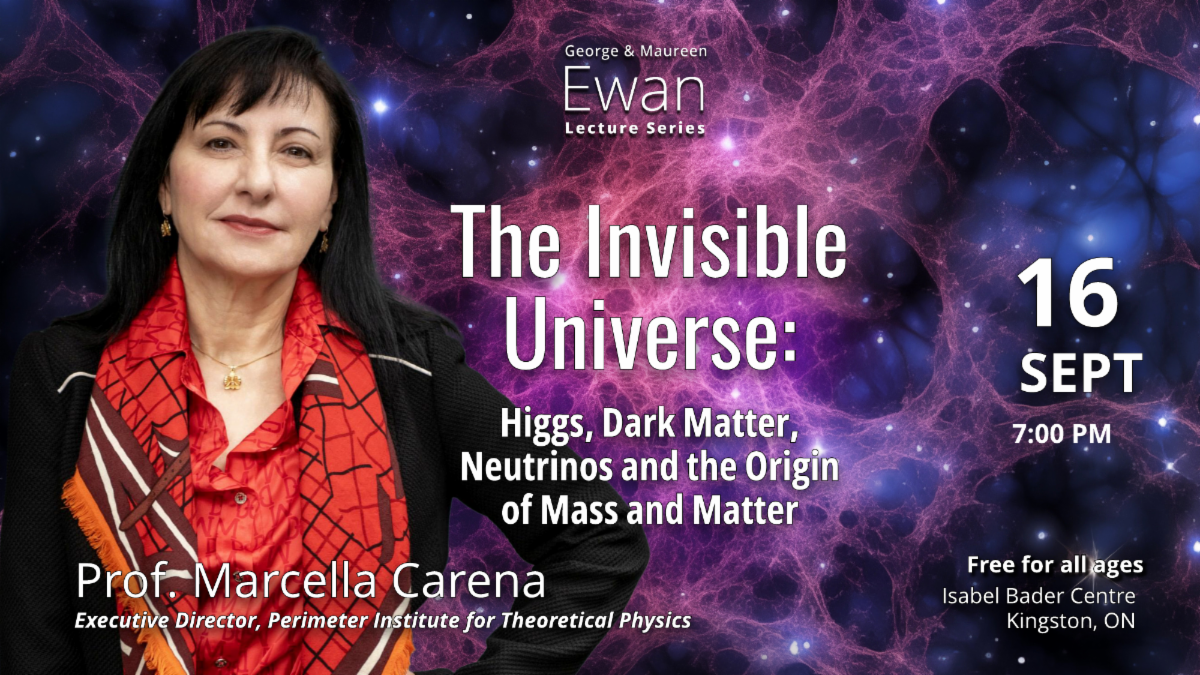
Join us on September 16th at the Isabel Bader Centre for the Performing Arts in Kingston for the 2026 Ewan Memorial Lecture, featuring Prof. Marcella Carena, Executive Director of Perimeter Institute. Dr. Carena will tell Kingston's science-curious public about the Higgs, Dark Matter, Neutrinos and how these invisible parts of the Universe played a role in the origins of mass and matter. If you've been to a Ewan Lecture before, you'll know to register for your free tickets early! Do so at https://www.queensu.ca/theisabel/whats-on/invisible-universe-higgs-dark-matter-and-gravity-waves
| | |
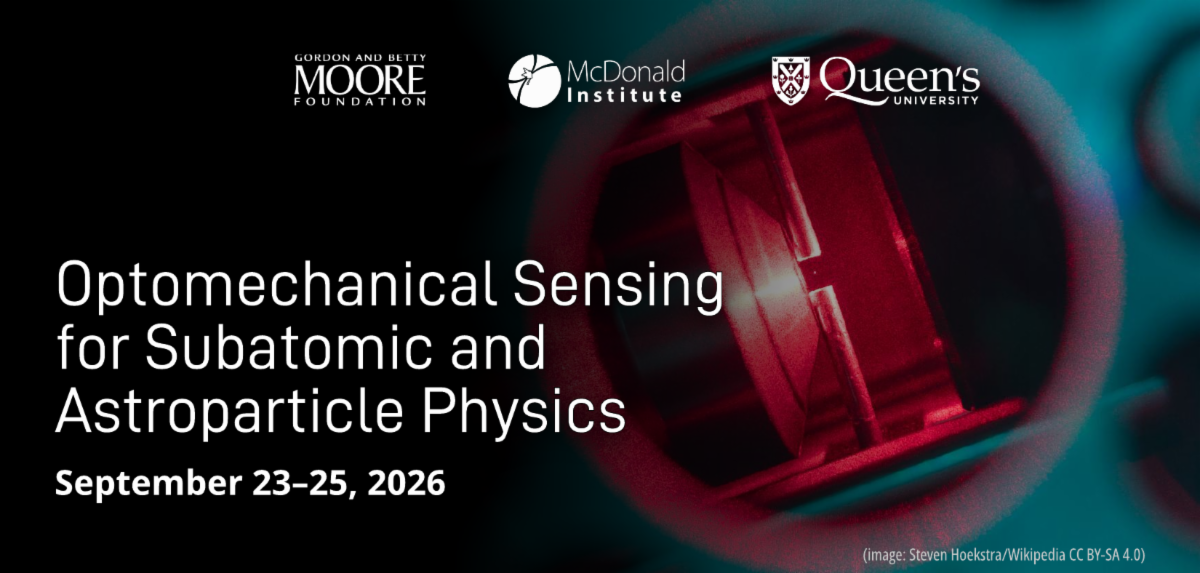
We’re pleased to be hosting the Optomechanical Sensing for Subatomic and Astroparticle Physics workshop at the Donald Gordon Centre in Kingston, September 23–25, 2026.
The workshop will bring together researchers working across optomechanics, quantum sensing, AMO physics, and subatomic/astroparticle physics, with a particular focus on how advanced quantum measurement techniques can open new opportunities in fundamental physics. There is still limited space for contributed talks, so if you or someone in your group is working on something relevant, we’d very much encourage you to submit an abstract and join us.
More information, registration, and abstract submission are available here:
https://indico.global/event/18677/
| | |
The 4th annual International Conference of MATERIALS, CHEMISTRY AND FITNESS-FOR-SERVICE SOLUTIONS for Nuclear Systems (MCFD 2026) will be held in Kingston on September 27-30 2026.
The conference will be of interest to representatives from various sectors of the nuclear industry, including: material and equipment vendors, technical and engineering service providers, utility technical staff, regulators, designers, researchers, students, and academia. More information at: https://cns-mcfd.ca/
| | |
Another Successful Annual Meeting
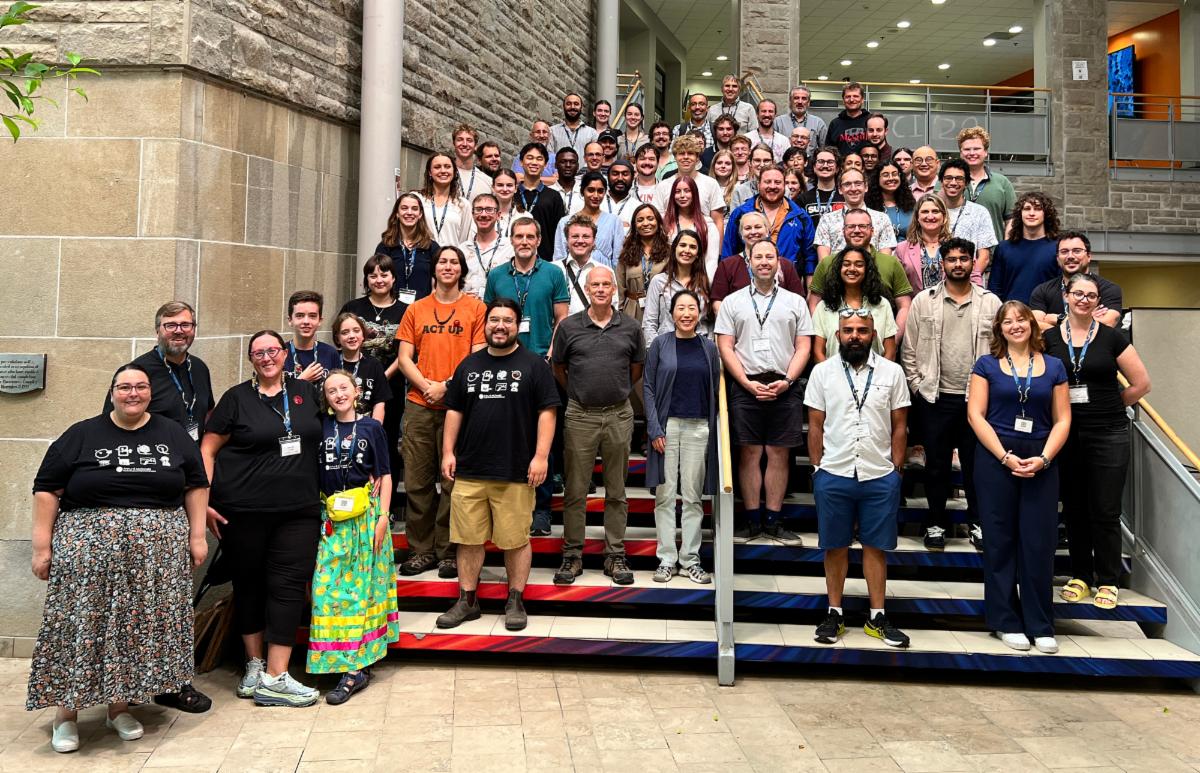
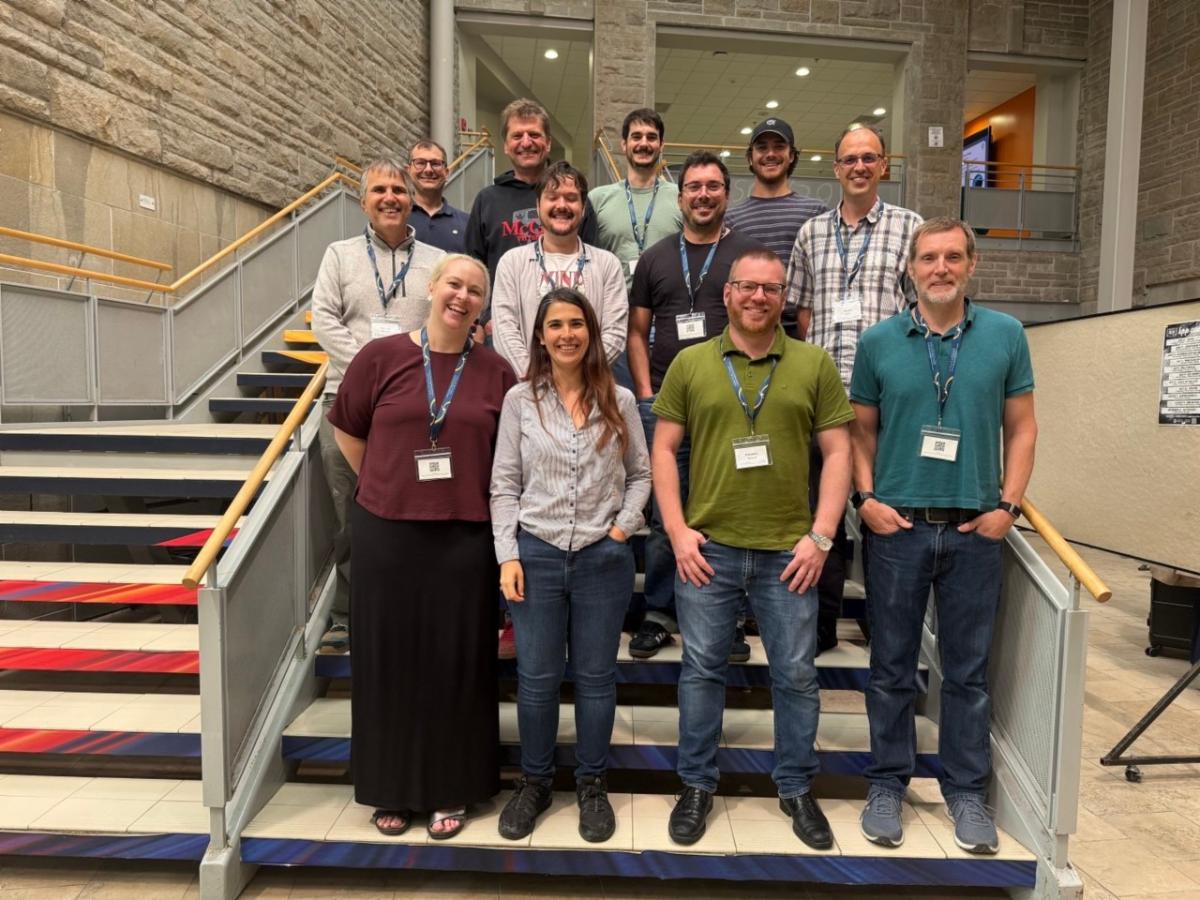
The 2026 Canadian Astroparticle Physics Annual Community Meeting was held in Kingston, Ontario, on July 27-29. This year’s meeting emphasized the research contributions of graduate students and postdoctoral fellows in the themes of dark matter, neutrinos, multi-messenger astronomy, and astroparticle theory & computation. Thank you to everyone who participated in person and virtually online. If you missed any part of the conference, you may access presentation materials on the conference contribution list.
| | |
Unfortunately, we didn’t take a group photo until the afternoon of the last day, so many of our amazing community are missing from the picture.
| | |
Beading Astroparticle Physics
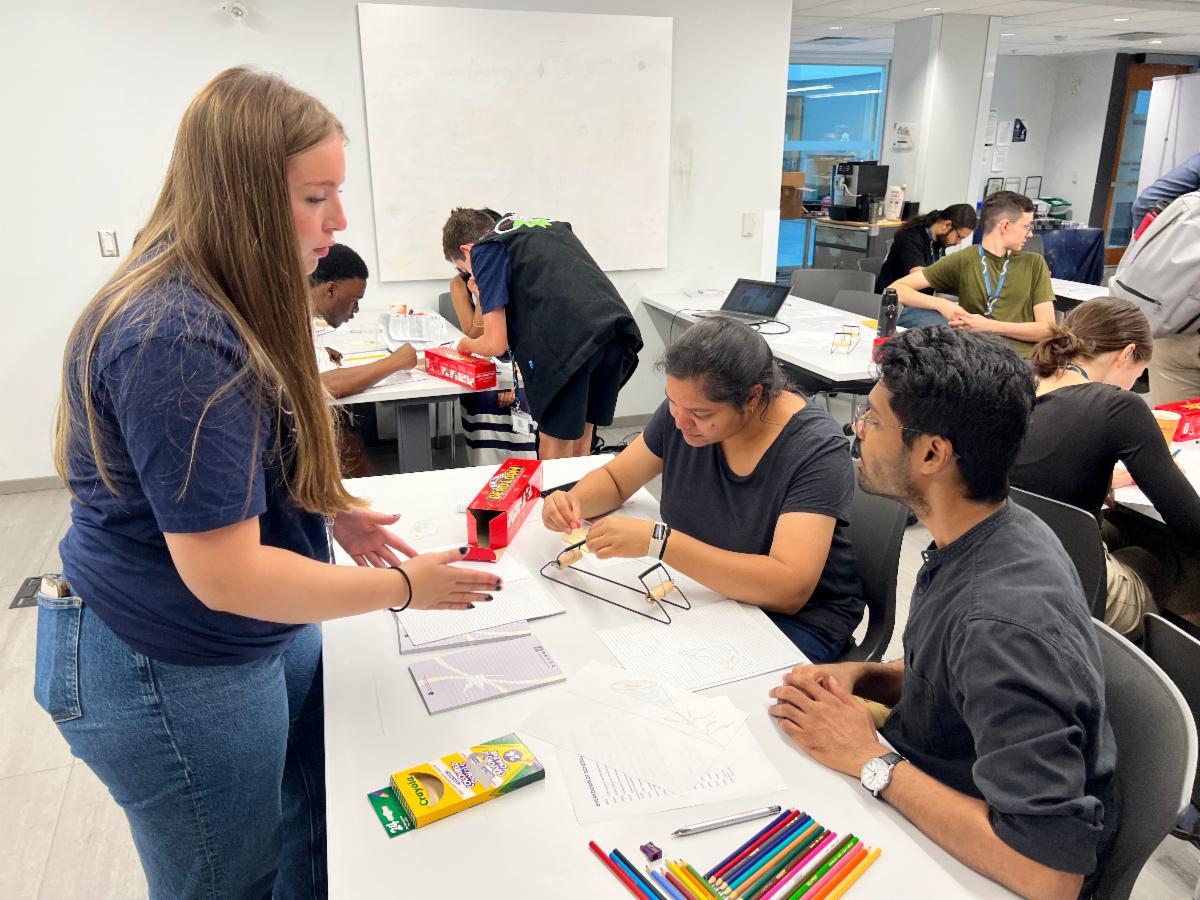
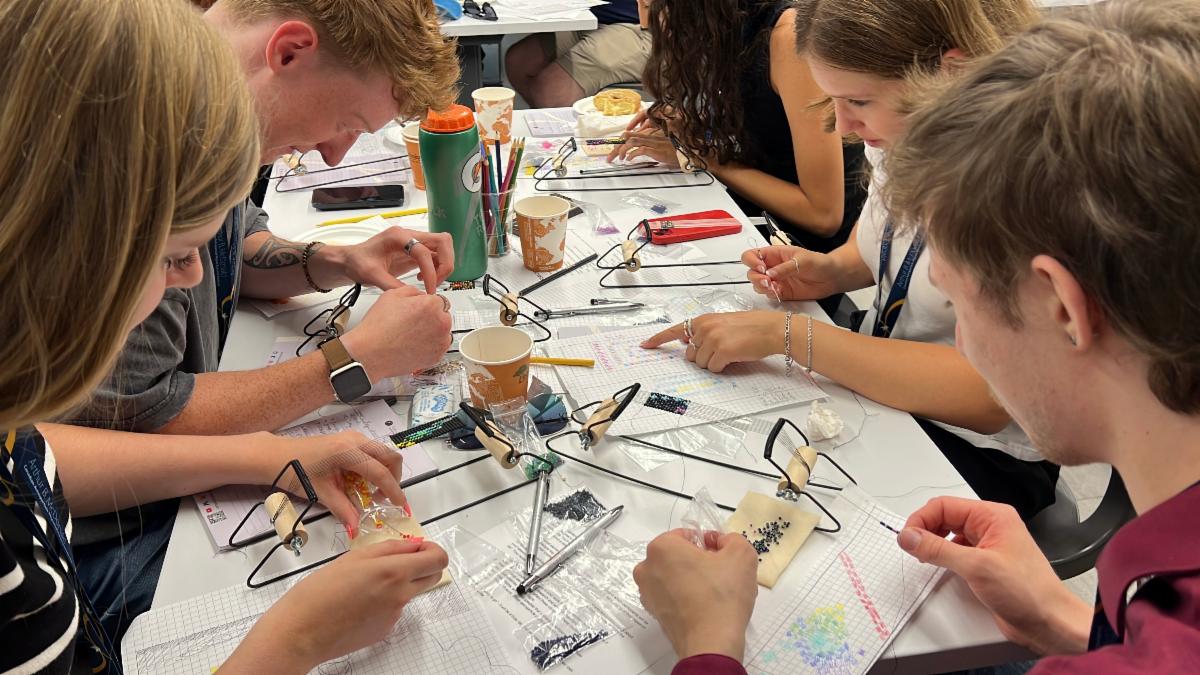
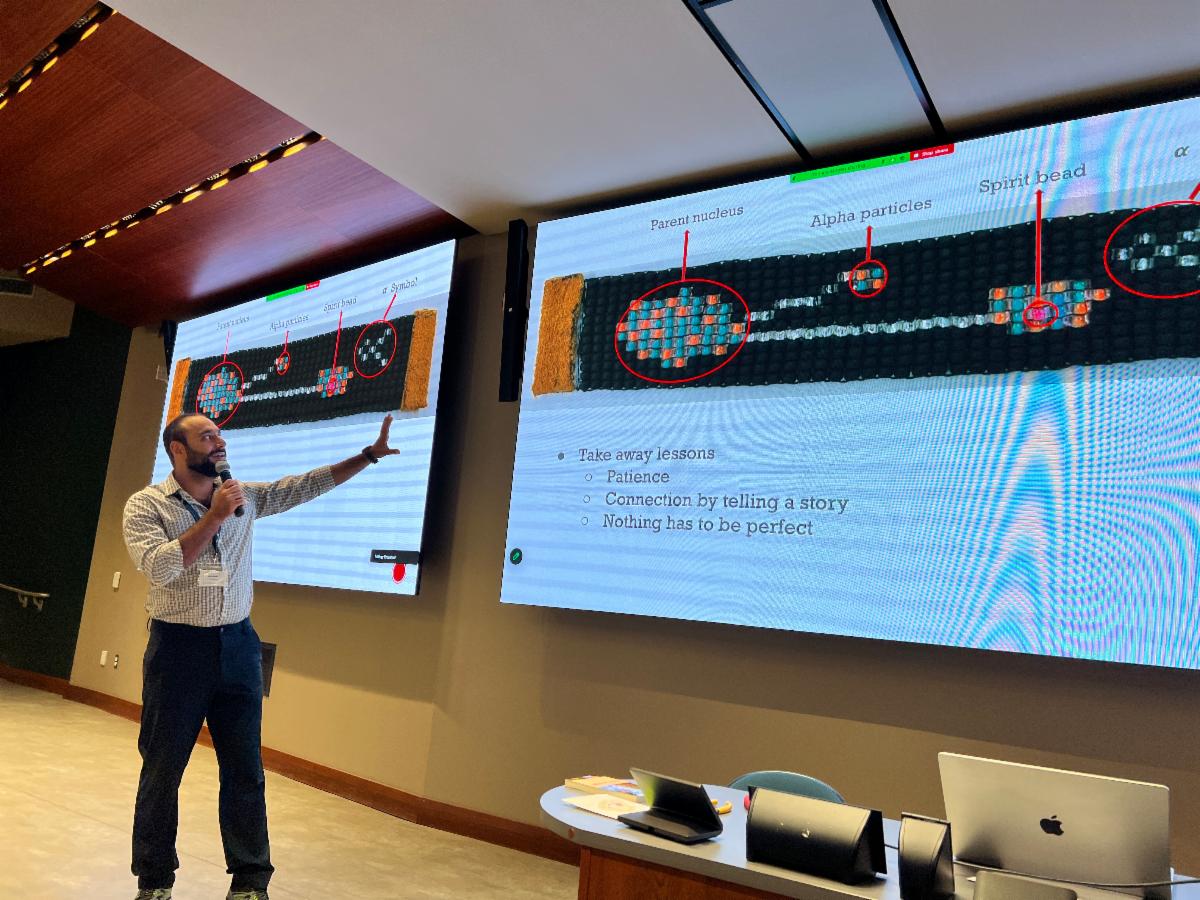
As part of the Annual Meeting, members of the astroparticle physics community were invited to participate in a Beading Astroparticle Workshop which took place throughout the day on July 27th. Our tremendous thanks to Dr. Danielle Lussier, Dr. Gregg Wade, junior collaborators Hugo, Rosie, and Opale, Liv Rondeau, and four Indigenous students who facilitated this transformative experience. Participants learned about beading as a traditional Indigenous practice and the important knowledge creation and translation capacity that beadwork holds. Each person was provided a loom, a curated selection of beads and followed a method of creating designs that could communicate an element of their research. Over the course of the afternoon and following day, the beadworks took shape, and six HQP from across the network were invited to give short presentations about their beadworks on the final day of the conference.
| | |
Top: HQP working on their beadwork with support from workshop facilitators. Bottom: AboBakr Emara presents the beadwork he created during the workshop and discusses the lessons he learned in the process. Read AboBakr's post about the workshop on LinkedIn.
| |
“Biidaaban” artist talks
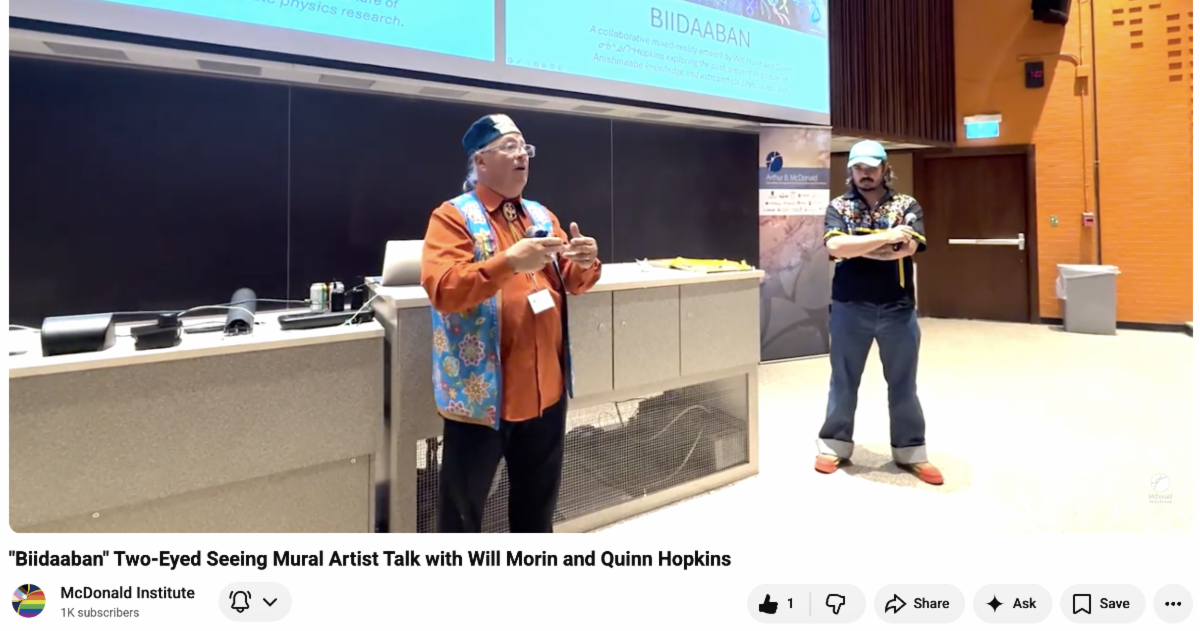
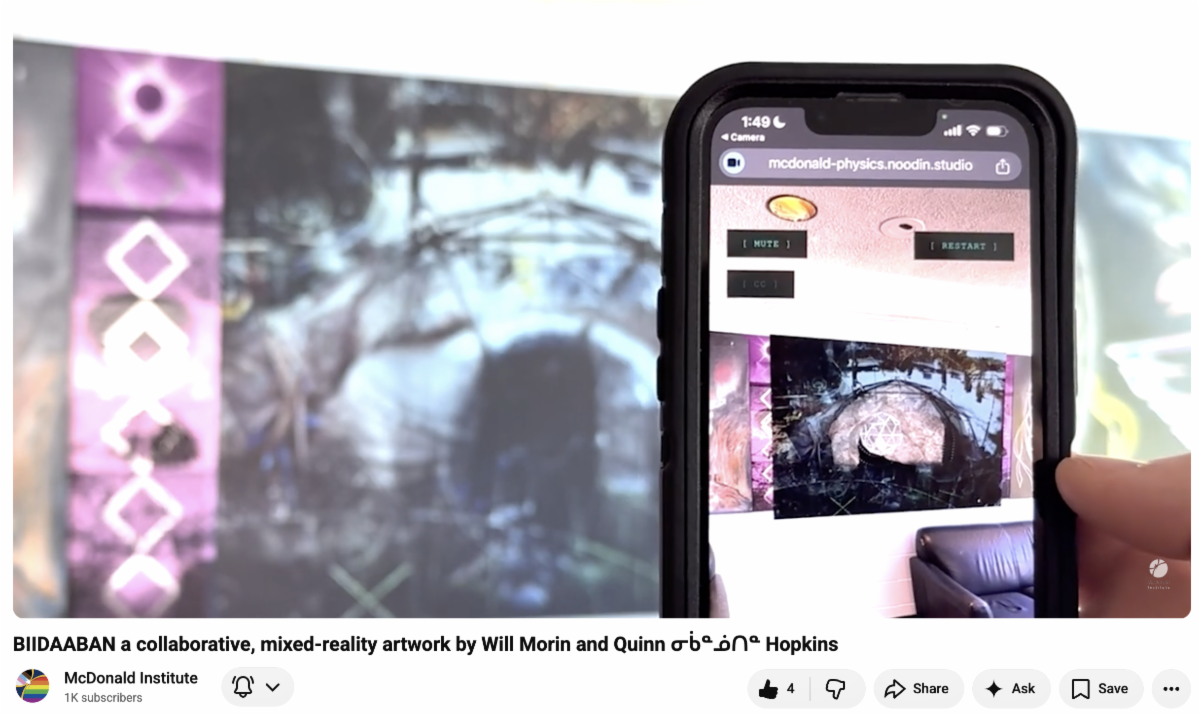
The Annual Community Meeting was also the perfect opportunity to unveil a new artwork that has been installed in Stirling Hall at Queen’s University. The five-panel, 18’ mural spans the width of the main foyer and explores the past, present, and future of Indigenous Knowledge and Astroparticle Physics in a multi-media installation involving painting, digital collage, and augmented reality. The meanings embedded in the artwork were inspired by a Knowledge Sharing event with physicists Nahee Park, Aaron Vincent, and Art McDonald, and Indigenous Elders and Knowledge Keepers, Will Morin, Aylan Couchie, and Brian Peltier. The artwork is presented as an invitation to engage in a Two-eyed Seeing approach toward understanding and relating to the mysteries of the Universe. On Monday, July 27th, artists Will Morin and Quinn ᓂᑳᓐ ᓅᑎᓐ Hopkins were present for the official unveiling of the artwork and gave artist talks offering deeper insights into various parts of the work, the recording of which is available on YouTube, here.
| You can also view the mural and the full augmented reality sequences on YouTube here. | | |
Noble Liquid Gas Detector Workshop
The workshop, held at Queen's University on July 27th, brought together Canadian groups working on noble‑liquid detectors (SNOLAB, TRIUMF, McGill, Queen’s, Carleton, Windsor, Toronto, CNL, Sherbrooke, Laurentian, and others) to inventory R&D, identify overlaps, and plan coordinated action. Participants summarized strengths: sensor characterization (with a focus on semiconductor‑based photosensors, with either analog or digital readout), cryogenics and purification of noble liquids, calibration‑source production (Kr‑83, Rn‑220, tailor‑coated alpha sources, reactor activation), simulation and optical modelling, embedded ML (FPGA/ASIC), and low‑background materials work (Chemical Vapour Deposition nickel, electroformed copper). The meeting emphasized why coordination matters now: shared technical challenges span multiple experiments, and joint R&D can leverage limited funding and build national capacity.
| | |
Integrated Project Delivery Center (IPDC)
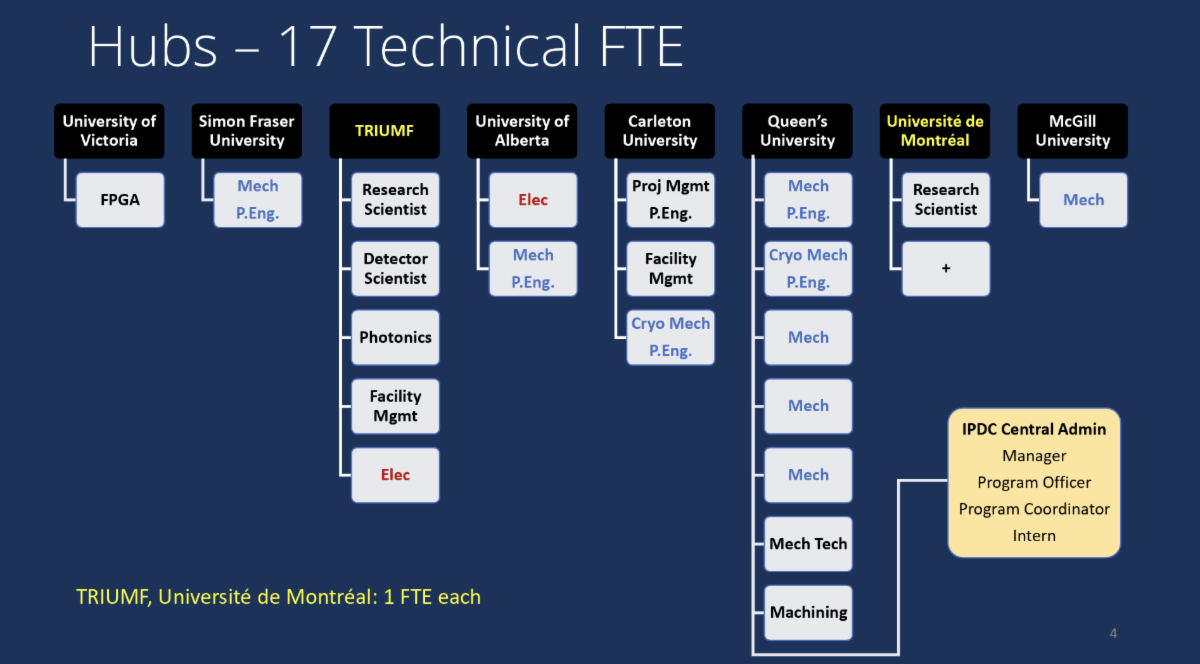
Many in the astroparticle community will be interested in learning more about the Integrated Project Delivery Center (IPDC), a national engineering service funded by the McDonald Institute that provides Canadian astroparticle projects with rapid access to engineering expertise. It employs ∼17 FTE distributed as regional hubs (examples: Queen’s machine shop and cryogenics, UAlberta mechanical and electronics, SFU mechanical design, TRIUMF optics and test facilities, Sherbrooke photosensor characterization) plus a central admin team. Resource requests undergo a technical feasibility review, followed by an assessment by the Resource Allocation Committee (RAC) that aligns investments with community priorities. The IPDC is also launching an engineering intern/EIT program.
| |
The IPDC Organization chart shows the various regional hubs. View Koby Dering’s and several other IPDC presentations here.
For more information, visit the IPDC Website.
| | |
Congratulations to the winners of CASST 2026!
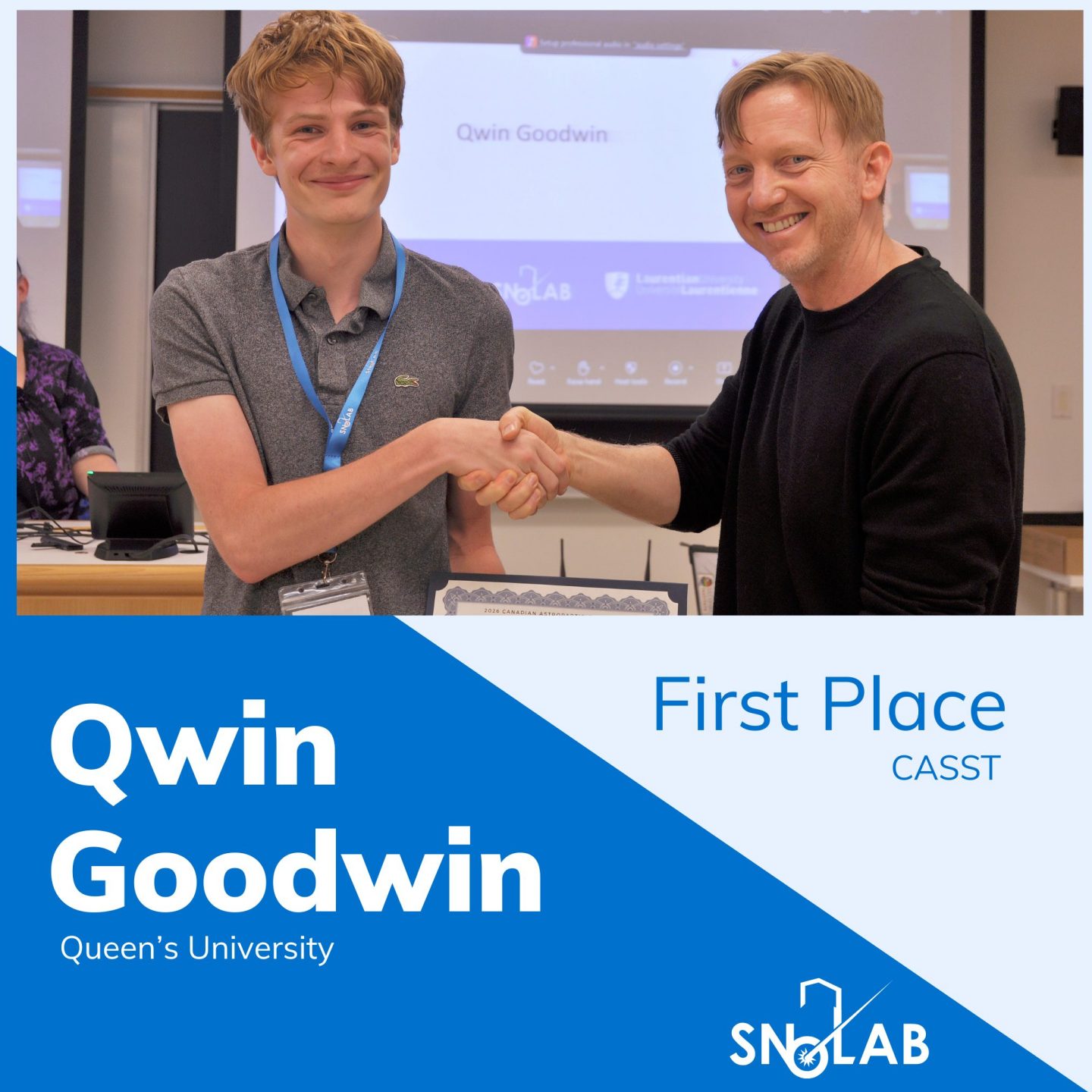
This year's Canadian Astroparticle Summer Student Talk Symposium (CASST), hosted by SNOLAB last week, attracted a record 54 undergraduate and two high school students from across Canada. The annual competition gives undergrad physics students an opportunity to present their summer work projects.
This year’s first place talk was given by Qwin Goodwin from Queen’s University. Second place went to Justine Thébault-Weiser from McGill University. Third place went to Ahmed Abdel-Dayem, a student at Laurentian University. Congratulations to fourth- and fifth-place winners, Cameron Flaman and Sara Bergevin and honourable mentions to Julia Brachman, Guneev Dhillon, Driss Mestiri, Cheyanne Monk, and Elspeth Bruce. Qwin Goodwin and Sara Bergevin were chosen to travel to the 2027 CAP Congress to present their talks there. Congratulations to all participants for your work in preparing and giving research talks!
https://www.snolab.ca/news/snolab-hosts-record-canadian-astroparticle-summer-student-talk-competition/
| | |
Our newsletter provides the astroparticle physics community with updates, programs, and opportunities, and we want to help share your story! We invite all members of the community to contribute to this newsletter.
The McDonald Institute at Queen’s University is situated in the traditional territory of the Anishinaabe & Haudenosaunee First Nations. The Institute is part of a national network of institutions and research centres which operate in other traditional Indigenous territories. Visit www.whose.land to learn about the traditional territories where astroparticle physicists are grateful to live and work across Canada.
Thank you for your support. If you would like to view past newsletters from the McDonald Institute, please visit the Newsletter Archive.
| | Join us on our social media channels | | |
To update your contact information, such as your email address, institution, or position, or to change your subscription preferences, please use the Update Profile link in the footer below.
Unsubscribe from this newsletter
| | | | |