|
Greetings!
Happy Summer! We're looking forward to the Annual Meeting in July and hope to see many of you there. If you haven't submitted an abstract, please do consider doing so.
| | |
Upcoming McDonald Institute Census
The McDonald Institute has begun sending the annual Census to community members for the 2025/2026 fiscal year (April 1, 2025 – March 31, 2026). The goal of the census is primarily to collect required data for our funding agencies, the Canada First Research Excellence Fund (CFREF) and NSERC, while reducing the time and burden of the reporting process. The Census is also used to measure our performance and trends that inform financial and programmatic resource allocation -- ultimately, guiding decision-making on how to best support and empower the Canadian astroparticle physics community.
We are asking all staff, faculty, and students who receive or benefit from McDonald Institute funding to complete the Census. For members of the broader community, your input is extremely important, and we ask that you contribute as well.
The census is distributed via email from surveys@queensu.ca, with individualized access links. Please check your junk/spam filters and let us know if you have not received it.
| | |
Annual Meeting July 27-29
The 2026 Canadian Astroparticle Physics Community Annual Meeting will be held in Kingston, Ontario, from July 27-29.
This year’s meeting is intended to emphasize graduate and postdoctoral fellows’ specific research contributions in the themes of dark matter, neutrinos, multi-messenger astronomy, and astroparticle theory & computation. We are encouraging speakers to not only describe specific individual work but also briefly discuss their own insights into implications for the field at large or for practical applications of their work outside the field.
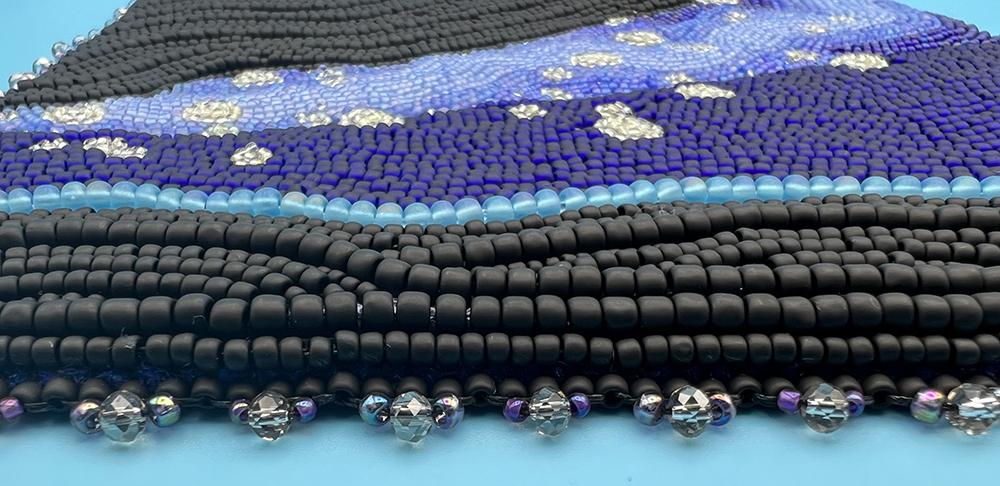
On the first day of the Annual National Meeting, HQP will participate in leadership development, including a special workshop led by Dr. Danielle Lussier and collaborators, where you’ll explore astroparticle physics through Métis beadwork and experience a relational, creative approach to learning and research. The evening of the 27th features an artists’ talk about the new augmented-reality Two Eyed Seeing installation at Stirling Hall, created by Will Morin and Quinn Hopkins. The next two days will feature research presentations, keynote talks, panels, and social events.
Register or submit an abstract.
| | |
Upcoming McDonald Institute Census
The McDonald Institute has begun sending the annual Census to community members for the 2025/2026 fiscal year (April 1, 2025 – March 31, 2026). The goal of the census is primarily to collect required data for our funding agencies, the Canada First Research Excellence Fund (CFREF) and NSERC, while reducing the time and burden of the reporting process. The Census is also used to measure our performance and trends that inform financial and programmatic resource allocation -- ultimately, guiding decision-making on how to best support and empower the Canadian astroparticle physics community.
We are asking all staff, faculty, and students who receive or benefit from McDonald Institute funding to complete the Census. For members of the broader community, your input is extremely important, and we ask that you contribute as well.
The census is distributed via email from surveys@queensu.ca, with individualized access links. Please check your junk/spam filters and let us know if you have not received it.
| | |
Community Leadership Opportunity
The McDonald Institute Highly Qualified Personnel Advisory Committee (HQPAC) is seeking new members for the 2026-27 academic year. This is a great opportunity to have an impact and make meaningful change in the research community.
The time commitment is minimal: 1-2 hours a month to attend the monthly meeting and move projects along. The committee has an operating budget at its disposal to compensate additional work needed to operationalize projects as they develop. Members are also recognized with a small honorarium and a modest professional development allowance.
Visit the HQPAC website or send an email to hqpac@mcdonaldinstitute.ca for more information.
| | |
Beading Astroparticle Physics
What happens when Indigenous Knowledges and Perspectives meet astroparticle physics? The McDonald Institute is excited to share an update on the Beading Astroparticle Physics project led by Dr. Danielle Lussier, Dr. Gregg Wade, and three junior collaborators.
| |
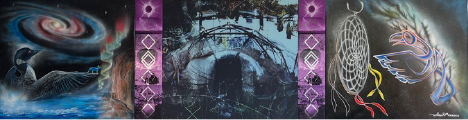
“Biidaaban”, a New Mixed-Reality Artwork unveiling and artist talks event
July 27th, 5:00 PM - 9:00 PM, Stirling Hall, Queen’s University
We are thrilled to welcome the astroparticle physics research community and the general public to the unveiling of a new artwork installation, “Biidaaban”, by artists Will Morin and Quinn ᓂᑳᓐ ᓅᑎᓐ Hopkins. There will be a catered reception in the 3rd-floor lounge area of Stirling Hall where the artwork is installed at 5:00 PM and artist talks starting at 6:00 PM. For those interested, there will also be a screening of the new documentary film, Messengers, in the Auditorium at 7:30 PM.
https://mcdonaldinstitute.ca/events/biidaaban-unveiling/
| | |
Canadian Physics Counts Engagement Survey
In 2020, Canadian Physics Counts provided the first comprehensive, Canada-wide data on equity, diversity, and inclusion (EDI) in physics, capturing the identities and experiences of the community. In preparation for the next survey, you are invited to provide through this short (5–10 minute) engagement survey.
Your feedback will inform the questions we ask helping to ensure that the next survey reflects the current priorities, needs, and experiences of the Canadian physics community.
Whether or not you have previously engaged with EDI data, your perspective is valuable. Access the survey here.
If you have any questions, please contact Francine Ford (CAP Executive Director) at execdir@cap.ca.
| |
Light Dark World at Carleton U. July 28-31
The eleventh annual Light Dark World International Forum is taking place from July 28-31 at Carleton University in Ottawa. This event will cover recent progress on light gauge bosons, light scalars, light dark matter candidates (axions, light sterile neutrinos), and dark energy fields.
For more information, please visit the Indico site.
| | |
Exchange Programs Updates – More Support for Early Career Researchers
The Visiting Scientist Exchange Program and the Graduate Student Exchange Program have an increased funding allocation within the McDonald Institute’s base budgets and will expand the number of awards available to support both inbound and outbound collaboration-driven travel.
“We are putting renewed emphasis on the ability of Canadian astroparticle physics researchers to host their postdoctoral colleagues from abroad, and also trying to smooth the process of supporting pre-tenure faculty in Canada who need to ensure their research groups are well-networked to in-person collaborative work with international colleagues,” says Edward Thomas, Associate Director (External Relations) who manages the programs.
A new Early Career Researcher Mobilization stream within the existing Visiting Scientist Exchange Program allows pre-tenure faculty to make a single application for multiple exchange vouchers over a two-year period supporting their own collaboration trips, as well as those of students and postdocs under their supervision, as well as incoming and outgoing postdoctoral exchanges.
Early Demonstration Seed Fund for Astroparticle Physics Innovators
The McDonald Institute has launched the Early Demonstration Seed Fund Program, designed to support astroparticle physics researchers in Canada to apply research-driven technology solutions to practical problems. This initiative offers funding through two distinct tiers: Tier A (Technology Demonstrations) and Tier B (Tech Transfer Due Diligence).
Tier A focuses on validating and demonstrating the potential of new technologies, with awards ranging from $20,000 to $30,000 CAD for projects lasting up to 12 months.
Tier B supports entrepreneurial and innovation development, including supports for intellectual property assessments, market validation, and early adopter engagement in projects of up to 6 months duration.
Eligible applicants must be researchers at Canadian academic institutions. Proposals must align with the McDonald Institute’s scientific goals and address practical problems beyond core research challenges. Applications are evaluated based on problem definition, feasibility, risk management, and alignment with the Institute’s objectives, including equity-in-tech planning.
Funding is provided on a reimbursement basis for eligible expenses, including salaries, materials, travel, and service provider fees. Successful applicants will receive an award letter and may submit invoices quarterly.
Don’t miss this chance to turn innovative ideas into impactful solutions!
| | |
Community Global Bulletin Board
• Science staff writer Adrian Cho quotes several astroparticle physicists about the JUNO collaboration’s prospects for determining the neutrino mass hierarchy in its June 10 online edition. The JUNO collaboration’s results for neutrino mixing angle and mass squared difference parameters during its first two months of data taking were published in Nature this week, after having been initially posted to arXiv in November. Early results have improved two parameter estimates sin2θ12 and Δm221, reducing their uncertainties by one-third for the normal mass hierarchy.
• Experimentalists are encouraged to read the recent PTEP article detailing Canadian-led development of silver-zeolite radon trapping for dark matter detection in NEWS-G. The research effort led by Dr. Marie-Cécile Piro at the University of Alberta shows a massive three-orders-of-magnitude improvement of Ag-ETS-10 zeolite over activated charcoal in radon capture efficacy at room temperature.
• The Direct Search Experiment for Light Dark Matter (DELight) collaboration has received funding from the German Research Foundation (DFG) for a superfluid helium-4 dark matter detector at a 1-litre scale. The collaboration is led by Heidelberg University, the Karlsruhe Institute of Technology, the University of Freiburg, and Imperial College London.
• The newest postulated source for the 100 PeV transient observed in 2023 by the KM3NeT/ARCA detector is published in the Journal of Cosmology and Astroparticle Physics. The authors calculate that multiple interacting blazars could generate a neutrino flux with energies consistent with the signal.
| | |
The Advancing I-EDI Award: OPEN
The McDonald Institute is pleased to relaunch the Advancing Indigenization - Equity, Diversity and Inclusion (I-EDI) Fund for Astroparticle Physics, supporting initiatives that strengthen equitable training environments and research cultures across astroparticle physics and related disciplines.
The award prioritizes activities that expand I-EDI action in Highly Qualified Personnel (HQP) training and research environments through five funding streams:
- Stream 1 (up to $1,000): Seed funding for new initiatives that build EDII capacity in labs, research groups, and departments, including pilot programs, training activities, or events.
- Stream 2 (up to $2,500): Support funding for existing initiatives that advance EDII practice in the field.
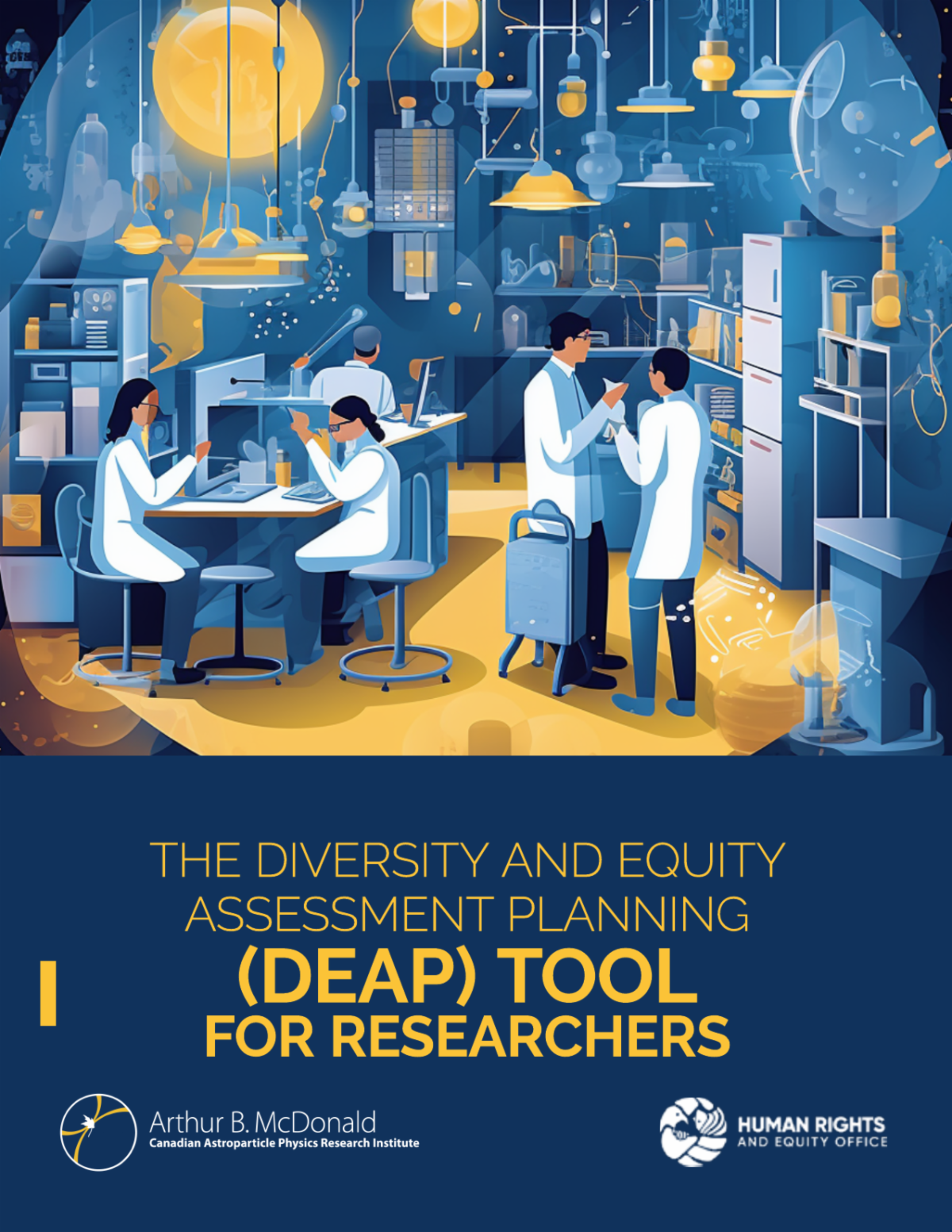
- Stream 3 (up to $2,500): Support for faculty actively advancing equity goals using the DEAP Tool for Researchers (or an equivalent assessment framework). Advising support is available.
New for Round 2 (2026):
- Stream 4 (up to $5,000): Seed funding to advance community partnerships that build relationships with equity-deserving groups, create pathways into physics degrees, and foster interdisciplinary collaborations that strengthen long-term participation and retention in astroparticle physics.
- Stream 5 (up to $12,000): Seeding support for research projects that examine and advance understandings of equity, diversity, inclusion, Indigenization, anti-racism, and accessibility (EDIIAA) in astroparticle physics, including research, evaluation, and knowledge mobilization activities.
Applications will be reviewed on a rolling basis, with internal adjudication occurring at the end of each month until available funds are fully allocated.
Students, postdoctoral fellows, staff, researchers, and faculty across the network are encouraged to apply. Learn more about eligibility, timelines, and application details at: https://mcdonaldinstitute.ca/funding-opportunities/the-edii-fund/
Please reach out to Alex Pedersen (alexandra.pedersen@mcdonaldinstitute.ca) with any questions.
| |
Join the Astroparticle Physics Community of Practice for I-EDIAA
We are launching a new Community of Practice (CoP) for researchers and trainee leaders interested in applying the DEAP Tool for Researchers (https://mcdonaldinstitute.ca/deap-tool-for-researchers/) in real research settings across Canada’s astroparticle physics network. This peer-learning group will create a practical space to share experiences, challenges, and emerging practices. The purpose of this group is to support goal-setting and action planning, and learn from one another about strengthening inclusive lab culture, mentorship, supervision, and research environments. Each meeting will feature a guest speaker, short reading, or case study, with dedicated time to reflect, share experiences, and connect insights back to the DEAP Tool to support progress within participants’ own research contexts.
Whether you are new to the DEAP Tool or already using it in your research group, we welcome participants who are interested in collaborative learning, applied problem-solving, and contributing to a culture of continuous improvement.
Those interested are encouraged to register, with the date and time of the first meeting to be scheduled in June based on participant availability: Astroparticle Physics Community of Practice for I-EDIAA – Fill out form
| | |
Our newsletter provides the astroparticle physics community with updates, programs, and opportunities, and we want to help share your story! We invite all members of the community to contribute to this newsletter.
The McDonald Institute at Queen’s University is situated in the traditional territory of the Anishinaabe & Haudenosaunee First Nations. The Institute is part of a national network of institutions and research centres which operate in other traditional Indigenous territories. Visit www.whose.land to learn about the traditional territories where astroparticle physicists are grateful to live and work across Canada.
Thank you for your support. If you would like to view past newsletters from the McDonald Institute, please visit the Newsletter Archive.
| | Join us on our social media channels | | |
To update your contact information, such as your email address, institution, or position, or to change your subscription preferences, please use the Update Profile link in the footer below.
Unsubscribe from this newsletter
| | | | |