August 2026

"NCA Health & Safety News" provides you with valuable information and assists in your quest to achieve a world-class safety culture. We believe that developing a safe work ethic is a never-ending process that must be part of every business's professional development.


Please do not hesitate to contact the office with your input, suggestions or safety questions. We value your feedback!

Membership Appreciation Day Picnic & TradeShow


Vendor booths are now SOLD OUT—thank you to all of our exhibitors for your incredible support!


Sponsorship opportunities are still available, and registration is free. 

Join us on Wednesday, September 23 at Club Roma Pavilion for an afternoon of networking, safety presentations, complimentary lunch, door prizes, and the opportunity to connect with Niagara's construction community. We look forward to seeing you there! 


Register Now!

WSIB Ends the Second Injury and Enhancement Fund (SIEF)


Effective June 16, 2026, the Workplace Safety and Insurance Board (WSIB) has officially closed the Second Injury and Enhancement Fund (SIEF). The updated policy was published on July 16, 2026.


What was SIEF?

SIEF allowed eligible Schedule 1 employers to receive claim cost relief when:

  • a worker's pre-existing condition prolonged recovery from a workplace injury; or
  • a prior disability contributed to the workplace accident.

The program had been in place for decades and was intended to reduce barriers to hiring workers with pre-existing disabilities or medical conditions.


What has changed?

As of June 16, 2026:

  • No new SIEF cost relief will be granted.
  • Existing SIEF awards will not be increased or adjusted, except in limited circumstances outlined in the WSIB's "SIEF wind-down" policy or as the result of an appeal.
  • Employers can no longer submit new requests for SIEF cost relief.


Why was the program discontinued?

WSIB's decision follows an independent Value for Money Audit conducted by Deloitte, which concluded that:

  • the program no longer met its original objective of reducing employment barriers;
  • changes to Ontario's human rights and accessibility legislation have significantly reduced the need for this type of incentive; and
  • changes to the WSIB rate framework introduced in 2020 meant the program often provided little or no meaningful financial benefit to employers, particularly small and medium-sized businesses.


What does this mean for employers?

While SIEF has ended, employers' responsibilities under the Workplace Safety and Insurance Act have not changed.

Employers should continue to focus on:

  • early and safe return-to-work planning;
  • meaningful workplace accommodation;
  • effective claims management; and
  • injury prevention.

These practices remain the most effective ways to support injured workers and manage workers' compensation costs.


Read the full Deloitte Value for Money Audit and the updated WSIB policy here.

The Best Summer Safety Tips for a Construction Crew


Summer is the most dangerous season for construction workers. Other months have their own challenges, but nothing compares to working outside in the blistering heat. Along with the standard hazards in construction, the higher potential for dehydration and heat exhaustion put workers at an even greater risk of injury and death. Read more

Back to School Means Back to Safety


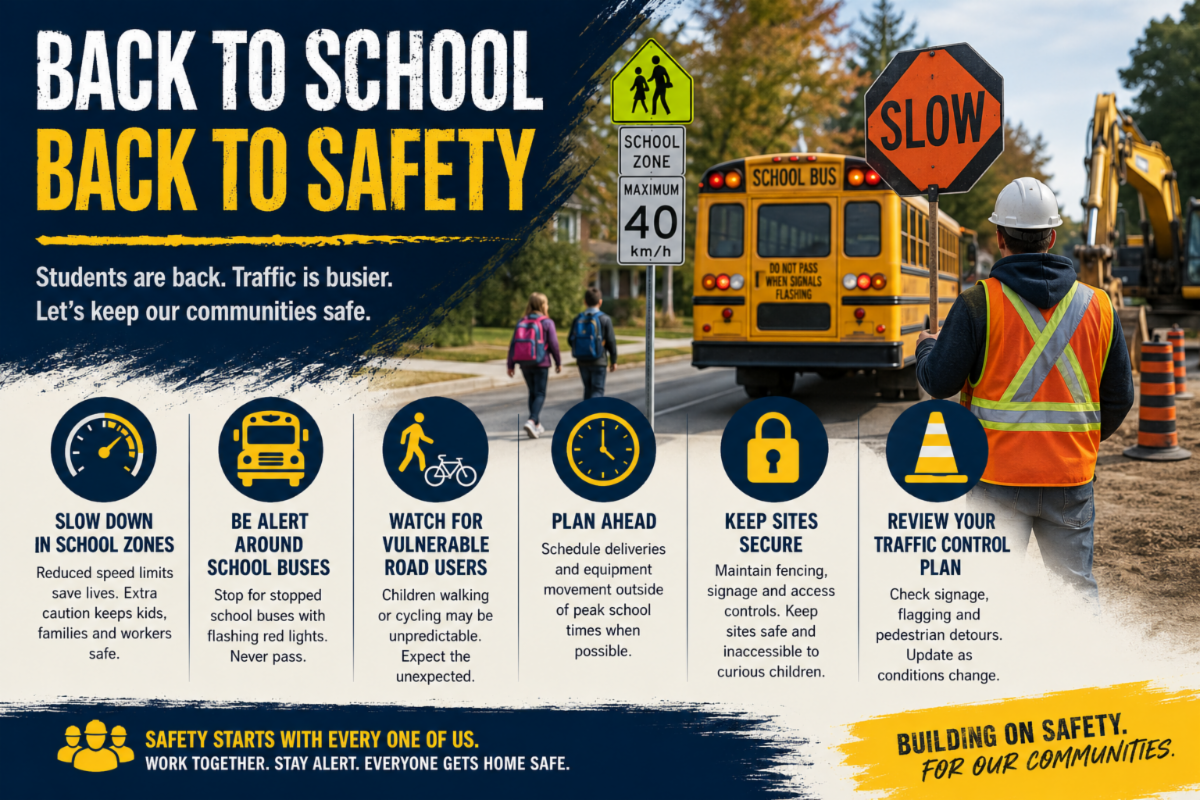
September marks the return of students to classrooms across Ontario, bringing increased traffic, school buses, cyclists, and pedestrians to our roads. For the construction industry, it's an important reminder that work zones often overlap with school routes, making extra vigilance essential to protect children, families, and workers.


Slow Down in School Zones

School zones become significantly busier before and after school hours. Reduced speed limits are in place for a reason—children can be unpredictable and may not always look before crossing the street. Leave a little earlier for work so you have plenty of time to drive safely through these areas.


Be Alert Around School Buses

Ontario law requires drivers travelling in both directions to stop for a stopped school bus with its red overhead lights flashing on roads without a median. On roads divided by a physical median, only vehicles travelling behind the bus must stop. Never pass a stopped school bus displaying flashing red lights.


Watch for Vulnerable Road Users

Children walking or cycling to school may be distracted or unfamiliar with traffic patterns. Construction vehicles have larger blind spots and require greater stopping distances, making it even more important for operators and drivers to remain alert, reduce speed, and expect the unexpected.


Plan Deliveries and Equipment Movement

Where possible, schedule deliveries, material movement, and large equipment transport outside of peak school arrival and dismissal times. A few minutes of planning can significantly reduce risks around schools and busy pedestrian routes.


Keep Construction Sites Secure

If your project is located near a school, ensure fencing, barriers, signage, and access controls are maintained daily. Curious children may be tempted to explore construction sites outside working hours. Proper housekeeping and secure storage of tools, materials, and equipment help prevent injuries and unauthorized access.


Review Your Traffic Control Plan

September is an excellent time to review site traffic management plans. Confirm that signage remains visible, flagging operations are effective, and pedestrian detours are clearly marked. If work conditions have changed over the summer, update your traffic control measures accordingly.


Safety Starts with Every One of Us

Every worker, supervisor, and driver has a role to play in keeping Ontario's roads and construction sites safe during the busy back-to-school season. A few extra moments of patience and awareness can prevent serious incidents and ensure students, families, and construction workers all return home safely.


This September, let's make safety our first lesson—on every job site and every roadway.

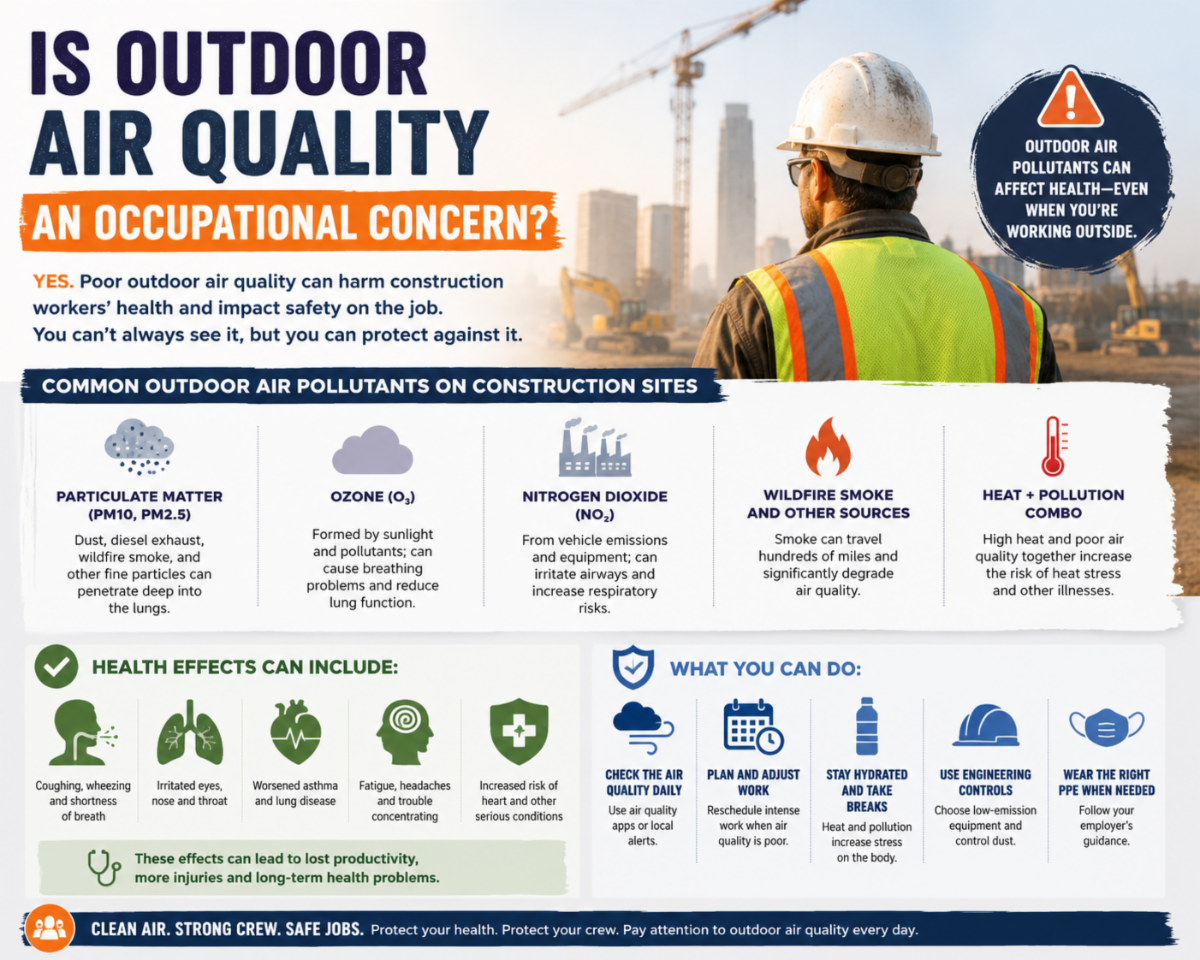
Is outdoor air quality an occupational concern? 


Outdoor air quality can be an occupational concern, especially during poor air quality events.


Employers have a duty to protect workers from hazards in the workplace, including environmental hazards, such as outdoor air quality.  Read more

Tick Safety Tips for Outdoor Workers This Summer


Summer in Ontario can be tough for outdoor workers. Crews on construction, demolition, and landscaping sites have to bear the brunt of the weather along with the risk of tick bites. While tick bites might seem harmless on the surface, their sting can actually increase the risk of contracting serious health conditions such as Lyme disease and other bacterial and viral infections. 
Read more

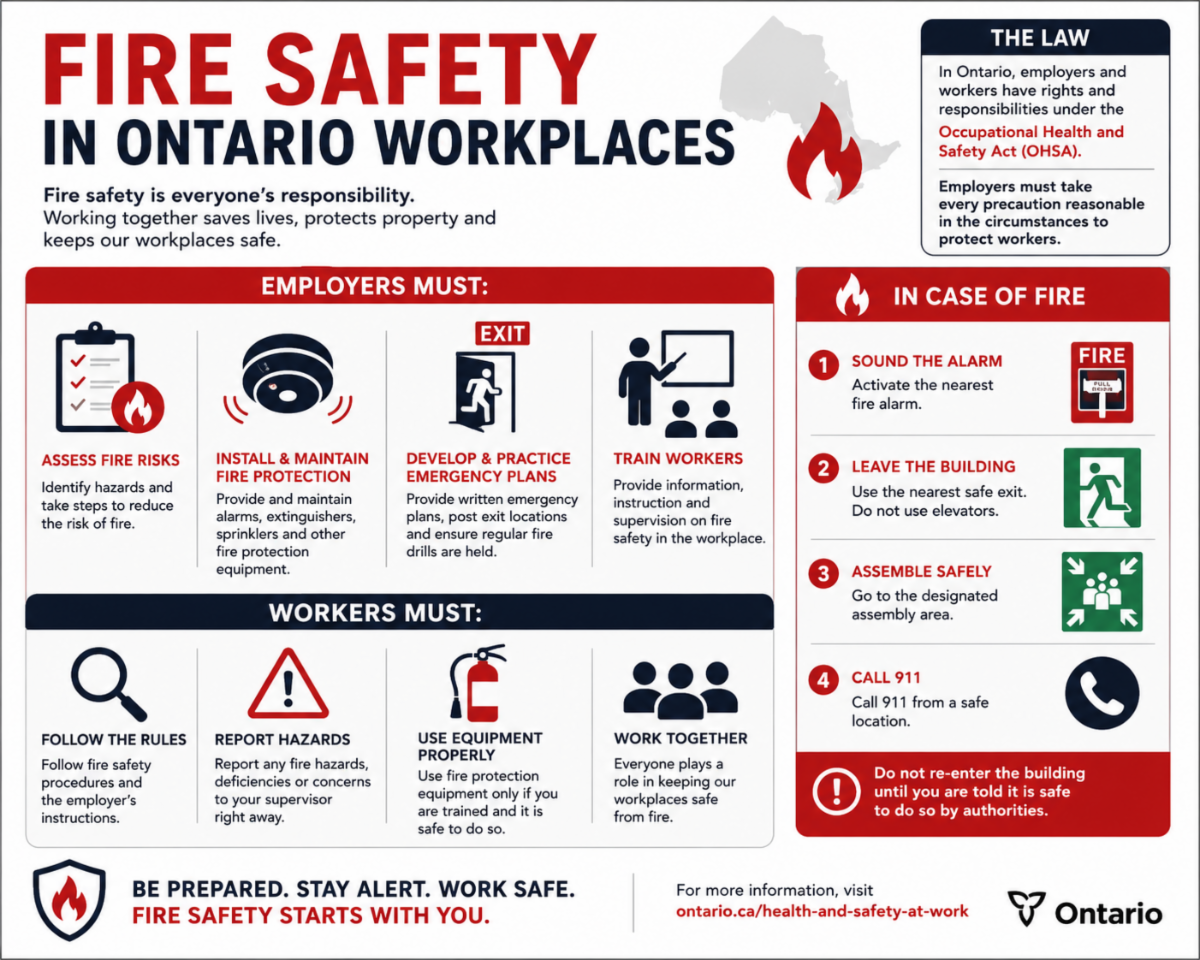
Fire Safety in Ontario Workplaces


Fire safety is a critical aspect of workplace health and safety in Ontario. Ensuring a safe environment not only protects employees but also minimizes the risk of property damage and business interruptions. Employers, employees, and safety officers must work together to implement effective fire safety measures. Read More

IHSA Surface Mining & Aggregates Newsletter Highlights 2026–2027


IHSA’s latest Surface Mining & Aggregates Network News highlights key health and safety updates for the mining sector, including the Ministry of Labour’s 2026–2027 compliance campaign focused on lockout/tagout and energy isolation procedures. The newsletter also outlines upcoming legislative changes, new and updated IHSA safety resources, sector-specific training opportunities, industry events, and workplace safety initiatives. Employers and workers are encouraged to stay informed on evolving regulations, participate in training, and access IHSA tools and expert support to help maintain safe and compliant workplaces. Click here to read more.

School Zone Safety Starts With You


As traffic increases around schools during morning drop-off and afternoon pick-up times, the City of St. Catharines is reminding drivers to stay alert and follow school zone safety rules. Drivers are encouraged to obey parking and traffic regulations, avoid double parking and idling, stop for school buses and crossing guards, and remain extra cautious around children walking or biking to school. Remember — children can be unpredictable and difficult to see, so slowing down and paying attention in school zones helps keep everyone safe. Click here to learn more about parking regulations and fines.

Click here for the IHSA monthly news & updates for July. 

Click here for IHSA's 2-minute news for July.

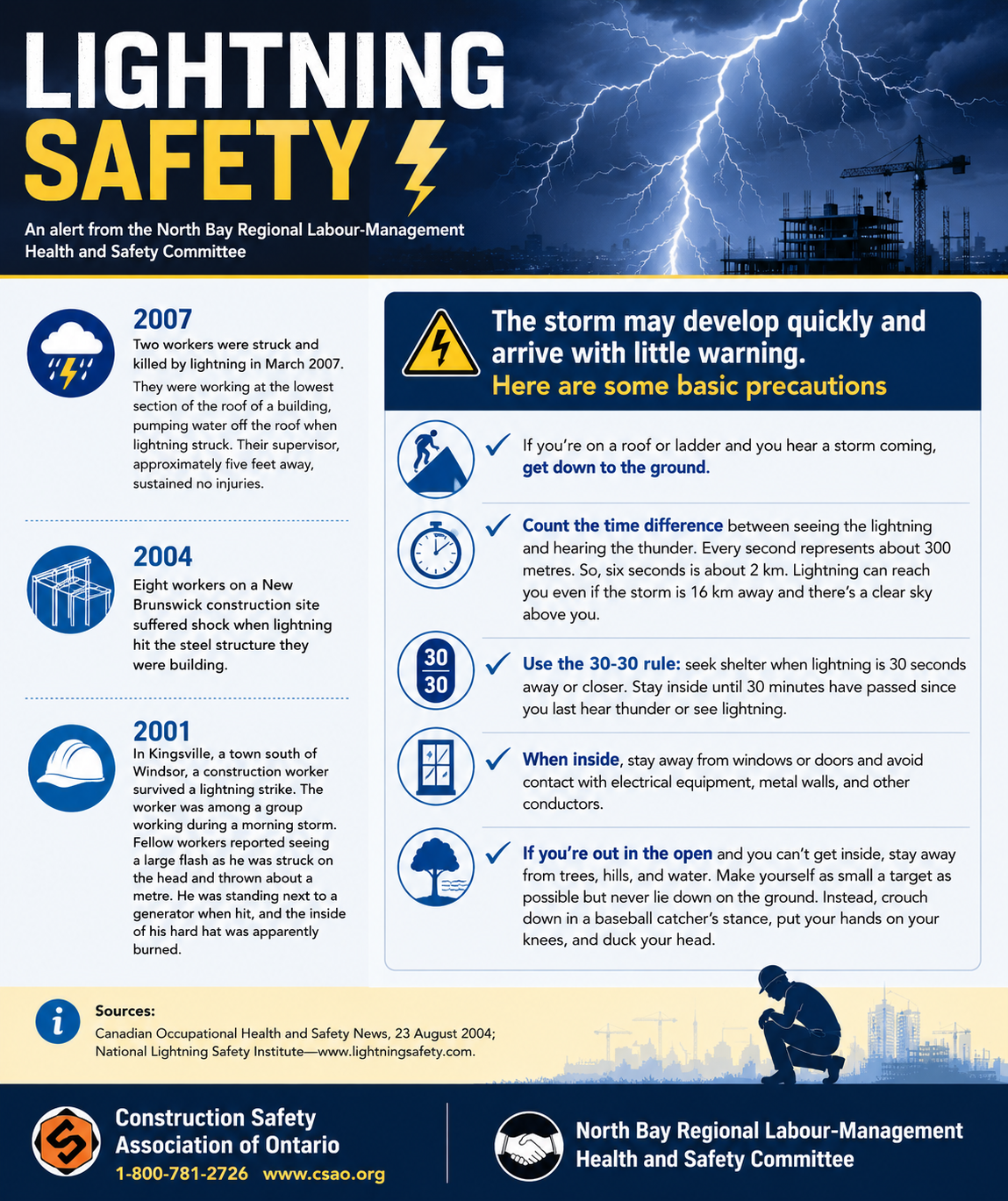
Who should be concerned about lightning?


Lightning kills more people in Canada than hail, wind, rain, and tornadoes combined, making lightning an important safety consideration. This fact is especially true for people who work outdoors. While the odds of getting struck by lightning are less than one in a million, Environment Canada (2021) says lightning kills 2 to 3 people every year in this country and injures another 180 people. Most of these injuries and fatalities occur between June and August. Most fatalities were people in open areas or taking shelter under a tree. Read More

Call Jenn for more information: 289-271-8623

Click here for more information.


Make your construction site safer and get rewarded—receive up to $2,500 toward an AED with WSIB's new reimbursement program for qualifying Ontario projects. Click here to learn more.


Click here for the July edition of the Ministry of Labour, Immigration, Training and Skills Development monthly newsletter.

MHSP campaign 2026–2027: Lockout/tagout in focus


From April 1, 2026 to March 31, 2027 the Mining Health and Safety Program (MHSP) inspectors will be focusing on ensuring that mining employers:


Comply with Reg. 854, sections 158, 159, 185, and 196, which require energy sources to be de-energized, locked out, and tagged before any equipment work.


Ensure workers are trained in lockout/tagout procedures, and that lockout devices are properly installed and used.


Implement effective measures and procedures when workers are required to perform live work.


This campaign is part of ongoing efforts to keep mining workplaces safe and prevent incidents. IHSA will provide updates as more information becomes available.


Click here for IHSA's latest news and events.

Train on Your Time with IHSA eLearning


Take charge of your training with IHSA’s fully interactive eLearning courses. Designed for flexibility and built with engaging multimedia content, these courses let you learn anytime, anywhere—when it works for you.

MLITSD Ministry of Labour, Immigration Training & Skills Development Report for: July 2026 and August 2026


Click above for full reports (critical injuries, fatalities, Provincial Coordinator's Comment, incidence details and codes, news)

GAIN THE COMPETITIVE ADVANTAGE OF GOLD SEAL CERTIFICATION - Gold Seal Webinars


The Gold Seal Certification program has been the industry’s most trusted, valued, and reliable certification for those in the management of construction. Gold Seal Certified (GSC) credentials demonstrate your commitment to the profession and your expertise through certifying education, experience, and competency.


Ever wonder what it takes to get Gold Seal Certified?

Find out the answers to these questions and more:

• Do I qualify to write the Gold Seal exam?

• Do I need more experience or training?

• What information do I need to apply?

• What is the application process through the online portal?


Watch a recording of a Gold Seal information session here.


Here are the next dates for this certification:


September 18, 2026

  • Time: noon Eastern time.
  • Enroll by August 28, 2026.
  • For new enrolled applicants and in-progress applicants, the deadline for GSC applications and final reviews is September 9, 2026.
  • The last date for approved GSC applicants to choose this exam date is September 9, 2026.


November 20, 2026 

  • Time: noon Eastern time.
  • Enroll by October 30, 2026.
  • For new enrolled applicants and in-progress applicants, the deadline for GSC applications and final reviews is November 11, 2026.
  • The last date for approved GSC applicants to choose this exam date is November 11, 2026.


For more information, click here.

NCA Training & Development courses at the NCA

NCA Training Courses

(membership discounts)


♦ Live Webinars & Workshops


♦ Online Courses


Please request the most recent training newsletter here.

Safety courses created to enhance health and safety awareness and help prevent injures to workers, e.g. Confined Space Safety Awareness, Pipeline Construction Safety Training and more - safety and management courses. Contact us for more information.

 
Helpful H&S Resources and Information

Ministry of Labour, Training & Skilled Trades NEWSROOM

Stay up to date with the latest industry safety news and training by clicking here.

Check out these valuable resources by clicking here.

Check out this valuable resource by clicking here.

Click Here for WSIB Newsletter

NCA has made safety awareness a primary initiative for our Association. Our PATHS initiative, Partners Aligned Together for Health and Safety - making a stronger commitment to safety awareness and training.

P.A.T.H.S includes:

  • NCA Health & Safety Newsletter
  • NCA New Safety Training Partners
  • NCA WSIB Health & Safety Excellence Program
  • NCA Membership Appreciation Day & Safety/Member Tradeshow
  • NCA Safety Resources and Guidelines
  • NCA Guidance to become "Supporting Ontario’s Safe Employers" (SOSE) eligible
  • NCA Partners with Audit Companies

Have a question for our Safety Committee? Email office@niagaraconstruction.org

X Share This Email
LinkedIn Share This Email