THIS WEEK IN
Federal Policy News
|
|
Climate Executive Order to Require Federal Government to be Net-Zero Emissions by 2050 |
According to a new Executive Order signed by President Biden on December 8, 2021, the U.S. government will aim to be carbon neutral by 2050. Per the order, the government will slash its carbon emissions by 65% by the end of the decade. The executive order directs that government buildings use 100% carbon-pollution-free electricity by 2030, that the U.S. fleet of cars and trucks become all-electric by 2035, and that federal contracts for goods and services be carbon-free by 2050. Government buildings should be carbon-free by 2045, including 50% emissions cut by 2032. Of importance to agriculture, Section 208 (b) of the Executive Order directs the Chair of the White House Council on Environmental Quality to consider establishing Federal food procurement policies to reduce associated greenhouse gas emissions and drive sustainability in the Federal food supply chain. |
|
ESA Comments - Critical Habitat & Definition of Habit |
On October 27, the U.S. Fish and Wildlife Service and National Marine Fisheries Service (NOAA Fisheries) published proposed regulations to rescind two critical habitat regulations finalized in 2020, with an initial comment deadline of November 26. That deadline was subsequently extended to December 13, 2021. The first proposal would rescind the final rule that revised the process for considering critical habitat exclusions under the ESA and the second proposal would rescind their joint regulatory definition of the term habitat under the ESA. CAFB submitted written comments to the Services on both proposals. You can view the comment letters here and here. |
|
WOTUS Phase One Proposed Rule Released by Agencies |
The EPA and Army Corps have proposed a Waters of the United States rulemaking that would repeal the Trump Administration’s Navigable Waters Protection Rule (NWPR) and replace it with an updated version of the pre-2015 regulations. This “step 1” rule would repeal the NWPR and temporarily replace it with an updated version of the pre-2015 regulatory regime. The agencies have expressed that they will follow this rulemaking with a “step 2” rule that will provide a new WOTUS definition. CAFB staff is currently reviewing the “step 1” rulemaking and will provide written comment to the Agencies by the February 7, 2022 deadline. Additionally, as part of the Agencies public engagement activities, CAFB also recently submitted a Western regional roundtable proposal. CAFB will also participate in the upcoming public hearings scheduled for January 12, 13 an 18, 2022.
|
|
USDA Launches Loan Guarantee Program, offers $1 Billion for Meat and Poultry Processors and Food Supply Chain Infrastructure |
On December 9th, USDA announced the deployment of $100 million under the new Food Supply Chain Guaranteed Loan Program to make available nearly $1 billion in loan guarantees; these loan guarantees will back private investment in processing and food supply infrastructure that will strengthen the food supply chain for the American people.
Through the Food Supply Chain Guaranteed Loan Program, USDA will partner with lenders to guarantee loans of up to $40 million to help eligible entities expand meat and poultry processing capacity and finance other food supply chain infrastructure. Lenders may provide the loans to eligible cooperatives, corporations, for profits, nonprofits, Tribal communities, public bodies and people in rural and urban areas.
USDA Rural Development (RD) will administer the loans. Funding may be used to:
- start-up or expand food supply chain activities such as aggregating, processing, manufacturing, storing, transporting, wholesaling or distributing food.
- address supply chain bottlenecks.
- increase capacity and help create a more resilient, diverse and secure U.S. food supply chain.
|
|
House Ag Leaders Push Back on Herbicide Changes at EPA |
A bipartisan group of House Ag members and other farm-state lawmakers are calling on the agency to reconsider its push to restrict the number of herbicides farmers can use.
The effort comes after the EPA took steps to end the use of three herbicides: atrazine, glyphosate (two of the most widely used) and simazine, saying they likely cause harm to plants and animals protected under the Endangered Species Act. In a letter the lawmakers argue the timing is wreaking havoc on producers planning for next year’s growing season and call on EPA Administrator Michael Regan to delay the changes.
|
|
$2.5 Trillion Debt Limit Increase Signed by the President |
The federal government will avoid a potential default after the President signed a $2.5 trillion debt limit increase on Thursday. The increase should ensure that there will be no more debt limit debates prior to the midterm elections in late 2022. Last week, Senate Minority Leader Mitch McConnell had helped broker a stopgap deal that would pave the way for a debt limit increase that only needed 50 votes. Typically, an increase requires at least 60 votes in order to overcome the filibuster threat. However, the deal meant all Republicans could vote against the more substantial bill, protecting them in future votes as well. Although inflation and debt worries continue to grow with many voters, Congress and the President avoid any major shutdowns or default as the holidays approach. |
|
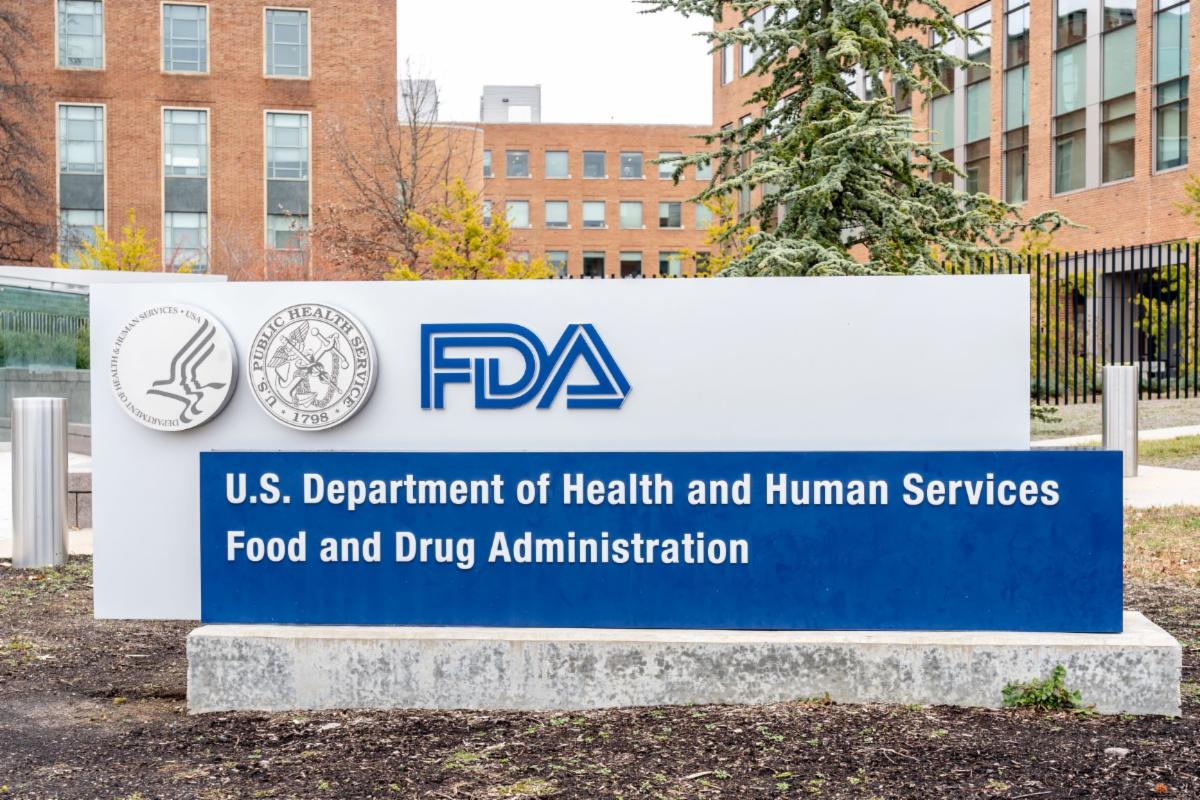
FDA Proposes New Revisions for Agricultural Water Testing under FSMA |
On December 2 nd, the Food & Drug Administration announced a newly proposed rule aimed at updating the pre-harvest agricultural water testing requirements under the Food Safety Modernization Act. In the rule’s summary, it cites previous stakeholder comments that raised concerns about the complexity and practical implementation challenges of the preexisting requirements. The new requirements would replace the microbial testing criteria for pre-harvest agricultural water with a comprehensive systems assessment and adds new options for mitigation methods to add flexibility (amongst other changes).
FDA Deputy Commissioner for Food Policy & Response Frank Yiannis issued published remarks that reiterated the agency’s goal of addressing what it considers to be too many foodborne illness outbreaks in recent years. The overall implementation process of FSMA has been a long and arduous one for many years now. With 120 days of comment period available, CAFB will be planning to solicit member feedback and submitting comments on the proposed changes. We realize this has been a complicated process and look forward to your input. For more information, please contact Matthew Viohl. |
|
AEWR Rates Released & Proposed Changes on Calculations Introduced |
On December 15 th, the Department of Labor (DOL) released their 2022 Adverse Effect Wage Rate (AEWR) figures, confirming that increases will be expected in the coming year for H-2A workers. For California, the rate will jump to $17.51 an hour —up from $16.05 in 2021. Over the past several years, some states have seen jumps of over 40% in the hourly rate, while the national average will be expected to rise to $11.99 an hour. Although a continued increase in overall approved H-2A workers has been a promising development, these wage increases could pose significant challenges for many farmers.
In addition, DOL announced a proposed rule to make changes to the way in which the AEWR is calculated, which could also raise wage rates for certain H-2A worker classifications through new methodology. There are already a number of questions as to how this could lead to even less stability within the program if they were to go into effect. CAFB will be submitting public comments on this problematic proposal and encourages your feedback on both this and the expected AEWR increase. Please feel free to contact Matthew Viohl for more. |
|
USDA to Adopt More Flexible Remote and Telework Options for Employees |
In a letter to staff issued nearly two weeks ago, the US Department of Agriculture (USDA) announced that they would be moving to a far more flexible remote and telework schedule. Going forward, the agency will now offer up to eight days of remote work in a given two-week pay period, with possible limitations depending on the nature of an employee’s work. With the pandemic still ongoing, potential dates and other changes are not necessarily set in stone, but department leadership has noted the changes could lead to increased morale and employee retention in this challenging labor environment. |
|
Cal/OSHA Expected to Update ETS Next Week |
On December 3 rd, Cal/OSHA released draft language of the final extension to their Emergency Temporary Standard (CA ETS), originally issued back in November of last year. Updated in June, the ETS will go through yet another set of changes before it is likely shifted into a permanent infectious diseases rule sometime in the Spring. Although it remains to be seen which alterations will make it into the final version—many are similarly awaiting a potential announcement relating to the federal OSHA ETS and how exactly Cal/OSHA will follow it up. States with their own safety and health programs (such as CA) are technically required to issue their own emergency rule that at minimum matches the federal version. However, with the federal ETS still halted and under court review, many states appear to be waiting for court action before going forward. CAFB will continue to update members as these developments occur. |
|
Sara Arsenault
Federal Policy, Director
916-561-5619
|
|
Matthew Viohl
Federal Policy, Associate Director
916-561-5612
|
|
Erin Huston
Federal Policy, Consultant
916-849-3746
|
|
|
|
|
|
|