Your Monthly News & Updates | |
|
|
It is quite a humbling experience to take on the role of President for an organization with a 132 year history. And more so when the past president has done so much during his 14 year tenure. David Temple, together with many dedicated volunteers have accomplished countless improvements to the condition of the archive – installing new shelving and displays, improving the archival materials for major sections of the collection, and raising money for significant improvements for our now 101 year old building. In addition, David saw after the first major wave of technology adoption at the Society. I am personally so grateful for all that he has done. But most of all, I appreciate the trust that he has placed in me by handing over the baton.
As I begin my own journey, my primary mission – above all else – is to ensure that the Society lives on for the next 132 years. My goal is not only for it to 'survive' but rather to thrive as a central community center for at least the next hundred years. In addition to the amazing work that is already in place with five community events per year, robust school programming, History Weekend and resources such as our website and our newsletter – my goals include rethinking our museum space and publishing the new Medfield Magazine.
In the article below under "At the Museum" I've shared some of my initial thoughts. I look forward to sharing more over the coming months. In the meantime, Happy Holidays!
| |
|
PeggySue Werthessen
President
| |
|
Monday, Feb 5
7:30 pm
First Parish Unitarian Universalist Church
26 North Street, Medfield
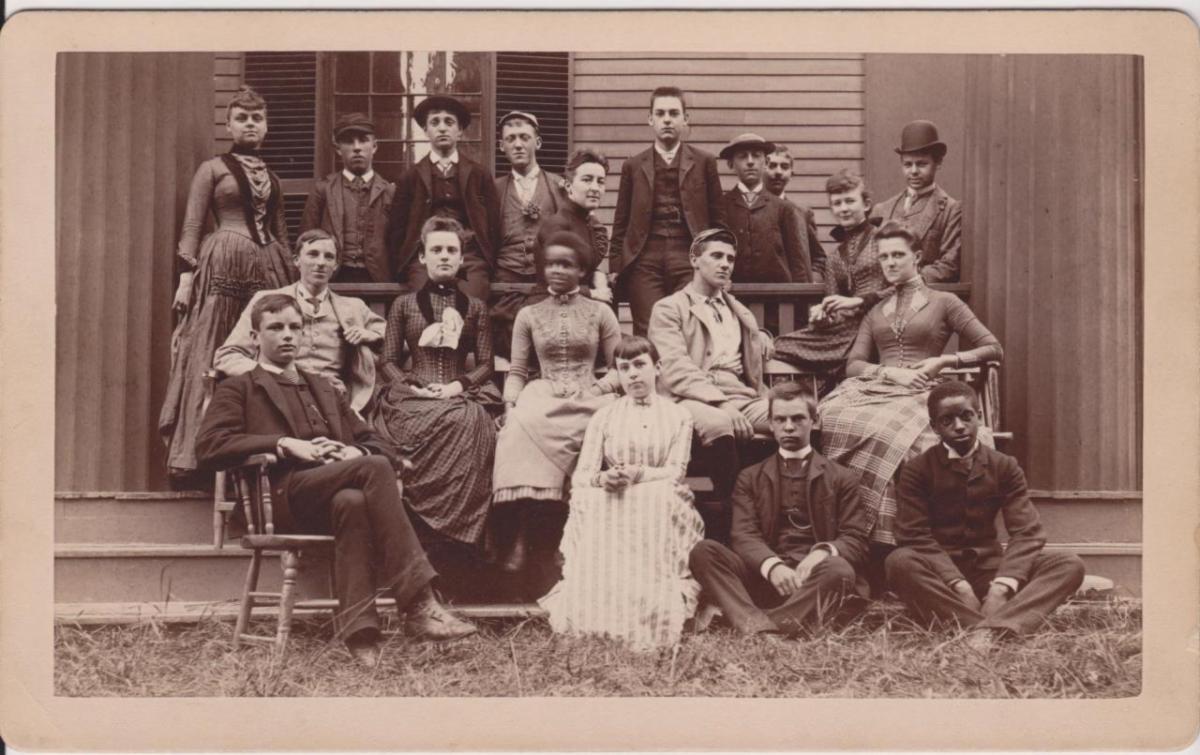
At our February program we will be showing a 40-minute documentary film, “An Uncommon Education” about The Allen School in Newton. The school was founded in 1854 and led by Nathaniel T. Allen who was born, raised, and is buried in Medfield.
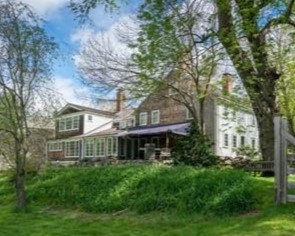
His home, known as the Allen Homestead, at 260 North Street (pictured here), is shown in the documentary. It was a stop on the Underground Railroad and was visited often by Frederick Douglass and William Lloyd Garrison.
| |
The Allen School advanced a radical new vision of social and educational equality in the United States in the last half of the 19th century.
At a time when slavery was still the law of the land and women’s suffrage yet a distant goal, the Allen School admitted Black students, foreign students, and women to a forward-looking program of study, empowering them to develop their talents, while moving society decisively toward gender and racial equality.
This is a story that has not been told before in film and not fully told in the written histories. As such, it will restore a forgotten piece of history in Massachusetts – a state that values education and was an early pioneer in fostering inclusion.
“An Uncommon Education” will help current generations make connections that point us toward a more just society.
This presentation is free and open to the public. We look forward to seeing you there.
| |
The Very, Very Early History of Medfield with John Thompson | |
|
by David Temple
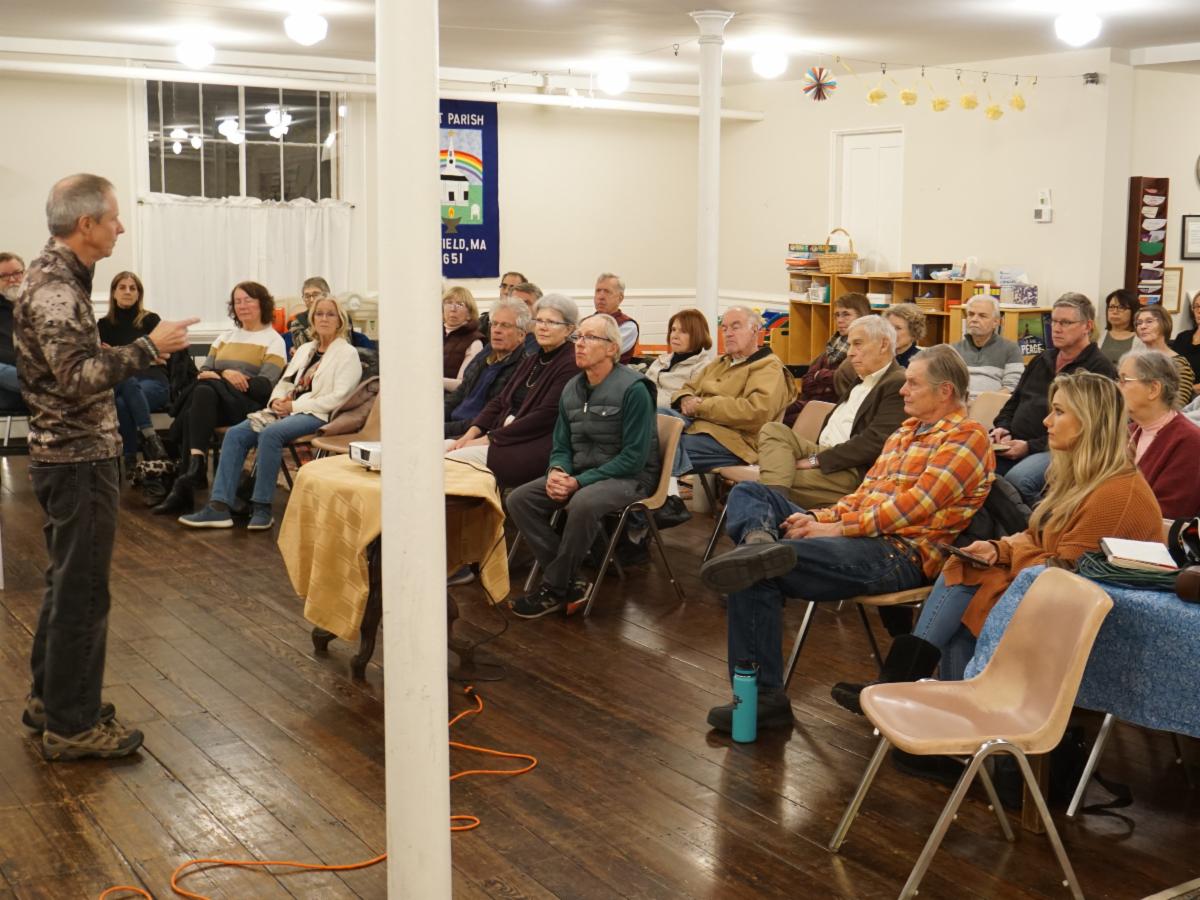
A near-capacity audience – upwards of 60 people – crowded the vestry of the old meetinghouse November 13 to hear John Thompson give a wide-ranging talk on a subject few knew anything about – Medfield in the centuries and millennia before the Europeans arrived.
John said he had done his undergraduate work in glaciers and archaeology at the University of Rhode Island, where he and a professor investigated ancient Narragansett sites. He went to graduate school at Miami of Ohio and spent one summer living on a Shoshone reservation. He also credited the late Mike Standley with helping to inspire his interest in native archaeology.
| |
|
John Thompson’s Subtopics and Comments
- Being close to water was vital to Native Americans. It meant there would be vegetation nearby that would be a food source for wildlife and fish and migratory birds – which in turn would be food sources for the Native Americans.
- Medfield has not one, but two watersheds: the Neponset River east of the hill near Shaw’s Plaza, and the Charles to the west.
- The center of Medfield is an outwash plain, which is what’s left in front of a melting glacier. The actual glacier stopped at Rocky Woods at the end of the last Ice Age, about 10-12,000 years BP (Before Present).
- Much of Medfield, from the Peak House to the near end of South Street Extension and to Turner Pond in Walpole, was covered by Lake Medfield. But Lake Medfield exploded out to sea when a dam-like structure near Turner Pond suddenly let go.
| |
Timelines
- 12,000-9,000 BP (Paleo-Indian period) – the first known settlers in North America.
- 9,000-2,700 BP (Archaic period) – Artifacts from St. Lawrence area found locally, suggesting active trading. Also pollen from Alaska found locally.
- 6,000-8,000 years BP – Native Americans had a campsite at South Street and Route 27, and they left artifacts. Artifacts’ dates have been established by carbon dating, a highly accurate method developed at the University of Chicago in the late 1940s by Willard Libby, who won a Nobel prize for his efforts.
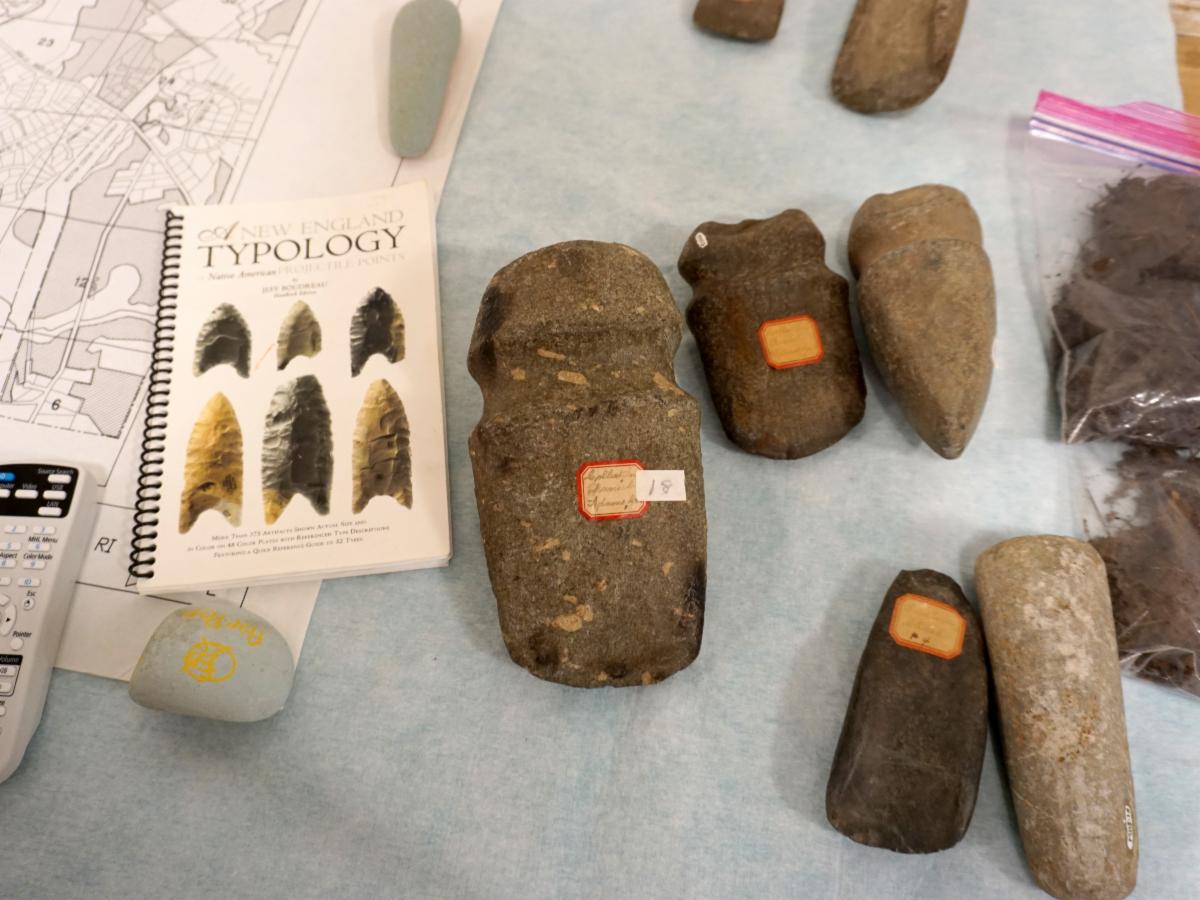
- 3,000-1,000 years BP (Woodland period) – More tool diversity. Beginning of move toward sedentary life. Maize cultivation. Ceramics. Bow and arrow. Farming. Fish and shellfish. John showed Woodland era stone hoes (see photo below), with notches to hold wood handles in position to drag the hoe to create trench for planting seeds.
|  | |
John noted that, while all arrow heads are projectile points, not all projectile points are arrow heads. Spears had projectile points before the bow and arrow was invented.
In the winter, Native Americans burned wood to keep warm. To keep a sustainable source of firewood, it requires 70 wooded acres per person, which placed enormous pressure on Native Americans as English settlers poured in in the 17th century. The English kings sought to expand westward to the Hudson River to keep it from falling into French hands.
Massachusett Indians lived on Great Blue Hill.
The original Dedham land grant extended all the way to Bellingham!
Many artifacts were dug up and carefully documented by Medfield’s amateur archaeologists in the 1930s. The information helped the state develop secret maps showing archaeological resources.
|
|
PeggySue's Focus for the Future of the Society | |
|
by PeggySue Werthessen
At the museum we are moving from the idea of curated 'things' to curated 'stories. To date, much of the collection has been driven by donations. In some cases, we are gifted the most amazing things, such as the recent donation of textbooks that were used to train nurses at the Medfield State Hospital back in 1940.
Other times, we are simply the end point for things that don't seem to have another home because they are old. Historically, (pun intended) we have held onto many of these items even when they don't help us tell our story. (I am not sure who needs 14 copies of the Psalms of David printed over 100 years ago.)
Although we will always get excited when someone chooses to share a treasure with us, we are increasingly focusing on how these items help us tell our collective story. For example, we recently highlighted the fact that the inventor of the four-wheeled roller skate was from Medfield.... yet we didn't have anything at the Museum that would help us tell that story. Fortunately, two residents donated their old skates and we are on our way to creating a thoughtful display with these as well as a print of the original patent. We have so many great stories to tell and I can't wait to share them with you.
Another thing that I am focused on is how we document today for future generations. A recent example of this was a very small collection of items from Covid. It isn't a lot but some of the items are uniquely Medfield including the hand sanitizer produced by local Liberty Tree Distillers as well as some of the hand made masks that were created by Medfield residents. This type of effort is even more important considering how much happens online and may not be accessible to our future selves.
But most of all, I am investing in increasing overall awareness of all of the great work that the society does already – from five public programs to school programs and more. One of my favorite things that we have implemented is Mondays at the Museum – a time where anyone can drop in and volunteer for a while. It has really been an incredible way to meet other history minded people.
| |
The New Medfield Magazine is Here! | |
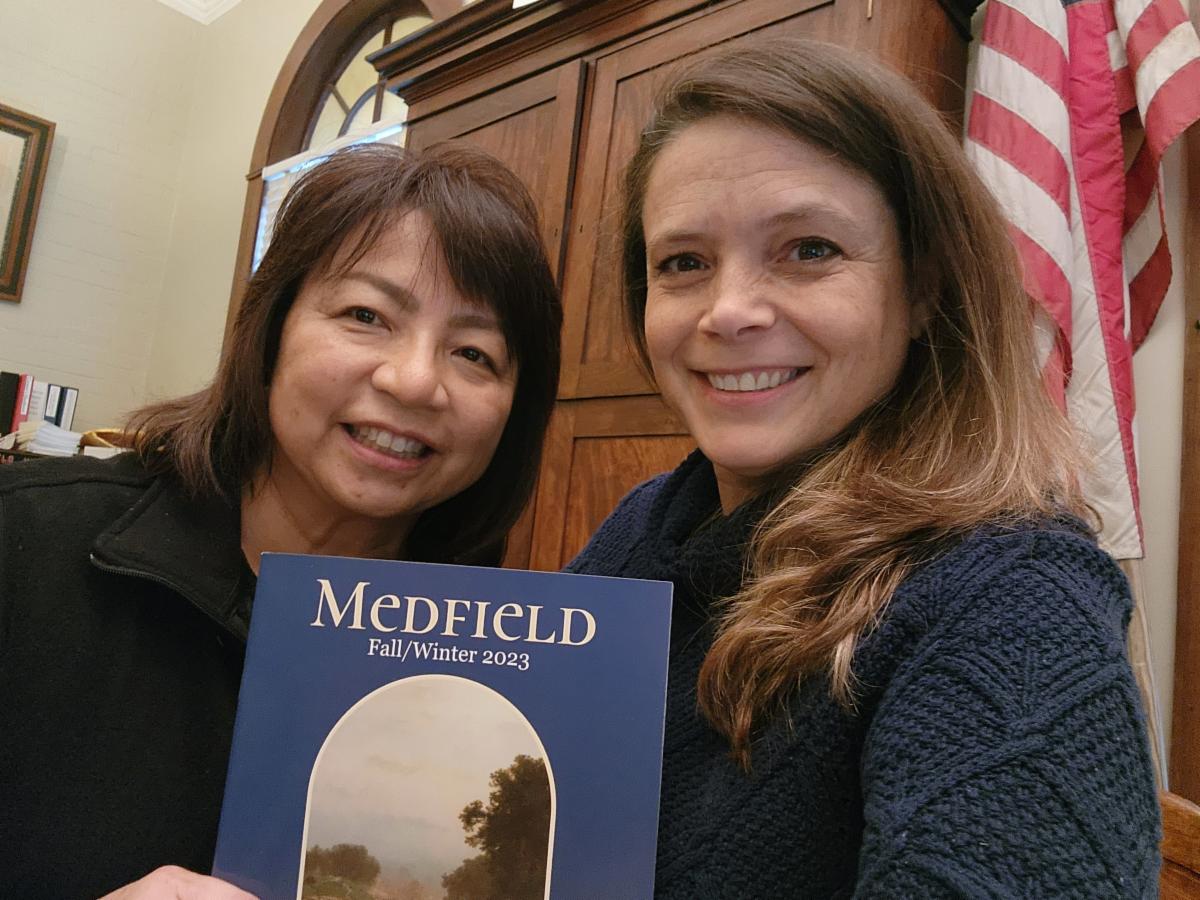
The Medfield Historical Society has completed producing the first edition of its new biannual publication, Medfield Magazine. This magazine will serve as an invaluable resource for the community as well as a permanent record of town clubs, local businesses, historical sites, annual events, and more. | Yumi Jones and PeggySue Werthessen show off the first edition of our new Medfield Magazine hot off the presses. A big shout out to Yumi for selling all the ads that enabled us to publish this magazine. | |
The best news is that all 2024 members at the family level or above will receive a copy for FREE! If you haven't already responded to our annual appeal letter, be sure to join or renew your membership now to ensure that you get your copy before they sell out!
Not sure your membership is up to date? Feel free to pay your dues now and it will be extended through 2024.
| |
As you can imagine, the cost of printing and distribution of such an effort is well beyond our normal operating budget. To offset these costs we have been selling ads to local businesses. Even still, the magazine is not expected to be a significant fundraiser. However, over time we hope to grow this effort which will allow us to raise money for some of our more ambitious preservations projects.
We distributed our first copies on December 1 during the annual Medfield Holiday Stroll.
| |
The Jonathan Boyden Jr. Homestead | |
|
by Cheryl O'Malley
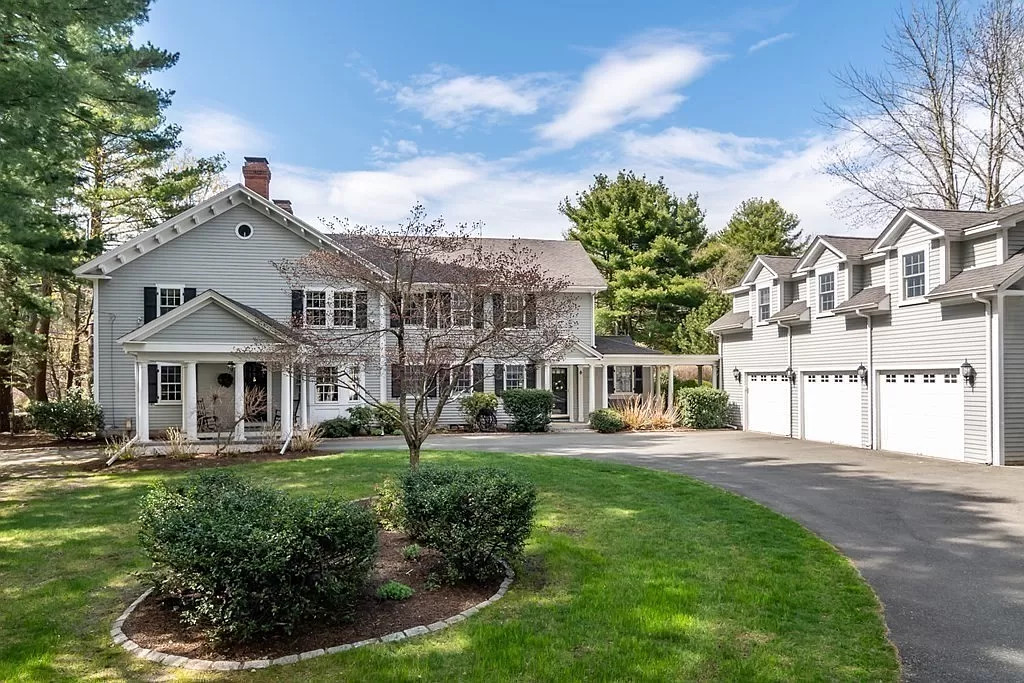
The Boyden Homestead at 120 High Street (Rt. 27), near Plain Street, heading towards Walpole, has a long and varied history. It has significant historical ties to both national and local events starting with the great migration to America, the King Philip War, the French and Indian War, the Revolutionary War and the Civil War. It also harbored, within its walls, a budding inventor, Selectmen, Captain, building contractor, butcher and activist.
The Boyden Family (1700–1728)
The house was built by Jonathan Boyden Jr. around 1700. He was the son of Jonathan Sr. and Mary (Clark) Boyden. His father became a captain in 1712, Representative to the Legislature in 1715, and was actively involved in Medfield town affairs. Tracing Jonathan Jr.’s lineage further, his grandfather, Thomas Boyden, came to America, in 1634 on the ship “Francis” from Ipswich, England, and settled first in Scituate, then Watertown and finally in Medfield.
| The Boyden Homestead as it looks today. | |
Jonathan Jr. and Rachel Fisher were married in Medfield on November 17, 1698. Rachel’s parents were John and Hannah Adams Fisher. Her father’s estate was on North Street not far from “Castle Hill,” the old Allen estate. Fisher’s house was burned during the King Philip War. He never rebuilt, but bought a house near his original house. He was a blacksmith by trade whose shop was located at the corner of North and Frairy Street.
The Boydens had six children: Jonathan, John, Marah, David, Joshua and Benoni, two of whom died within their first year of life. Jonathan, John and David all took up residence in Walpole. The last child, Bononi, was born on March 24, 1712, and his mother died six days later at the age of thirty-three. Benoni lived only four months longer.
Joshua, Jonathan Jr.’s son, remained in Medfield. He was a housewright (a person who builds houses for a living). He was selectman for three years, and sealer of weights in 1742. He lived on his grandfather’s homestead on Pound Street with his three sequential wives and eleven children: Lemuel, Asa, Catherine, Sarah, Micah, Micah, Moses, Elijah, Joshua, Sarah and Elisha.
The first five children were delivered by his first wife Sarah Allen. Lemuel and Asa remained in Medfield. Lemuel served in the French and Indian War. Catherine married Jonathan Adams and resided in Medway. Sarah and Micah died in their first year of life.
The union of Joshua and his second wife produced only one child, Micah. The last five children were of his third wife Rachel Bullard. Elisha was the last to be born in 1761.
| |
Jonathan Jr.’s second wife was Esther Thurston. They were married in Medfield on February 12, 1713, but he died only six years later at the age of forty four. The couple had two children: Silence, who lived only one month, and Seth, an early settler of Foxboro and inventor of a machine to cut nails, a leather splitting machine for book binding and a cut-off valve for steam engines.
It appears none of Jonathan Jr.’s children succeed him in living out their natural life in their parental home. There is no mention of those into whose hands the property fell after Jonathan Jr. died in 1719.
Esther’s parents were John and Mary Wood Thurston. Her father served as Representative of the General Court for two years and as Deacon for one year in Medfield. He was one of eight children. His sister, Mary, was taken captive during the King Philip War and Mary Rowlandson wrote of Mary’s kindness in an account of her own captivity in the Narrative of Captivity of Mrs. Mary Rowlandson, 1682. John’s sister, Margaret, and brother, Samuel, died of wounds inflicted on the dreadful day of King Philip’s attack on Medfield.
Click here to read more >>
| |
|
Accessioning is the formal, legal process of accepting an object into a museum collection.
A museum normally has a collecting policy for new acquisitions, so only objects in certain categories and of a certain quality are accepted into the collection. The process by which an object is formally and legally accepted into the museum collection is called accessioning.
Because accessioning an object carries an obligation to care for that object in perpetuity, it is a serious decision. Though in the past many museums accepted objects with little deliberation, today most museums—including the Medfield Historical Society—have accepted the need for formal accessioning procedures and practices and have put such procedures and practices in place.
While every museum has its own procedures for accessioning, it generally begins with either an offer from a donor to give an object to a museum, or a recommendation to acquire an object through purchase or trade.
Several issues must be considered in the decision to accept an object. The Medfield Historical Society’s accession policy states that we “accept materials, whether objects or archival items, that pertain to the town of Medfield, Massachusetts, within the following guidelines:
- the item was made by a Medfield resident, business, or organization; or the item was used by a Medfield resident, business, or organization; or the item has some other definable connection with the town, or with a Medfield resident, business, or organization
- the item has significant historical context
- the item can be adequately stored and cared for by the Society
- the item is in sound condition or has the potential to be restored to sound condition
- the item does not duplicate existing holdings
- ownership of the item by the potential donor is not in question”
Our policy further states that, “Only through its collections is the Medfield Historical Society able to fulfill its mission, and preservation of the collections is therefore paramount. Professional standards will be applied to handling, storage, and display of the collections. Any cleaning, repair, or conservation must be done under the direction of a Curator and in keeping with professionally accepted standards.
A secure environment will be maintained to protect the collections. While in storage or on display, items will be protected as much as possible from injury by heat, cold, humidity, lack of humidity, light, vermin, and other environmental factors. Storage and display spaces will be secure from theft and vandalism.”
Once the decision has been made to accept an object, it is formally accessioned through a Deed of Gift and entered into the museum's catalog records. Each object is given a unique catalog number to identify it. Objects are then packed for appropriate archival storage, or prepared for exhibition or other educational use.
As mentioned in the President's message above, moving forward we are increasing our focus on how these items help us tell our collective story.
| |
People and Places of the Past | |
The Life and Times of Honey Bear Babcock | |
|
by David Temple and Tim Flaherty
There used to be a sign at the shack at the old Medfield town dump listing a few rules and regulations. At the bottom it said, “Per Order of Honey Bear Babcock, Dump Commissioner.”
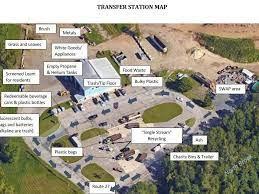
Fifty years ago, Medfield’s town dump was located off Grove Street. The site of that dump is the big grassy hill you see on your right as you drive on the “new” Route 27 past the DPW garage toward West Street. The old dump was filled to capacity, covered over, and replaced in 1986 by the new $800,000 transfer station shown in the aerial photo. (In addition to the primary function of receiving trash, the transfer station has become a minor summer social center, thanks to Nancy Irwin and the other swap area volunteers.)
| |
This was in the days before Route 27 was relocated in the 1970s to a new road, called North Meadows Road, that began next to CVS and ran northward, crossing Dale and West Streets, past the transfer station and former state hospital, toward Sherborn. The old Route 27 snaked through the center of town from Spring Street to Main Street, left on North Street, up to Harding Street, left on Hospital Road, then past the hospital and down the hill out to present road to Sherborn.
It is worth noting that when the century-old state hospital was shut down, an open dump was left behind on the property. That trash pit (since cleaned up at a cost in the millions) contained eight junk cars, as well as medical waste, toxic chemicals, and general refuse, covering an area that measured about 1,000 feet by 50 feet.
| 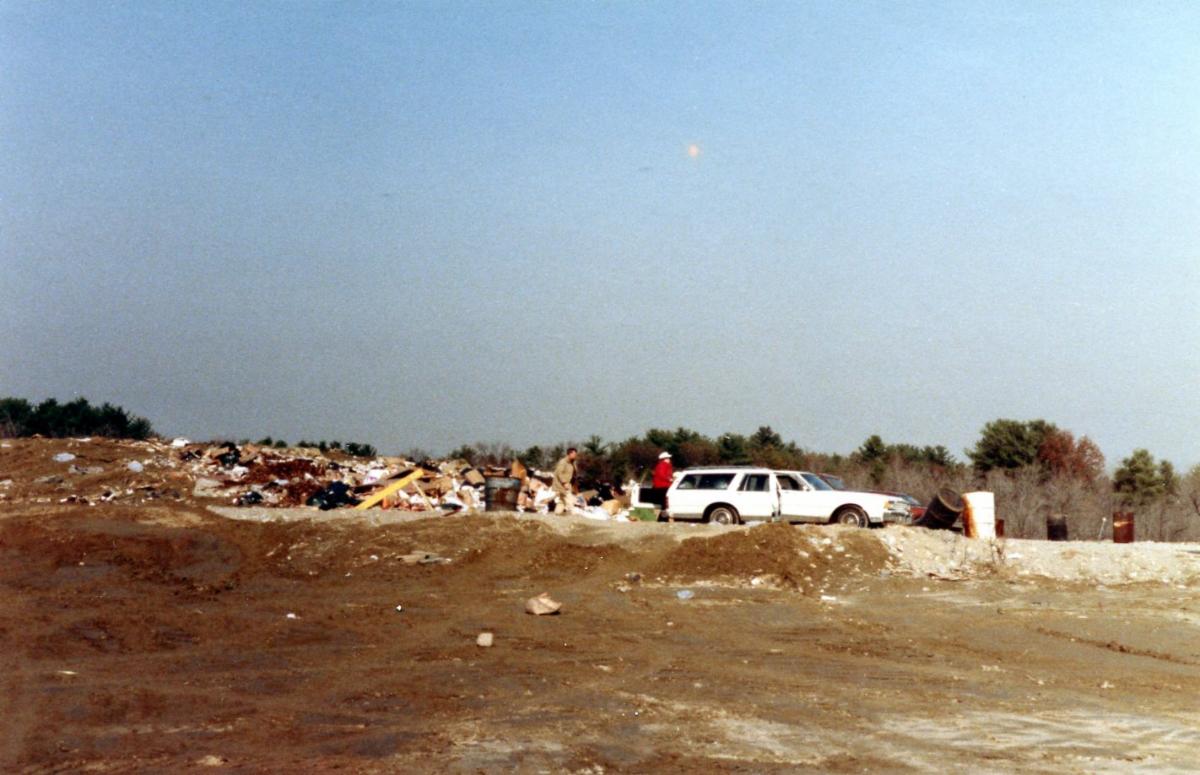 | |
The photo above (undated, but the car appears to be a General Motors station wagon from the late 1970s) shows the old dump, aka Mount Trashmore, very near the end of its useful life.
Click here to read more >>
| | | | |