The City's Future Housing Plan
Why Do We Need a Housing Plan?
The City of Green Lake is a beautiful community, but like many small towns, it faces housing challenges. Homes are expensive, there aren’t enough options for people of different ages and incomes, and seasonal workers and young families struggle to find places to live. A healthy community needs a variety of housing options.
According to the State of Wisconsin, a city’s growth is measured solely by its Net New Construction - new homes, buildings, and improvements that expand the tax base. If the City isn't building houses, its revenues do not grow. And with rising operating expenses due to inflation and little new revenue to match, the City will continue down a path of financial hardship. Investing in housing plans and developments is key to reversing this trend and building a more stable, prosperous future for Green Lake.
This plan called CH-3: Housing for All, from the City’s Comprehensive Plan which is nearly finished, lays out ideas to create more housing, the right kinds of housing, and affordable options for all.
Who will benefit from this housing plan
- Local Workers who can’t find housing close to their jobs
- Young families looking for starter homes
- Seniors who want to downsize but stay in town
- Business owners who need housing for staff
- Renters who want fair prices and safe places to live
Key goals of the plan
- Create more types of housing - apartments, townhomes, and smaller homes - to fit the needs of young professionals, families, seniors and seasonal workers.
- Make Housing More Obtainable - Explore ways to make it easier to build and rent affordable homes, including working with developers and offering incentives for affordable units.
- Support Smart Growth - Encourage housing development in areas where roads, utilities, and services already exist, like near downtown or near schools and parks.
-
Update Rules and Zoning - Update the City's rules to make it easier to build a variety of housing, such as allowing single-family homes to be converted into duplexes, permitting accessory dwelling units (like garage apartments), and streamlining the building permit process. At the same time, ensure the City’s zoning ordinances follow best practices while remaining sensitive to the community’s concerns about density.
-
Preserve the Character of Green Lake - Grow in ways that keep the small-town charm and natural beauty of Green Lake, while meeting today’s needs.
What actions are being recommended to accomplish these goals
- Revise Zoning Laws: Make it easier to build smaller homes and multi-family units where appropriate.
- Infill Development: Build on vacant lots in town instead of spreading out into farmland or nature areas.
- Accessory Dwelling Units (ADUs): Allow people to build small homes on their property for relatives, renters, or care providers.
- Rental Support: Promote fair and safe rental options.
- Incentives for developers who build affordable or workforce housing.
- Partnerships: Work with employers, nonprofits, and housing agencies to fund and support new housing efforts.
- Public Education: Help residents understand the importance of housing diversity and affordability.
What happens next?
The City of Green Lake will continue reviewing and updating policies, working with community members, and applying for grants to bring this plan to life. To review the data from the Comprehensive Plan survey supporting this Housing Plan, click here.
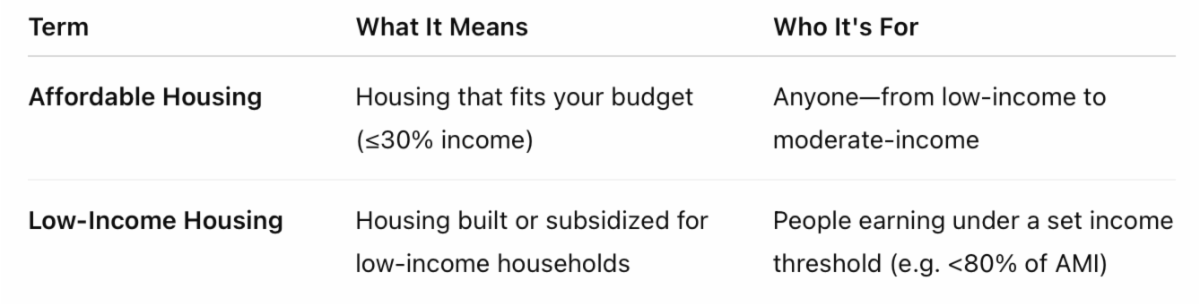
Understanding Affordable/Workforce Housing vs Low-Income Housing
|