|
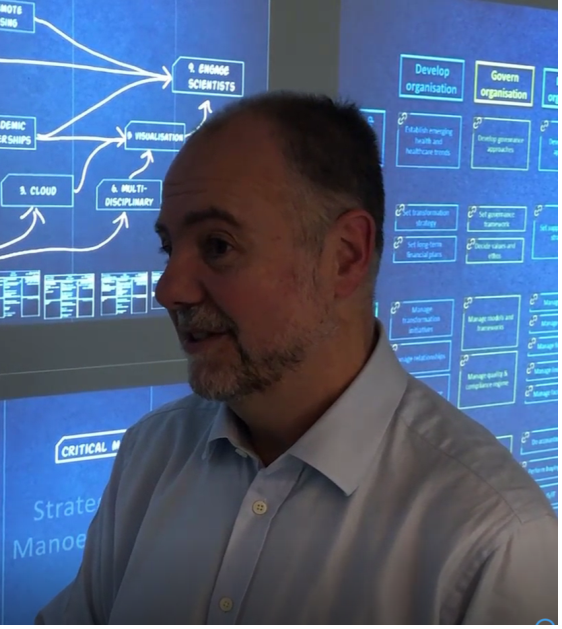
This - along with many other thought-provoking topics - was discussed at-length in our IASP UK Strategy Debate in December, Strategy or Futures Thinking: which discipline is more important now?
Amongst a panel of distinguished academics & practitioners of both Futures Thinking and Strategy, the nature of how the future unfolds, and our role (as both humans and strategists) in shaping it was returned to again and again.
Right from the off, our perspectives on 'the future' were upturned with the introduction of the notion that there is no such thing as 'the future'. There is - at any one time - an innumerable number of possible futures. Each followed by a further multitude of possible futures. And on, and on.
This highlighted a handful of crucial fallacies that we make when we think about strategy and shaping the future.
-
Determinism: Assuming that 'the future' unfolds in a linear, predictable way - as an ongoing sequence of cause-and-effect relationships
-
Rationality: We expect that an underlying logic prevails and guides the unfolding of 'the future'
-
Bias: We both over-estimate the accuracy of our future predictions AND over-estimate the degree of control we have in 'creating' the future (at best, we shape!)
What's particularly fascinating here is that this serves to highlight the inherently psychological nature of strategy and futures thinking. Underlying each of these fallacies is a very natural human desire for control. To let go of the comforting notion that the world unfolds in predictable ways is to cede control. And our primal brains really don't like to cede control.
In a business landscape where being 'data-driven' is a must, we can't separate ourselves from our psychological wiring. Instead, we must work with it:
- Lean into curiosity and creativity - imagine a varied range of future scenarios. Listen for weak signals and forecast scenarios from the probably to downright implausible! Techniques such as Wardley Mapping are helpful here.
- Be aware of our assumptions, heuristics and biases - call out the assumptions that underpin our predictions and be open to being wrong!
- Maintain a mindset of experimentation - all we can do is to continue to generate hypotheses about how we think the future will unfold. Continually gather data to refine these hypotheses as we move forward.
Paradoxically, by leaning into the natural uncertainty and unpredictability of the future, we may just improve our ability to anticipate and respond to it.
What do you think? Do you agree with our views here? Or do you have an alternative perspective? Join the debate - we'd love to hear your thoughts and continue the discussion!
[If you would like to contribute a 'Topic of the month' article to the newsletter, please contact us by email with your draft: the aim is to publish a short article about strategy each month that stimulates thinking and discussion.]
|