Your Monthly News & Updates | |
|
Help Wanted: New Keeper of the Clock | |
|
A new keeper is needed for Medfield’s town clock. That’s the four-faced clock atop the old meetinghouse, aka First Parish Unitarian Universalist Church at 26 North Street.
For the last 20 years the job has been faithfully and creatively performed by David Maxson, who has sold the Lawrence Circle house he and his family built and lived in since the early 1990s. They have moved to Connecticut.
The job requirements are few and intermittent. They consist of resetting the clock for the semiannual time changes and in case of a power failure, and generally keeping an eye on things so the mechanism moves smoothly. David noted that in the long run, oil used in the mechanism tends to gunk up, so it seems better to have it clean and dry.
The keeper of the clock is not responsible for repainting the clock face or maintaining the hands you see from the street – for that, you call a steeplejack.
| |
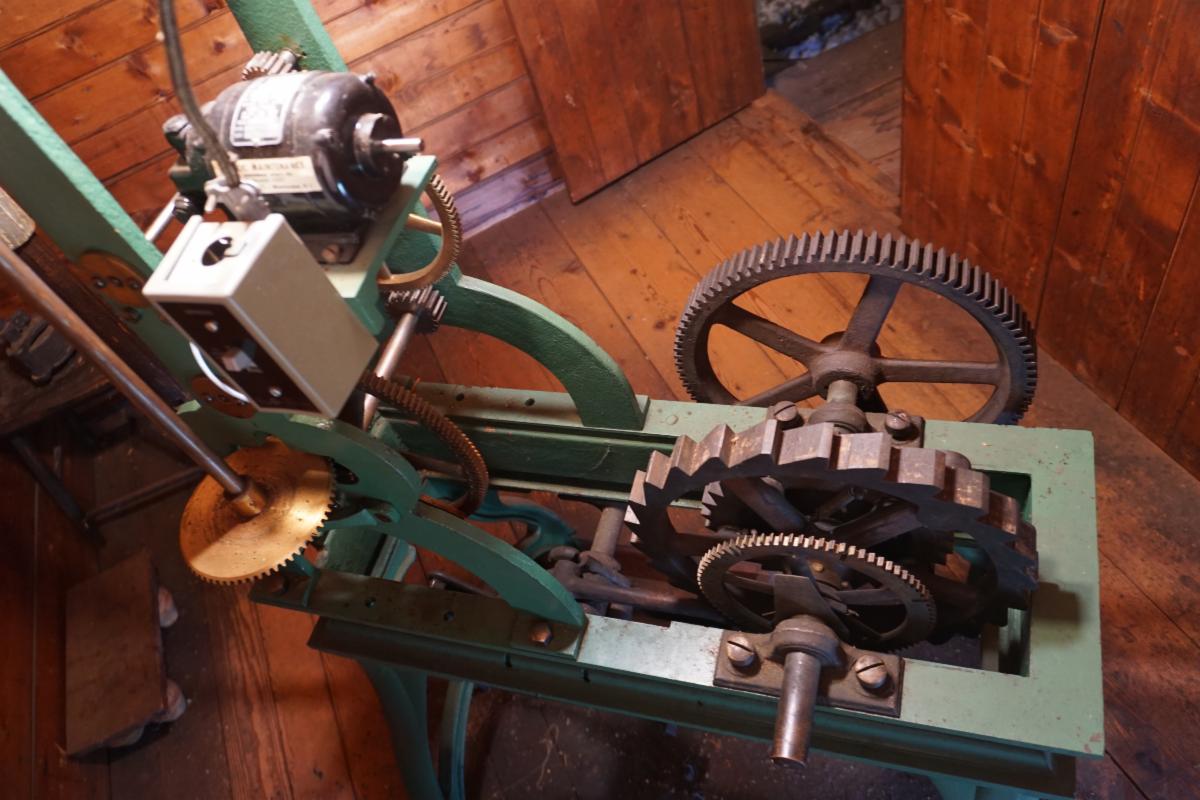
The fractional-horsepower motor and gear mechanism than drives the clock hands. | |
The position of keeper of the clock was created over 50 years ago by the Medfield Board of Selectmen, sort of as a going-away present for Austin C. “Buck” Buchanan to give him something else to do as he retired from that board.
Buck did a little bit of everything in his life – journalist, printer, soldier, Civil Defense director, safety engineer, EMT, firefighter, bank director, organist, stand-up comedian, and above all, family man and active citizen. In the early 1970s he designed and built a solar hot water heater for his then-home at the corner of Oak and Pleasant Streets. Despairing of finding a competent repairman for his power tools, he took a course in small engine maintenance at Keefe and repaired lawn mowers and chain saws for friends and neighbors.
Buck was also a member of First Parish, and when he retired as keeper of the clock, his successor was a fellow Unitarian, David Maxson. Being a Unitarian is not a job requirement, however.
The NRHP-listed church/meetinghouse was built in 1789, the third such building on the site. Fifty years later, in 1839, the church was rotated 90 degrees so it faced Main Street instead of North Street, and the Greek revival portico and columns were added. Its 18th century town clock was replaced in 1861 with the four-faced clock you see today. That weight-driven, pendulum-regulated clock was electrified in 1968.
In preparing this column I did a little research into the history of clocks. The earliest clocks were the sundials used in ancient Egypt. Other early clocks were water clocks and graduated candle clocks. Mechanical clocks appeared in the 1200s. Hourglasses appeared later, after glassblowing was invented.
Warning: this link will lead a curious reader down a rabbit hole in which you will also learn about chip logs, drogues, and why nautical speed is expressed in knots.
Interested in becoming the next keeper of the clock? Apply to the board of selectmen.
| |
Sheryl Faye To Perform at The Center as Amelia Earhart | |
|
Wednesday, Sep 13
6 pm - 7 pm
The Center
1 Ice House Road, Medfield
Sheryl Faye, a popular performer of one-woman shows featuring historically significant women, will be offering her show – "Amelia Earhart: Pioneer in Aviation!” – at The Center at Medfield on Wednesday, September 13 from 6-7 pm. The event is co-sponsored by Friends of the Medfield Library, The Center at Medfield, and The Medfield Historical Society.
Admission is free, but please register in advance by clicking the button below or by calling The Center at 508-359-3665.
| Faye has recently performed in Medfield to delighted audiences as Ruth Bader Ginsberg and Eleanor Roosevelt. Since 2003, she has masterfully brought to life important historical women in shows across the U.S. Her performances immerse the audience in multimedia learning experiences that captivate and spark interest to explore more. The upcoming show will depict Amelia Earhart’s fearless and adventuresome spirit, her wonder of the new “flying machine,” and passion for the science of aviation as flying becomes her career. | |
|
Saturday, Sept 23
10 am - 4 pm
26 North Street, Medfield
Discover Medfield Day, now in its 43rd year, is slated for Saturday, September 23rd, rain or shine! The event consists of over 150 booths highlighting Medfield businesses and organizations. To add to the fun, there will be an entertainment stage and kids’ alley filled with rides. The theme has yet to be announced, but it will be fun.
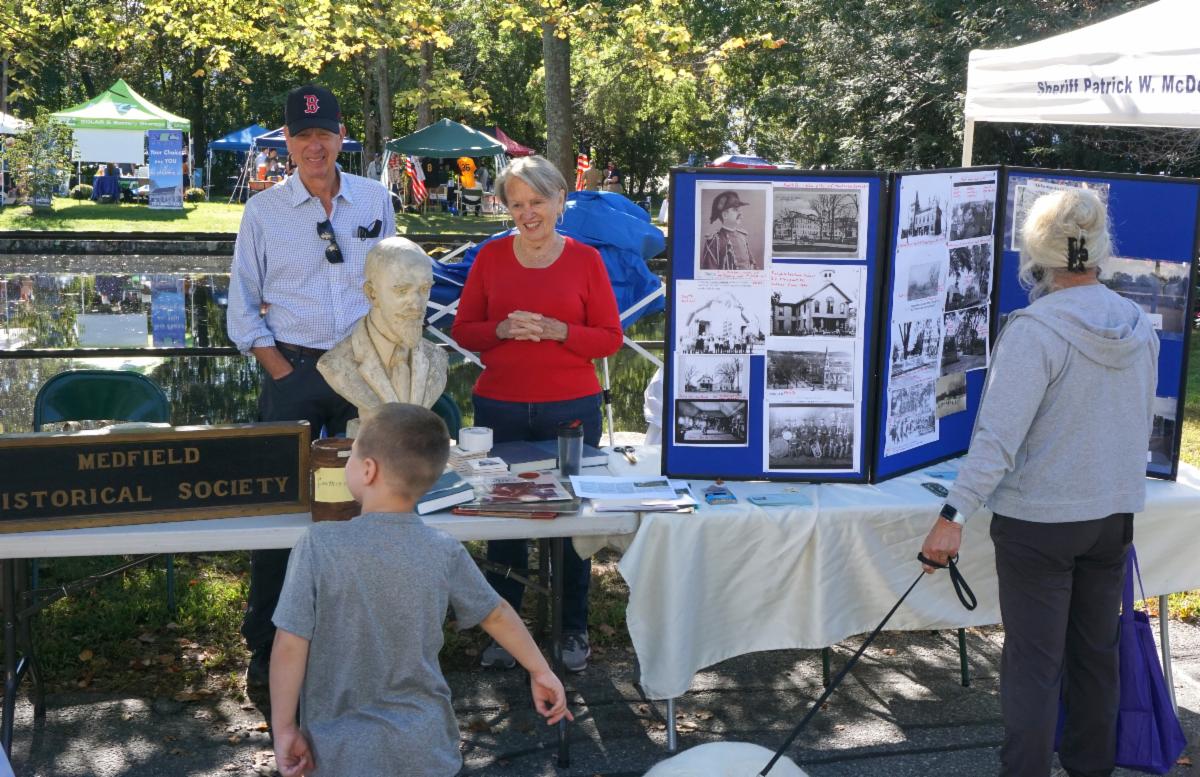
Come visit us at the Medfield Historical Society booth #39, across from the Dwight-Derby House. Bring along a few friends and introduce them to what the Historical Society has to offer.
|
|
|
Monday afternoons
3 - 7 pm
Medfield Historical Society
6 Pleasant Street
Anyone who has visited the Medfield Historical Society museum can attest that the building is busting at the seams with "cool stuff." While hundreds of items are on display and a volunteer docent will happily walk you through their history, thousands more items are tucked away in cabinets, the old bank safe, and the endless storage areas in the basement. Frankly, it is all a bit overwhelming.
However, if you are a history buff, each hour spent trying to make sense of it all is rewarded with the most incredible finds. In one evening, we uncovered a set of old wax records, a hand written journal from the 1800s, a monopoly style game about Medfield, and an undated map of the area (likely from the early 1900s).
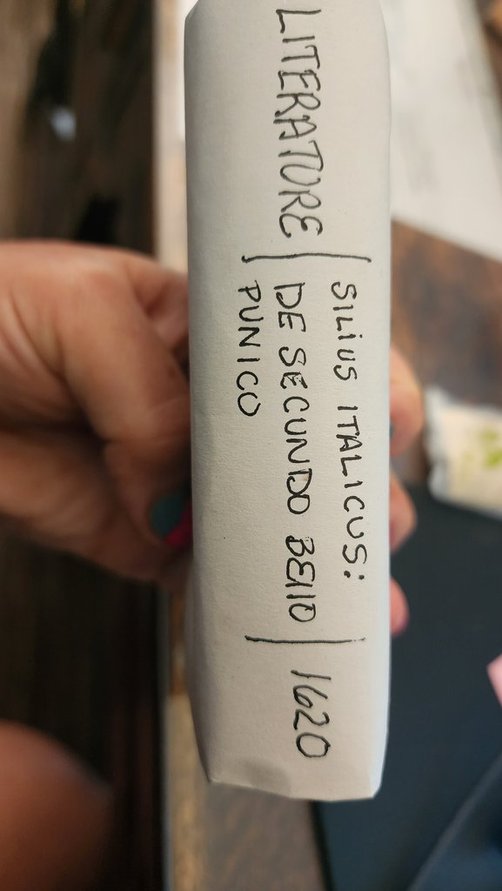
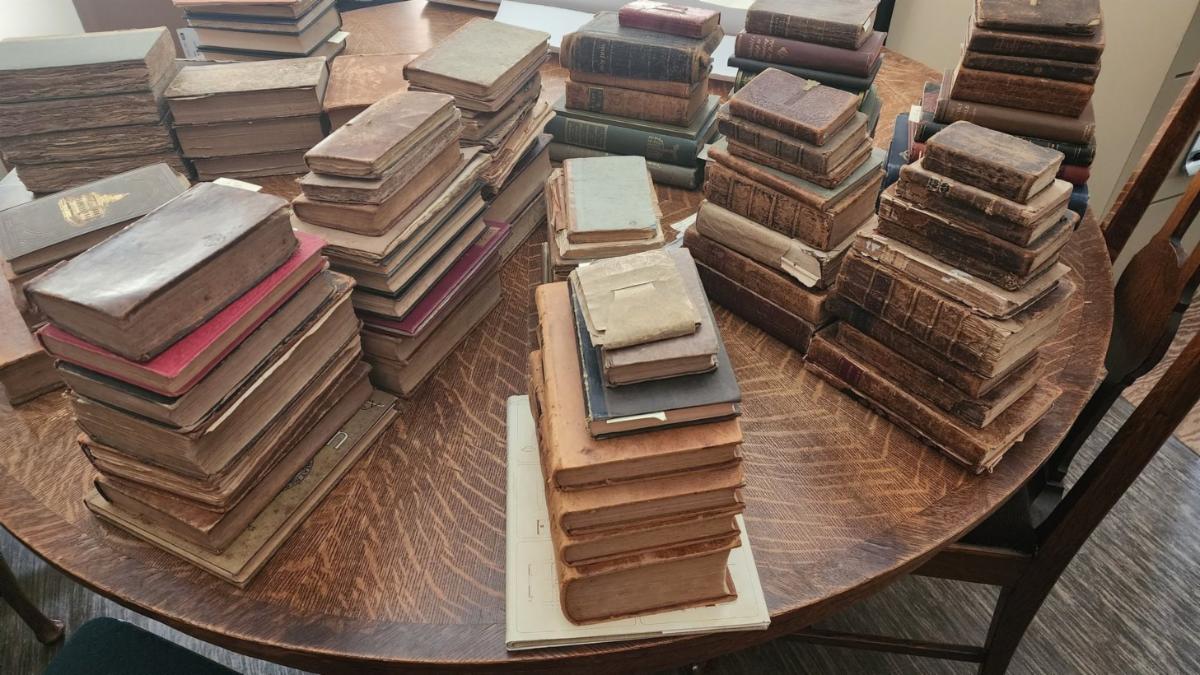
Right now, we are sorting through the antique book collection previously stored in the main hallway. Each book is being lovingly wrapped in archival paper which not only protects the book from inquisitive hands but also allows us to label the book – many of which have no identifying marks on the binding.
There is, of course, the financial cost of updating the archival materials to think about. (A single roll of archival quality paper used to wrap the books costs over $200.) But as a 100% volunteer effort, it is the physical effort that can feel even more daunting. So, in the spirit of the proverb "Many Hands Make Light Work," a group of us has recently started to gather together on Monday nights to chip away at the work.
|  | |
Our vision is to transform the collection into a museum with rotating exhibits that make it easier for our members to explore the contents of the building over time. We are also excited by the prospect of forming new collections that capture the town as it is today so that it might be enjoyed by generations to come. Would you like to help us make that happen?
The first step is to become a member if you are not already. We are 100% member funded. That means that we need SEVEN members to pay for a single roll of archival paper! Please do your part to make sure that we have the tools we need to be successful. It only takes a moment and makes a huge difference.
| |
The next step, if you are able, is to join us on Mondays between 3-7 pm. Come as often as you can and stay for as little or as long as you like. Bring a laptop if you can. There is always something to be done – dusting, sorting, scanning, cataloging, wrapping, transcribing, etc.
To our members, THANK YOU! Your support is what keeps us energized. We can't wait to share more about our "finds" as we go along!
| |
Backstage Tours at the Museum | |
|
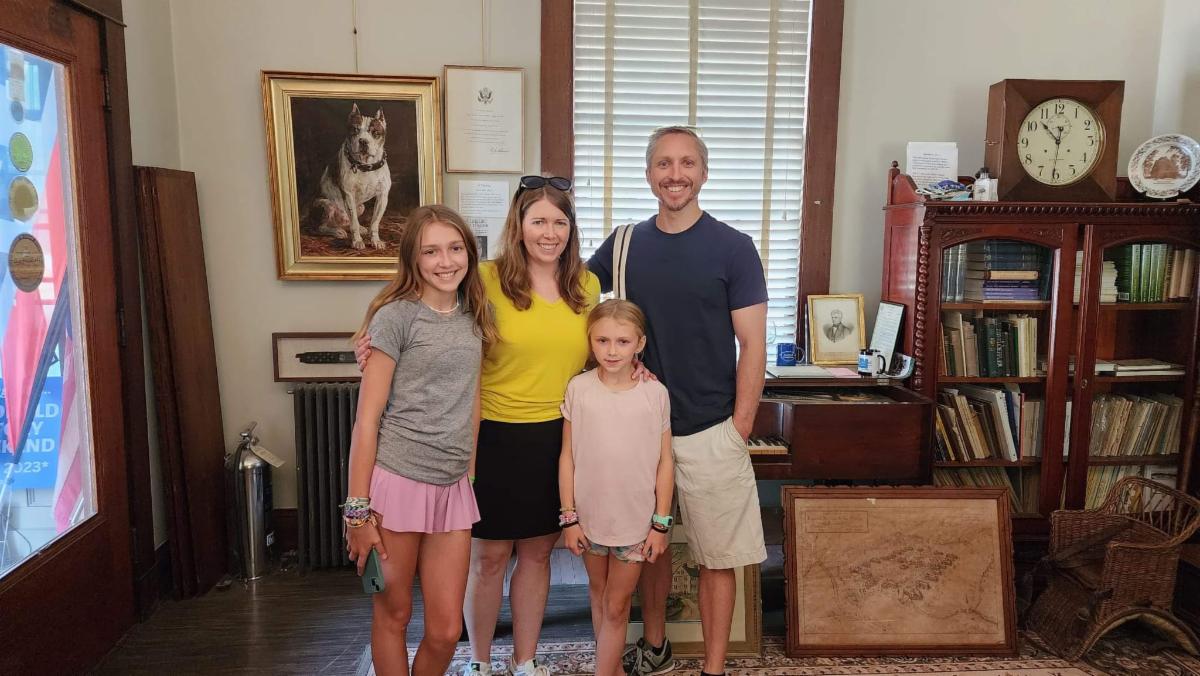
CONGRATULATIONS to the Obbagy family, winners of this month's back stage private tour of the Medfield Historical Society!
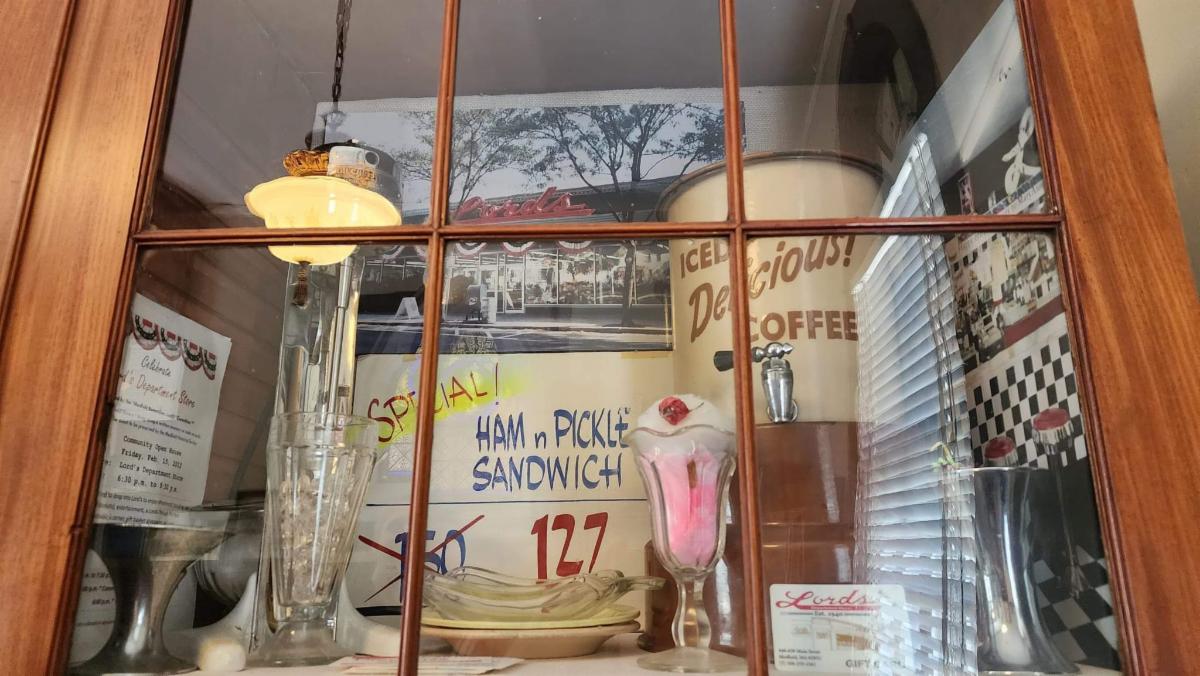
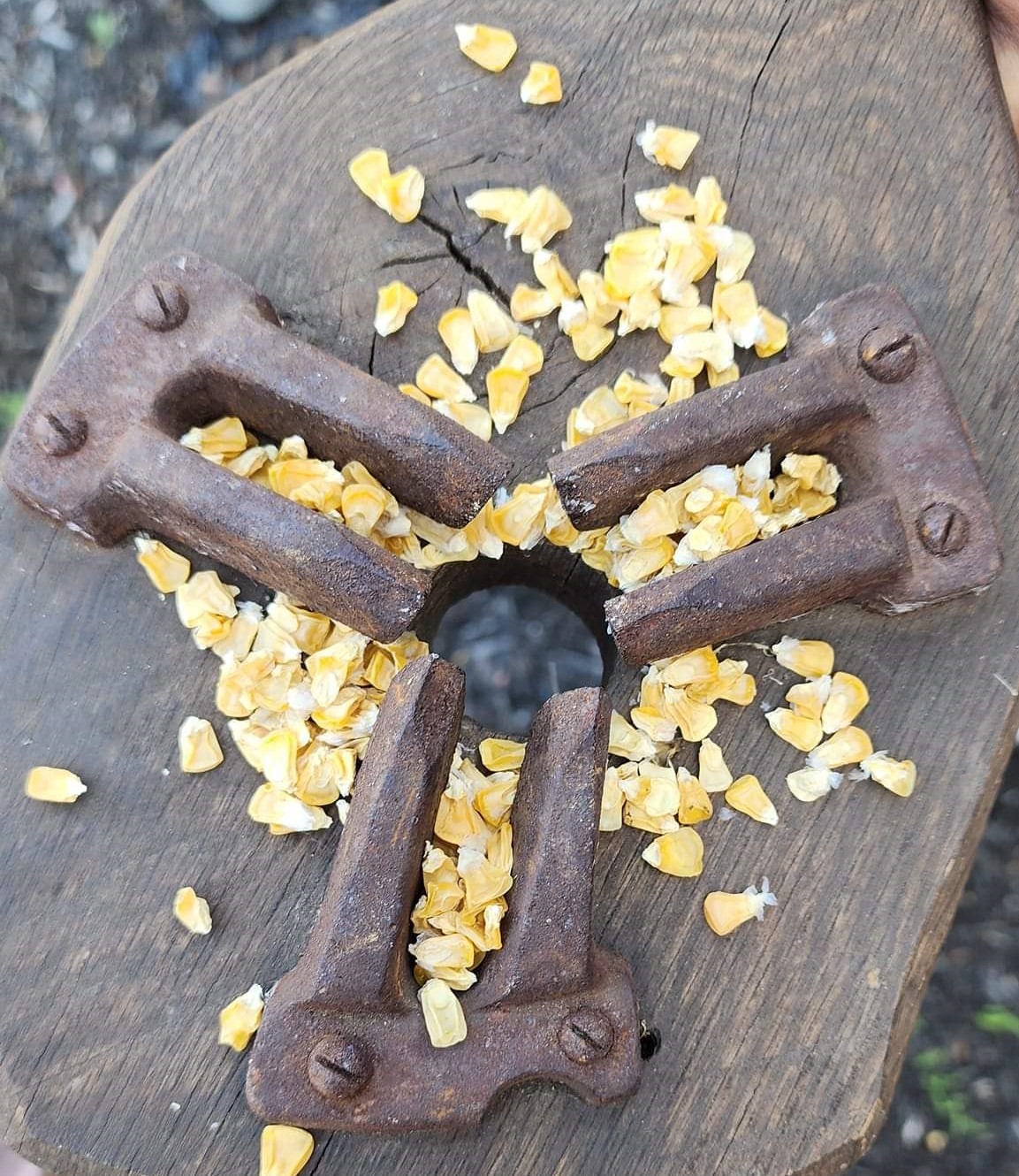
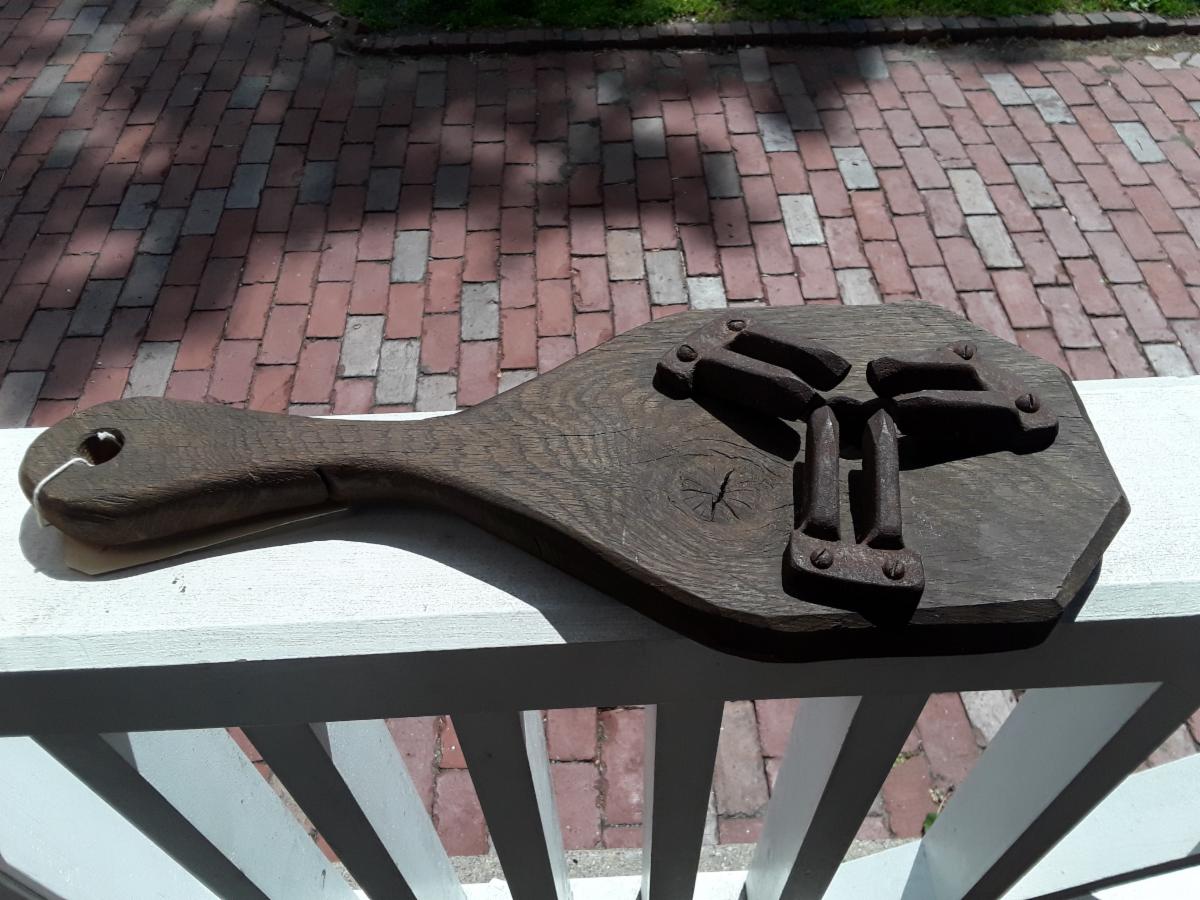
This was a very special tour indeed as we tested out our theory for a tool that was found long ago in the Inness barn. The family favorite was our new permanent display of items from Lord's department store which was unveiled at history weekend.
Are you interested in a private tour? All members are entered into our monthly drawing! Who knows, you could be next!
| |
Top: the Obbagy family at the museum; Center: Lord's display at the museum; Bottom: Mystery tool, a corn seeder, in action! | |
|
Would you like a chance to win a backstage tour of the museum archives? Become a member today! All members are entered in a drawing each month and winners will be announced in the newsletter!
Not a member? Join with a Family Membership today!
| |
In June's Portal, we asked readers to identify a mystery tool – a three double-pronged something-or-other mounted on a heavy paddle. To the rescue came Roy Van of Wrentham: it's a corn seeder, alternatively called a corn peeler, corn cob stripper, kernel cutter, and probably several other names. Googling "antique tool for stripping corn off a cob" produced a plethora of photos of tools for stripping corn on an industrial scale. None of those tools looked like ours, which was designed to strip one ear at a time. | |
A Peek Inside the Meetinghouse Clock and Bell Tower | |
|
Medfield’s outgoing keeper of the clock, David Maxson, has given many Medfield Day steeple tours at the NRHP-listed First Parish Unitarian Universalist church. Before moving to Connecticut, he gave what may be a farewell tour for Mike Taylor, Don Rolph, and other members of the church’s buildings and grounds committee.
Until the early 19th century, the building served not only as a church, but also as the Medfield town meetinghouse. It is the oldest building in Medfield that is open to the public. The present structure, which dates from 1789, was preceded by two smaller buildings on the site, put up in 1651 and 1701. It was added to the National Register of Historic Places in 1974.
Ab0ut the Clock
From Tilden’s History of Medfield, 1801: Voted that the old bell be sent to Boston and recast as near on the same form and size as might be. Also voted to take charge of the clock that had been bought for the meetinghouse, and have it wound at the expense of the town. There is no record of the purchase of the town clock, and it was probably a gift of individuals.
That clock remained in service until 1862, when the present clock was installed. The “new” clock originally was regulated by a pendulum and driven by weights, which the keeper of the clock had to raise each week, before the clock was electrified in 1968. (The weights are still lying on the floor up there. Not far away is the tip of the steeple that was blown off and pierced the church roof in the hurricane of 1938.)
Old clocks can last for centuries. The Morse clock in the historical society is nearly 250 years old, and it still works and keeps fairly good time. It is driven by weights, which must be raised every several days, and it is regulated by a pendulum. If the clock runs fast or slow, there’s an adjustment knob to use to raise or lower the pendulum weight, but it’s a catch-as-catch-can process.
The pendulum clock was invented in 1656 by Christiaan Huygens, and it resulted in a quantum leap in clock accuracy over the mainspring, which preceded it by a century. The clock at the Salisbury Cathedral in England still has most of its original parts from 1386 and is considered one of the oldest working clocks in the world.
| 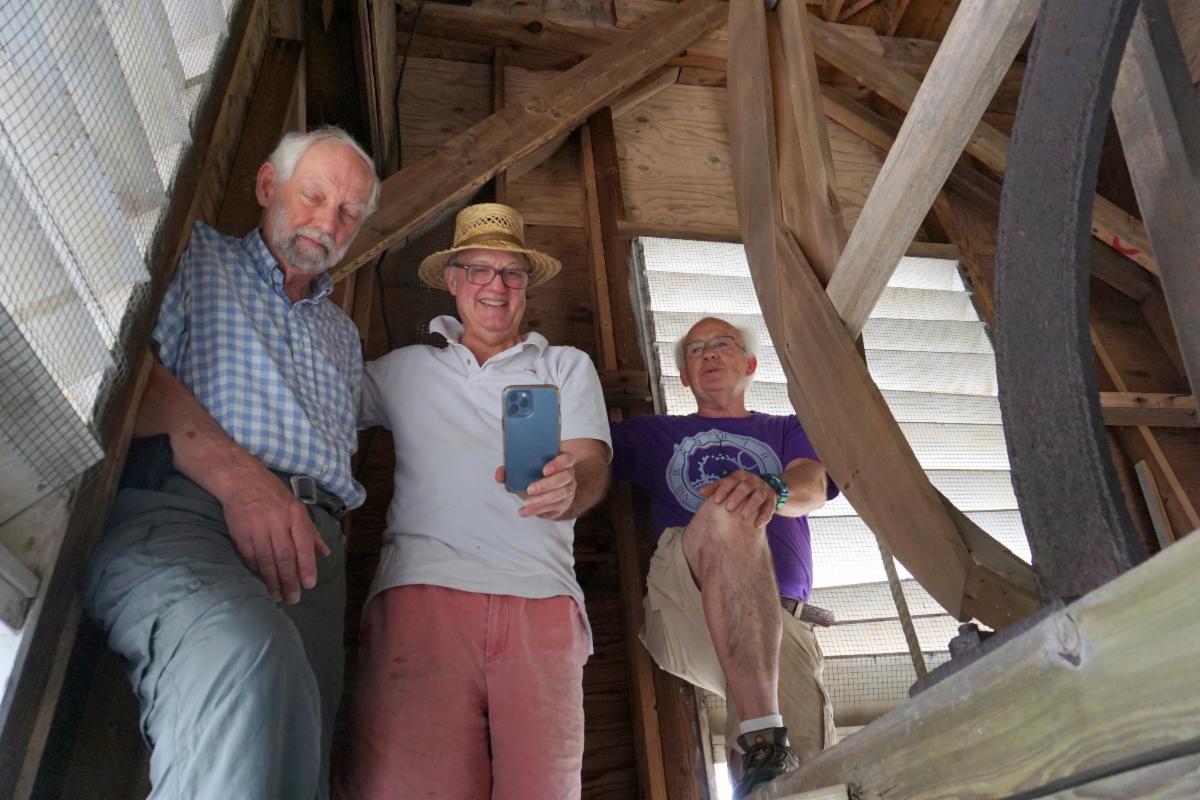 | 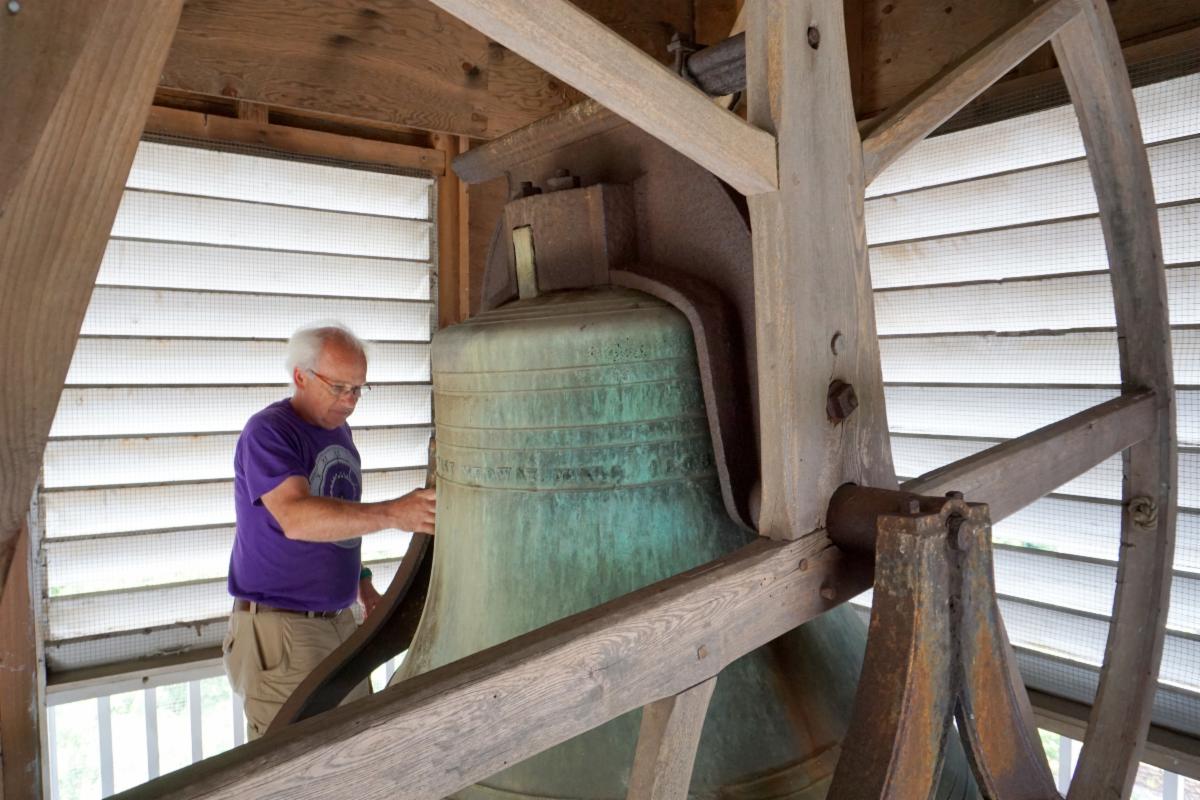 | 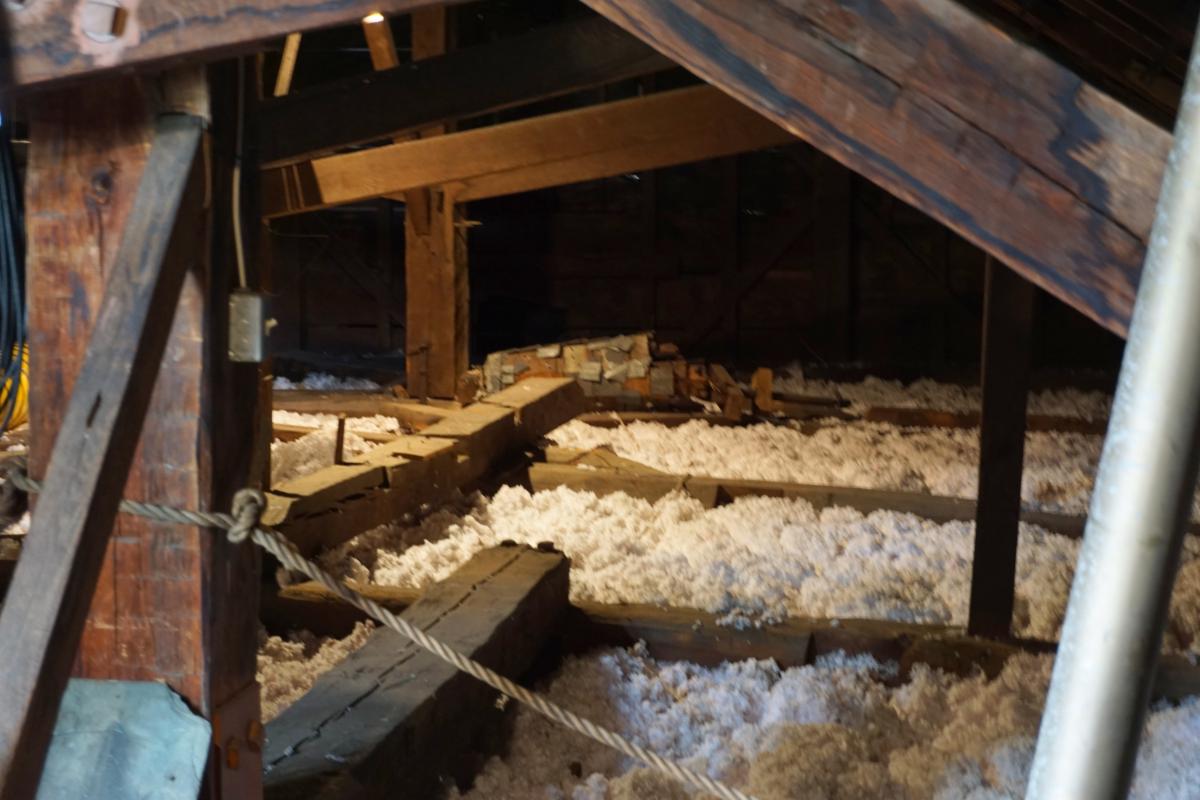 | Photos show David Maxson giving the bell a farewell pat, Don Rolph and Mike Taylor (photographer) with David Maxson, and the tip of the steeple that pierced the church roof in the hurricane of 1938. | |
About the Bell
The Holbrook bell high up in the tower of the old meetinghouse, First Parish Unitarian Universalist Church, is several feet across and weighs upwards of a ton, and its dominant tone is F-sharp above Middle C. (Holbrook bells were acclaimed world-wide for their superior musical tone.)
For a century the bell was attached to the town clock and pealed each hour. But when the clock was electrified in 1968 to reduce maintenance and improve its accuracy, there wasn’t enough money in the budget to adapt the old striking mechanism to the more modern drive.
Thus, this splendid bell is now silent except for special occasions and for calling people to church on Sunday morning.
Click here to read more >>
| |
|
by Claire Shaw
It’s 5:00 pm on a Friday in June and you are in Medfield Center, standing at the corner of North and Main Streets. It’s eerily quiet. There are no cars, no trucks, no cement mixers clogging the intersection. One or two people saunter across the street without looking! You hear the wind stirring the leaves in the trees.
You clearly hear the calls of cardinals, titmice, chickadees and warblers as they dart from tree to tree. The road is sandy dirt, rutted and littered with manure. It is 1723. Chores have been completed, dinner is being eaten and the town is settling in for the evening. Medfield is 74 years old and her selectmen are Henry Adams, Samuel Smith, Jonathan Plimpton, Solomon Clark and Abraham Harding. Medfield was still under the aegis of the British Empire at this time.
What else was happening in our town in 1723? According to William S. Tilden’s History of the Town of Medfield, Massachusetts 1650–1886, the street now known as Rocky Lane was laid out and the town petitioned the General Court to prevent a Mr. Thomas Sawing “to make a Dam Cross Charles River at natick least it prove a damage to our medows.” The princely sum of £26 was allotted for a grammar school and Mr. Jabez Wight was hired to teach in that school.
| |
|
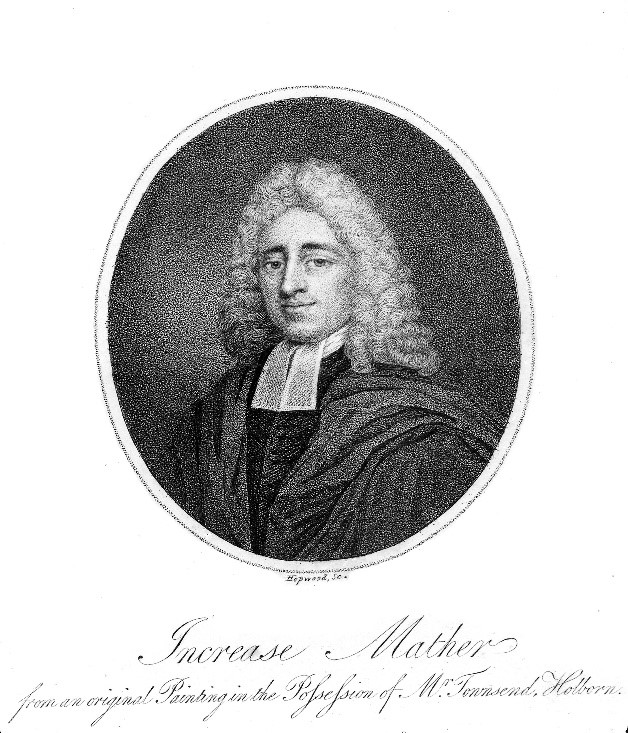
Beyond Medfield, Adam Smith, a Scottish economist and philosopher, and author of The Wealth of Nations was born, as was Increase Mather, New England Puritan clergyman and president of Harvard College for 20 years. The great English architect Sir Christopher Wren, probably best-known as designer of St. Paul’s Cathedral in London, died at the age of 90.
Click here to read more >>
| |
People and Places of the Past | |
Once There was a Place Called Lord's | |
|
Once cosmopolitans who thought themselves sophisticated, might have asked, “Medfield? Where’s that? What’s that?” And many of the young people living in Medfield were chagrined by the frequent snide remarks about Medfield being Deadfield or Mudfield.
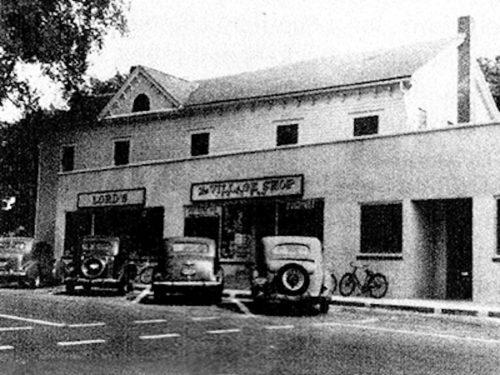
Times change. Gradually the transplanted city people came to recognize a bustling community after driving down Main Street. Perhaps they were first welcomed by Lord’s department store at the corner of Main and South Streets. Back in the mid-50s, Lords looked like an old-fashioned general store, with something for everybody. But Lords made a transition in the 60s and 70s.
The little old soda fountain grew longer and taller. Kids could buy their favorite ice cream, or a popsicle or ice cream sandwich, a root beer float, or a frappe of one’s choice. Hamburgers, hot dogs, and sandwiches were made to order. Soft drinks, milk, and apple pie were always available as you made yourself comfortable on the high stools at the counter.
In the hot summer of 1957, pet lovers could be seen making a beeline over to Lords. One regular customer had a Norwegian Elkhound mix named Roscoe. Roscoe wasn’t just the owner’s dog; Roscoe was also treated as one of the family’s best friends. That wonderful dog was in good company with that family’s 12 cats. Of course, about half of those cats were kittens that all played on a living room rug and still had growing appetites besides their mother’s milk. So, the oldest teen in the family went into Lords and bought four cans of Calo pet food – two for dogs and two for cats -- for just 28 cents a can.
Click here to read more >>
| | | | |