|
Sentiment Stabilizing as Market Looks for a Bottom
The second quarter of 2025 continued to reflect the challenging conditions that have gripped the multifamily sector over the past 18 months. Occupancy has softened in many Sunbelt markets where affordability and consumer credit quality have weighed on leasing velocity. At CALCAP, we’ve responded by tightening resident screening criteria, which has led to a meaningful drop in delinquencies and bad debt, though it has placed some downward pressure on occupancy.
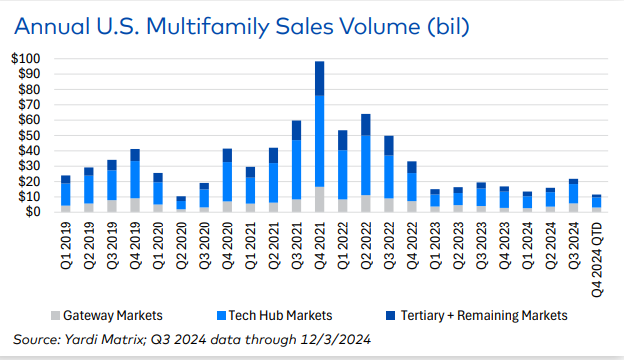
Transaction volume across the country remains muted. Owners who are not over-leveraged are holding tight, while others with maturing debt have largely been able to work with lenders on loan modifications. This combination has kept for-sale inventory low and made deal sourcing difficult. With cap rates in the mid-5% range and debt costs still elevated, positive leverage remains elusive—especially under conservative rent growth assumptions.
| | |
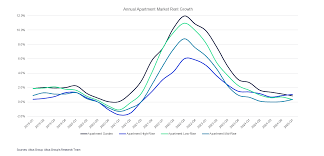
Operating margins are also under pressure. According to Yardi Matrix’s Winter 2025 National Outlook, rent growth has turned negative year-over-year in key oversupplied metros such as Austin, Phoenix, and Las Vegas. However, Yardi also notes signs of bottoming: the national average asking rent ticked up modestly in May, and nearly half of all tracked metros posted month-over-month rent gains. National rent growth is forecasted to end 2025 in positive territory, with improved fundamentals heading into 2026.
Despite headwinds, there are green shoots. The recent passage of the One Big Beautiful Bill (OBBB) creates a more stable and attractive tax environment for real estate investors. The legislation restores 100% bonus depreciation and makes it permanent, enhances the Qualified Business Income deduction, and expands Opportunity Zones and other investor incentives. These provisions could help draw capital back into multifamily, particularly from high-income investors and family offices who benefit from pass-through structures and accelerated expensing.
While it may be too early to call a full recovery, we’re encouraged by signs of stabilization. New supply pipelines are easing, buyer and seller expectations are slowly realigning, and long-term fundamentals remain intact. For disciplined investors, the next several quarters may offer compelling entry points as the market begins to turn.
| | |
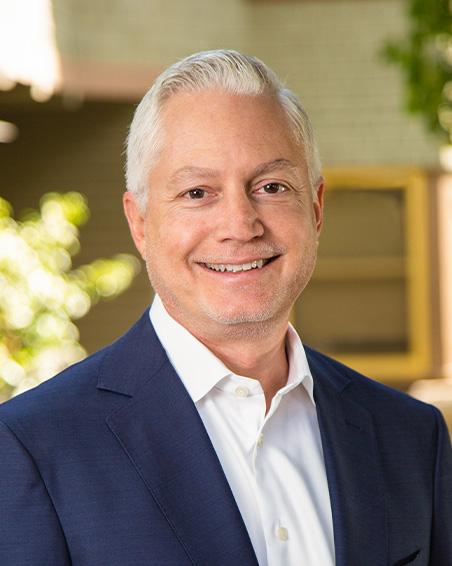
Edward M. Aloe
President and CEO
626-229-9057
| | |
| | Welcome to the Real Estate Wealth Podcast, where we explore real estate as the most proven way to financial freedom. Join us for insights with leading experts and discover how vibrant health and an abundance mindset are keys to true wealth. | | | |
|
4 Takeaways From 2025 State of the Nation’s Housing Report
A national supply wave has put downward pressure on new lease trade-outs.
Rising costs are increasingly leaving more homeowners cost burdened. In 2023, the number of cost-burdened homeowners rose by 646,000 to 20.3 million, accounting for 24% of all homeowner households. Rising home insurance premiums (57% higher in 2024 than 2019) and property taxes (which increased by an average of 12% between 2021 and 2023) are contributing to the weight of cost burdens on homeowners.
The report finds renters are also feeling the burden of costs. In 2023, the number of cost-burdened renters—those spending more than 30% of their income on housing and utilities—reached a record high of 22.6 million, or 50% of renters. Approximately 12.1 million—or 27%—of renters are severely burdened, spending more than half of their income on housing.
“High housing costs are a challenge to home buyers and a burden to homeowners. High costs are also a challenge for renters and soon to be a greater challenge given that markets are tightening,” said JCHS senior research associate Daniel McCue. “For the lowest-income households given these conditions, the need for housing assistance has never been higher.”
View Article Here
| | | |
|
Multifamily Resilience Drives Stability In 2025 Housing Market
Multifamily resilience supports rent growth in 2025 despite high supply, economic uncertainty, and policy risks across US markets.
Multifamily remains the most attractive commercial asset class, but transaction volumes are still subdued. Through May, sales reached $25.9B—up slightly year-over-year—but still below pre-2022 levels due to a persistent pricing gap. Buyers want discounts to account for higher interest rates; sellers remain reluctant.
However, debt capital is plentiful. CMBS issuance is on track for its strongest year since 2007, and agency lending is surging. Delinquency rates are rising—CMBS reached 6.4%—but ample rescue capital is preventing widespread distress.
National average rent is expected to rise 1.5% in 2025, reaching $1,761. Sun Belt metros continue to struggle with negative rent growth due to oversupply. Austin (-3.5%), Denver (-1.9%), and Phoenix (-1.7%) are among the weakest performers. In contrast, constrained supply markets like New York (3.5%), Kansas City (3.0%), and New Jersey (3.0%) are leading on the upside.
View Article Here
| | | |
|
Zillow: US housing shortage hit 4.7 million in 2023
Home construction spikes resulting from pandemic-driven demand helped to slow the growth of the deficit
Homeownership remains out of reach for many Americans. In 2019, a median-income household could afford to purchase a typical home. As of 2024, Zillow reported, that same household would require an additional $17,000 in annual income to afford the mortgage payments on a typical home priced at $368,000.
That was only the tip of the iceberg as mortgage affordability, based on a 20% down payment, required more than $50,000 per year in additional income in several of the largest metro areas.
Mortgage rates have dipped slightly from last year, but affordability remains a significant barrier — particularly for first-time buyers.
View Article Here
| | | | |
About CALCAP
California Capital Real Estate Advisors, Inc., and its affiliate entities (CALCAP Asset Management, CALCAP Properties, CALCAP Lending, CALCAP Senior Healthcare, and CALCAP Strategic Opportunities, collectively known as “CALCAP”), is a California-based investment company founded in 2008 and headquartered in Pasadena, California. The Company sponsors alternative real estate investment opportunities focused on demographically driven housing. CALCAP has been able to consistently provide both individual and institutional investors with outstanding returns over the last 14 years. The Company uses a highly selective and disciplined investment approach, focused on delivering superior risk-adjusted returns. CALCAP currently has over $650mm in Assets Under Management. To learn more visit www.calcap.com.
Social Mission
CALCAP CARES is a 501(c)(3) private foundation organized to encourage employees to find a way to give back to the neighborhoods where we invest. CALCAP has created "GiveTime4Autism" as its initial program which gives employees the opportunity to donate unused vacation and sick days for a very worthy cause.
| | |
LOS ANGELES
The Sanborn House
65 N. Catalina Avenue
Pasadena, CA 91106
SAN DIEGO
12626 High Bluff Drive, Suite 360
San Diego, CA 92130
PHOENIX
740 N. 52nd Street
Phoenix, AZ 85008
SANTA BARBARA
1309 State Street, Suite A
Santa Barbara, CA 93101
| | |
Edward M. Aloe, Founder & CEO
(626) 229-9057
ed.aloe@calcap.com
Patrick A. Wakeman, Executive Managing Director Portfolio
(858) 764-4890
pat.wakeman@calcap.com
Drew Buccino, President
(602) 419-3381
drew.buccino@calcap.com
Greg Blix, Managing Director
(805) 896-8500
greg.blix@calcap.com
| | |
Mark A. Mozilo, Executive Managing Director
(626) 229-9056
mark.mozilo@calcap.com
| | | | |