CALCAP CONNECTIONS

June 2026

Principal's Corner

The Supply Cliff Is Here (Finally)


For the last three years, we've written about the coming supply cliff in multifamily housing. Many economists (and hopeful sponsors) called it too early as a seemingly never-ending wave of new supply continued to dilute the rental markets.


Well, it finally happened. After months of speculation, the May 2026 multifamily housing starts collapsed by a whopping 41.6% in a single month according to the U.S. Census Bureau, hitting a 15-year low. That's roughly 40% down from the 2022 peak. We have all been patiently waiting for the massive over-supply to finally subside---and it is here.


The data now clearly shows the end of new supply in this cycle is real, and the drop-off is dramatic. The new supply pipeline (which has been steadily slowing) is about to empty out. By 2027 and 2028, new deliveries will be severely constrained. Less supply, all else being equal, means one thing: rent growth. Something we have not seen in the Sunbelt markets in several years now. Despite all the new supply, renter demand has remained extremely resilient. Q1 2026 posted the strongest net absorption on record! For the first time since 2021, demand actually outpaced new supply. That is a meaningful statistic. As we mentioned many times, the supply glut has been mainly concentrated in the high growth Sunbelt markets. Overall, the country still faces a structural housing deficit of roughly 4 million units. People need places to live, and affordability constraints will continue to push renter demand.


Despite the long-term positive outlook for multifamily housing, most investors remain paralyzed. The latest Burns Fear & Greed Index shows a remarkable 71% of investors are frozen – neither increasing nor decreasing their exposure. It's a classic case of waiting for perfect clarity before being willing to jump back in. While the majority sits on the sidelines, the window of opportunity seems to be wide open.


At CALCAP, our focus remains squarely on Class B workforce housing. Why? Because these renters have nowhere else to go. They represent the most durable segment of demand, a market reality that doesn't waver with market sentiment or interest rate fears. We are currently seeing opportunities in our core Sunbelt markets that we haven't seen since the early days of this firm. Sellers are motivated, debt is available and competitive for clean deals, and the basis we're acquiring at today will look very different when the supply cliff fully takes hold in 18 months.


While others are frozen by fear or greed, we're actively deploying capital into markets where the fundamentals are strong. The supply cliff is here, and for disciplined investors, it looks a lot like an opportunity.

Edward M. Aloe

President and CEO

626-229-9057

We are currently under contract on a 98-unit community in the highly desirable Overland Park area of Kansas City.


For more information, please contact Greg Blix at Greg.Blix@calcap.com or

805-896-8500.

Welcome to the Real Estate Wealth Podcast, where we explore real estate as the most proven way to financial freedom. Join us for insights with leading experts and discover how vibrant health and an abundance mindset are keys to true wealth.

Latest Headlines...

Apartment Discounts Start To Ease As Concession Use Stays High


Average discount levels for apartments showed the first sign of easing in two years in May, even as operators continued to rely heavily on concessions to support leasing. The average U.S. discount decreased 0.1 point on a monthly basis to 10.9% in May 2026, a modest move but the first monthly decline in average concession amounts since March 2024.


Still, May's 10.9% reading was up 1.7 points year over year and translates into nearly six weeks free on a 12‑month lease. At the same time, U.S. apartment concession use was unchanged in May according to data from RealPage Market Analytics, with average concession usage among stabilized units holding at 16.9%, a level that is up 4 points from a year earlier and remains near the highest average since mid‑2014.


Overall, U.S. concessions have generally trended upward since reaching a decade low of 5.5% in mid‑2016 and remain near their highest level since the post–Great Financial Crisis period in 2010.


View Article Here

Overlooked Multifamily Submarkets Are Becoming The Only Deals That Work


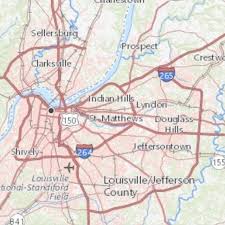
When Jay Parsons talks about where apartment deals still make sense, he is not pointing to the usual headline markets. On a recent episode of his Rent Roll podcast, the economist said that some of the most compelling opportunities are hiding in plain sight: submarkets that saw very little construction during the last cycle but have clear demand drivers. Places like Torrance in L.A.'s South Bay, Ventura County, affluent suburbs of Portland and pockets of Louisville are suddenly getting a closer look.


Those markets share a simple profile. They are not cheap land plays on the edge of growth. They are established, often affluent areas that, for a mix of political, zoning or capital‑allocation reasons, were largely bypassed when money poured into Sun Belt boom metros and CBD towers. Now, with conventional starts down sharply and lenders wary of oversupplied nodes, that lack of recent development is starting to look like a competitive edge.


View Article Here

The Case For 60s And 70s Multifamily Cash Flow


The backdrop is a late‑cycle environment in which the easy value-add wins have largely been harvested. Rent growth has cooled from its peak, operating costs—from payroll to insurance—have marched higher, and debt remains expensive.


In that context, paying up for newer assets with thin current yields and big pro forma promises looks less compelling. Older properties with strong occupancy and proven rent rolls, especially in supply‑constrained submarkets, can suddenly look like the safer trade.


That does not mean any asset from the 1960s or 1970s qualifies. The key, as Lippman's strategy implies, is pairing vintage with submarket discipline. Older assets located in neighborhoods with stable or growing renter profiles, barriers to new construction and manageable regulatory risk can hold their own against newer product when markets flatten out.


View Article Here

On the Lighter Side...

About CALCAP Advisors

About CALCAP

California Capital Real Estate Advisors (CALCAP) is a Pasadena-based real estate investment firm founded in 2008. The Company sponsors and manages alternative investment opportunities focused primarily on workforce and attainable housing in growth-oriented U.S. markets.


Since inception, CALCAP has navigated multiple market cycles with a disciplined, research-driven approach centered on capital preservation, operational execution, and long-term value creation. The firm partners with both individual and institutional investors and currently oversees approximately $650 million in assets under management.


CALCAP’s strategy emphasizes selective acquisitions, conservative underwriting, and active asset management designed to deliver durable, risk-adjusted returns across varying market conditions.


To learn more visit www.calcap.com.


Social Impact

CALCAP CARES is the firm’s 501(c)(3) private foundation, created to support the communities where we invest and operate. The foundation encourages team members to give back locally and contribute to causes that strengthen neighborhoods and families.


A primary focus of CALCAP CARES is supporting organizations that serve individuals and families affected by autism. Through financial contributions and community engagement, we aim to make a meaningful difference in the lives of those navigating the challenges associated with autism while reinforcing our broader commitment to community impact

LOS ANGELES

The Sanborn House

65 N. Catalina Avenue   

Pasadena, CA 91106


SAN DIEGO 

12626 High Bluff Drive, Suite 360

San Diego, CA 92130 


PHOENIX

7014 E. Camelback Rd, Suite B100A

Scottsdale, AZ 85251


Edward M. Aloe

Founder & CEO

(626) 229-9057

ed.aloe@calcap.com


Patrick A. Wakeman

Executive Managing Director

(858) 764-4890

pat.wakeman@calcap.com


Drew Buccino, President

(602) 419-3381

drew.buccino@calcap.com


Greg Blix, Managing Director

(805) 896-8500

greg.blix@calcap.com

Mark A. Mozilo

Executive Managing Director

626) 229-9056

mark.mozilo@calcap.com

View our website: www.calcap.com

Stay Connected:
Facebook  Linkedin  Twitter