CALCAP CONNECTIONS

June 2025

Principal's Corner

Home Prices Show Cooling Across the U.S.


After several years of outsized appreciation, the U.S. housing market is showing clear signs of cooling. According to the latest S&P CoreLogic Case-Shiller Home Price Index, national home prices rose just 2.7% year-over-year in April 2025—the slowest pace of growth in nearly two years and a meaningful slowdown from the 3.4% increase seen in March.


Regionally, pricing is showing a dramatic shift from pandemic-era patterns. Northeastern and Midwestern cities continue to lead the pack, with New York (+7.9%), Chicago (+6.0%), and Detroit (+5.5%) posting strong annual gains. Conversely, many former high-growth Sun Belt markets are softening, with cities like San Francisco, Los Angeles, Phoenix, Seattle, and Denver now experiencing year-over-year price declines.


Several macro factors are contributing to this shift. Mortgage rates remain elevated, with the average 30-year fixed rate hovering near 6.8%, which continues to weigh on buyer activity. Inventory has started to increase slightly, providing more choices for buyers. At the same time, a high number of homes already in the construction pipeline are being completed, adding to short-term supply pressure.


While price growth may be decelerating, there’s no sign of a broader collapse. Instead, the market appears to be settling into a more sustainable rhythm—what many are calling a "normalization" after years of volatility.


For multifamily investors, this environment presents opportunity. As homeownership remains out of reach for many would-be buyers, rental demand stays firm. Slower home price growth improves the relative affordability of renting, while the continued lock-in effect keeps homeowners on the sidelines and renters in place. These dynamics continue to support occupancy and rent stability across much of the multifamily landscape.


Long term, most analysts expect U.S. home prices to rise modestly—about 3–4% annually over the next few years. For multifamily, this moderation in single-family growth could be a tailwind, particularly as new construction starts decline and renter demand remains resilient.


At CALCAP, we continue to view these market shifts as constructive for long-term investors.

Edward M. Aloe

President and CEO

626-229-9057

Welcome to the Real Estate Wealth Podcast, where we explore real estate as the most proven way to financial freedom. Join us for insights with leading experts and discover how vibrant health and an abundance mindset are keys to true wealth.

Latest Headlines...

These Six Markets Bucked the Nation’s Negative New Lease Rate Trend


A national supply wave has put downward pressure on new lease trade-outs.


A small handful of major markets defied the broader negative new lease rate trend across the country that has been driven by pressure from the national supply wave over the past couple of years. Across the United States, new leases were cut by an average of 4.4% annually as of late 2024, according to RealPage Market Analytics data.


However, Anaheim, Columbus, Kansas City, New York, Philadelphia and Virginia Beach were outliers to this trend in 2024, with each posting flat to modest growth in the category, while the rest of the nation was slashing rents, the report said.


All six markets hit a low point for new lease trade-out toward the end of last year, as supply was peaking nationwide. Leading the group was Anaheim, where trade-out bottomed out at 1.4% in December. Columbus posted growth of 0.9%, followed by Kansas City at 0.8% and New York at 0.6%. Philadelphia and Virginia Beach were almost unchanged in 2024, each at 0.1%. By comparison, Austin and Denver were cutting new leases roughly 10% over the same period.


View Article Here

Smaller Industrial Markets Set to Outpace Hubs in Rent Growth Through 2029


CBRE forecasts widening gap in industrial rent growth across U.S. markets.


Industrial rent growth performance is likely to experience a distinct performance gap between the top and bottom markets over the next five years, according to a CBRE forecast.


Markets that CBRE expects to outperform between now and 2029 are those that typically lagged during the 2013-2019 and 2021-2023 growth cycles. Prices in the top 15 projected rent growth markets are expected to increase by 5%, while the bottom 15 markets are expected to see gains of less than 2%, according to the firm’s chart of the week. By comparison, the top 15 projected markets for 2025-2029 grew by 10% between 2021 and 2023 and the bottom 15 by about 14% during the period.


View Article Here

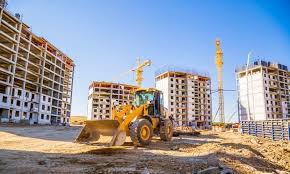
Multifamily Construction Surges in Low-Density Regions as Big Cities See Declines


Single-family construction growth slowed across all markets in the first quarter.


Areas of the U.S. with lower population densities are seeing an increase in multifamily construction. At the same time, in the nation’s largest markets, growth has turned negative, according to the Home Building Geography Index (HBGI) for 1Q 2025, just published by the National Association of Home Builders.


“The largest construction gains have been in low population density areas, with the combined market share for small metro outlying counties, micro counties, and non-metro/micro counties growing 2.2 percentage points from 7.8% to 10% between 1Q 2024 and 1Q 2025,” the HBGI revealed. It tracks multifamily and single-family permits across seven U.S. geographies, categorized by population density.


Multifamily construction jumped 29.3% in micro counties, 18.5% in small metro outlying counties and 3.7% in non-metro/micro counties. It also rose 33.2% in large metro outlying areas in 1Q 2025 – the highest level since 2Q 2022, when it rose 71.8%.


View Article Here

On the Lighter Side...

About CALCAP Advisors

About CALCAP

California Capital Real Estate Advisors, Inc., and its affiliate entities (CALCAP Asset Management, CALCAP Properties, CALCAP Lending, CALCAP Senior Healthcare, and CALCAP Strategic Opportunities, collectively known as “CALCAP”), is a California-based investment company founded in 2008 and headquartered in Pasadena, California. The Company sponsors alternative real estate investment opportunities focused on demographically driven housing. CALCAP has been able to consistently provide both individual and institutional investors with outstanding returns over the last 14 years. The Company uses a highly selective and disciplined investment approach, focused on delivering superior risk-adjusted returns. CALCAP currently has over $650mm in Assets Under Management. To learn more visit www.calcap.com.


Social Mission

CALCAP CARES is a 501(c)(3) private foundation organized to encourage employees to find a way to give back to the neighborhoods where we invest. CALCAP has created "GiveTime4Autism" as its initial program which gives employees the opportunity to donate unused vacation and sick days for a very worthy cause.

LOS ANGELES

The Sanborn House

65 N. Catalina Avenue   

Pasadena, CA 91106


SAN DIEGO 

12626 High Bluff Drive, Suite 360

San Diego, CA 92130 


PHOENIX

740 N. 52nd Street

Phoenix, AZ 85008 


SANTA BARBARA

1309 State Street, Suite A

Santa Barbara, CA 93101


Edward M. Aloe, Founder & CEO

(626) 229-9057

 ed.aloe@calcap.com


Patrick A. Wakeman, Principal

(858) 764-4890

pat.wakeman@calcap.com


Drew Buccino, Principal and COO

(602) 419-3381

drew.buccino@calcap.com


Greg Blix,Dir. of Investor Relations

(805) 896-8500

greg.blix@calcap.com


Mark A. Mozilo, Principal
(626) 229-9056

View our website: www.calcap.com

Stay Connected:
Facebook  Linkedin  Twitter