|
By Dan Flores
Basic Books
Paperback $19.99
Reviewed by Apollo Frenzel
I started reading this on a whim when I found my copy down in Moab during a camping trip. I cracked it open that night around my small campfire with my chili and started a chronicle of possibly one of the most fascinating animals in the Americas.
The coyote encompasses flexibility and endurance to the extreme, their history echoes and resonates almost side by side with the homosapien, it’s uncanny. On top of that, the coyote has been the center of many political arguments that still last to this day. Our home state of Utah offers $50-$100 per dead coyote, resulting in thousands of coyotes dead with not much use for the fur. The crazy part? Coyotes haven’t dipped in population at all. Which means all that money for dead coyotes, haven’t even put a dent in the so-called “problem.” This is consistent across the
United States.
So, why are coyotes so hated? The answer is rooted deep in western history and propaganda. During the 1800’s, when we were settling the west, ranchers and farmers had their animals eaten by wolves and mountain lions. This kicked off one the largest eradication efforts in the US, if not the world. Nearly 2 million wolves were shot, trapped, or poisoned. Many species went extinct in part to this effort. Once the wolf population was nearly non-existent, their sights turned to coyotes.
Because coyotes sometimes scavenge dead carcasses, they got blamed for nearly every missing animal. We hunted them in the millions with the goal of exterminating them. Because of this, coyotes were viewed very badly and grew extremely cautious of humans. Along with that, because their habitat was no longer safe, they were forced to expand their reach and their population, reaching the Pacific Northwest and beyond. A few centuries later, we have coyotes braving the winds and snow of Canada, Alaska, and even the Arctic. More persecution drove them east, then south. Because of our hatred for coyotes, we inadvertently spread their population across the continent. The reason the coyote expanded so quickly and rapidly is because of their genes and instincts.
Despite the massive explosion of coyotes, they only mate for life. Coyotes don’t breed with anyone else besides their chosen mate, until that mate dies. They also establish a territory of about 5-20 square miles, keeping coyote families together and stabilized. The cool part is, they will only create enough coyotes to the land's carrying capacity, meaning coyotes very rarely overpopulate and tend to stabilize their population. Because we hunt so many every year, these social rules are broken all the time, leaving less competition for breeding, and an increase of litter size. That’s right, killing this many coyotes is just giving them room to make more! Our own University of Utah put an article out last year saying that coyote populations are often greater in areas where they are hunted the most.
Interesting enough, the places where coyotes are not hunted at all, are National Parks. Because of the effort for conservation, hunting was generally prohibited in national parks from the beginning. This made farmers and ranchers grumble and protest, calling the parks “strongholds for predators” they worried that predators would eat all their livestock.
The last thing Dan talks about is the coyote migration into major cities. What started this whole interest was when a coyote was spotted in New York City in the 1990’s. The locals named him Otis and put him in the Queens Zoo. A second one was found and tranquilized. Then, in 2019, a coyote couple was spotted in Central Park. Instead of capturing them, the city decided to study them. They were named Romeo and Juliet, because they are often spotted at the Delacorte theatre, exploring. Similar stories pop up in Los Angeles, Chicago, Denver, Washington DC, Portland, etc. We are seeing (at least I hope) a renewed interest in this canine and are learning to co-exist alongside them.
| | |
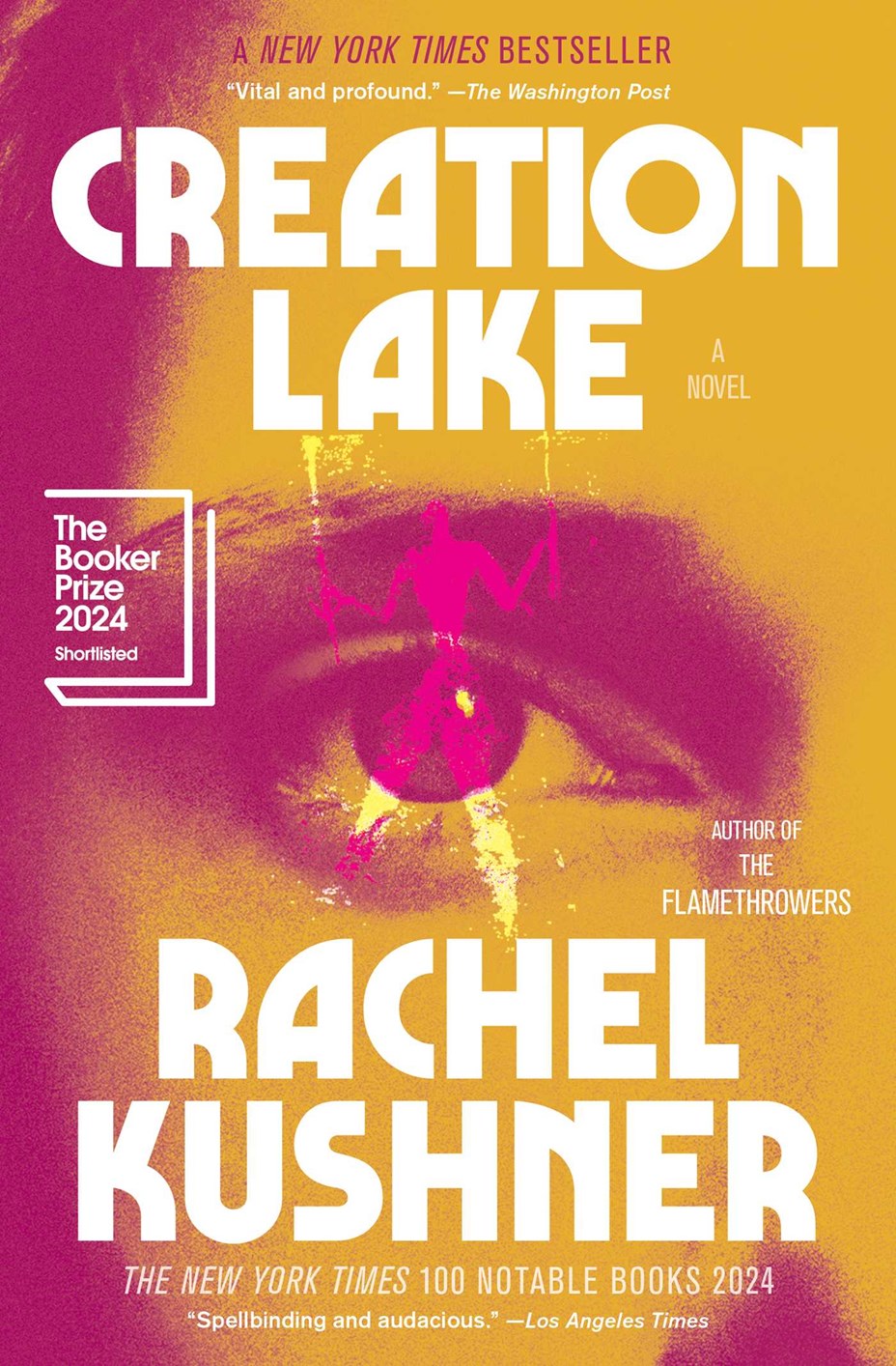
By Rachel Kushner
Scribner Book Company
Paperback $20
Reviewed by Dylan Parry
What do you get when you blend a John Le Carré spy thriller with theory on Neanderthals, radical environmentalism, mixed with a blending of Situationist burnouts, and set
it all in the Massif Central of France? Well you get Creation Lake of course!
Before reading Creation Lake, my familiarity with Rachel Kushner was limited. I had
tried her previous novel, The Flamethrowers, but put it down as something just not quite right for me. However, on picking up Creation Lake, I cannot say I did the same. From the beginning I was eating it up.
We follow Sadie Smith, our not so heroic heroine (and not her real name), as she looks to infiltrate an environmentalist group with connections to past radical politics and potentially violent means, led by a mysterious man by the name of Bruno Lacombe. Sadie’s nameless handlers who want him and his followers behind bars or eradicated, by whatever means necessary, are stand-ins for any modern politician or private developer who’s only interest is profit. However, this isn’t some cut-and-paste thriller.
While Sadie goes through the motions of learning more about her target, having
equipment that seems like something out of a modern spy’s toolkit, or skilled hacker, it’s clear that she’s hiding things not just from herself, or her employers, but us, the reader, as well. Her unwillingness to say much of anything about who she really is, what she really thinks or feels, contrasts well with her desire to know all she can of Bruno Lacombe, reading personal emails she intercepts, and trying to understand him through his supposed cult-like followers, who she’s
more than willing to spill information on, and explain ways of exploiting supposed weaknesses. The unreliable narrator trope is well used by Kushner, and I think makes for some awkward and funny moments in an otherwise serious psychological tale.
But Sadie’s greatest tool (and she knows it, wielding it with finesse on more than one occasion in the book,) is her looks. It’s clear Kushner is adding the layer of the femme fatale trope to her tale, giving us a front row seat to an experience we are often outside of, yet think we know. Kushner doesn’t shy away from showing the psychological darkness of a person who thinks themselves above Sadie, because of her looks. Be it a man or woman, none are safe from the trap that is Sadie’s looks, and once set, Sadie unhesitatingly snaps shut to advance her mission.
In contrast, her target, and unabashed fixation, Bruno Lacombe, is also hidden away, only this time literally. Only a select few know his location. Unlike Sadie, Bruno is more than willing to express his feelings and ideas. A swap of a common trope perhaps? Bruno however is an old revolutionary, and has learned through defeat after defeat, how to use his words wisely. Knowing that someone is always listening, Bruno expertly uses wordplay in the emails he sends, through theories on Neanderthals, and a sort of desire for a return to nature, to get his ideas about
the greater part of society across. Who knew emails could be a fun read?
Creation Lake is a breath of fresh air. Kushner’s cat-and-mouse tale is unlike any other I have read in a while. The characters are rich, with some being flat, but even then you’ll still be wondering if any of it’s true. The parts of France the book takes place in were for me, a nostalgic throwback to the days when I spent time in the very same regions and departments, enjoying the vistas and views. After reading Creation Lake, I might just have to give The Flamethrowers another
chance.
| | |
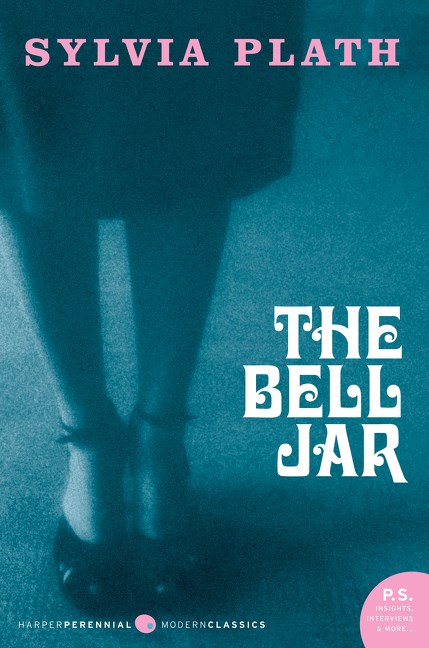
By Sylvia Plath
Harper Perennial
Paperback $17.99
Reviewed by Liam Harrison-Stewart
Sometimes, life can feel unbearable, unreal, and completely broken. In Sylvia Plath’s words, life can be “under the same glass bell jar”, suffocating a human being. Plath’s novel gives us a perfect example of reaching that point where we can no longer bottle up the mental instability lingering in our minds. As many literary lovers know, Sylvia Plath struggled with severe depression and insecurity in her life, leading her to take her own life. She amplified her struggle mostly through her poetry. However, I believe her sole novel paints a clearer picture at what exactly she was feeling and what so many others feel in themselves that can go unnoticed by society as a whole.
In this novel, we follow Esther Greenwood, a young woman in college who is spending a summer in New York City as an intern for a fashion magazine. Esther is everything an ambitious young woman in the 1950s wants to be, she has a bright and hopeful future ahead of her and has a good-standing reputation and social status. However, behind the mask she puts on, there is uncertainty, fear, and impossibly high expectations when it comes to what she wants for her life. It’s clear when she recounts old memories that she has always felt insecure but her disillusionment sparks when she learns that her longtime romance and fiance, Buddy Willard, is not a virgin. She feels betrayed and sets out to get away from him after he becomes ill with tuberculosis, leading her to take the summer internship
After a few nights out with friends (in which she meets who she considers to be many “boring” men), an intimate encounter, and tense meetings with her editor at the magazine, she has her first breakdown on the last day of her internship. When she returns home to her mother, she gradually grows worse, until an action she takes in response to her unhappiness sends her to multiple mental institutions. She meets many interesting characters on her journey through these institutions, including Buddy’s first girlfriend, who went down an eerily similar path as Esther.
Plath perfectly illustrates how trauma, our environments (including the people we surround ourselves with), and the choice of which of our desires to follow can lead a person to madness when all these factors are all pushed together into one thought, “Who am I?” She also provides a social commentary on what was expected of women like Esther of this time period in the United States and highlights the treatment of patients in state run mental hospitals in comparison to the well funded and private ones that many could not afford.
It’s hard for me to believe that this book was not well received when it was first published. It took until 7 years after Plath’s suicide, when the novel was published in the United States, to become a bestseller, making her a legendary name among authors. I blew through this novel, and when I finished it, it made me question a lot about myself and the hardships that I have not confronted in my own life. I think that was Plath’s intention, for the reader to understand that a mental health crisis is a very real and serious issue, and that it cannot be ignored forever.
| | RECEIVE 20% OFF WHEN YOU PURCHASE DURING APRIL | | |
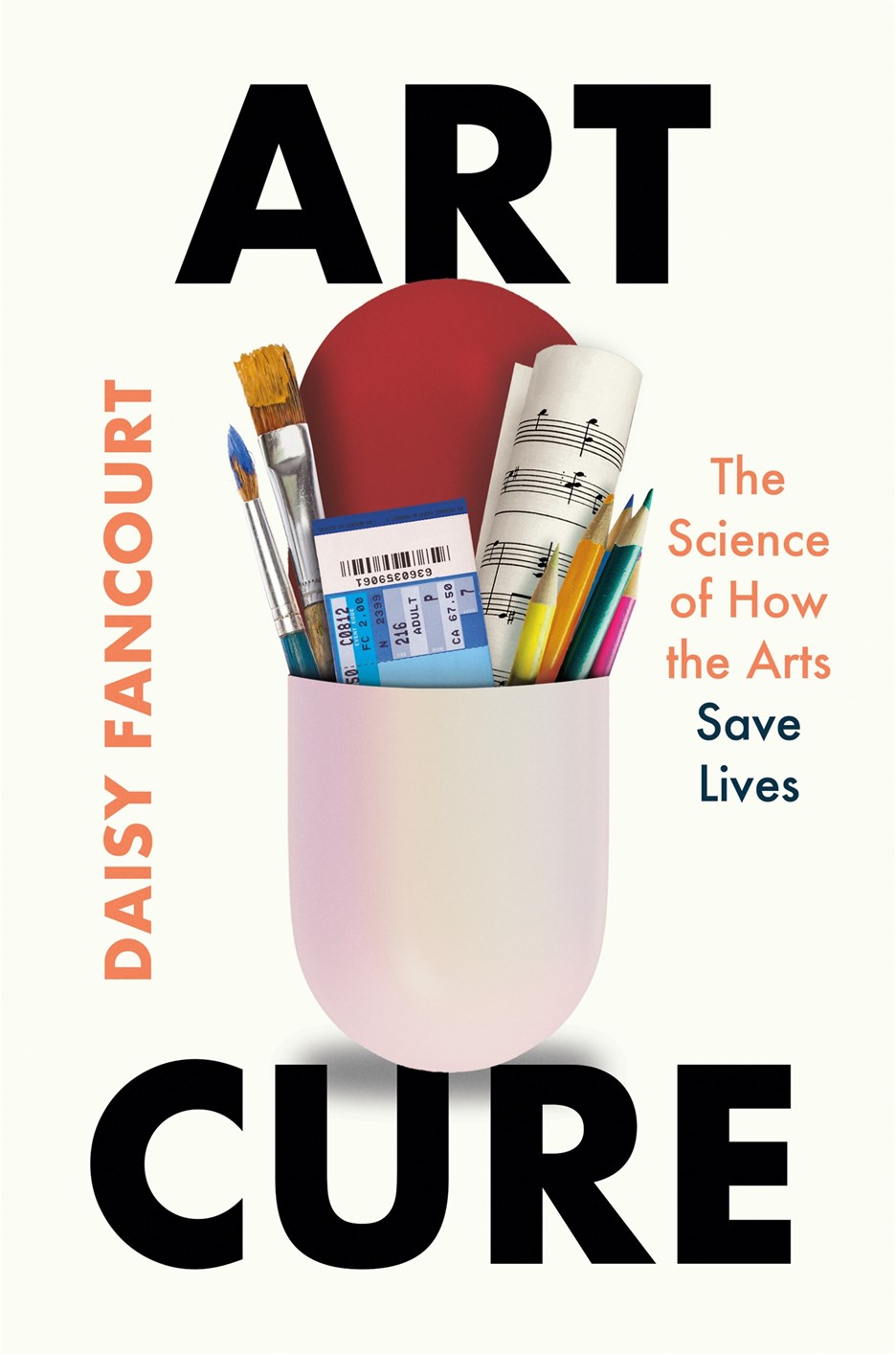
By Daisy Fancourt
Celadon Books
Hardcover $28.99
Best Wellers Price $23.19
Reviewed by Thomas Moore
Perhaps you've heard it said that "Art is good for the soul." This may be true, but what it seemingly fails to encapsulate is just how beneficial arts engagement can be for our health in general. In a few hundred pages, Professor Daisy Fancourt explains the impact of art in all its forms upon our well-being through the lens of science. The book is nothing short of a fascinating read, with statistical analysis, interesting anecdotes, and sound advice for how you might incorporate the arts more fully into your daily life. I started the book on a whim, intrigued by the premise, and I discovered that it put words to something I've observed in my own life, yet could never explain competently.
Early in her endeavor to communicate the ways in which art supports health, the author addresses an essential, but elusive, question: What is art? She lists no arbitrary set of activities, instead presenting the arts as any number of things possessing certain "ingredients." Provided are a few potential examples of these ingredients, such as "imagination", "creativity" and "novelty," which might be identifiable in various activities, for example, viewing a sculpture or performing a magic trick.
The concept is subjective; the essential ingredients of art might be different, and present within different activities, between one person and another. Importantly, she asserts that embracing these ingredients through art can serve to activate psychological, biological, social, and behavioral mechanisms that in turn can impact health. She likens this to the active ingredients in a drug, which work through the mechanisms in our body to take effect. From this premise, the book goes on to tackle several spheres of health that can be positively impacted in this manner, with sections on overall well-being, mental health, brain and memory, movement, stress and pain, healthy behaviors, and longevity. Finally, Fancourt rounds out the book by presenting some of the barriers that prevent us from participating in arts, and what we might do about them.
This book masterfully interweaves the data from scientific studies with personal accounts. The statistical data is presented meaningfully, with quantifiable examples provided. Many of these studies were conducted by the author herself, while other findings have been analyzed from the data available in wider studies. The personal stories are touching and offer perspective on how music, painting, and other art forms can dynamically affect a person's well-being, even so far as to save their life. One of my favorite features of this book is the inclusion of a "daily dose" section at the end of each chapter. Here, the author suggests ways in which the reader might more comprehensively implement arts engagement in their own life, with an emphasis on optimal health outcomes. I also enjoyed the communicative writing style, which presents concepts that might be hard to visualize in an understandable way. Often, it leans into the realm of inspiration without stretching beyond realistic conclusions.
Fancourt's message is an important and timely one. In the present day, support for careers in the arts is too often labeled 'non-essential' and art programs are frequently the first victims when funding is slashed. The science supports a very different conclusion: that art is an essential element of humanity and, in fact, necessary for a healthy society. The most oppressive barriers that seclude us from these vital experiences are societal, and this book is as much a call for societal change as it is an informative guide.
Overall, this is an excellent and worthy book. If you have an appreciation for creative impulses, you might find this book to be the push you need to embrace them more regularly.
| | |
Click here for our April events newsletter.
And, as always, view our events calendar to see all of our upcoming events.
We host both virtual and in-person events, and we look forward to seeing you soon.
| | |
Come visit us!
SUNDAY 12-5
MONDAY-THURSDAY 10-8
FRIDAY & SATURDAY 10-9
| | |
Can’t make it to the store?
Support your local indie from home!
Order by phone or online, then pick up at the store! We also ship!
| | |
Give us a call at 801-328-2586.
Shop new books on our website.
Browse our entire inventory of new, used and rare books on Biblio.com.
Listen to audiobooks from Libro.fm.
| | This issue of Word From Wellers is edited by Liam Harrison-Stewart | | | | |