Your Monthly News & Updates | |
|
For the past few years, as I sought a successor, I said I’ve been president of the historical society longer than anyone should be president of anything. At the end it was over 14 years! Though I still liked having the position, it was time for a change. I felt it was important for the venerable 1891 society to have a new face – a younger person who would take a fresh look at what the society does and what it offers. Someone who would broaden the society’s appeal to encompass a younger, wider network of new friends. | |
|
I kept looking, and last April PeggySue Werthessen raised her hand and volunteered. She’s whip smart and funny, and as a volunteer without portfolio, she has shown great energy and enthusiasm… plus both can-do spirit and will-do determination. Last week she was voted onto the board – and immediately elected president!
Other new people were voted onto the board, which now looks stronger than it’s been in many years – Nick Werthessen, Geoff Sauter, Chris McCue Potts, Yumi Jones, Joe Opiela, and Tom Connors. Former board member, now Californian, Jo Ellen Heck continues in her invaluable advisory capacity. I remain on the board, along with Dan Medeiros and Nancy Horan.
Serving as president has been an honor and a privilege for me.
In 2009 I took over a 118-year-old organization that was, and still is, financially solvent. It had a core of active and motivated if aging volunteers and board members… but a building in poor condition.
Since then, upgrades have included:
- New monthly on-line newsletter, The Portal
- Completely redesigned website with lots of rich content
- Revitalization through the addition of 21st century technology
- Digitization of some of our collections through a grant from Massachusetts Board of Library Commissioners and Digital Commonwealth
- Preservation of key assets, among them an oil painting of "Jack the Dog" done by John Austin Sands Monk and an 1831 map of Medfield with surnames and structure templates
- New roof
- New paint inside and out
- 50-year-old boiler replaced and new dehumidifier for better climate control
- A year later, thanks to very generous MassSave rebates and incentives secured by the Medfield Energy Committee, heat pump/AC units to replace an inefficient and dying 20-year-old AC, and thorough weatherization throughout
- New display system for the artworks, and new shelf systems for collection to raise the level of our museum exhibits and enable us to share more of our collections with you
- New landscaping
- The first (and critical) written collections policy, to define and evaluate what we need and what from our collection we could sell or otherwise dispose of
- The first curator’s handbook, with job descriptions and a guide to collection
- Updated bylaws for first time in 10 years – which now need updating again!
Thanks to all board members, past and present, and to society members for your support, and especially thanks to Jo Ellen Heck for her help and encouragement and leadership in making The Portal, the website, and our social media presence possible.
| |
John Thompson to Speak on Indigenous People in Medfield | |
|
Monday, Nov 13
7:30 pm
First Parish Unitarian Universalist Church
26 North Street, Medfield
Did you know indigenous peoples lived in and around Medfield for thousands of years before Columbus came to America?
November is Indigenous Peoples Month. What better time to hear popular speaker John Thompson provide an overview of the post-glacial Medfield environment and consider what we know about its geography and geology. He will discuss clues we have from that time to the lives of the indigenous peoples in the area. He will also describe the potential for an Archaeological Protection District bylaw for the Town.
An unparalleled authority on the area’s archaeology, Thompson has served on the Medfield Archaeology Advisory Committee for twenty-five years and is a former member of the Board of Trustees for the Massachusetts Archaeological Society. In recent years, he has overseen the creation of the new “Overlook” park at the former Medfield State Hospital.
| |
New Biannual Medfield Magazine on Tap | |
|
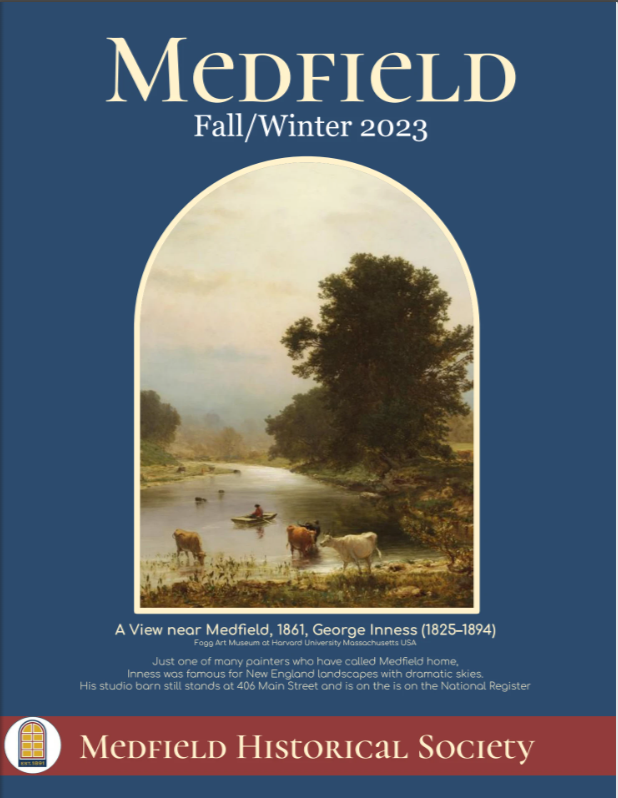
The Medfield Historical Society is in the process of producing a new biannual publication, Medfield Magazine. This magazine will serve as an invaluable resource for the community as well as a permanent record of town clubs, local businesses, historical sites, annual events, and more. If you want a sneak peek, you can check out an online draft here. We hope you love what you see!
The best news is that all 2024 members will receive a copy for FREE! So, don't wait for our annual appeal letter. Be sure to join or renew your membership now to ensure that you get your copy before they sell out!
Not sure your membership is up to date? Feel free to pay your dues now and it will be extended through 2024.
| |
As you can imagine, the cost of printing and distribution of such an effort is well beyond our normal operating budget. To offset these costs we have been selling ads to local businesses. Even still, the magazine is not expected to be a significant fundraiser. However, over time we hope to grow this effort which will allow us to raise money for some of our more ambitious preservations projects.
We expect to wrap up our first edition in the coming weeks and distribute our first copies in December. If you have a local business and would like to be an inaugural supporter, reach out to us here. As an extra incentive to our INAUGURAL edition advertisers, any business that places a full-priced ad in this edition will receive a perpetual 20% discount on future ads.
| |
|
October was a busy month with not one but two special tours!
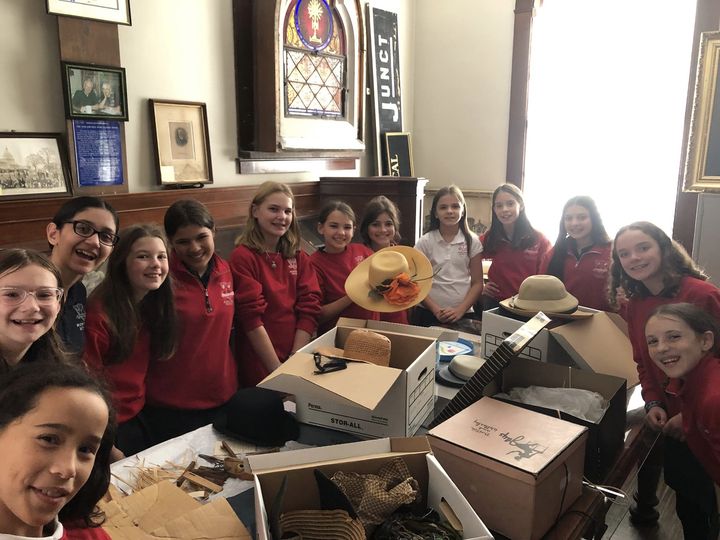
First, we were visited by the 6th grade class of the Montrose Girls School. Located in the building which previously housed the last hat factory in Medfield on North Street, the Montrose girls visited in multiple small groups to check out the museum and learn more about the industry. The focus of our discussion was on the voice of women in history. Through this lens we shared the stories of Betsy Metcalf who launched the straw hat cottage industry, Mary Keys – the first female patent holder in the United States, Hannah Adams – advocate for copyright law, and Jael Chenery whose fine hats drastically changed the fortunes of the Chenery family and enabled the first hat factory in Medfield on South Street. It was this fortune that resulted in the Chenery donation to build the town hall! As a special treat, dozens of hats were brought up from the archive room for the girls to see and even try on! The hats will remain on display during the month of November if you are interested in checking them out.
|  | |
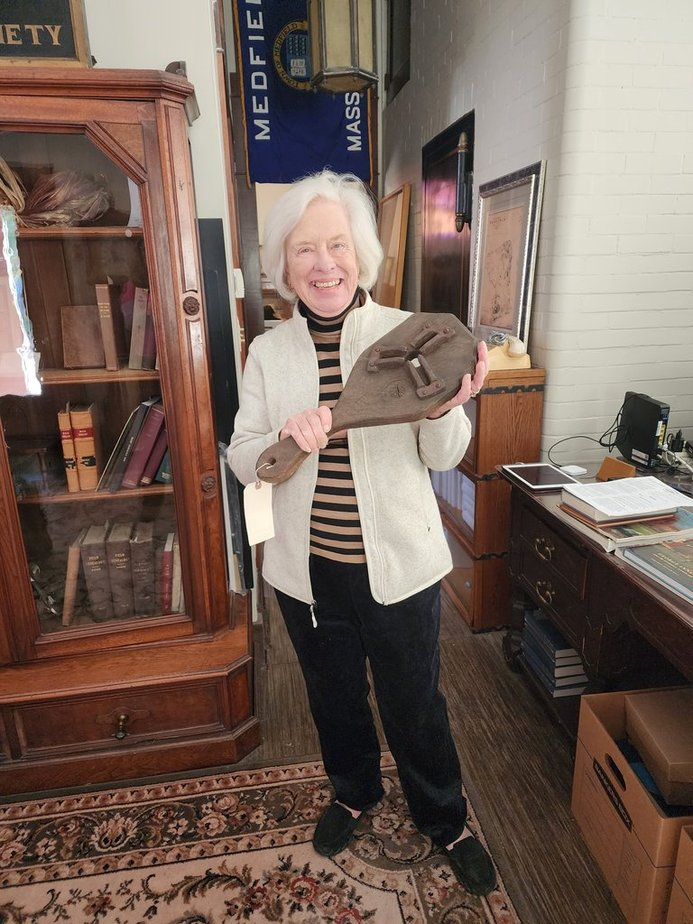
Second, we were thrilled to host this month's winner of the Behind the Scenes Tour – Barbara Yates. Barbara is a tireless volunteer herself serving multiple non-profits including Habitat for Humanity. Barbara was able to enjoy exploring the hats that were out in preparation for the Montrose girls. And, as we rooted around in the basement archives, we were excited to find a wooden box which turned out to be a lovely portable desk.
As many of you know, our long-term vision is to transform the society into a museum with rotating exhibits and this desk will be a great centerpiece to a future exhibit about education. In the photo with Barbara is the famous 'mystery item' that sits on our desk. Some of you who follow us on Facebook will have seen the video showing this device in action, but I won't spoil the surprise here. But, if you would like to see how it works, make sure to stop by! As always, we are open to the public on the first and third Saturdays of each month from 10 am -12 pm.
| |
When Spirits Visited Hannah Adams | |
|
by Norma Vogel
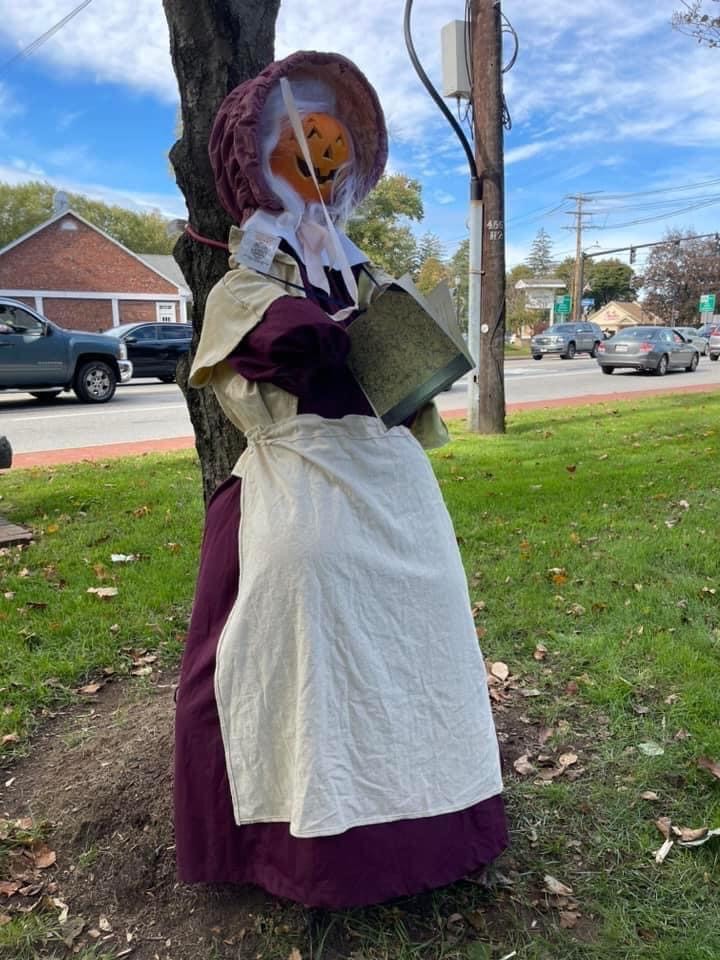
October in Medfield – it’s a magical feeling, somehow comforting and spooky at the same time. This week, my thoughts turn to our own Hannah Adams (1755-1831). I think she would have enjoyed being a contestant in the town’s Scarecrow Spooktacular contest, for it seems that she had a personal connection with the spirit realm. This is, of course, in addition to being the first American woman to earn a living as a writer. Adams’ primary works are A View of Religions, in which she explicitly intended to let the religions speak for themselves without injecting her own opinion – a very unusual approach in 1784 – and A Summary History of New-England (1799), which took such a toll on her eyesight that she was forced to hire someone to transcribe the manuscript.
| |
|
|
Anyway, the other day I was combing through the dusty volumes in the basement of the Historical Society, when I had the distinct feeling that some long-departed Medfield writer was waiting to speak to me. Suddenly I shivered, though it must have been 80 degrees down there, for there she was: Miss Hannah Adams, speaking to me through the journal of Miss Mary Morse, in one of those elegantly marbled notebooks with the modest title Items and Facts Connected to the Early History of Medfield and Medfield Families of the Early Times Which Are Not Accessible in Any Published History of the Town, Collected by Miss Mary Morse, July 3, 1877. Through Miss Morse’s journal I was able to discover a fascinating side to the Hannah Adams we all thought we knew.
Click here to read more >>
| |
Life in the Early Days of Medfield | |
|
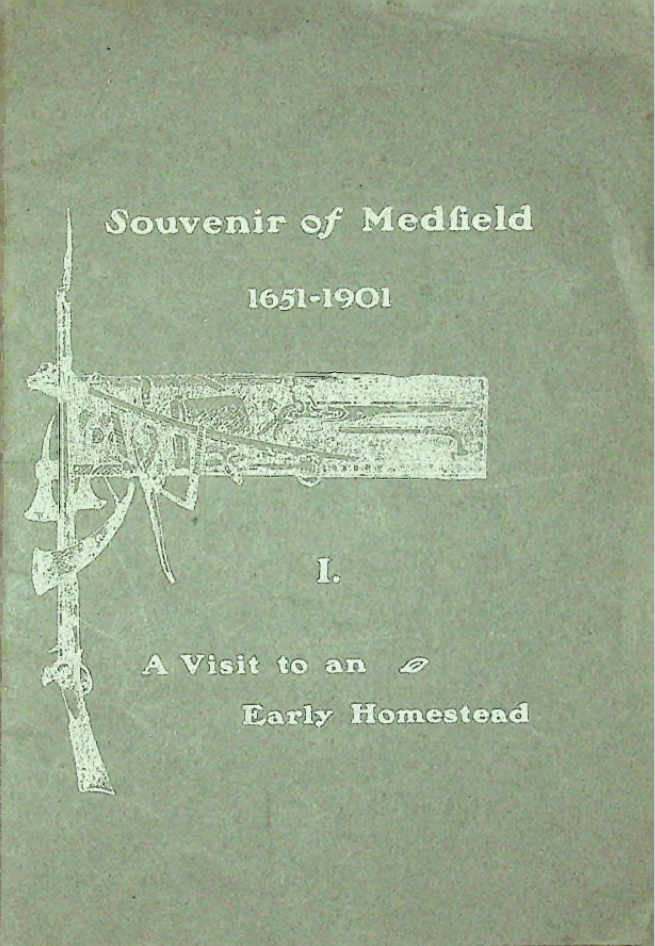
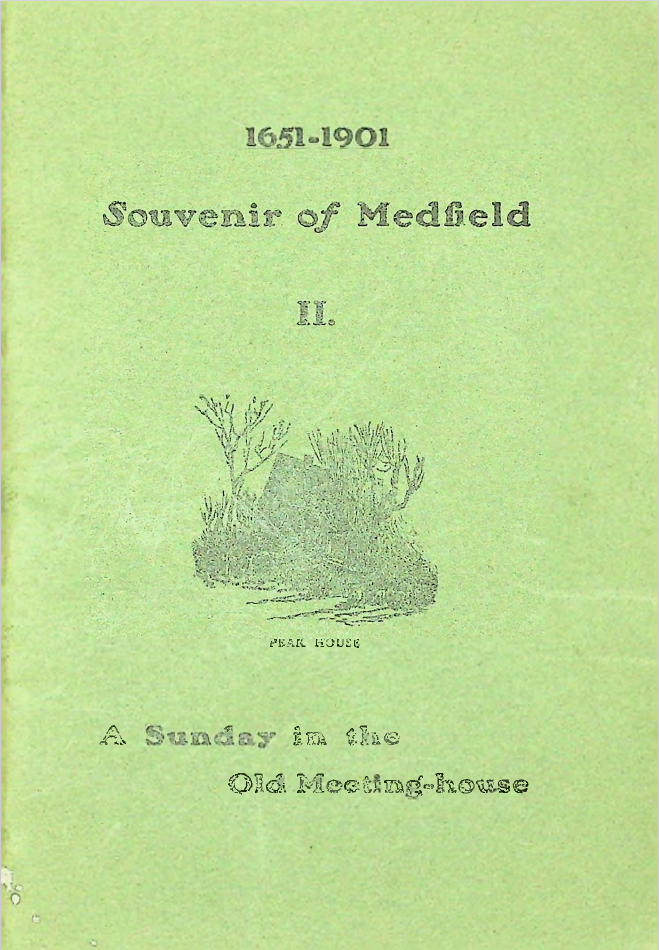
Printed in 1901 by our very own Tilden, these little booklets offer a lovely view into the earliest days of Medfield. The first booklet imagines a scene that unfolds inside an early homestead and the second is a view into a Sunday at the Old Meeting-house.
Both are told as if you were a visitor to these places at the time of Medfield's first settlement. Whether the attributes of the characters within are drawn from stories told through the generations or are simply the imagination of the author is not known. But, either way, they make a lovely short read for those that want to understand the lives of early settlers.
Click on each image below to read these booklets.
| |
Historic and Magical Lucy Bran House For Sale | |
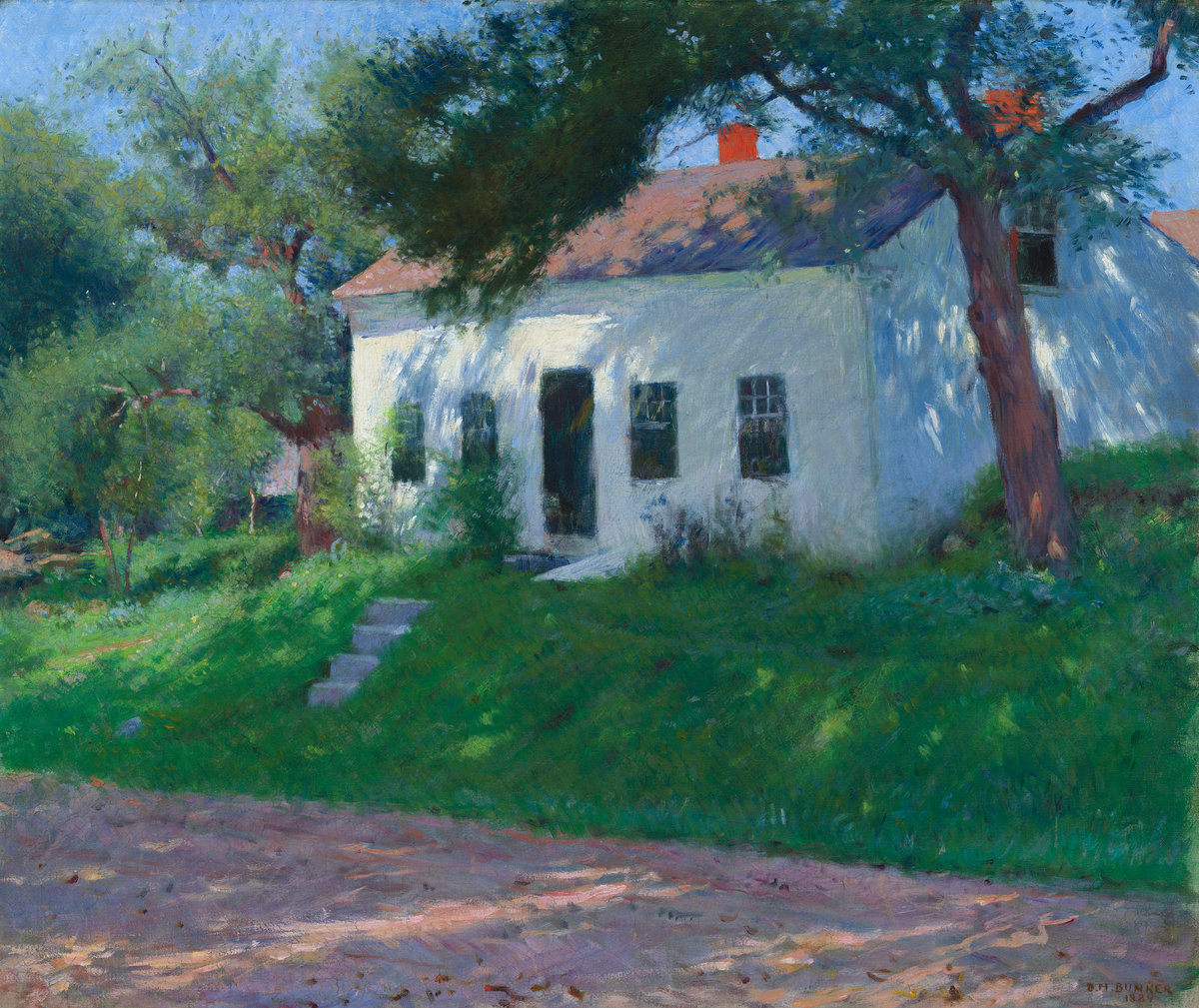
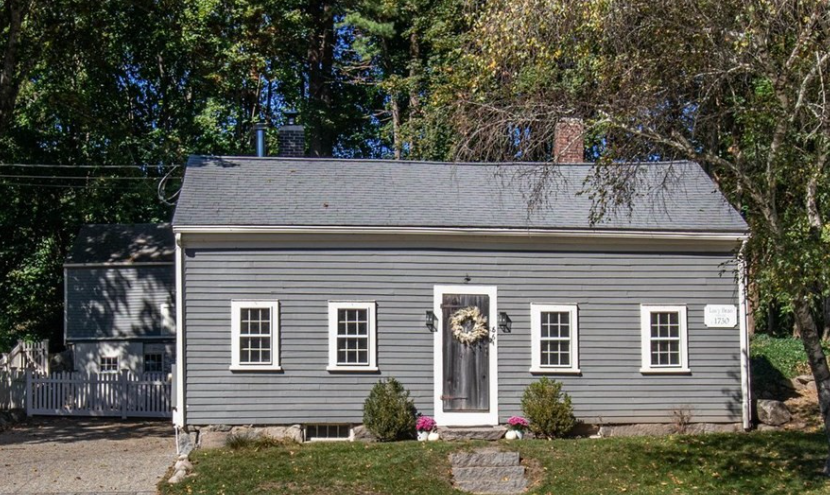
It’s safe to say that on Medfield walls there are more copies of this painting than any other. The house is just west of the cemetery at 661 Main Street. It is known as the Lucy Bran house. The date sign on the house says 1730, but it could be older: the earliest part of the house may have been a herd house for farmers who brought their animals to graze around the nearby Charles river. | |
Roadside Cottage by Dennis Miller Bunker, 1889, hangs in the National Gallery of Art in Washington, D.C. | |
According to Richard DeSorgher, town historian, Lucy Bran was one of the last descendants of Native Americans who lived around what’s now Medfield. She grew up in Medfield, lived most of her life in the cottage, earned her living as a weaver, and died in 1837 at age 85.
Since 1992 the three-bedroom house has been owned and lovingly cared for by Brad and Betsy Phipps. There was a serious fire there in 2002, followed by careful restoration. In conversation Brad repeatedly uses the word “magical” to describe the experience of living in it. And it is now on the market. Googling 661 Main St., Medfield, leads to Realtor listings with 40 photos inside and out.
| The Lucy Bran cottage at 661 Main Street, just west of the Vine Lake Cemetery. |
|
The Victor Victrola Gramophone | |
|
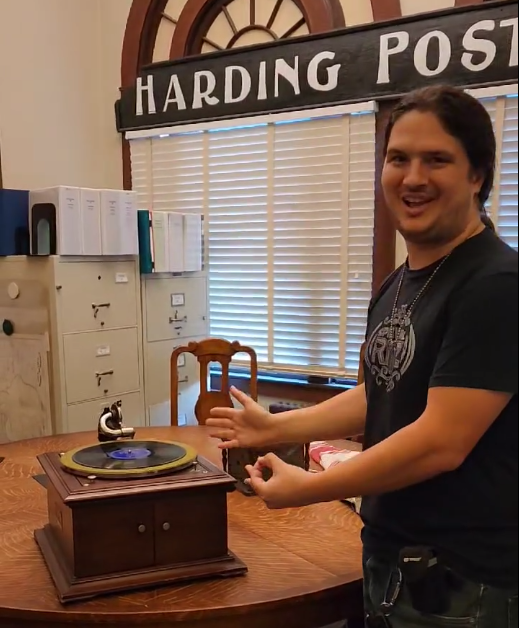
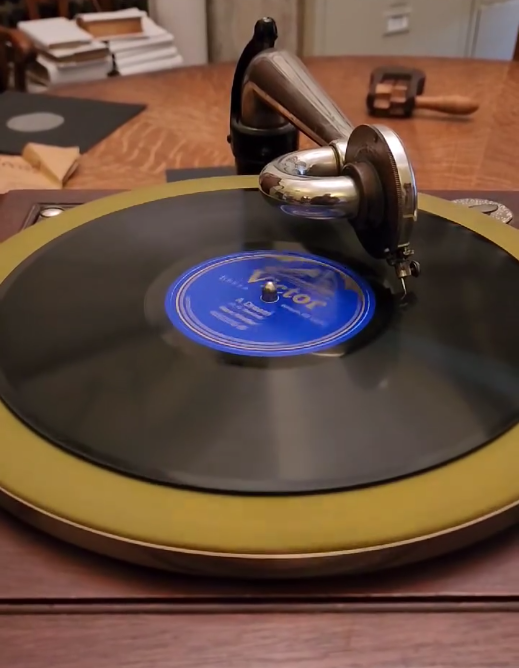
Society volunteer Johnny Dalton of @kungpowrecording paid the MHS another visit to show us this Victor Victrola gramophone from 1913. It is a beautiful example of how people listened to music before the advent of the electrical radio. Differing from the Edison wax cylinder phonograph machine previously featured in our newsletter and on Facebook , the Victrola gramophone plays flat discs. Compared to the two-minute single song of the wax cylinder, the 10" shellac 78rpm discs contain upwards of five minutes of material on one side – with a whole other five minute song on the other! The sound quality was better and clearer, and the mass-manufacturing capability of the flat disc launched it to the preeminent format of music for the next 40 years.
The song Johnny played for us is entitled "A Dream," written by composer J. C. Bartlett, featuring Hans Kindler on the cello, and recorded in 1916 for what would eventually become the Victor Blue Bird label. Bartlett was born in 1850 in Harmony, ME and retired to Medfield where he passed away in 1929. To see this Victrola in action and listen to "A Dream," visit our Facebook Page where this video is featured.
| |
Johnny Dalton demonstrates the 1913 Victrola gramophone. | |
People and Places of the Past | |
Benjamin Rockwood, Veteran | |
|
by Richard DeSorgher
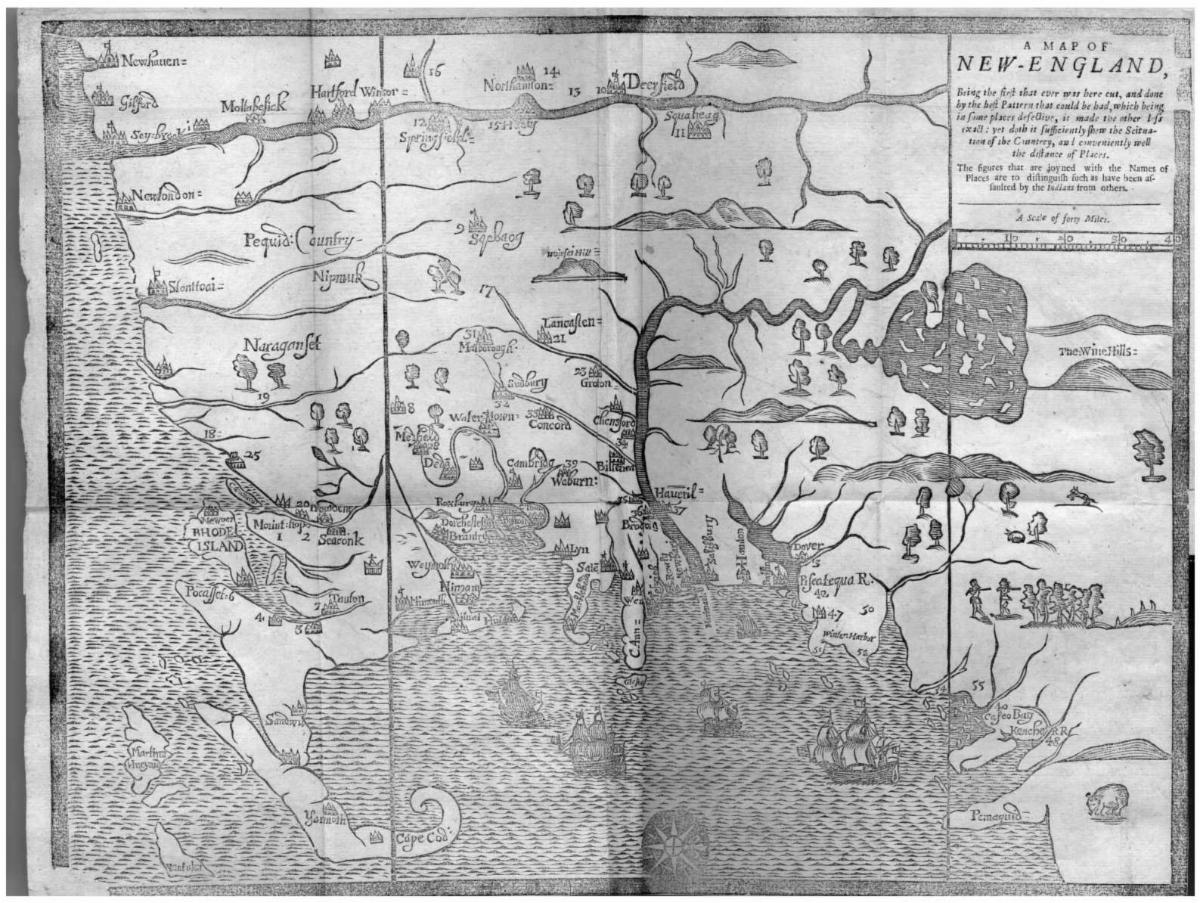
Today we know the area around Scarborough, Maine, as a vacation retreat. In 1677 the area was the part of Massachusetts Bay Colony known as Black Point. In those years of the King Philip War, this was the easternmost settlement in the providence of Maine. The local natives, after years of peaceful relations with the settlers, struck back with fighting breaking out between the settlers and the natives. Even though the death of King Philip a year earlier had ended the fighting down in Massachusetts Bay Colony, hostilities continued in this easternmost part of the colony. On June 29, 1677, three ships of war lay off the coast of Black Point, having arrived the day before. In them, led by Captain Swett, were men gathered from towns of the Massachusetts Bay Colony. Among those men landing on that rocky coast was Benjamin Rockwood of Medfield.
Benjamin’s was one of a half-dozen Medfield births recorded in 1651, the first year of Medfield’s status as an official town. He was the son of Nicolas and Jane Rockwood who arrived here from Braintree with others from Braintree and Weymouth, where they took up house lots on Bridge Street. Benjamin’s mother died when he was but three years old and his father remarried two years later.
Click here to read more >>
| |
|
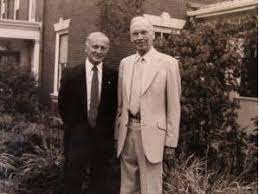
For two thirds of the 20th century, the name Arthur Ritchey Stagg would have been on everyone’s short list of the most respected people in Medfield. Actually, the name would appear twice, because there were two Dr. Arthur Ritchey Staggs, senior and junior.
Stagg Senior (1907-2006), the grandson of a doctor, was born in Nashville, Tennessee. He was one of eight children, three of whom became doctors. Two of the eight died relatively young, but six lived extraordinarily long lives: one to 101, four in their 90s, and one at 87.
Click here to read more >>
| | | | |