Updates From the Pacific West | |
Dear Colleagues,
As we close our second year, we're reflecting on the relationships, lessons, and collaborations that have shaped our work across the Pacific West region.
In Year 2, we partnered with organizations implementing peer support, measurement-based care, school mental health, suicide prevention initiatives, and many other efforts to improve access to effective mental health services. Together, we reached more than 1,160 participants through 43 support events through our Hub. We're proud of what we've accomplished together, and even more excited about what's ahead!
Looking forward, we're excited to launch and support several Year 3 initiatives, including:
- Mental health adaptations for rural and remote communities
- Implementing Measurement-Based Care in Oregon
-
Supporting dissemination of xaʔtu̓s (First Face) for Mental Health, a mental health and wellness training designed with and for Tribal communities
- Leadership and change management for Quality Compliance Leadership
- Partnering to promote and support organizations to deliver Community Defined Evidence-Based Practices (CDEPs)
Our work is strongest when it reflects the priorities of the communities and organizations we serve. We want to provide practical support that addresses the real-world challenges you're facing. How can we support your organization in the year ahead?
- Are you planning to launch a new mental health program or practice?
- Do you want to improve or strengthen your mental health service implementation?
- Would talking with our team and exploring resources and support help?
Reach us at pacificwest@cmhisupport.org to set up a quick introduction call, have a brief consultation, request support, or explore a project idea. Our services are provided at no cost, and we'll collaborate to identify solutions that work for your setting.
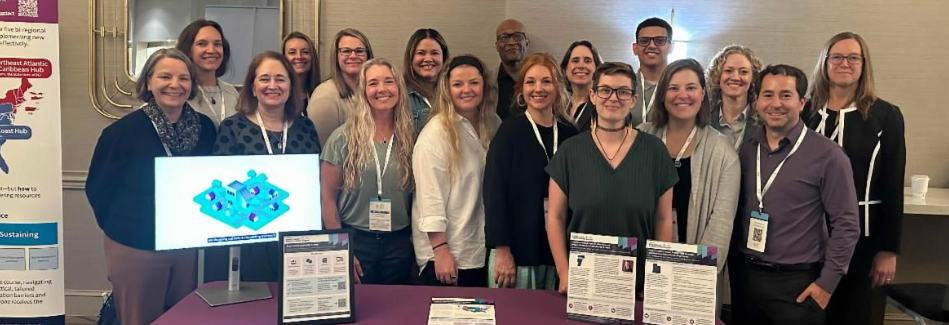
| CMHIS staff at the 2026 Society for Implementation Research Collaboration Conference. | |
Speaking of making connections, this fall we had the pleasure of meeting many of our colleagues at the Society for Implementation Research Collaboration (SIRC) and National Association for Rural Mental Health (NARMH) conferences.
At both conferences, we heard a consistent message: successful implementation depends on meaningful community partnership, workforce development, and turning data into action. These conversations continue to inform how we approach our work across the Pacific West region.
From our team to yours, THANK YOU for striving to deliver the best care to the communities you serve, and for allowing us to be a part of your journeys. It's clear that knowing what works is only part of the challenge, and that we have so much to learn from one another.
Warmest regards,
Co-Directors Christina Clayton & Lydia Chwastiak
| Lessons Learned: Resources for the Real World | |
This past year, our Hub developed several learning series to help teams work through common implementation challenges and questions, from understanding what's getting in the way of implementation efforts to making better use of data.
Explore asynchronous recordings, session materials, and resources, and learn more about the support we've provided in the past year below.
| From Challenges to Practical Next Steps | |
When a practice isn't taking root in an organization, it's not always clear why.
Our Moving from Barriers to Action series goes beyond theory to help you assess what’s getting in the way and, more importantly, what to do about it.
Learn how to identify what's helping or hindering implementation, decide what needs attention first, and choose strategies that actually fit your setting.
| Adapting Practices to Fit Your Setting | |
Evidence-based practices don't always fit neatly into the settings where they're used.
This series explores how teams can adapt practices to meet local needs while staying intentional about what changes are being made and why.
Adaptation isn't inherently good or bad. It can be an essential part of making a practice work in a particular context. Watch the series to learn more!
| Rethink What's Possible in a Single Visit | |
Many people receive far fewer therapy sessions than traditional treatment models anticipate.
Single-session interventions (SSIs) offer structured, evidence-based approaches designed to deliver meaningful support in one encounter.
Explore what SSIs are, when they may be useful, and what organizations need to consider when implementing them.
| Turning Data into a Tool for Change | |
How can behavioral health leaders move beyond collecting data to actually using it to tell a story, build support, and guide decisions?
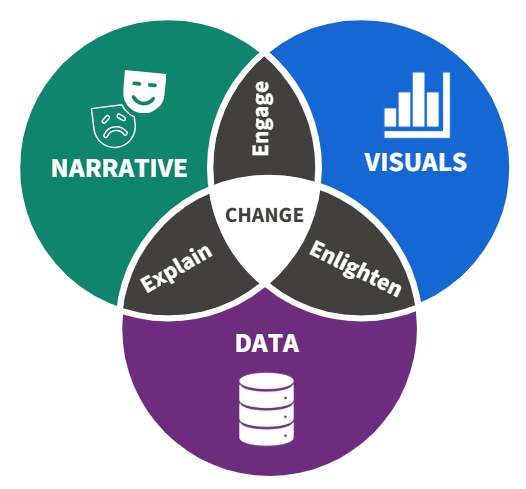
Our Data Storytelling Learning Community brought behavioral health leaders together to explore how to combine numbers with people's experiences to make data more meaningful and useful.
Quantitative and qualitative information work best together. Numbers can show you a pattern, but context helps you understand what it means and what to do next.
| |
Looking for something specific? Visit the CMHIS Learning Lab and Resource Library to explore other recordings, tools, and practical resources available at no cost to you.
Here are a few easy-to-use resources to start with:
Email us at pacificwest@cmhisupport.org if you'd like to discuss any resources, tools, and/or how they might be presented to your teams or organizations. Remember, our Hub is another source of support for you on your implementation journey!
| | We serve HHS Regions 9 and 10, which include Arizona, California, Hawaii, Nevada, American Samoa, the Commonwealth of the Northern Mariana Islands, the Federated States of Micronesia, Guam, the Republic of the Marshall Islands, the Republic of Palau, Alaska, Idaho, Oregon, and Washington. These regions are home to over 430 federally recognized Tribes including the Navajo Nation, the largest Tribe in the U.S. | | | | |