NEWSLETTER

We Fix Broken RFPS

7 October 2026


The Science of Cost in RFPs: Why Pricing Should Never Exceed 35%

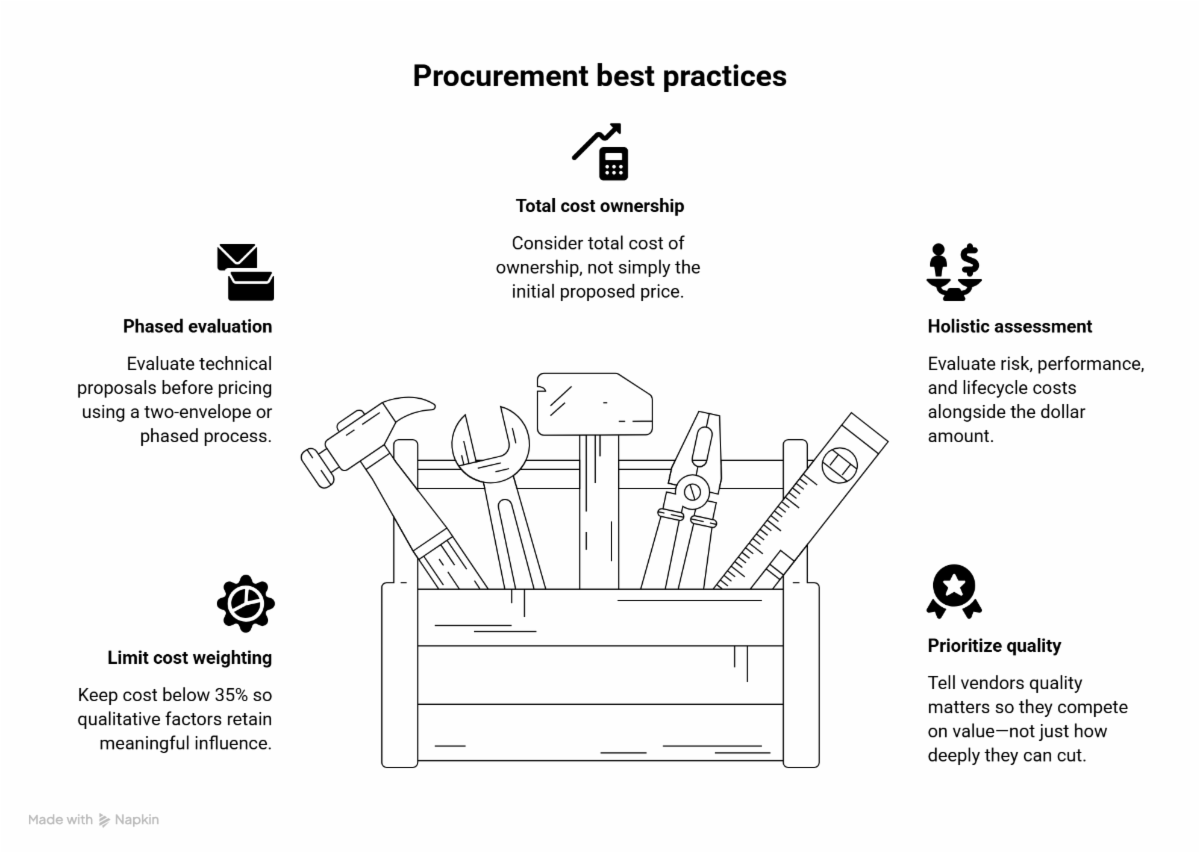
Click on image for better resolution


Price matters.


But when price matters too much, your RFP may stop functioning like an RFP at all.


CPE research suggests that no single evaluation criterion—especially cost—should exceed 35% of the total score. Once pricing crosses that threshold, it begins to dominate the process, weakening the influence of qualifications, technical approach, risk mitigation, interviews, and long-term value.


In other words, you may think you are running a best-value procurement while the math quietly turns it into low bid.


High cost weighting changes vendor behavior, too. When firms believe price will determine the outcome, they respond accordingly: cut margins, reduce proposed resources, limit innovation, or decline to compete altogether. The strongest firm may not be the cheapest—and the cheapest proposal may become much more expensive once change orders, delays, performance problems, and scope disputes begin.


A better approach keeps price in perspective:

  • Keep cost below 35% so qualitative factors retain meaningful influence.
  • Evaluate technical proposals before pricing using a two-envelope or phased process.
  • Consider total cost of ownership, not simply the initial proposed price.
  • Evaluate risk, performance, and lifecycle costs alongside the dollar amount.
  • Tell vendors quality matters so they compete on value—not just how deeply they can cut.


Procurement is not about finding the lowest number on a spreadsheet. It is about finding the solution that produces the best outcome for the organization.


Price should inform the decision.


It should not make the decision.


Because when cost becomes king, everything else in your evaluation becomes decoration.


If price decides the winner, you didn’t really run a best-value RFP

After the Award: Project Performance, Customer Surveys, & Closeouts

Procurement teams can spend months developing a solicitation, answering questions, evaluating proposals, defending the process, and getting the contract across the finish line.


Then the award is made.


And sometimes…everyone moves on.


That is a problem.


Selection is only half the job. The real value of procurement shows up during the months and years that follow, when the vendor is actually performing, customers are actually using the product or service, and the organization is finding out whether the promises in the proposal became reality.


Good contract management creates a feedback loop that makes future procurements stronger.

That means consistently asking:

  • Is the vendor meeting the performance standards promised in the contract?
  • Are internal customers satisfied with the service they are receiving?
  • Are problems being documented—or simply tolerated?
  • Did the scope, requirements, and evaluation criteria actually produce the outcome we expected?
  • What should we do differently the next time we procure this service?


Customer surveys, performance scorecards, and meaningful contract closeouts turn experience into usable procurement intelligence.


They also change behavior. Vendors tend to pay closer attention to performance when they know results are being measured, documented, and potentially considered in future contracting decisions.


And closeout may be the most overlooked opportunity of all.


Your best ideas for improving the next solicitation are often sitting inside the last contract: unclear requirements, unnecessary specifications, recurring complaints, missed deliverables, change orders, or performance expectations that looked great on paper but did not work in practice.


Your contract file may say “Awarded.”


The better question is:


Does anything in the file say how it actually went?


Don’t just document who won. Document how it went.


The Center for Procurement Excellence (CPE) is a non-profit, membership based organization that promotes the use and training of advanced Request For Proposals (RFPs). We provide tools, templates, educational and networking opportunities to assist in better project outcomes. Our mission is to improve the effectiveness of public and private procurement worldwide by advocating to drive change in the solicitation process. We advocate for Fair, Open, Transparent, Efficient, and Accountable purchasing practices. Visit our website to find out more.


LinkedIn  Facebook