SEPTEMBER 2026

Your Peek Into Sacramento’s Coordinated Access System


Stories, updates, and data from Sacramento’s front door to homelessness services.


August Data & Analysis


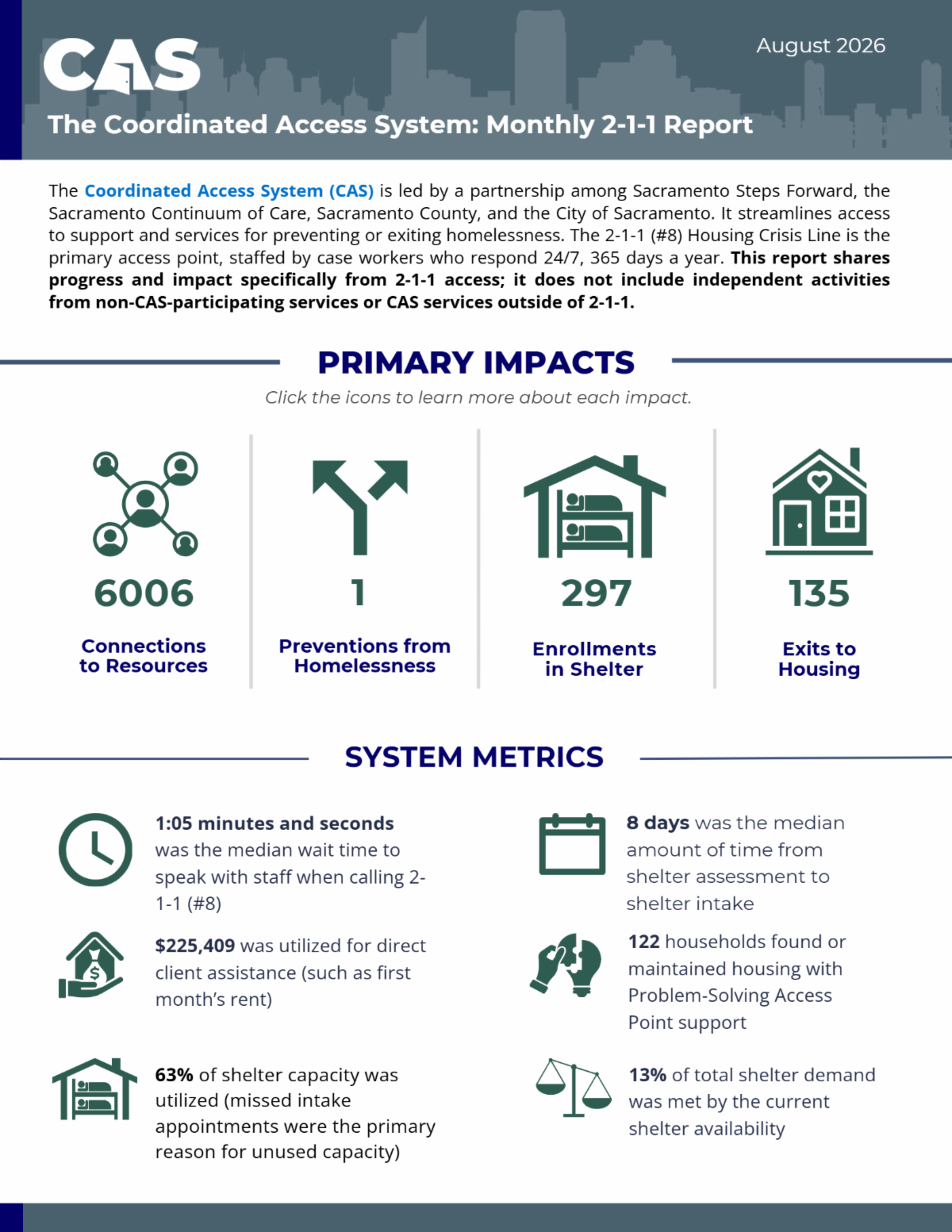
in August, we saw growth in the role of Problem-Solving Access Points (PSAPs) in helping households identify housing solutions that fit their individual circumstances. PSAPs supported 122 households in finding or maintaining housing, nearly doubling the 62 households supported in July.


One emerging trend is the increased use of shared housing as a pathway to housing stability. As households navigate rising housing costs and limited affordable housing options, shared living arrangements can provide another opportunity to access and maintain housing while reducing financial barriers.


Direct client assistance remained steady, with $225,409 provided in August, compared with $218,558 in July. The system also connected 6,006 households to resources, down slightly from 6,080, and supported 135 exits to housing, down from 144.


Together, these outcomes demonstrate the value of flexible problem-solving approaches that help households explore different pathways to housing stability and respond to the changing needs of the community.


READ THE FULL REPORT & ANALYSIS ➜

A Problem-Solving Approach to Preventing and Resolving Homelessness 


A Message from Tlaltzin Muro Gomez, Program Administator, Sacramento Steps Forward. Originally shared in the September 2026 SSF Newsletter.


When a family receives an eviction notice, falls behind on a utility bill, or can't cover move-in costs required to secure stable housing, one-time financial assistance can help them keep their home or get quickly housed. That's the concept of Housing Problem Solving and the opportunity of the Problem-Solving Access Point (PSAP) program, an effort that is ramping up in reach and impact here in Sacramento. 


Housing Problem Solving (HPS) is a person-centered, housing-focused approach to resolving housing crises. It starts with a conversation that centers a household’s strengths, relationships, and support networks to identify solutions that can help them remain housed or quickly return to housing. Depending on the household’s needs, HPS may include connections to community resources, conflict resolution, landlord negotiation, or financial assistance. 


Sacramento Steps Forward (SSF) developed the Problem-Solving Access Point (PSAP) program around this HPS philosophy as part of the community’s broader homelessness response framework. Since 2022, the PSAP program has helped more than 1,000 households secure permanent housing, connecting eligible households with trained navigators who help identify housing solutions, connect to community supports, and access financial assistance when appropriate. 


SSF supports the PSAP network through two partnership models with provider agencies: contracted partnerships and Memorandums of Understanding (MOUs). Both partnership models provide access to PSAP services, with the primary difference being how households connect to providers. Contracted PSAP providers are selected through a competitive Request for Proposals (RFP) process and receive referrals through the 2-1-1 CAS Specialist team, while MOU partners connect with households through their own community outreach and existing networks.  


In 2026, Sacramento Steps Forward completed a competitive Request for Proposals process to expand the PSAP network across Sacramento County. Contracts were awarded to Community Health Works (COHEWO) and United Way California Capital Region (UWCCR). Together, these organizations now provide six staff members to support PSAP services.  


In its first four months of expanded operations (April–July 2026), the PSAP program provided financial assistance to 160 households. On average, $2,984 was provided per household, with an average resolution time of 14 days, measured from notification of a completed financial assistance request to the release of payment to the landlord or vendor. Together, these early results highlight the PSAP program's ability to provide targeted financial assistance to help households address housing crises quickly and efficiently. 


Eligible community members can access PSAP referrals Monday through Friday by calling 2-1-1 and selecting option 8 to speak with a CAS Specialist and complete a Crisis Assessment. Eligible participants are then connected to an available PSAP provider who will reach out and schedule an intake appointment within 24 hours. 


Sacramento’s continued investment in prevention and problem-solving is an important part of building a stronger, more effective community response to homelessness. Providers interested in becoming a PSAP partner can reach out to our team psaps@sacstepsforward.org to learn more. 

Updates & Reminders


CAS 2-1-1 Hours Update


Beginning October 1, 2-1-1’s Coordinated Access System will shift to core operational hours of Monday through Saturday, 7:00 a.m. to 7:00 p.m. The change is designed to better align staffing with peak demand and the hours when shelters and housing programs are most available for intake.


Community members will continue to be able to reach 2-1-1 and access the Coordinated Access System 24/7/365. Focused CAS Specialist staffing during core hours will help ensure more people receive timely, comprehensive assistance when demand is highest and housing and shelter resources are most accessible.


LEARN MORE ABOUT THE UPCOMING CHANGE ➜

Learn How to Use the New Sacramento Youth Resource Guide App


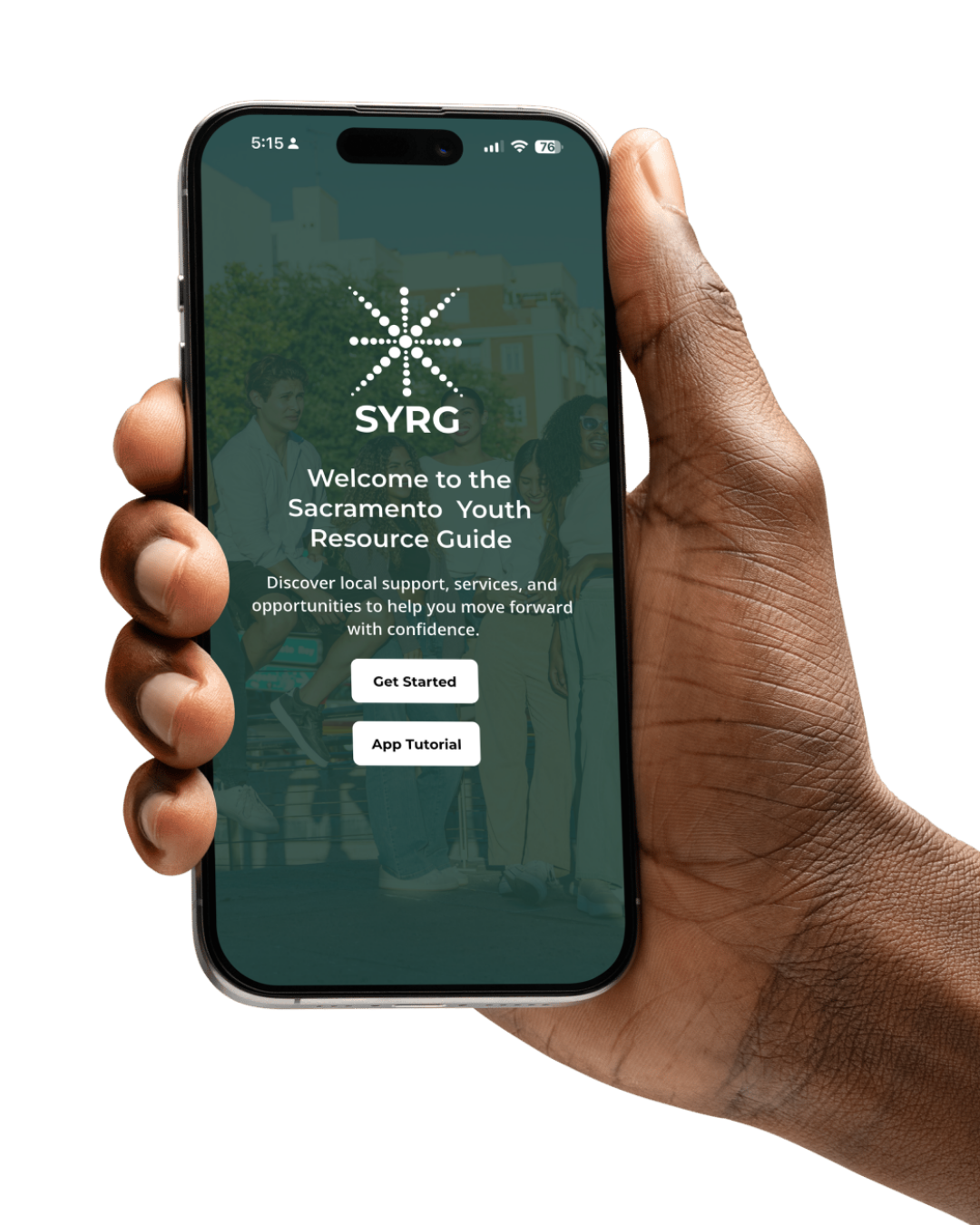
The new Sacramento Youth Resource Guide (SYRG) app helps transition-aged youth quickly find housing, basic needs, community resources, and live 2-1-1 Sacramento support.


Providers can now access a training presentation, video walkthrough, app download links, and ready-to-share flyers ahead of the official September 30l laucnh date to get familiar with SYRG and before introducing it to youth.


EXPLORE SYRG TRAINING & RESOURCES ➜

CAS Assessor Self-Paced Training Modules 


For the remainder of the year, there will be no live CAS Assessor trainings. To support flexibility in learning and certification, the Training Team has developed the CAS Assessor Self-Paced Training, which includes six pre-recorded online modules, slide decks, and additional training resources. 


Once all modules are completed and the supporting materials reviewed, trainees may take the CAS Assessor Quiz to demonstrate their understanding and readiness for certification. This training is intended for Service Providers and Outreach Workers who need access to the Crisis Assessment and Housing Conversation tools. 


EXPLORE THE ASYNCHRONOUS TRAINING ➜

The People Behind the Progress


Behind every referral and placement are people working together to make it possible.


This Month’s Spotlight: Tiffani Reimers, Lead Case Conferencing Specialist, Sacramento Steps Forward 


Q: What does your role in the Coordinated Access System involve?  


A: I've worked with the Coordinated Access System for over 6 years, and I participate in the Coordinated Access System from the position of provider coordination. I set up and monitor Case Conferencing groups that bring direct service providers together from a myriad of spaces- street outreach, shelters, behavioral health, reentry services, and more. 


Q: In your experience, how does the CAS help people experiencing or at risk of homelessness move toward stability?  


A: The Coordinated Access System offers a single, shared process to prioritize and match people to housing resources based on vulnerability and need, rather than leaving folks to navigate a maze of separate programs on their own. Through case conferencing, CAS encourages service providers to connect on a client's needs and goals, so nothing falls through the cracks between outreach, shelter, and housing placement. 


Q: Can you describe the most memorable experience you’ve had helping someone through the CAS? 


A: I experience the Coordinated Access System through the lens of Case Conferencing. Our last cycle was a memorable one, including case managers and housing navigators from 18 emergency shelter and transitional housing sites. We focused intently on completing housing assessments, achieving document readiness, and connecting to resources in the community. This outstanding representation from shelter and transitional housing programs emphasized the shared commitment across our Continuum of Care to make the most of temporary placements and move people toward permanent housing as quickly as possible. 

The Q&A Corner: Problem Solving Access Points


This month’s most-asked questions.


Q: If my client has too much income for their referral, does that mean they are not eligible for other programs? 


A: Not necessarily. Each housing program has its own income requirements. For example, if a client is over the income limit for a project-based unit that serves households at 0–30% of Area Median Income (AMI), they would not be eligible for programs with those same income restrictions. 


However, the Coordinated Access System (CAS) also has programs with higher income limits or no specific income limit at all. This is why it is essential for service providers to keep the client's Housing Conversation Tool updated with their correct annual income. Accurate income information ensures the client is placed on the appropriate Priority Lists and considered for all programs for which they are eligible. 


Q: What can I do if my client is enrolled in a Rapid Re-Housing (RRH) program, but it isn’t going to be a good fit? What should I do? 


A: Client choice is what matters most. If the client does not want to move forward with the RRH program, you can communicate the client’s decision to the RRH program. Be sure to update the Housing Conversation Tool with the client’s current preferences and needs. 


Please keep in mind that disconnecting from a Rapid Re-Housing program does not automatically connect the client to another housing program. Housing opportunities are still based on program eligibility, vulnerability score, and document readiness. 


Q: Does CAS help connect participants to CalAIM support?  


A: Yes! CAS assessors can support their clients connect with 2-1-1 (#8) to complete a Crisis Assessment (CA) and explore CalAIM options.  


FIND ADDITIONAL CALAIM INFORMATION ➜

🏠︎ Housing Highlights


As of September 2026, Madison Square, Sequoia Hotel, Auburn Oaks (Phase 1), and 440 Arden (Rivo Apartments) have successfully leased up. Together, these four projects have provided 226 households with housing supported by a Project-Based Voucher (PBV).


We extend our sincere thanks to the Sacramento Housing and Redevelopment Agency, John Stewart Company, BRIDGE Housing Corporation, Lutheran Social Services, and Hope Cooperative for their collaboration and dedication over the past eight months. Through this collective effort, these projects are now serving residents and providing stable, affordable housing in our community.


Upcoming Housing Projects from CAS


Auburn Oaks (Phase 2): Pending Construction


Auburn Oaks Phase 2 is currently pending construction and will expand access to stable, affordable housing for older adults experiencing homelessness.


Service Provider: Hope Cooperative

Property Management: John Stewart Company

Type: Project-Based Voucher Site


Client Eligibility:

  • Adults only
  • 55+ years old
  • Experiencing homelessness
  • Literally homeless documentation required, including valid ID, Social Security, and homeless certification
  • Income can’t exceed 30% AMI. Review 2026 Rent and Income Limits ➜


Central Sacramento Studios II: Referrals Underway


Central Sacramento Studios II has begun accepting referrals through the Coordinated Access System (CAS), bringing another permanent housing opportunity online for adults experiencing homelessness.


Service Provider: LifeSTEPS

Property Management: Danco Group

Type: Project-Based Voucher Site


Client Eligibility:

  • Adults only
  • Experiencing homelessness
  • Literally homeless documentation required, including valid ID, Social Security, and homeless certification
  • Income can’t exceed 30% AMI. Review 2026 Rent and Income Limits ➜


Thank you for being part of this work.


Questions about the Coordinated Access System?

Contact: CAS@sacstepsforward.org