|
A Changing Maple Season:
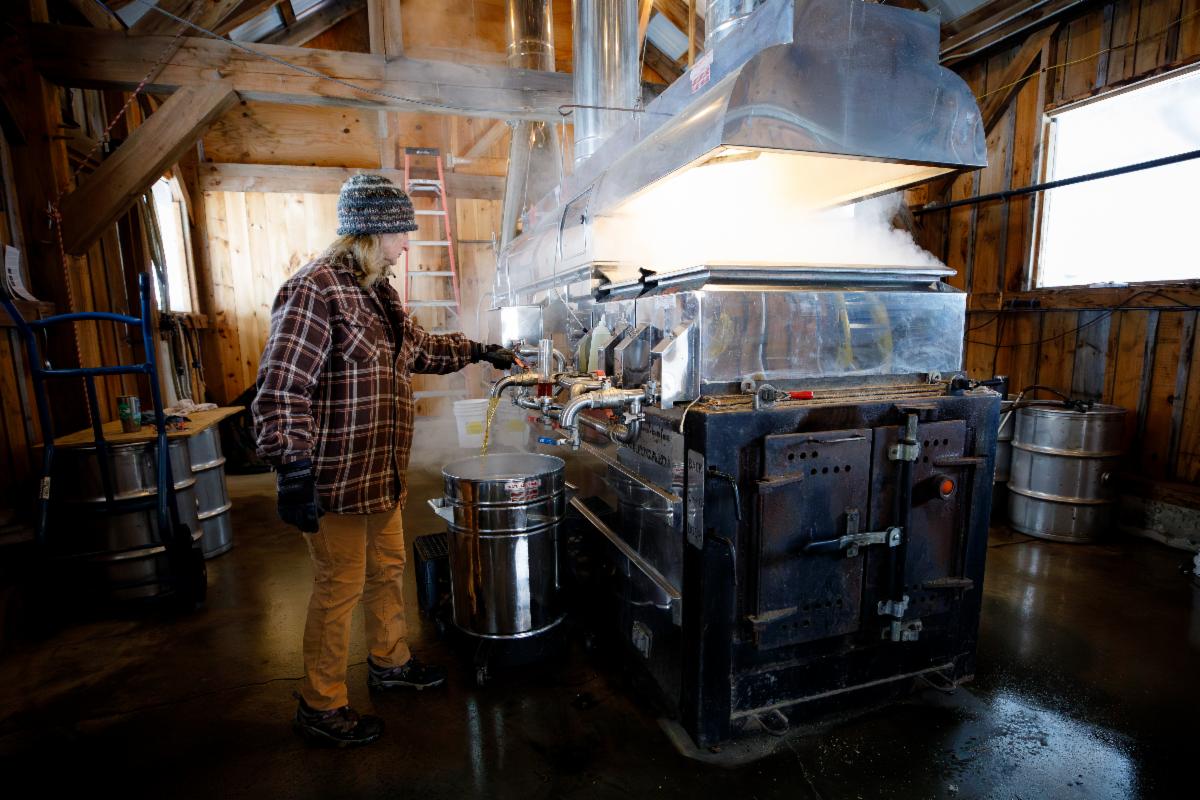
March is a month of change, of eagerly awaiting the end of winter and the warmer days of spring, while dealing with see-sawing temperatures and snowpack turning to mud. For local maple syrup producers, the transition from winter to spring marks the busy harvest season. When days start to warm above freezing, but nights are still cold, sap is ready to be collected and boiled into maple syrup.
Every maple sugaring season is different, and the weather controls the amount and quality of syrup that farmers can produce. When days and nights are too cold, the sap doesn’t flow – but once the days warm up significantly and the trees begin to bud, the sap quality declines and the season is over.
It’s not surprising that climate change is making this annual process even more unpredictable. The start of maple season has shifted earlier, temperature swings during the season are more extreme, and the season often ends earlier as well, compressing the time frame when sap can be harvested. The changing climate also affects the health of maple trees themselves, as rising temperatures can lead to greater threats from invasive insects and plants.
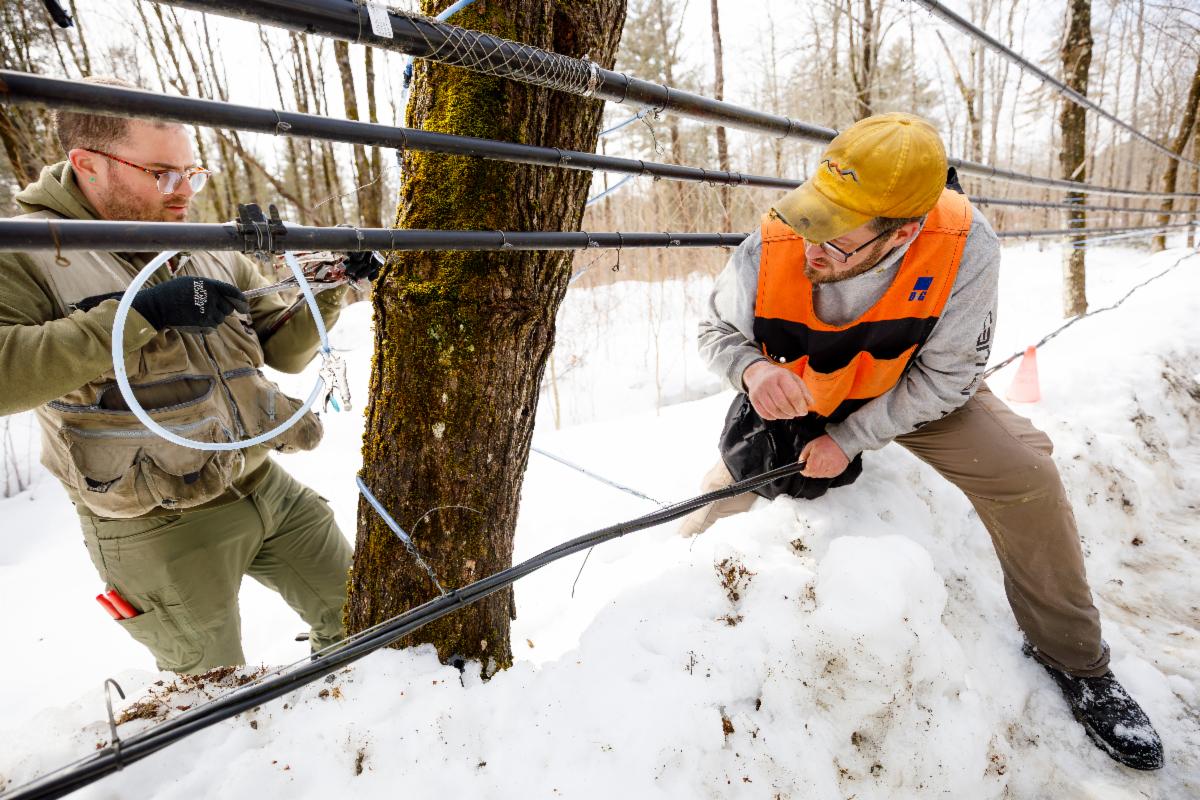
Farmers are resilient in the face of climate change, and maple producers are adopting a variety of strategies to protect their harvest. At Turner Farms Maple Syrup in Egremont, MA, vacuum systems help draw sap faster from the trees. “The systems allow for longer draw times and larger quantities,” said Carla Turner. “We have changed our operation many times over the years but this is by far the most beneficial in the wake of climate change.”
Research on regional maple production helps farmers adapt to new technology and adjust their practices. Research forests, like the ones at University of Vermont and Cornell University, allow for long-term study of forest management, climate impacts on maple tree health and the effectiveness of different maple tapping practices.
Ioka Valley Farm in Hancock, MA also relies on technology to maintain their syrup production in the face of uncertainty. Their reverse osmosis system filters the sap before boiling, increasing the sap’s sugar concentration. The filtered sap requires less time and fuel to boil into the final syrup product. But farmer Missy Leab doesn’t depend solely on technology to mitigate climate change. “It's a balance of using technology, staying educated and most importantly being able to adapt,” she said, noting that maple producers need to be responsive to the seasonal conditions and not just the calendar. Kim Trust of Justamere Tree Farm echoes this philosophy, noting that they now start tapping trees earlier in the season to catch any early sap runs.
The Northeast Indigenous Climate Resilience Network notes that “farmers who begin adapting in advance” and “communities that introduce conservation measures” will both help maple production remain “an important part of the Northeast’s economy and culture."
Communities can also support maple production by purchasing more maple syrup and other maple products. Maple farms in the Berkshires produce more than just syrup – try Ioka Valley’s maple cream or Justamere Tree Farm’s maple seasoning (a spice blend mixed with maple sugar).
Farms:
Justamere Tree Farm, Worthington, MA: The first Amherst Farmers Market is April 18th and the first Great Barrington Market is May 9th.
Ioka Valley Farm, Hancock, MA: They are open weekends 8am-3pm now until April 4th for sugarhouse tours and tastings and the Calf-a is open for pancake meals.
Woodlife Ranch, New Lebanon, NY
Turner Farms, Egremont, MA
Holiday Brook Farm Dalton, MA
Sweet Brook Farm, Williamstown, MA
Jennings Brook Farm, New Ashford, MA
Resources:
As winters get warmer, maple farmers are learning to adapt - Vermont Business Magazine
Cornell - Public Dashboard Season 2026 - Dashboards - Grafana
ACERnet – Acer Climate and Socio-Ecological Research Network
|