|
Theme:
- High-Leverage Practices (HLPs) 15: Scaffolded Supports
Articles:
- Scaffolding Success: Supporting Students who are Deaf and Hard of Hearing
News from RMTC-DHH
- TA-Live! High-Leverage Practices: HLP 15
- Listening and Spoken Language Strategies: Thinking Outside the [Theme] Box
- Passport to Learning
- AT in the Classroom: Lesson Integration
Expanded Skills Spotlight
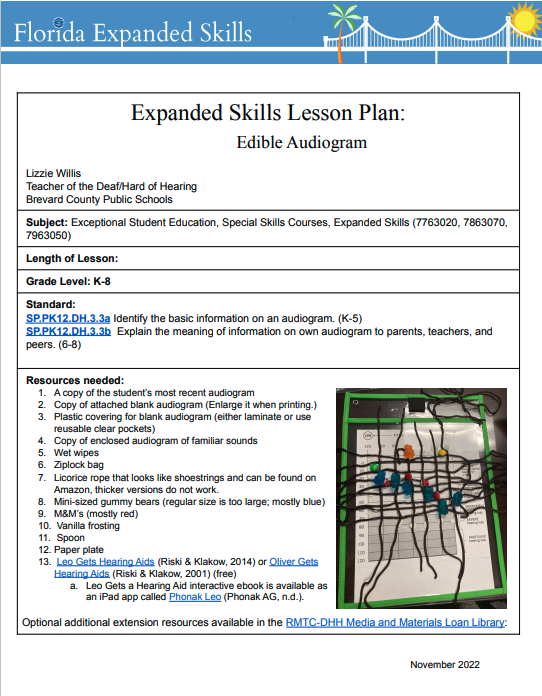
- Edible Audiogram
- Standards: SP.PK12.DH.3.3a and SP.PK12.DH.3.3b
Teacher Toolkit
- LiveBinder of Tools for HLPs
- Loan Library Resources
Did You Know?
Upcoming Events
| |
HLP 15: Scaffolded Supports | |
The theme for this month is based on the 15th practice from the Collaboration for Effective Educator Development, Accountability, and Reform (CEEDAR) Center and Council for Exceptional Children (CEC)’s High-Leverage Practices in Special Education: Provide scaffolded supports. Keep reading for resources and more! | | | |
Scaffolding Success: Supporting Students who are Deaf and Hard of Hearing | |
|
In the diverse landscape of education, it is crucial to provide environments of belonging that cater to the unique needs of every student. For students who are deaf and hard of hearing (DHH), effective scaffolding supports linguistic and academic development and can lead to improved concept understanding or even increased social integration. Scaffolding refers to the structured support systems implemented to help students gradually develop independence in their learning. For students who are DHH, educators can adopt a variety of strategies to ensure they receive the necessary support and thrive in their educational pursuits.
One essential tip is to leverage visual aids and technologies. Visual support tools, such as using photos and illustrations connected to text and vocabulary, written instructions, diagrams, and multimedia presentations, can facilitate comprehension and enhance access to communication for students who are deaf and hard of hearing. Providing students with access to visual resources not only increases the chance they receive information effectively and efficiently but also fosters a more inclusive learning environment.
Encouraging collaboration and peer support in a scaffolded and supported environment is instrumental in creating an inclusive atmosphere. Pairing students who are deaf or hard of hearing with classmates who have been briefed on effective communication strategies can promote a sense of belonging and mutual support. Educators can also implement inclusive classroom practices, such as assigning group projects that encourage collaboration and communication, which create opportunities for students to learn from one another in a supported environment. By fostering a culture of understanding and teamwork, educators can enhance the overall learning experience for ALL students, including those who are DHH.
Scaffolding supports for students who are DHH requires a multifaceted approach that addresses instruction, communicative, and social aspects. Employing visual aids, embracing assistive technologies, and promoting collaboration are key strategies that empower students who are deaf/hard of hearing to thrive academically and socially. As educators continue to refine their practices to meet the diverse needs of their students, the implementation of thoughtful scaffolding measures will contribute to a more inclusive and enriching educational experience for all.
| |
|
In the TA-Live! series, RMTC-DHH is diving deep into the Collaboration for Effective Educator Development, Accountability and Reform (CEEDAR) Center and the Council for Exceptional Children (CEC)’s High-Leverage Practices in Special Education and how teachers of the DHH can utilize these practices through the lens of their specialized knowledge of students who are DHH.
Before the next scheduled discussion, participants will be encouraged to*:
*Unable to complete the homework? Please still feel free to join RMTC-DHH staff for a discussion on resources and tools Florida educators utilize related to the HLP discussed.
When?
The next TA-Live! session will be January 10, 2024 from 2:00 p.m. to 3:00 p.m. ET (1:00 p.m. to 2:00 p.m. CT). With a watch party of the homework starting at 1:45 p.m. ET (12:45 p.m. CT).
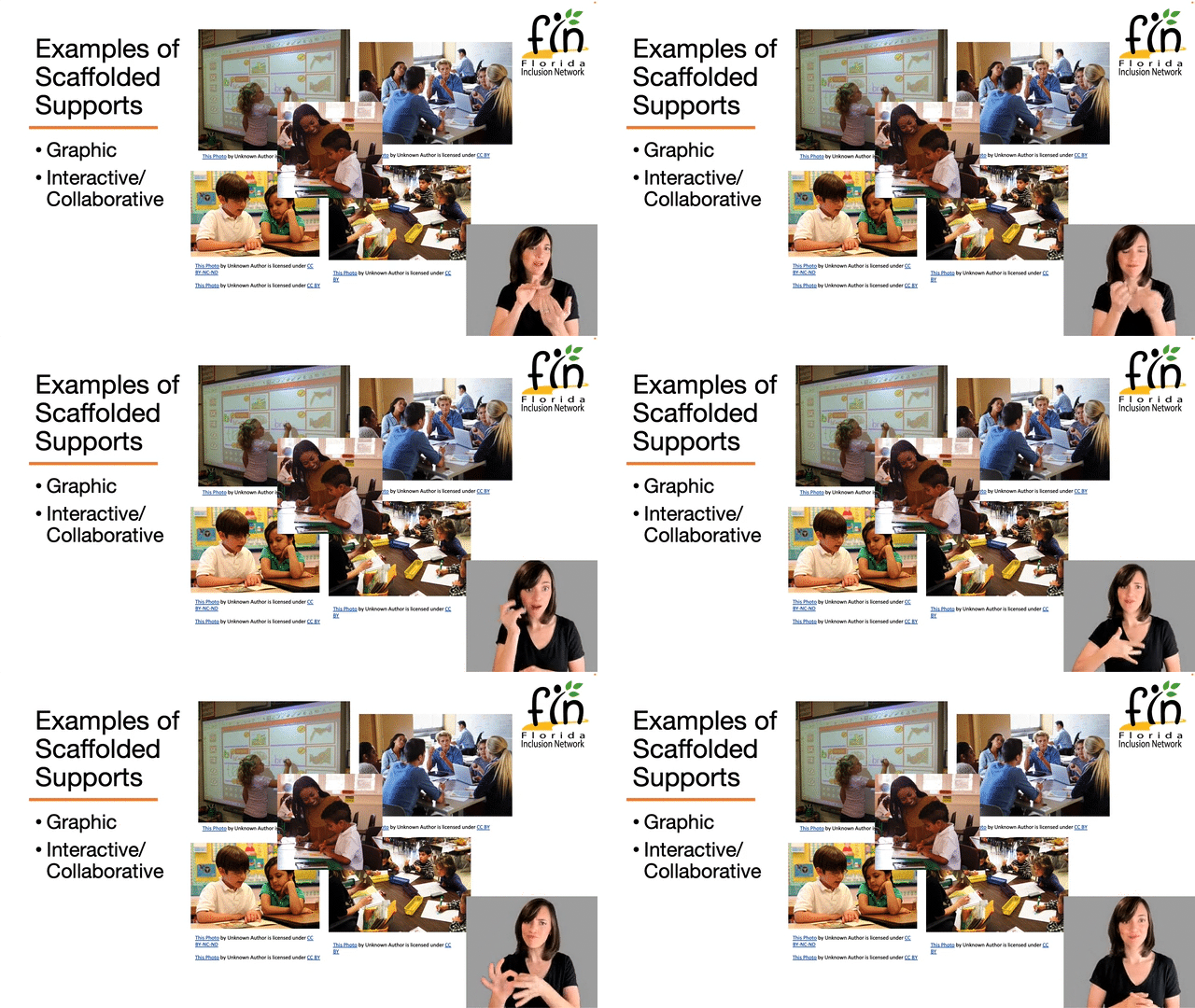
|  | For January's TA-Live! discussion session, RMTC-DHH will be joined by the Florida Inclusion Network (FIN). Have questions for FIN you would like to submit before the discussion session? Please fill out this form. | | |
Listening and Spoken Language Strategies: Thinking Outside the [Theme] Box | |
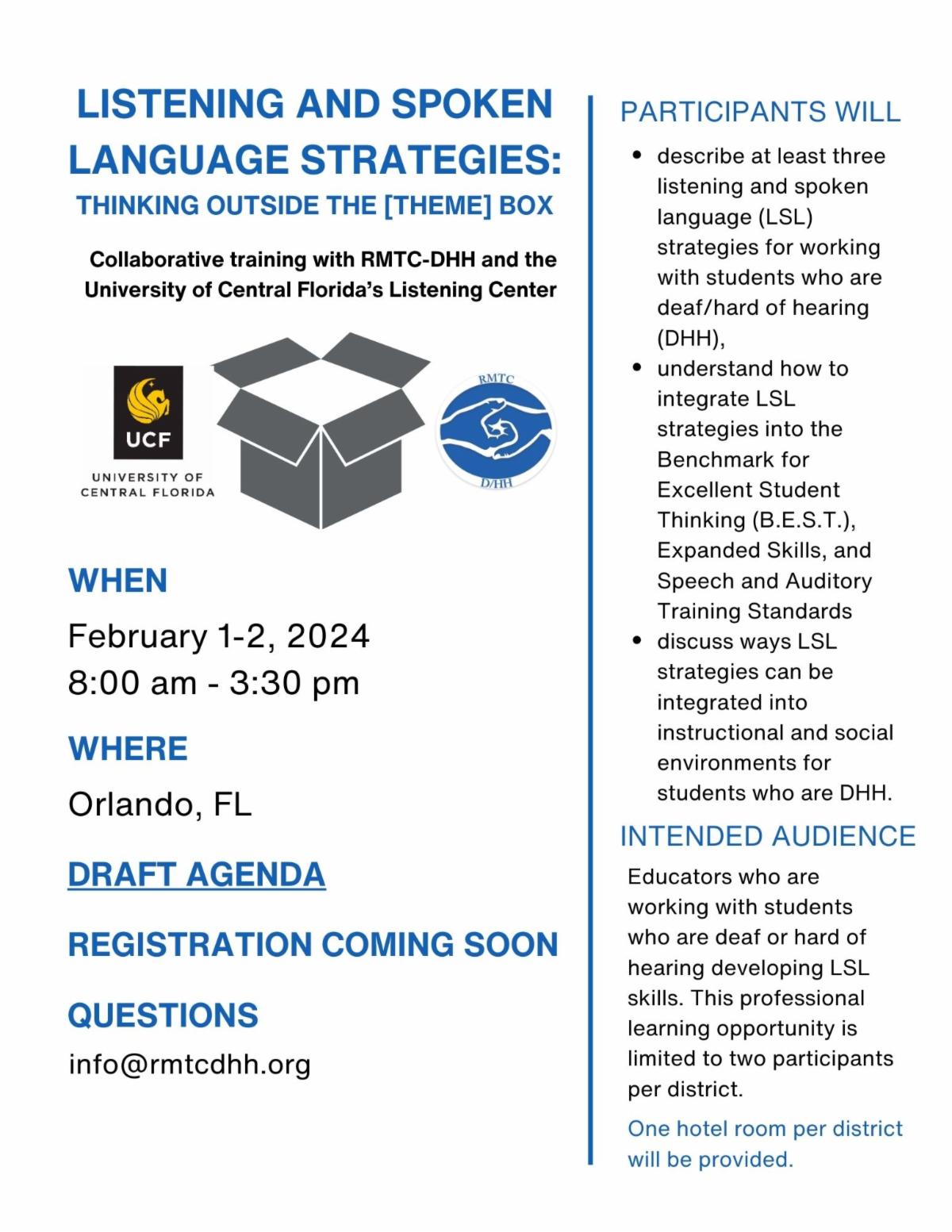
RMTC-DHH is excited to offer Listening and Spoken Language Strategies: Thinking Outside the [Theme] Box on February 1-2, 2024, face-to-face in Orlando, Florida. This professional learning opportunity is a collaboration between RMTC-DHH and the University of Central Florida (UCF) Listening Center. This two-day collaborative event will include hands-on activities where the participants will leave with tools and resources that can be implemented in their instructional practice the following work day. For more information, please see the save the date flyer. To register, please reach out to your district's DHH contact.
| | |
Sign up by February 10, 2024: RMTC-DHH is excited to collaborate with the Problem-Solving/Response to Intervention: Technology and Learning Connections (TLC) project, the Florida Instructional Materials Center for the Visually Impaired (FIMC-VI), and the Access Project to bring you Passport to Learning. “Passport to Learning is a micro-credential professional learning system that is provided free for Florida educators, specialists, and related service providers that serve Florida students. You, the "traveler," can apply for a "passport" (an online account) and then sign up for one or more pre-planned travel packages. Each travel package includes a number of competency-based "destinations." Your "passport" receives a stamp (badge) for each completed travel package and you will receive a certificate of inservice hours earned. You will also have the option of earning CEUs.” This spring, RMTC-DHH is excited to be a part of the Vision and Hearing: Band Two. You do not need to have completed Band One in order to participate. Visit their web page for more information or email info@rmtcdhh.org. | | |
Assistive Technology in the Classroom:
Lesson Integration
|
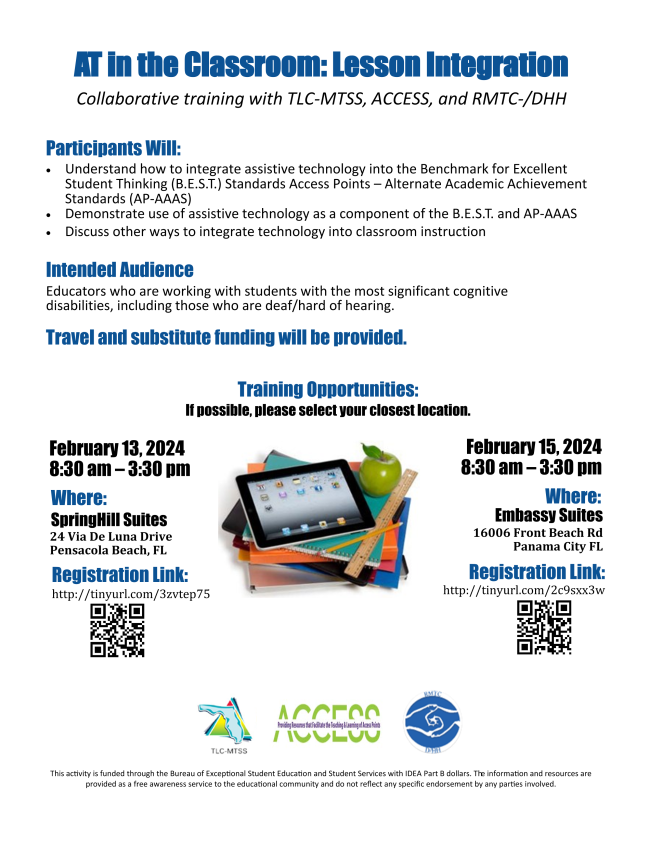 |  | Panhandle-area teachers of the DHH and other professionals providing instruction to students on Access Points are invited to register for Assistive Technology (AT) in the Classroom: Lesson Integration. The PS/RtI: Technology and Learning Connections (TLC) project in collaboration with the ACCESS Project and RMTC-DHH are pleased to offer AT (Assistive Technology) in the Classroom: Lesson Integration. This day-long event offers an opportunity for attendees to increase their AT knowledge and put to practice what they've learned. They will experience, program, and troubleshoot a vast array of low- and high-tech devices aimed at improving accessibility and communication in educational environments. This event is staffed by discretionary project personnel with opportunities for consultation, technical assistance, and discussion. Participants are limited to those serving students with the most significant cognitive disabilities, including teachers for students who are DHH serving this population. Please see the attached flyer for more information.
| | |
|
|
Resources:
In order to keep all the resources in one place, RMTC-DHH has created a LiveBinder that is categorized by the twenty-two “High-Leverage Practices for Students with Disabilities” from the CEEDAR Center and the Council for Exceptional Children (CEC). To see the resources available by each category, check out the LiveBinder!
| | | |
Resources from the RMTC-DHH Media and Materials Loan Library:
The below resources from the Media and Materials Loan Library* have relevance to HLP 15.
*Florida stakeholders may borrow these and many other resources from RMTC-DHH's Media and Materials Loan Library, for FREE. Each material comes with a return label, making even the shipping at no charge to the borrower.
-
#1507 Teaching as Inquiry: Asking Hard Questions to Improve Practice and Student Achievement (Book)
-
#1523 Classroom Instruction That Works: Research-Based Strategies for Increasing Student Achievement (Book)
- #1868 The Itinerant Teacher's Handbook (Book)
- #1940 Building Skills for Independence in the Mainstream (Book)
| | | |
NRSC STEM Academy
NTID Regional STEM Center (NRSC) invites high school students who are deaf and hard of hearing, aged 15-21, to apply for the Summer 2024 program. This engaging academic program is designed to prepare students for their transition to college.
Learn more about the program and frequently asked questions on the STEM Academy page. Check out highlights from past programs. Download a brochure to share with students and families.
STEM Academy is offered at no cost to participants. This includes covering all expenses such as travel, accommodations, meals, and recreational activities.
Email Debbie Gilliam, gilliam.debbie@aidb.org, or Cara Wilmot, wilmot.cara@aidb.org, with any questions.
| | |
-
Jan 10, 2024: TA-Live! HLP 15
-
Feb 1-2, 2024: Listening and Spoken Language Strategies: Thinking Outside the [Theme] Box
-
Feb 13, 2024: AT in the Classroom: Lesson Integration (Pensacola)
-
Feb 15, 2024: AT in the Classroom: Lesson Integration (Panama City)
-
March 20, 2024: TA-Live! HLP 16
Check out the RMTC-DHH 2023-2024 Calendar for more upcoming events!
| |
|
RMTC-DHH provides Tech Notes as a free resource to teachers, professionals, and families around the state in order to pass along potentially useful information and expand the knowledge and opportunities available to educators and families of children who are deaf/hard of hearing. This email was funded by the Florida Department of Education Bureau of Exceptional Education through federal assistance under the Individuals with Disabilities Education Act (IDEA), Part B funds. The information included does not reflect any specific endorsement by any parties involved. | |
Suggested Citation:
Resource Materials and Technology Center for the Deaf/Hard of Hearing [RMTC-DHH]. (2024, January). High-Leverage Practice 15: Scaffolded supports. Tech Notes. https://www.rmtcdhh.org/tech-notes-archive/
| | | | |