|
Theme:
- High-Leverage Practices (HLPs) 17: Flexible Grouping
Articles:
- Embracing Flexibility: Effective Grouping Strategies for Students who are DHH
- National Appreciation for Teachers, Interpreters, and Speech-Language Pathologists
News from RMTC-DHH:
- TA-Live! High-Leverage Practices: HLP 17
- Shoutout to Districts for Completing Training in an Evidence-Based Literacy Curriculum
- End of the Year Survey
- Calendar for 2024-2025
Teacher Toolkit:
- LiveBinder of Tools for HLPs
- Loan Library End of the Year Note: Returning Materials
Did You Know?
- DHH Eligibility Rule Finalized
- National Speech-Language-Hearing Month
- ASHA Awards Nyle DiMarco
- Summer Camps & Scholarships for Students who are DHH
- Clarke Webinar Series for Professionals
- AG Bell Parent Chats
- Hearing First Webinar
- Lindamood-Bell Webinar on Science of Reading
- Laurent Clerc National Deaf Education Center Webinar
- 2024 Family Café
- 2024 FLASHA
- Updated and Revised High-Leverage Practices Book
Upcoming Events
| |
HLP 17: Flexible Grouping | |
The theme for this month is based on the 17th practice from the Collaboration for Effective Educator Development, Accountability, and Reform (CEEDAR) Center and Council for Exceptional Children (CEC)’s High-Leverage Practices in Special Education: Use flexible grouping. Keep reading for resources and more! | | | |
Embracing Flexibility: Effective Grouping Strategies for Students who are Deaf and Hard of Hearing | |
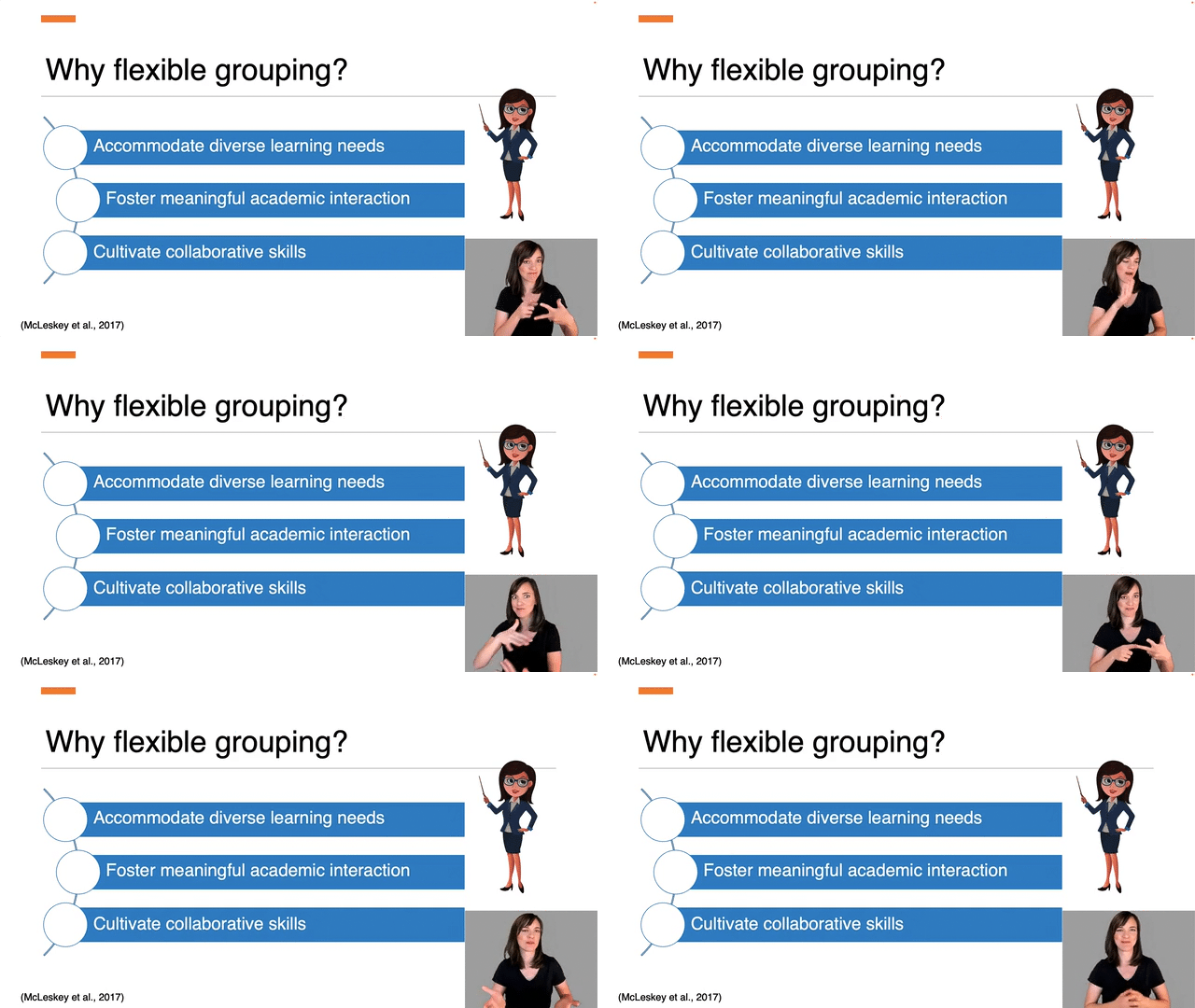
In the diverse landscape of education, meeting the needs of every student is essential for fostering learning environments that cater to individual requirements. Among the student population, individuals who are deaf or hard of hearing (DHH) are part of a low-incidence, yet highly specialized and varied population, that require tailored approaches for effective education. Flexible grouping emerges as a promising strategy to address the diverse needs of students who are DHH in a variety of learning environments. Different grouping arrangements used flexibly accommodate diverse learning needs, foster meaningful academic interactions, and cultivate collaborative skills among students (McLeskey et al., 2017). | In a research study conducted by Flagler College’s Dr. Catalano and colleagues (2022), it was discovered that separate classroom teachers of the deaf/hard of hearing (TODHHs) use small group or 1:1 instruction less than 1% of the instructional day. | |
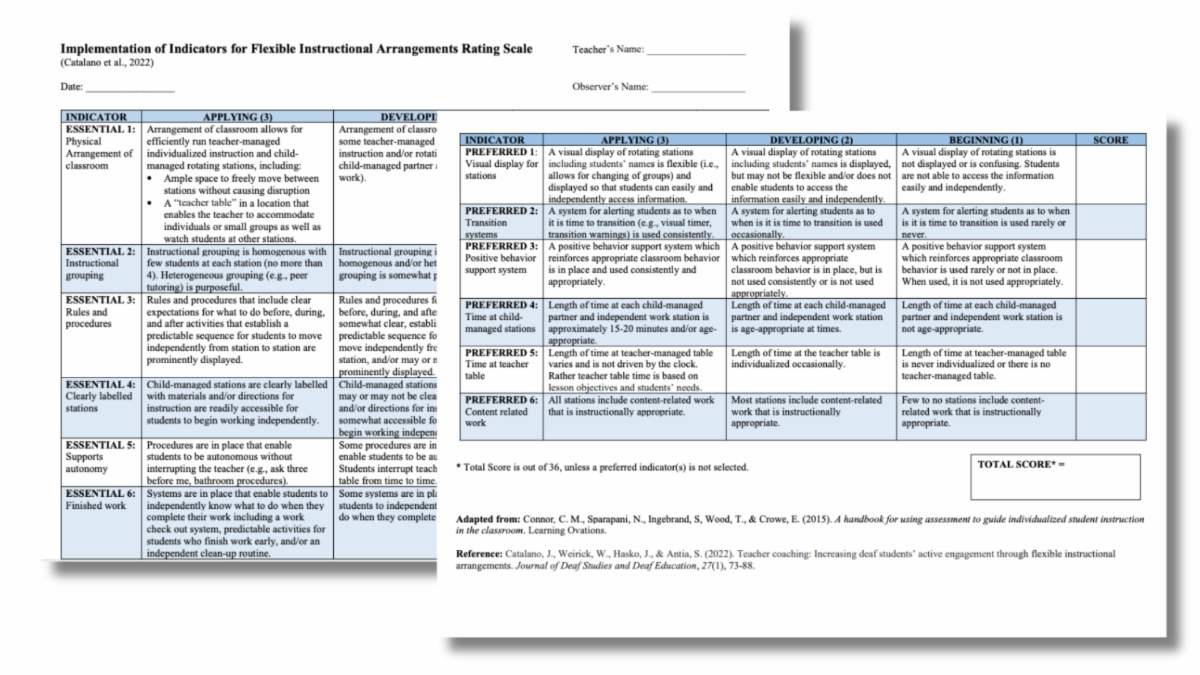
Catalano et al. (2022), created a rubric to guide TODHHs in incorporating flexible grouping arrangements. The rubric includes six essential indicators for flexible grouping arrangements and six preferred indicators that were dependent upon the student’s age, grade, and teacher preferences.
Teachers, regardless of education setting, can use the essential and preferred indicators to promote flexible grouping in their classrooms.
| |
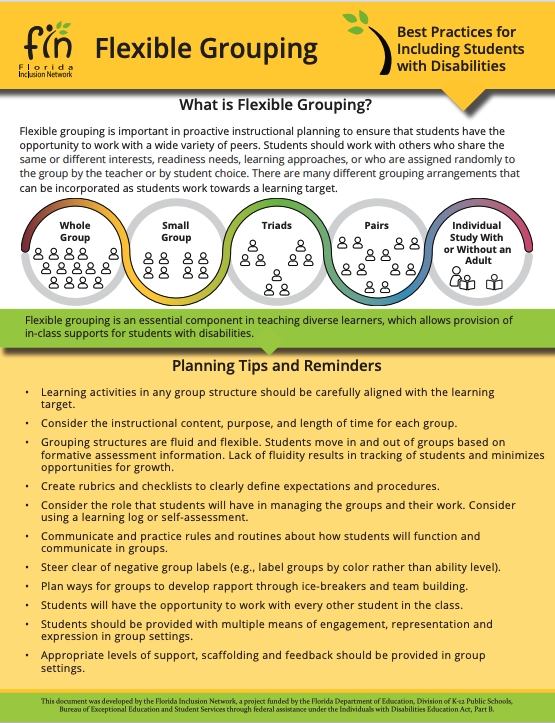
Another resource teachers can use is the Best Practices for Including Students with Disabilities: Flexible Grouping document from the Florida Inclusion Network (FIN, 2022). In this document, FIN includes tips and reminders and a planner for successfully implementing flexible grouping in the classroom.
Significant changes in classrooms can feel overwhelming for teachers. The rubric with the essential and preferred indicators for flexible groupings (Catalano et al., 2022) and the best practices for flexible grouping (FIN, 2022) can supply teachers with guidance to implement flexible grouping arrangements that promote individualized instruction. Integrating flexible grouping strategies offers significant potential for enhancing the educational journeys of students who are DHH.
| |
As educators embark on this path of adaptability and openness, they reaffirm their dedication to cultivating classrooms where every student's voice is respected and appreciated.
For more information, watch the RMTC-DHH TA-Live! HLP 17 video on flexible grouping and how to use it in both a separate classroom setting and general education setting for students who are DHH.
| |
National Appreciation for Teachers, Interpreters, and Speech-Language Pathologists | |
May is full of national appreciation celebrations for educators and support staff.
- May 1 was Interpreter Appreciation Day.
- May 6-10 is National Teacher Appreciation Week.
- May 18 is National Speech-Language Pathologist (SLP) Day.
Thank you to the phenomenal teachers, interpreters, and SLPs who support students who are deaf/hard of hearing (DHH) in Florida! RMTC-DHH is grateful for the opportunity to work alongside fabulous service providers to optimize outcomes for students who are DHH.
| |
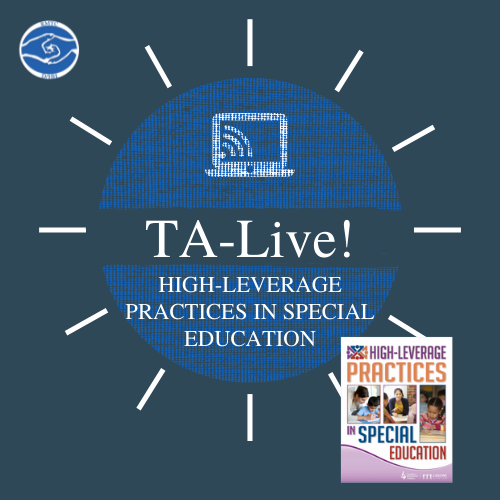
TA-Live! HLP 17: Flexible Grouping | |
In the TA-Live! series, RMTC-DHH is diving deep into the Collaboration for Effective Educator Development, Accountability and Reform (CEEDAR) Center and the Council for Exceptional Children (CEC)’s High-Leverage Practices in Special Education and how teachers of the DHH can utilize these practices through the lens of their specialized knowledge of students who are DHH.
Before the LAST scheduled discussion of 2023-2024, participants will be encouraged to*:
*Unable to complete the homework? Please still feel free to join RMTC-DHH staff for a discussion on resources and tools Florida educators utilize related to the HLP discussed.
When?
The next TA-Live! session will be May 8, 2024, from 2:00 p.m. to 3:00 p.m. ET (1:00 p.m. to 2:00 p.m. CT). With a watch party of the homework starting at 1:45 p.m. ET (12:45 p.m. CT).
| For March's TA-Live! discussion session, RMTC-DHH will be joined by the Florida Inclusion Network (FIN) and Dr. Catalano from Flagler College's Deaf Education Program. Have questions for FIN or Dr. Catalano you would like to submit before the discussion session? Please fill out this form. | | | Shout-out to Districts for Completing Training in an Evidence-Based Literacy Curriculum | |
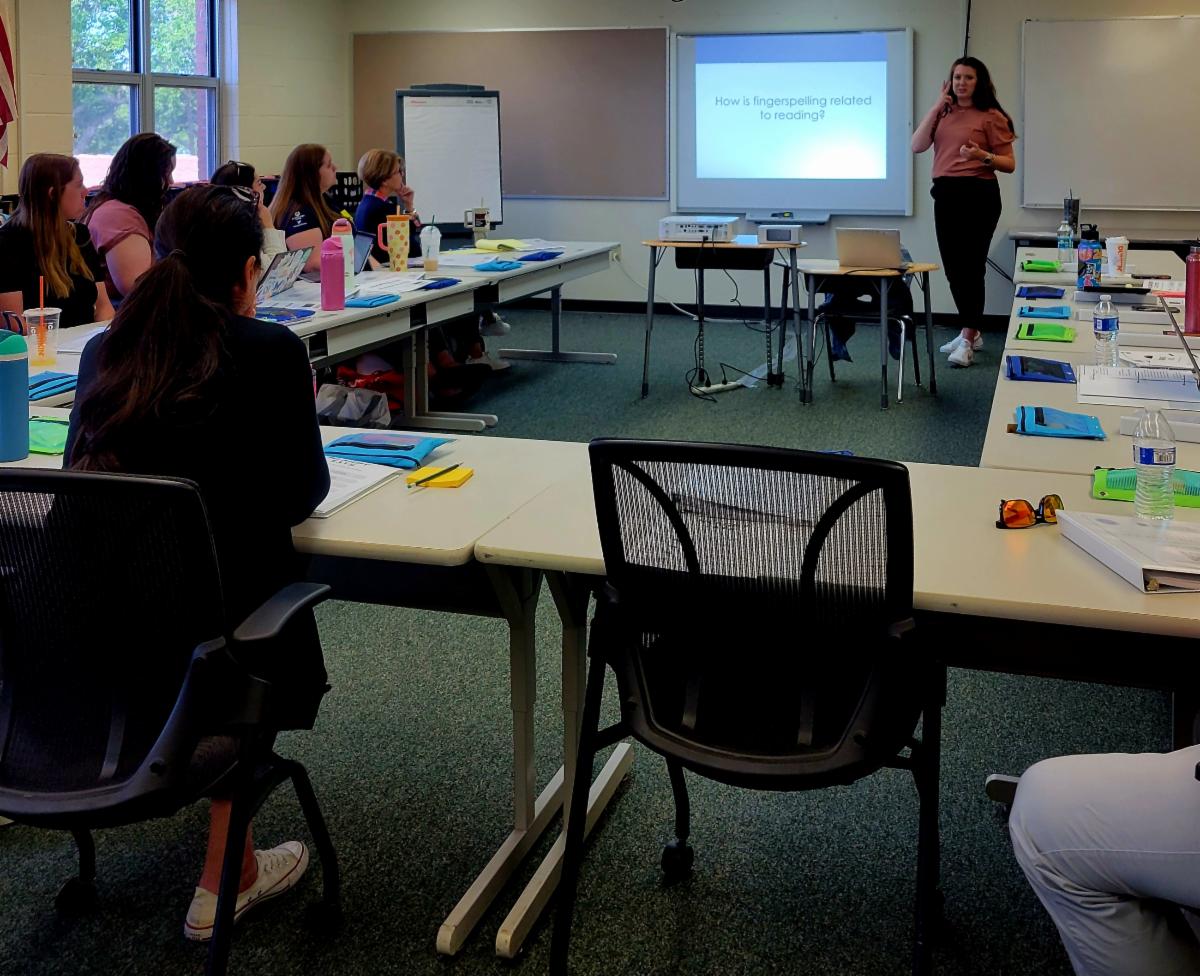
Thank you to the Florida School for the Deaf and Blind and Randi Mitchell for collaborating with us to provide Working with the Experts (WWE): Deaf/Hard of Hearing - Fingerspelling Our Way to Reading. We are grateful more districts have been trained in this evidence-based literacy curriculum specifically designed for students who are DHH! Shout-out to the following districts who attended this WWE:
- Columbia
- Dade
- Duval
- Highlands
- Lee
- Orange
- St. Johns
- Volusia
| | | |
|
End of the Year Needs Assessment Survey
RMTC-DHH works hard to serve your needs and interests. Your opinions, suggestions, and concerns are an important part of our planning efforts. Your input is critical to help us understand your needs and provide effective and focused support. Please help us by completing the 2023-2024 RMTC-DHH Annual Survey.
| | | |
|
Calendar for 2024-2025
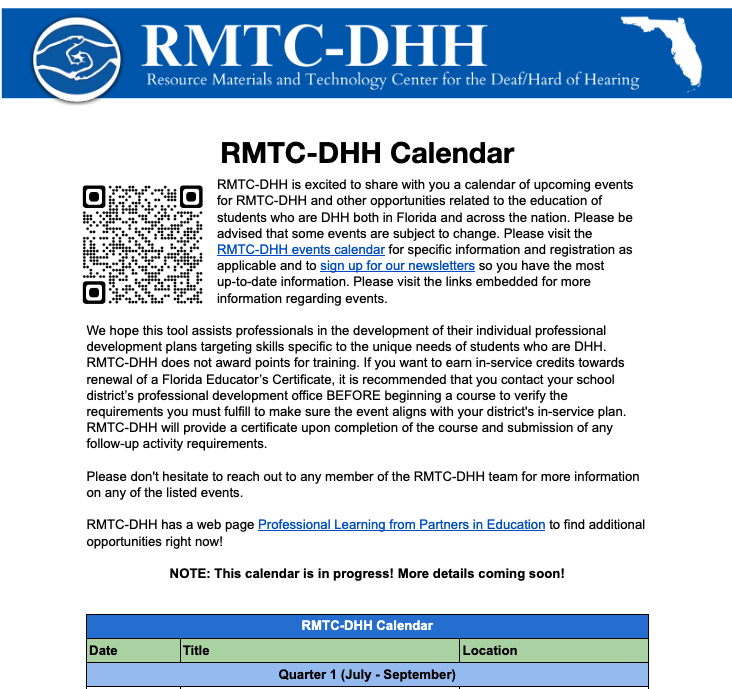
RMTC-DHH is in the process of planning professional learning opportunities for the 2024-2025 school year. Check our calendar frequently to get the most recent information.
| | |
|
|
Resources:
In order to keep all the resources in one place, RMTC-DHH has created a LiveBinder that is categorized by the twenty-two “High-Leverage Practices for Students with Disabilities” from the CEEDAR Center and the Council for Exceptional Children (CEC). To see the resources available by each category, check out the LiveBinder!
| | | |
End of the Year Note: Returning Materials
As the end of the school year approaches please take a look around your classroom, office, or home for any stray RMTC-DHH materials (DVDs or books) that may have been misplaced or pushed aside during the school year.
If you need a return label, please fill out the Request Services Form. RMTC-DHH can send you a prepaid label so there is no charge to you. We appreciate your cooperation in getting our materials returned so others can use them.
*Florida stakeholders may borrow materials from RMTC-DHH's Media and Materials Loan Library, for FREE. Each material comes with a return label, making even the shipping at no charge to the borrower.
| | | |
DHH Eligibility Rule Finalized
On April 17, 2024 the State Board of Education voted unanimously to approve the changes to the proposed rule 6A-6.03013, Exceptional Student Education Eligibility and Assessments for Students Who Are Deaf or Hard of Hearing.
| |
2024 National Speech-Language-Hearing Month | |
|
May is National Speech-Language-Hearing Month, formerly known as “Better Hearing and Speech Month.” Although the name of the May observance changes, its mission stays the same. It will remain a platform for a variety of public outreach efforts: bilingual media tours, public service announcements, digital campaigns, and downloadable resources for the public and professionals (ASHA, 2023).
There are two discretionary projects, funded by the Florida Department of Education Bureau of Exceptional Education and Student Services (BEESS) through an auditory-oral education grant, that specifically support families and educators of children who are DHH using listening and spoken language. For more information on using listening and spoken language with children who are DHH, visit their websites:
| |
Summer Camps & Scholarships
Summer is near! Time to ask the questions… What summer camp options are available for children who are DHH? What scholarships are available for students who are DHH? RMTC-DHH answers both of these questions! Check out the Scholarship FAQ and the Summer Camps FAQ for more information.
| |
2024 Family Café
The 26th Annual Family Café will be held June 14-16, 2024, at the Hyatt Regency Orlando. Registration is free for people with disabilities as well as families of children with disabilities. See RMTC-DHH's very own Mark Keith, Scott Walsh, and Sherry Conrad during their sessions. Also, visit RMTC-DHH at our booth!
| |
2024 FLASHA
The 2024 Florida Association of Speech-Language Pathologists and Audiologists (FLASHA) Annual Convention will be held June 20-23, 2024 in Daytona Beach. See RMTC-DHH’s very own Sherry Conrad and Candace McIntire present on music for students who are DHH and tech tools for individuals who are DHH. Some other familiar faces you may see are Lynn Miskiel from the University of Miami Debbie School and Kori Gedris, Putnam County Teacher of the Deaf/Hard of Hearing. We hope to see you there!
| |
Updated and Revised High-Leverage Practices Book
The High-Leverage Practices for Students with Disabilities (2nd Edition) book is now available on the CEEDAR website. This guide helps educators support positive academic, behavioral, and social outcomes for all students amid the challenges of modern classrooms.
| |
RMTC-DHH provides Tech Notes as a free resource to teachers, professionals, and families around the state in order to pass along potentially useful information and expand the knowledge and opportunities available to educators and families of children who are deaf/hard of hearing. This email was funded by the Florida Department of Education Bureau of Exceptional Education through federal assistance under the Individuals with Disabilities Education Act (IDEA), Part B funds. The information included does not reflect any specific endorsement by any parties involved. | |
Suggested Citation:
Resource Materials and Technology Center for the Deaf/Hard of Hearing [RMTC-DHH]. (2024, May). High-Leverage Practice 17: Flexible grouping. Tech Notes. https://www.rmtcdhh.org/tech-notes-archive/
| | | | |