|
Message from Candace
Dear Friends,
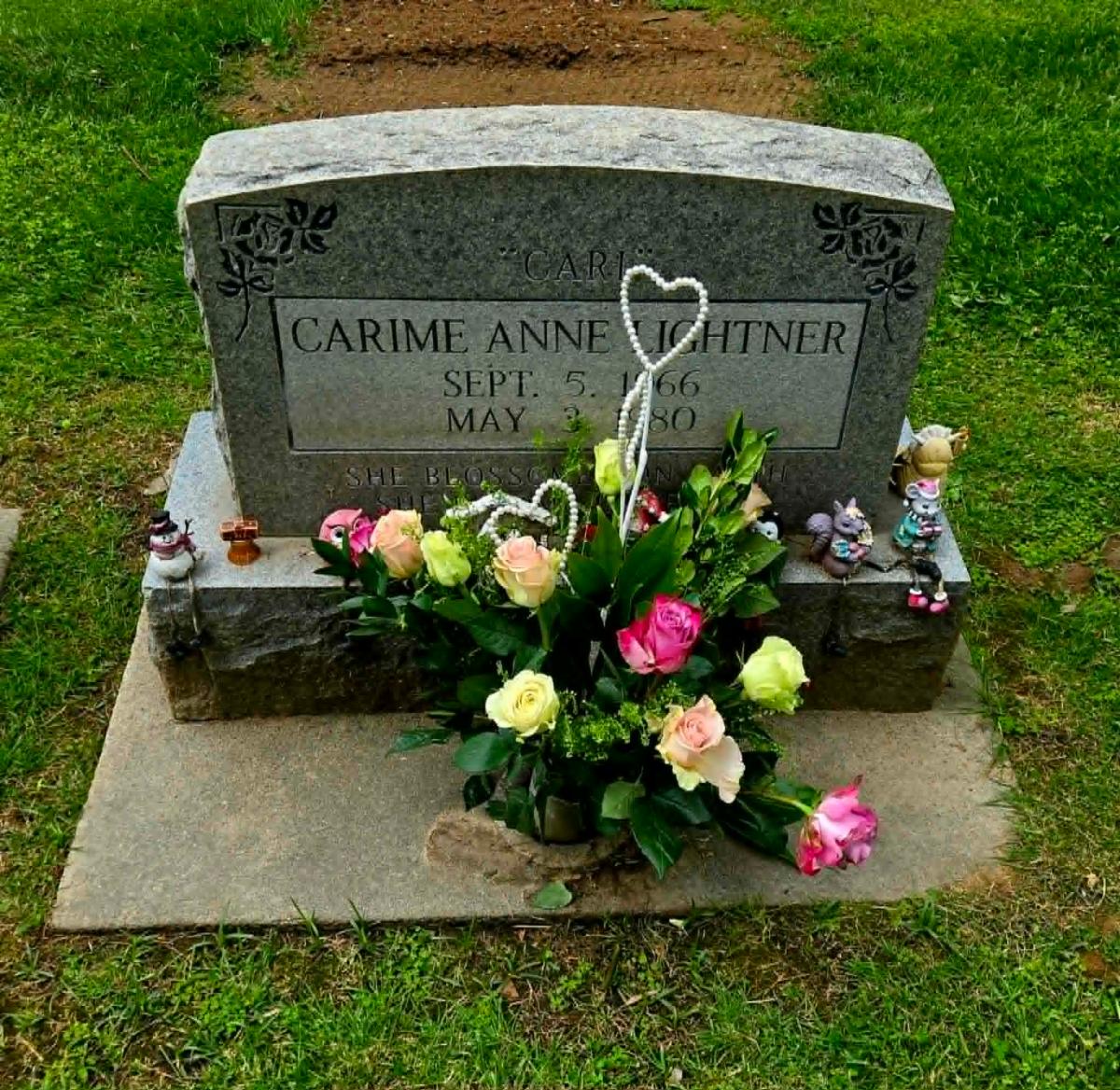
It is May, and what used to be my favorite month isn’t anymore—not since May 3rd, 1980, when my daughter, Cari, forever 13, was killed by a multiple repeat-offender drunk driver.
This year was different. I didn’t drown in the familiar waves of grief, which seem to come less and less as time goes by. In fact, they didn’t come at all this year. I didn't send flowers to mark the day she died.
| |
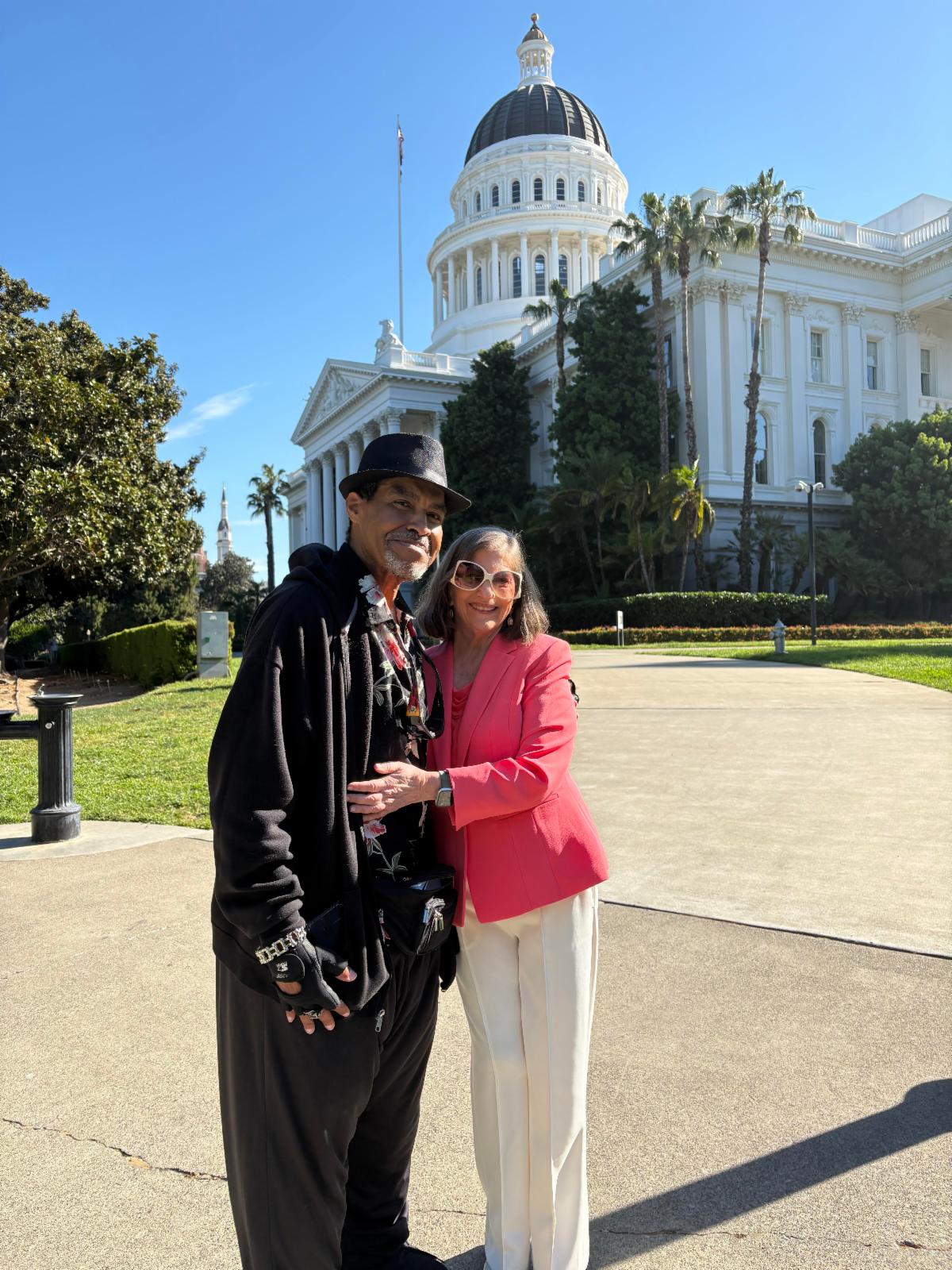
I am fortunate, though, because Cari has a gatekeeper. His name is Kelvin. We met through Facebook. He and his brother Tony went to the same high school I did, Armijo High—years after me. Tony once wrote a very flattering article about me for a local newspaper. We stayed in touch online, sharing posts and comments, and several years ago I learned that Kelvin lives not far from Cari’s grave in Fair Oaks, California. I live in Virginia. If I ever win the lottery (my favorite mantra), I will bring her home here. Until then, Kelvin has taken time from his own busy life to tend her grave in my absence. When I once confessed my worry about who would send her flowers after I die, he reassured me that he would. Like other families, I would be heartsick if she were no longer remembered.
It’s ironic, when you consider that for more than four decades my daughter’s death has been used to teach this country that drunk driving is a violent crime. Laws changed. Public awareness changed. Lives were saved. Generations of young people grew up hearing her story and being told: this was not an accident; this was a crime. I am still amazed at how many mothers tell me their children grew up calling them for a safe ride home because of Cari’s story.
And, of course, she does have a small exhibit at the Smithsonian, so perhaps I needn’t worry so much about her being forgotten.
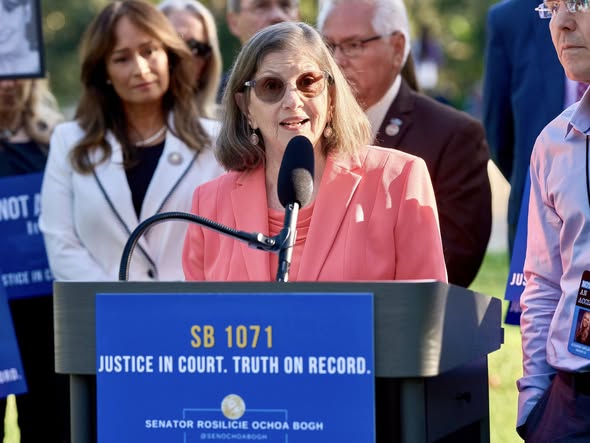
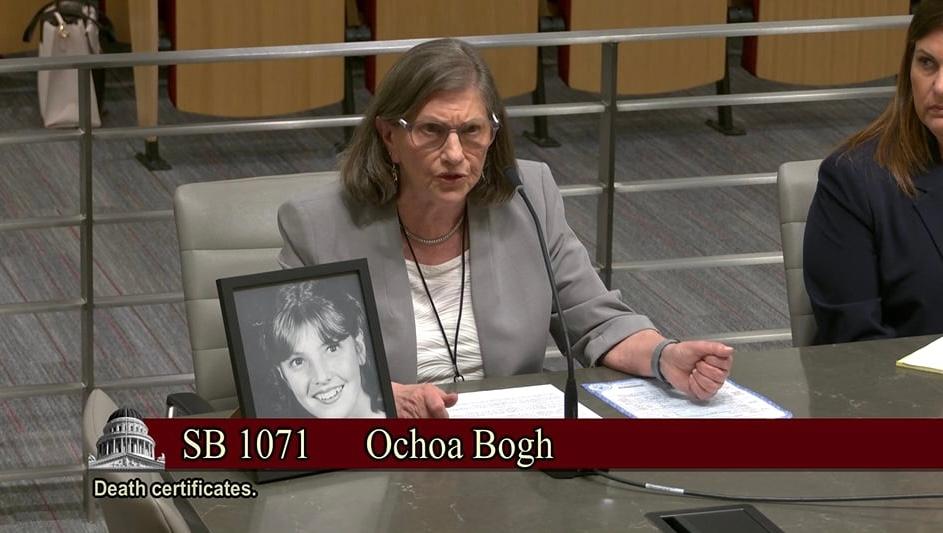
I credit some of this easing of grief to time, to moving forward, to our Not an Accident campaign, and to my recent trip to Sacramento to speak at a press conference and testify on SB 1071 before the Senate Judiciary Committee. I was surrounded by grief-stricken families holding photos of their children for the cameras and legislators, wearing lanyards with their children's faces.
I did the same, although I was extremely uncomfortable. I have always seen Cari’s death—and my work—as representing hundreds of thousands of victims of impaired driving. I have usually avoided focusing only on her, except in private. I have thought of her as the voice of the voiceless, simply because of what has been accomplished in her name. But in that room, standing with those families, it would have seemed wrong not to join them.
While in Sacramento, for the first time in many, many years, I was also able to visit her grave. I brought two vases of flowers and set them on her headstone, knowing I may never be back.
Life does go on, and so have I. She will always be part of me. I miss her often, but not as constantly as I once did. And yet, as I approach 80, I have never felt closer to her. I was commiserating with a friend recently, a bit younger than I am, about his daughter’s death, and he said the same thing.
Death takes away. That is all there is to it. But grief brings it back. By acting on our grief, we can eventually find within ourselves a place of peace and purpose. I did.
Because I care . . .
Candace Lightner, Founder and President
We Save Lives
| | |
Motorcycle and Bike Safety Month!
E‑Bike Safety and Sharing the Road Responsibly
This is a guest blog post by Victoria Carlborg, a Community Advocate from California.
If you drive in nearly any urban, suburban or rural community around the country, you have probably noticed that you’re sharing the road with electric bicycles. A fun, affordable and environmentally friendly way to get around, commute and deliver goods, I can understand why you would want to own an e-bike and buy them for your kids. In sunny Southern California, however, helping my teenager practice driving a car with her learner’s permit can be distracting enough without having to navigate around a group of fellow teens zipping in and out of traffic unexpectedly.
As e-bikes grow in popularity, they’re changing how we share the road — and creating new types of distractions for drivers. While e-bikes are eco-friendly and convenient, they introduce new safety challenges for both drivers and riders. E-bikes can distract drivers by accelerating faster than traditional bikes, yet are quieter than motorcycles, leading to drivers misjudging their speed and creating dangerous situations for both drivers and riders.
While most e-bike riders follow the rules of the road, many riders weave through traffic, ride on sidewalks, ignore traffic lights, and even ride while under the influence. I also take care of an elderly relative and recently had to push his wheelchair out of the way into traffic before an intoxicated-behaving e-bike rider careened into us on a public sidewalk.
Indeed, the integration of e-bikes into our transportation systems, though beneficial, has inadvertently created new forms of driver distraction that necessitate further research, policy, design, and educational interventions.
Traffic safety studies by the National Highway Transportation Safety Administration, for example, have found that driver behaviors such as “distraction, impairment, and aggressive driving” are key risk factors for vulnerable road users, including bicyclists (“Understanding the Problem,” NHTSA, 2023).
Insight from both quantitative and qualitative data has helped local law enforcement educate the public.
Here in California, Assemblymember Laurie Davies recently spearheaded two e-bike laws in California. AB 544 requires all e-bikes to have both a front and a rear light when in operation, with the rear light or reflector needing to be visible from 500 feet at night. AB 545 prohibits the sale of software or devices that illegally modify e-bikes to go faster than the legal speed limits.
Small changes in education can make a big impact to reduce distractions, crashes, injuries and fatalities so we can all arrive at our destination safely.
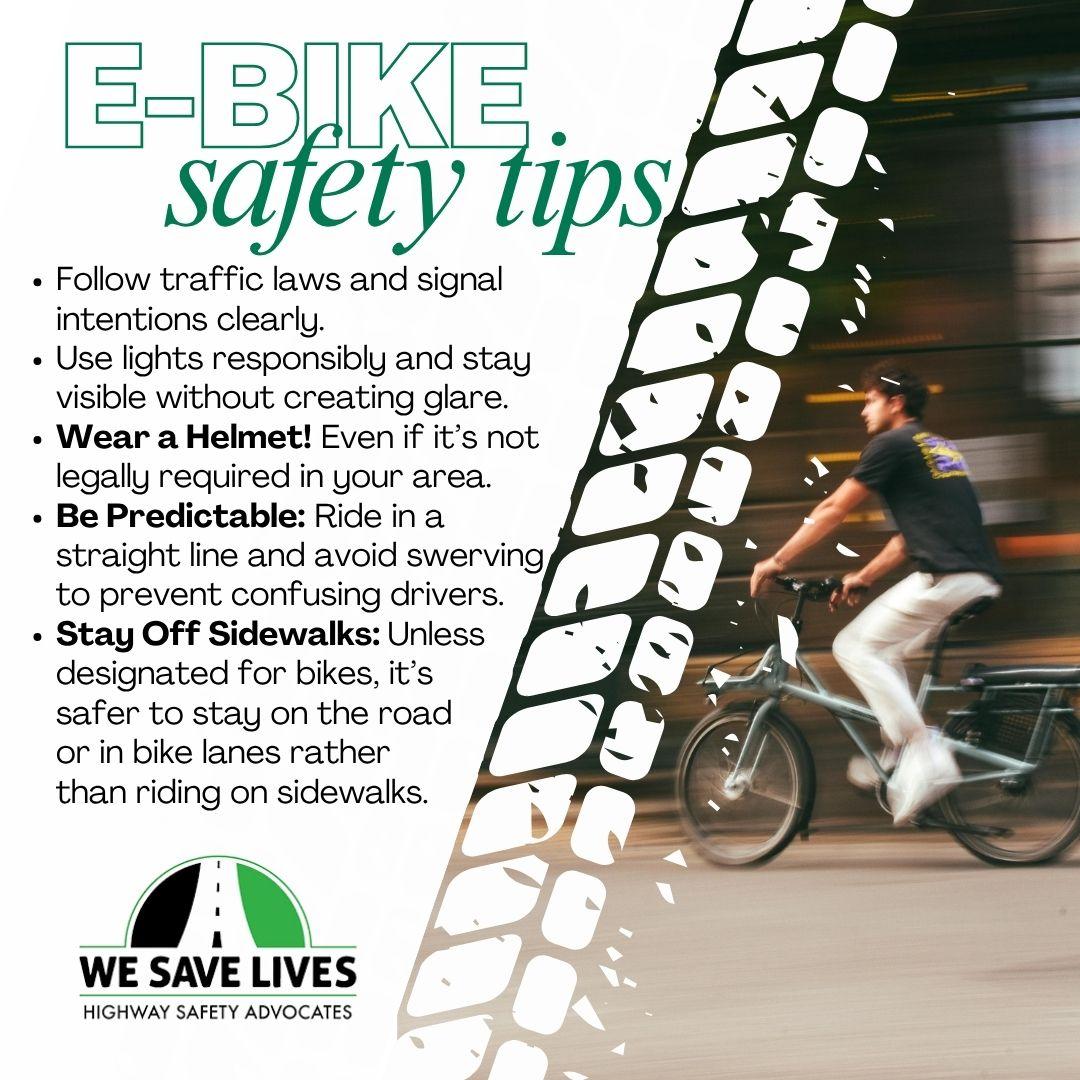
Safety Tips for E-Bikes and Drivers:
Learn more at https://bit.ly/49uu7Jr
| | |
Safety Tip of the Month 🚗
Memorial Day marks the unofficial start of summer—and one of the deadliest weekends on our roads. If you’re drinking or using impairing drugs, decide how you’re getting home before the first drink.
Plan a sober ride, a designated driver, or a rideshare in advance. Never assume you’ll ‘be fine to drive.’ The most meaningful way to honor those we remember on Memorial Day is to protect the lives in front of us.
| | |
Click on photo above to view and hear testimony from Candace Lightner on behalf of SB1071.
News & Updates 🗞️
■■ SB1071 passed both the Senate Health and Senate Judicary committees! We had support from more than 40 organizations and only opposed by 4.
■■ Upcoming Event: Memorial Day Weekend May 23-25th. Memorial Day is a U.S. federal holiday set aside to honor and remember the men and women who died while serving in the United States Armed Forces.
For Memorial Day weekend, the biggest highway safety hazard is impaired driving—especially drunk and drugged driving. It also marks the start of the “100 Deadliest Days of Summer.” This is the period between Memorial Day and Labor Day when traffic deaths—especially among teens and young drivers—rise sharply.
■■ Policy Update: HB26-1237 is now law in Colorado! After unanimously passing both the CO State House and Senate, the bill replaces the word "accident" with "crash" throughout state statute. We did the same in California. Every State should do this!!!
| |
Partner Spotlight
#PartnersforSafety
We are proud to partner with The National Police Association which advances five key missions: a Policy Mission, where supporters can join a Call to Action team to receive email alerts on pending crime‑fighting legislation and help influence bills at the federal and local levels; a Legal Mission, where NPA files lawsuits, FOIA requests, and friend‑of‑the‑court briefs to protect public safety, officer safety, and constitutional rights; a Support Mission, providing tools such as legal backing, public education, and #SupportThePolice messaging through billboards, PSAs, thank‑you cards, reward programs, and media outreach; a Petition Advocacy Mission, mobilizing citizens to tell local governments they support Quality of Life (“Broken Windows”) policing through a coordinated national mail and petition campaign; and an Education Mission, offering free resources such as the “Defending Law Enforcement & Restoring Criminal Justice” homeschool course, “The Ten Code” audio/eBook, and the National Police Association Podcast featuring law enforcement experts.
If you would like to become a We Save Lives Partner please contact us http://bit.ly/3KuNGYC
| | |
Take Action
■ Share this newsletter with 5 friends to help spread the message.
■ Sign the Petition to Stop Marijuana Impaired Driving. https://bit.ly/4nrHDU4
| |
Celebration of Life 🪽
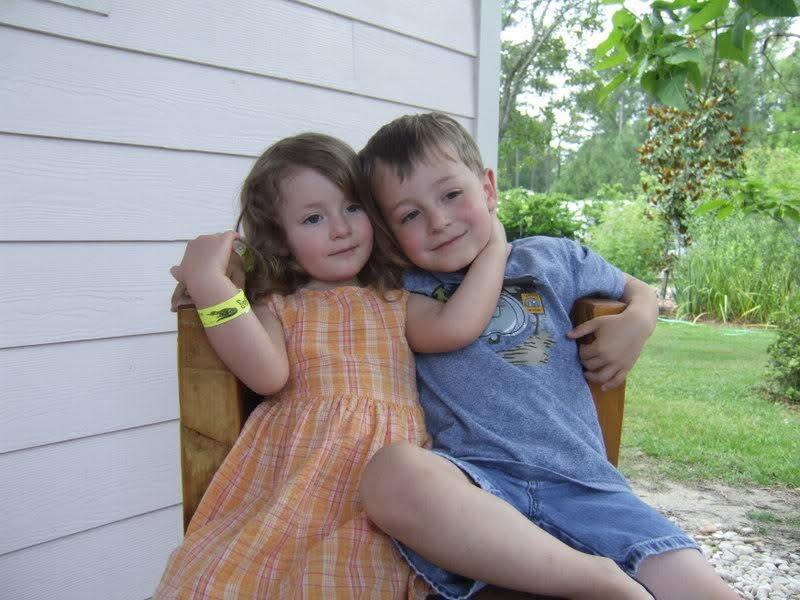
We were less than a quarter mile from home when a drunk driver shattered our lives.
My son, Garrett, was six. My daughter, Kasey, was three. Both were properly buckled into their car seats—Kasey directly behind me, Garrett in the rear passenger seat.
A repeat-offender drunk driver hit us on the driver’s side with such force that he was thrown 70 feet through the air, struck a church sign, and the sign broke and fell on top of him.
In the split second before impact, time stopped. I heard and felt a voice say, “It’s going to be okay.” A wave of peace washed over me, and then everything went black.
When I came to, the first thing I heard was Garrett’s voice:
“Mommy, Kasey’s dead.”
I had a concussion. My left arm was torn open down to the bone, my shoulder and hip dislocated. Garrett escaped with only small cuts from flying glass—but he had watched his best friend, his little sister, die instantly in his lap.
The drunk driver was sentenced to 24 years in prison.
Garrett is an adult now. His life is permanently marked by the loss of his sister. His battles are mostly invisible, and his story is his to tell. Mine has led me to join MADD’s founder, Candace Lightner, at We Save Lives. I have been part of her organization since 2017, honored to work alongside one of my personal heroes.
I will spend the rest of my life making sure my daughter’s life—and my son’s trauma—are not in vain. On the anniversary of Kasey’s death and on her birthdays, I ask people to perform random acts of kindness. We call them “Random Acts of Kasey.” It is our way of pushing back against the darkness that one drunk driver created.
Let’s all try to make the world a better place by being kinder to others and making better choices behind the wheel—because these tragedies are not accidents. They are preventable.
– Kelly, Kasey’s Mom
| | | | |