THIS WEEK IN
Federal Policy News
|
|
AFBF President Duvall Discusses Supply Chain Issues with President Biden |
Yesterday afternoon, American Farm Bureau Federation President Zippy Duvall had the chance to meet directly with President Joe Biden at the White House. Much of their agenda consisted of talking on the supply chain issues that have plagued farmers in all corners of the country. Duvall highlighted the importance of getting Congress to continue forward on the Ocean Shipping Reform Act, which would take a number of steps aimed at addressing the ongoing problems relating to ports, shipping carriers, and container costs and availability. The legislation has been stymied for the time being over differences in the House and Senate versions, both of which passed in their respective chambers. A compromise will need to be brokered if lawmakers plan to have it passed this year.
Per an AFBF release, the President was receptive to Duvall’s comments and agreed that shipping and port challenges have proved costly for American producers. Duvall also mentioned his concerns on rising input and fuel costs which have also added significant financial burdens onto farmers and ranchers in recent months. The President asked for AFBF to continue educating officials on these issues and appeared willing to host more agricultural producers at the White House in an effort to find solutions for several of these challenges.
|
|
Action Alert Reminder: Comment on the Securities and Exchange Commission Proposed Rule Today |
The Securities and Exchange Commission (SEC) is currently seeking public comments on a proposed rule that would amend its rules under the Securities Act of 1933 and Securities Exchange Act of 1933, that would require registrants to provide certain climate related information in their registration statements and annual reports. The proposed rule would require registrant companies to report climate related risks that are reasonably likely to have a material impact on its business, results of operations, or financial condition. The required information about climate-related risks would also include disclosure of a registrant’s greenhouse gas emissions, which have become a commonly used metric to assess a registrant’s exposure to such risks.
Currently, farmers and ranchers are not considered registrants or otherwise subject in any way to the jurisdiction and oversight of the SEC. However, the proposed rule would change this by extending reporting requirements for public companies to report on Scope 3 greenhouse gas emissions. Scope 3 emissions are emissions that result from activities from assets not owned or controlled by an organization but contribute to its value chain including farms and ranches. As a result, the proposed rule would force disclosure of private information, create burdensome reporting requirements for family farms and ranches who sell into supply chains and result in multiple, new sources of substantial costs and liabilities.
The comment period closes June 17, 2022.
Click here to write the SEC in opposition to the proposed rule today!
|
|
AFBF Releases Third Iteration of Drought Survey - Respond Today! |
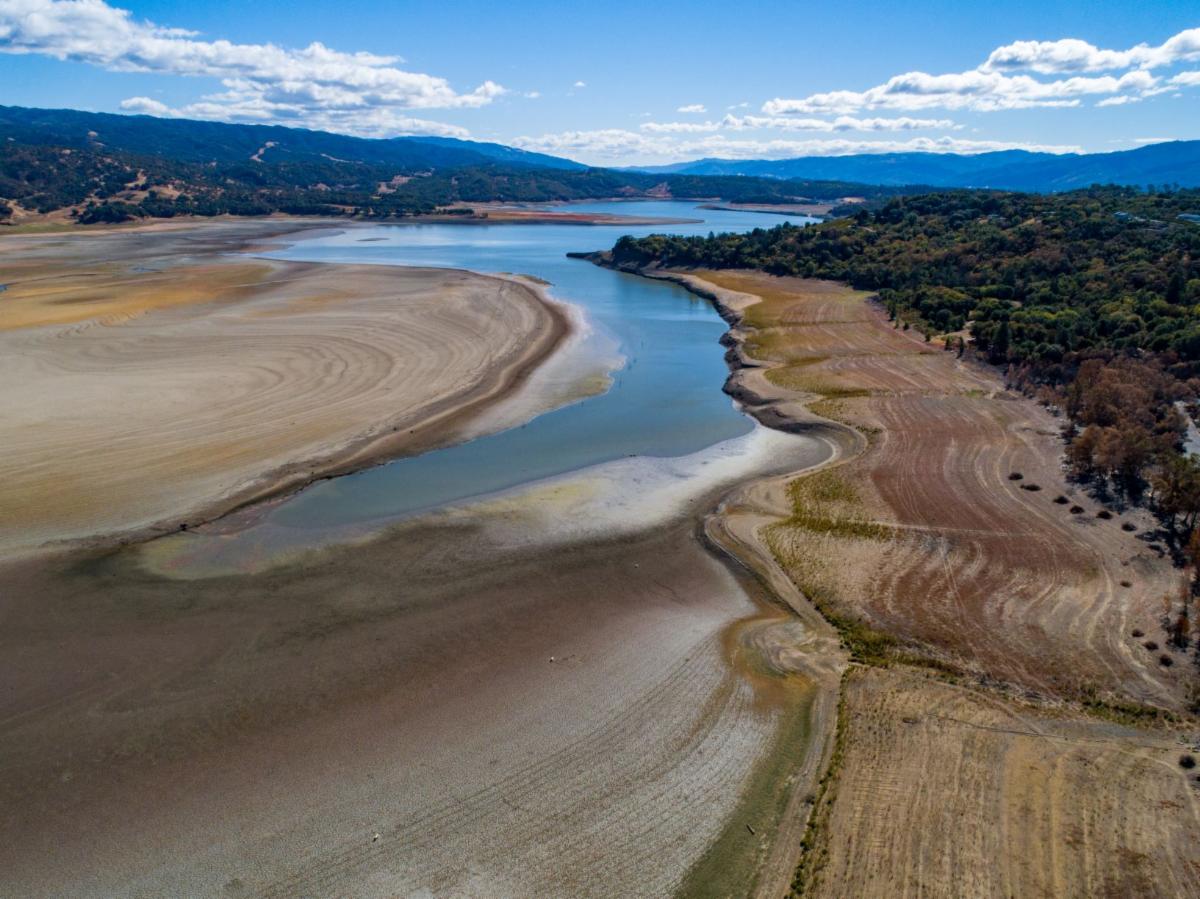
With the West and a growing number of Midwest states continuing to experience severe drought conditions, American Farm Bureau Federation has released a third iteration of their Assessing Western Drought Survey. The survey is open to all members; both those who took previous versions of the survey as well as those who did not. The data collected from this survey will be aggregated and summarized by American Farm Bureau Federation staff economists and be utilized to inform short-term disaster relief needs as well as long-term policy proposals aimed at assisting agriculture with drought preparedness, resilience, and response. Please consider responding today. The survey can be accessed here.
|
|
Senate Agriculture Conservation Subcommittee Holds First Hearing Since 2013 on Drought |
The Senate Agriculture Conservation, Climate, Forestry and Natural Resources subcommittee held its first hearing since 2013 on Tuesday. Chaired by Senator Michael Bennet (D-Colorado), the hearing focused on drought as well as forest and farmland restoration in the Western United States. Though specific legislation was not considered during the hearing, drought and water scarcity are increasingly being discussed on Capitol Hill. A recording of the hearing can be viewed here.
|
|
Forest Service Re-issues Restrictions of Certain Fire-Related Activities for Public Safety |
On May 27, the U.S. Forest Service Pacific Southwest Region (Region 5) Regional Forester Jennifer Eberlien reissued Regional Order 22-01. The regional order prohibits any processing materials or substances to create an explosive, the use of any fireworks or pyrotechnics, or the use of any internal or external combustion engine without a spark arrestor. The regional order remains in effect until May 29, 2025. With more than 90% of all fires caused by humans, the regional order is intended to increase public safety as well as reduce wildfire risk on National Forests in the region due to a drier than normal rainy season that is impacting fuel moisture levels. The seasonal fire outlook remains above average for the year.
Exemptions to the regional order include any federal, state or local officer, or member of an organized rescue or firefighting force in the performance of an official duty as well as any persons with a Forest Service Permit No. FS-7700-48 (Permit for Use of Roads, Trails or Areas Restricted by Regulation or Order).
|
|
House Ag Subcommittee Holds Farm Bill Hearing on SNAP |
Yesterday, the House Agriculture Subcommittee on Nutrition, Oversight, and Department Operations held a hearing overviewing the current state of the Supplemental Nutrition Assistance Program (SNAP) under USDA. Although the Farm Bill does focus quite a bit on issues and programs impacting farmers and ranchers, over 70% of funding actually goes towards nutrition programs. With roughly 41 million Americans participating in SNAP in some form, it garners quite a bit of attention when Farm Bill discussions begin.
Chairwoman Jahana Hayes (CT-05) reiterated Democrats’ support for the program and continued commitment towards ensuring it remains well-funded. Although Republican members cited inefficiencies and rising costs, SNAP and improved nutrition are generally areas where bipartisan support can be found, particularly as several industries such as food retailers rely heavily on the program. Ranking Member Don Bacon (NE-02) did raise questions on trying to ensure recipients are incentivized to utilize healthier food options when making purchases, an area Republicans are expected to continue focusing on.
|
|
Sara Arsenault
Director of Federal Policy
|
|
Matthew Viohl
Federal Policy, Associate Director
|
|
Erin Hutson
Federal Policy, Consultant
|
|
|
|
|
|
|