THIS WEEK IN
Federal Policy News
|
|
EPA Advances Proposed WOTUS Rule |
Last week, the U.S. Environmental Protection Agency sent their Waters of the United States proposed rule to the White House signaling that the proposed rule is undergoing final White House and interagency review by the Office of Management and Budget Office of Information and Regulatory Affairs. This is typically the last step in the rulemaking process before a proposed rule becomes final. If finalized, the proposed rule would undo the regulatory changes implemented by the National Waters Protection Rule and reinstate pre-2015 Clean Water Act rules. In addition to the proposed rule, the U.S. Supreme Court is scheduled to take up the prominent case, Sackett v. EPA, in early October 2022 which many believe will impact EPA’s authority and ability to regulate waterbodies under the Clean Water Act. U.S.EPA has also indicated that they intend to address additional WOTUS changes in a second rulemaking but timing for the second proposed rule remains unclear.
Additionally, earlier this week, fifteen Ranking Members of House committees sent a letter to U.S. EPA Administrator Michael Regan and Assistant Secretary of the Army for Civil Works Michael Conner reiterating their call for a halt to any WOTUS rulemaking until after SCOTUS issues a decision on Sackett. Read a copy of the House letter below.
|
|
USFS Resumes Prescribed Fire Program After Completion of 90-Day Review
|
On September 9, the U.S. Forest Service announced it would conditionally resume its prescribed fire program only on National Forest System lands that have implemented all recommendations at a location and only when local conditions have been certified as appropriate for a prescribed fire on the day of the proposed burn. The National Prescribed Fire Program Report outlines a series of tactical recommendations intended to ensure prescribed fire plans are up to date, utilize the most recent science, and factor day-of conditions and factors. Following the occurrence of prescribed fire escapes that impacted both communities and public land resources, the U.S. Forest Service announced a 90-day temporary pause of prescribed burning on National Forest System lands nationwide. Read USFS’s statement on resuming prescribed fire here.
|
|
California Farm Conservation Survey for
Landowners and Managers
|
USDA and the Pollinator Partnership are collaborating on a California Farm Conservation Survey intended to improve the quality of conservation programs for California farmers and ranchers. The 10-minute survey questions focus on the grower perspective of the quality, effectiveness, and efficiency of current federal conservation programs. Each survey respondent will receive a $20 Amazon gift card until the end of September. To take the survey, click here.
|
|
Reclamation Announces $20 million for Small Surface and Groundwater Storage Drought Resilience Projects
|
The U.S. Bureau of Reclamation has announced $20 million in available funding for small surface and groundwater storage projects. Funding is available for projects with a water storage capacity between 2,000 and 30,000 acre-feet that increase surface water or groundwater storage or convey water directly or indirectly to the storage project. Project sponsors may request cost-shared funding for their project's planning, design and/or construction.
This funding is part of the $8.3 billion provided for western water infrastructure in the Bipartisan Infrastructure Law. Over the next five years, there will be $100 million available for small surface and groundwater storage projects. In fiscal year 2023, $20 million is available for eligible projects. Applications are due by December 9, 2022, at 5:00 PM MST. More information on how to apply is available on grants.gov under funding opportunity number R23AS00019. To learn more about application requirements, visit www.usbr.gov/smallstorage.
|
|
District Court Judge Issues Ruling on
Food Disclosure Rule
|
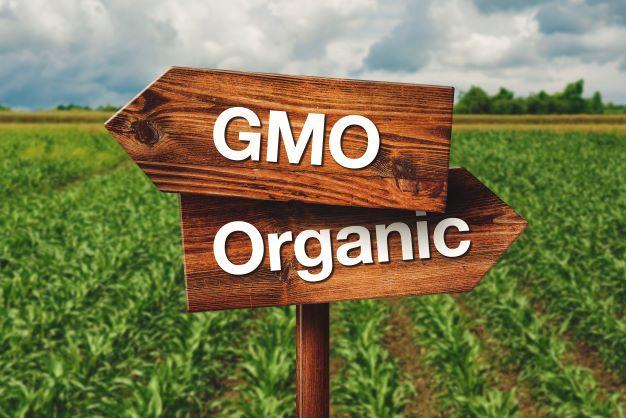
Late last week, a California judge offered a mixed decision on a case involving the National Bioengineered Food Disclosure Standard, a rule housed in the US Department of Agriculture (USDA). Back in 2020, a group of labeling advocates challenged the new (at the time) rule that would have allowed companies to use scannable QR codes that linked to labeling information (instead of on-package labels) as well as continuing to permit the usage of “bioengineered” language on food packages instead of “GMO.” In the judge’s ruling, they determined that the QR portion of the rule was not enough to comply with mandatory disclosure requirements; however, they did find the other areas of the standard were valid.
At this time, it remains to be seen whether the case will be appealed further. While not necessarily linked directly with many agricultural producers, some far-reaching standards and state laws could continue to demand more information at the farm level on products. And with several producers also being either directly or indirectly involved with their processors and packagers, it continues to be an area worth closely monitoring as regulators and lawmakers continue to show interest in increasing labeling requirements.
|
|
House Ag Committee Continues to Hold
Farm Bill Focused Hearings
|
Last week, the House Agriculture Committee held a Farm Bill review hearing on how rural broadband access has been implemented since coordination improvements were passed in the 2018 Farm Bill. Under that language, the National Telecommunications and Information Administration (NTIA) and Federal Communications Commission (FCC) were given new directives to work closely with the USDA on broadband access. Unfortunately, NTIA and FCC both failed to provide a representative on behalf of their organizations, a point criticized by both Chairman David Scott and Ranking Member GT Thompson.
Despite this, lawmakers generally agreed on the need to continue expanding access to rural and underserved communities. From pandemic relief packages to the Infrastructure, Investment and Jobs Act, tens of billions in funds have now been allotted to the above organizations in order to fulfill these goals. It remains to be seen what direction lawmakers will take based off these last several years of additions, but it will likely continue to be an area of focus as the Farm Bill develops.
|
|
Sara Arsenault
Director of Federal Policy
|
|
Matthew Viohl
Federal Policy, Associate Director
|
|
Erin Hutson
Federal Policy, Consultant
|
|
|
|
|
|
|