THIS WEEK IN
Federal Policy News
|
|
USDA's Emergency Relief Program Payments Now at $4 Billion |
Last month, USDA announced their plans to begin distributing billions in funds to farmers and ranchers under the Emergency Relief Program (ERP). The payments are essentially from the Wildfire and Hurricane Indemnity Program Plus (WHIP+) under a new branding. CAFB helped secure $10 billion in funding for the program during the fall of last year; however, payments have been slow to roll out. According to a new announcement, USDA has now distributed $4 billion to recipients during “Phase One,” with $2 billion still to go for this portion of the funds.
“Phase Two” payments are set to cover those that were not already utilizing crop insurance or other support programs through the federal government—although a timeline still has not been provided on when these will begin. Given that many California producers operate in the specialty crop space, we realize a number of members may not have had access to these Phase One payments. If you have any feedback you’d be willing to provide on your experience with the program thus far, we encourage you to contact Matthew Viohl with those thoughts. CAFB will continue to update members as more is learned on the Phase Two payments.
|
|
Endangered Species Act Update - Definition of Habitat |
The U.S. Fish and Wildlife Service and the National Marine Fisheries Service (Services) have released a Final rule rescinding the 2020 definition of “habitat” for the purposes of designating critical habitat, stating that the definition constrains their ability to fulfill their obligation to designate critical habitat based on the best scientific data available. The 2020 habitat definition had included a requirement that habitat needed to be usable now by the species. Practically speaking, the rescission of this definition reverts to the Services considering the definition of habitat on a case-by-case basis. CAFB previously submitted written comments to the Services in opposition to the proposed rule.
|
|
Changes to ESA Experimental Population Regulations, Species Reintroduction Proposed |
The U.S. Fish and Wildlife Service (USFWS) has a released a proposed rule that would revise Endangered Species Act Regulations Section 10(j) to allow for the introduction of listed species as experimental populations in suitable habitats outside of their historical ranges, primarily due to the impacts of climate change. Section 10(j) allows the USFWS to designate “experimental populations” of listed species to facilitate reintroduction of the species. Current implementing regulations allow USFWS to designate a population of an endangered or threatened species as an experimental population that will be released into suitable natural habitat outside the species’ current natural range.
The Proposed Rule would amend the regulation to allow expansion beyond the historical range due to climate change impacts to the range that could make it unsuitable for the species. This proposal will be applied to future designations and would not require the reevaluation of any prior designation of an experimental population. Comments on the Proposed Rule are due on or before are due August 8, 2022. Read the Proposed Rule here.
|
|
Senators Feinstein and Padilla Urge USDA to Support Farmers Hurt by Shipping Delays |
Earlier this week, Senators Dianne Feinstein (D-CA) and Alex Padilla (D-CA) sent a letter to Secretary of Agriculture Tom Vilsack, urging USDA to focus on agricultural producers as a new $1.5 billion supply chain initiative takes hold. The Senators highlighted the significant costs incurred by California producers over these last several years due to a myriad of port and shipping issues. They also noted the massive price hikes for shipping containers and the issues in locating affordable containers for the movement of produce and other products. In the letter, they call on the USDA to help facilitate the purchasing of specialty crops, quality loss assistance, and cold storage at food banks and distribution hubs. CAFB thanks both Senators for their attention on these issues. |
|
USDA Secretary Issues Memorandum Directing Assessment and Actions on National Forestlands |
On June 23, USDA Secretary Tom Vilsack issued a memorandum directing Forest Service Chief Randy Moore and Under Secretary for Natural Resources and Environment, Dr. Homer Wilkes, to take a series of immediate and near-term actions to build carbon stewardship and climate resilience on national forestlands. The actions in the Climate Resilience and Carbon Stewardship of America’s National Forests and Grasslands Memorandum include identifying forests at risk, assessing how those areas are currently managed, and analyzing how potential data gaps might be resolved. This analysis will then be used to develop a decision support tool to enhance carbon stewardship, wildlife habitat, watersheds, outdoor recreation, etc.
The Memorandum also directs USFS to take more immediate actions, including developing plans for increasing the safe use of prescribed fire, fostering innovative markets for sustainable forest products, conducting an inventory of old-growth and mature forests, accelerating reforestation, and boosting nursery capacity to grow more tree seedlings for post-fire recovery and other planting efforts. Finally, the memorandum instructs USFS to include guidance on how to use new data, tools, and traditional ecological knowledge in their plans and recommendations.
|
|
Bipartisan Save Our Sequoias Act Introduced in House |
On June 23, House Committee on Natural Resources Ranking Member Bruce Westerman, House Republican Leader Kevin McCarthy, California Representatives Peters, Costa, Valadao, Panetta, McClintock, and 23 other members in introducing H.R. 8168, the Save Our Sequoias (SOS) Act. The SOS Act provides resources as well as additional emergency tools to safeguard Giant Sequoia groves. Specifically, the bill seeks to enhance coordination between federal, state, tribal and local land managers through shared stewardship agreements and the codification of the Giant Sequoia Lands Coalition, a partnership between the current Giant Sequoia managers. The legislation is supported by both the California Farm Bureau and the Tulare County Farm Bureau. Read more about the legislation, including CAFB’s support statement, here.
|
|
House Committee Examines Dairy Priorities in the Farm Bill |
Last Wednesday, the House Agriculture Committee held a hearing to discuss dairy provisions and priorities in the Farm Bill. Conversations ranged from Dairy Margin Coverage (DMC) to Federal Milk Marketing Orders (FMMO) and other classifications. DMC received a fair bit of praise from both legislators and those on the panel, something of which was newly introduced in the 2018 Farm Bill. At one point, it was noted that over 70% of producers nationwide are still enrolled in DMC this year despite high milk prices (meaning payments are unlikely to go out).
Differences started to show more acutely on discussions around FMMO. Changes in the previous Farm Bill were intended to add more stability to the program; however, the COVID-19 pandemic helped reveal certain inefficiencies in the system, leading to widespread overproduction early on as well as substantial pricing issues. The hearing did not offer a clear idea for how legislators might tackle some of these challenges. As we have mentioned previously, the possibility of a House or even Senate flip into GOP control means that many of these hearings are lighter on concrete solutions for the time being.
|
|
Industry Letter of Support for the Beagle Brigade Act |
This week, several industry partners were set to send a letter of support for the Beagle Brigade Act of 2022. The legislation would reauthorize funding for the National Detector Dog Training Center in Newnan, Georgia. This center is where the USDA’s Animal and Plant Health Inspection Services (APHIS) trains canine teams for enforcement of agricultural quarantine inspections at US ports of entry. Despite the critical nature of this work, there is no dedicated funding for the program. CAFB supports dedicated funding for the training center in order to help ensure that potentially contaminated products are prevented from entering the country. |
|
AFBF Drought Survey Still Open! |
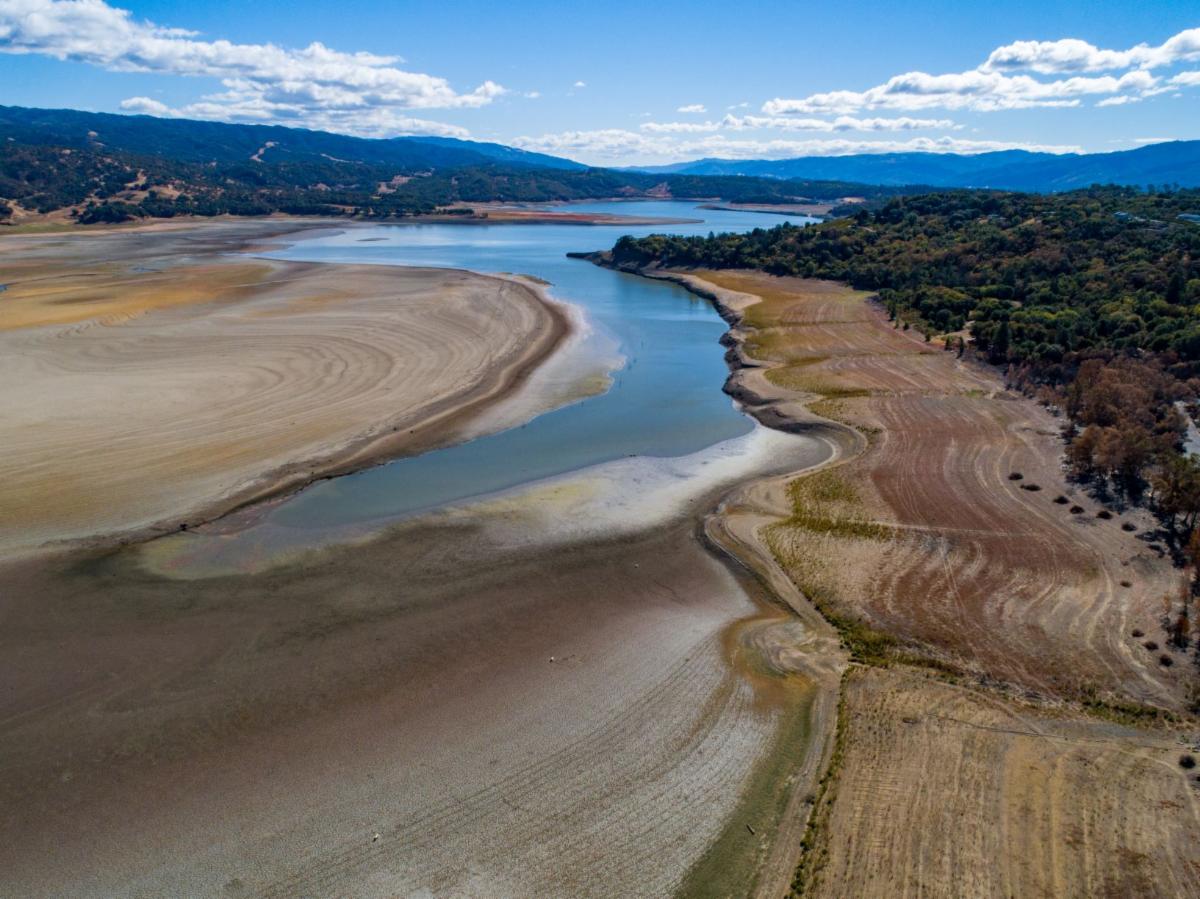
With the West and a growing number of Midwest states continuing to experience severe drought conditions, American Farm Bureau Federation has released a third iteration of their Assessing Western Drought Survey. The survey is open to all members; both those who took previous versions of the survey as well as those who did not. The data collected from this survey will be aggregated and summarized by American Farm Bureau Federation staff economists and be utilized to inform short-term disaster relief needs as well as long-term policy proposals aimed at assisting agriculture with drought preparedness, resilience, and response. Please consider responding today here.
|
|
Sara Arsenault
Director of Federal Policy
|
|
Matthew Viohl
Federal Policy, Associate Director
|
|
Erin Hutson
Federal Policy, Consultant
|
|
|
|
|
|
|