THIS WEEK IN
Federal Policy News
|
|
Members of the CA Delegation Call on Biden-Harris Administration for Emergency Port Action |
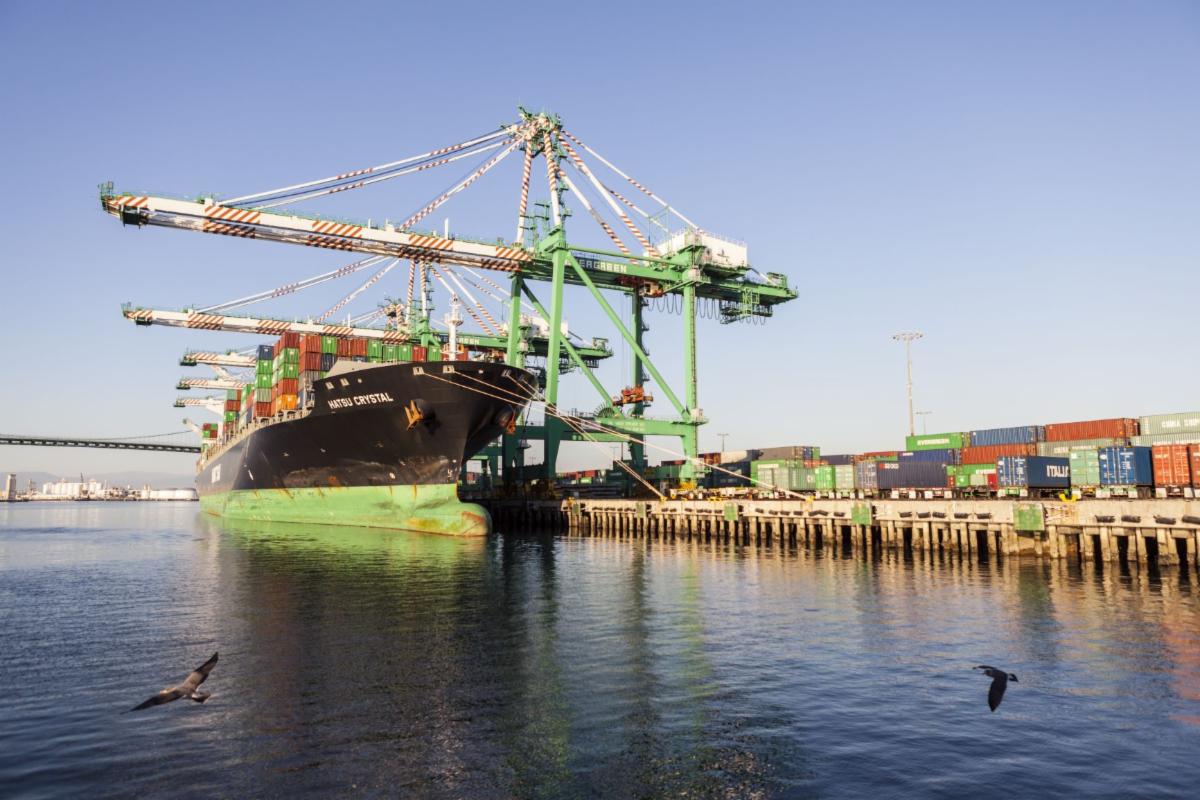
Over 70 House members from both parties, including many House Ag members, sent a letter to Biden on Monday asking the president to use emergency powers to address the backlog of exports from seaports — a pileup they said is weighing on agriculture, among other sectors. The lawmakers asked Biden to direct ports to provide trade-compliant priority access for carriers that commit to leaving ports with increased loads of full export containers, allow temporary exemptions on gross vehicle weight, and increase availability of shipping equipment.
The call for action comes after the bipartisan Ocean Shipping Reform Act of 2021 (H.R. 4996) recently and overwhelmingly passed the House of Representatives 364 – 60; it is essential the Senate also pass legislation to allow US agriculture to remain viable in global markets. President Johansson was quoted in in Rep. Costa’s press release highlighting the importance of the issue to California producers.
|
|
USDA Announces $72.9 Million in Grant Funding Available through the Specialty Crop Block Grant Program |
The U.S. Department of Agriculture (USDA) announced the availability of $72.9 million through the Specialty Crop Block Grant Program (SCBGP) to fund innovative projects designed to support the expanding specialty crop sector and explore new market opportunities for U.S. food and agricultural products.
The SCBGP funds are allocated to U.S. states and territories based on a formula that considers both specialty crop acreage and production value. Applications from the states and territories are being accepted electronically at www.grants.gov until May 3, 2022 at 11:59 p.m. ET.
|
|
Biden-Harris Administration Announces $1.36B in Disaster Relief Funds |
On Friday, Vice President Kamala Harris and USDA Agriculture Secretary Tom Vilsack announced $1.36 billion in disaster relief funds for the U.S. Forest Service to support post-disaster recovery and restoration in states across the county. The funding includes $600 million for California to fund recovery efforts following the devastating fires in 2020 and 2021. On the same day, USDA also announced $48 million in investments for the Joint Chiefs’ Landscape Restoration Partnership for projects, two of which are in California. The Big Flat Community Protection project will receive $701,342 and the Butte Valley South Landscape Restoration project will receive $600,000. The Joint Chiefs’ Landscape Restoration Partnership enables NRCS and the Forest Service to collaborate with agricultural producers and forest landowners to invest in conservation and restoration at a large scale.
|
|
Waters of the United States (WOTUS) Update - Comment Period and SCOTUS |
On January 24th, the Supreme Court announced that they would hear the high-profile Clean Water Act case, Sackett v. Environmental Protection Agency, which challenges EPA’s overreach of its Clean Water Act jurisdiction. Over the last several decades, there has been considerable confusion over where to appropriately draw the line of federal jurisdiction under the Clean Water Act. A decision in this case could provide significant clarity on what is the proper test for determining which wetlands are “waters of the United States” under the Clean Water Act.
In the meantime, the U.S. EPA and Army Corps of Engineers are currently accepting public comment until February 7, 2022, on their Proposed Rule that would repeal the National Waters Protection Rule and redefine “Waters of the United States”. CAFB has created a Farm Team alert for members to assist members with submitting comments.
We urge you to access the Farm Team alert and let your voice be heard!
|
|
Western Water Infrastructure Coalition Sends Letter to Administration on Implementation of Western Water Funds |
On January 18, CAFB and other western water infrastructure coalition partners submitted a letter to the White House Council on Environmental Quality, the Department of the Interior and the U.S. Department of Agriculture regarding the implementation of funding included in the Infrastructure Investment and Jobs Act (the Bipartisan Infrastructure Framework). The letter urged the agencies to consider flexibilities in sourcing construction materials, the Bureau of Reclamation’s interaction with its customers, the importance of working with local interests on restoration projects, and environmental compliance challenges. |
|
DHS to Enforce Vaccine Requirements for Essential Workers |
Last Friday, the Department of Homeland Security (DHS) announced that they would begin enforcement of vaccine requirements for non-U.S. citizens entering the country. Despite efforts from several organizations, the order was written to include essential workers, effectively meaning H-2A visa holders and others. AFBF President Zippy Duval expressed his disappointment on the order, stating that it would lead to additional supply chain challenges. For now, the order will remain in effect for up to one month, but the DHS can alter or extend it should they choose. If any of your operations have been impacted by these changes, we ask that you please contact Matthew Viohl.
|
|
Emergency Temporary Standard Formally Withdrawn |
On Wednesday, the Occupational Safety & Health Administration (OSHA) formally withdrew their vaccinate-or-test Emergency Temporary Standard (ETS or ETS2), which would have applied to most general business employers with at least 100 employees. OSHA announced they would be shifting the ETS towards a more formal and permanent rule-making process, which would require public comment and further review. The Supreme Court issued a stay in the ETS last week, which effectively killed its chances of being found legal despite still being under review by the Sixth Circuit court. It is unclear how emphatically the administration will try to push the permanent rule; however, this process typically is a lengthy one and would again likely face a legal challenge. |
|
USDA Announces $1B to Expand Meat and Poultry Processing Capacity |
Earlier this month, USDA announced plans aimed at addressing meat and poultry processing expansion opportunities amidst the rising cost of food prices through adding additional funds to existing USDA efforts and new program opportunities. The administration is dedicating $1 billion from the American Rescue Plan, a bill signed into law last year, specifically for the purpose of expanding independent meat processing capacity.
That includes $375 million in grants for independent meat producers, $275 million in additional financing available for processors, $100 million to address inspection costs for smaller processing plants and $100 million in training for workers in the meat and poultry industry.
The administration also announced new efforts to ensure transparency in cattle markets and to ensure there is reasonable levels of competition in the industry. California Farm Bureau, along with industry, is working to understand additional details of program application requirements, eligibility and timelines.
|
|
AFBF Cattle Market Positioning Regarding the Cattle Price Discovery and transparency Act of 2021 |
Last Friday, American Farm Bureau Federation announced its support of the Cattle Price Discovery and Transparency Act of 2021—with the exception of the bill’s establishment of mandatory minimums for negotiated purchases.
In Atlanta, AFBF delegates voted to revise 2022 Farm Bureau policy regarding the establishment of mandatory minimums for negotiated purchases in cattle markets. While Farm Bureau supports robust negotiated sales, delegates voted to oppose government mandates that force livestock processing facilities to purchase a set percentage of their live animal supply via cash bids.
The Cattle Price Discovery and Transparency Act is sponsored by Sen. Deb Fischer (R-Neb.) and Sen. Chuck Grassley (R-Iowa) and cosponsored by 14 other senators from both sides of the aisle. The legislation would also equip farmers with more information by establishing a cattle contract library, updating mandatory price reporting and increasing fines for companies that violate the Packers and Stockyards Act.
|
|
EPA Announces Endangered Species Act Protection Policy for New Pesticides |
Effective immediately, before EPA registers any new conventional AI, the Agency will evaluate the potential effects of the AI on federally threatened or endangered (listed) species, and their designated critical habitats, and initiate ESA consultation with the U.S. Fish and Wildlife Service and the National Marine Fisheries Service (the Services), as appropriate.
If EPA finds through its analyses that a new conventional pesticide AI is likely to adversely affect listed species or their designated critical habitats, EPA will initiate formal consultation with the Services before granting a new AI registration. As part of its analysis and under its existing authorities, EPA will consider the likelihood that the registration action may jeopardize the continued existence of listed species or adversely modify their designated critical habitat and provide its findings to the Services. To determine or predict the potential effects of a pesticide on these species and habitats, EPA will use ecological assessment principles and apply what it has learned from past effects determinations and the Services’ biological opinions.
More information is available at this link. An FAQ is linked here.
|
|
Sara Arsenault
Federal Policy, Director
916-561-5619
|
|
Matthew Viohl
Federal Policy, Associate Director
916-561-5612
|
|
Erin Huston
Federal Policy, Consultant
916-849-3746
|
|
|
|
|
|
|