THIS WEEK IN
Federal Policy News
| |
|
California AEWR Expected to Increase
Yet Again in 2024
| |
|
In a recent analysis by the American Farm Bureau Federation’s Market Intel team, it has become clear that the Adverse Effect Wage Rate (AEWR), which governs the base hourly payrate for H-2A workers, will once again be going up for California. Currently at $18.65 an hour, the 2024 rate is now expected to climb to $19.75 an hour—almost a 6% year-to-year increase. While it is not the largest percentage increase compared to other states, it will again leave California with the unfortunate “honor” of having the highest hourly rate in the country once again.
We realize the perpetual annual increases in the AEWR have been a frustratingly challenging experience for users of the program, as the full burden of costs on employers (and added regulatory hurdles) continues to make the program less and less tenable, especially for Californians. Since 2020, the AEWR has gone up at an astonishing 33% rate. For years, we have pushed for legislation that not only slows down these increases, but also reworks what is a fundamentally flawed wage calculation structure. Unfortunately, many other states and AFBF policy have hindered those efforts. Those tides have shifted in the past year though as more and more states have felt the pinch of these continued increases
Over the summer, AFBF began an internal working group among the various state farm bureaus, intending to see what unanimity we can find on our varied labor interests. And earlier this week, AFBF’s Board of Directors approved prioritizing a legislative AEWR freeze in the short term. While a stopgap will add much-needed relief, CAFB realizes it will take substantially more changes to address the full list of challenges faced in the ag labor space. The Department of Labor’s formal posting of the updated AEWRs should come either this week or next.
|
|
CAFB Submits a Joint Comment Letter to the U.S. Fish and Wildlife Service Regarding a Proposed Threatened Species | 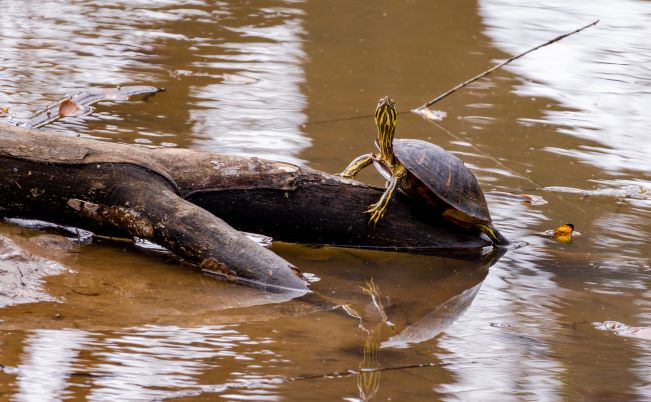 | |
In alliance with several other organizations including Oregon Farm Bureau, Washington Farm Bureau, Klamath Water Users Association, California Cattlemen's Association, and others, CAFB contributed comments opposing the U.S. Fish and Wildlife Service proposed “threatened species” designation on northwestern and southwestern pond turtles. This proposed rule outlines regulatory prescriptions under section 4(d) of the Endangered Species Act (ESA). Driven by litigation deadlines, the rule has the potential to enforce intensive regulatory restrictions over more than 100 million acres in Washinton, Oregon, Nevada, and California.
Along with the unnecessarily broad reach of proscriptions, there are concerns over irrigated agriculture land specifically, as water managers could suddenly face legal liability for practices not identified as significant threat to the species, posing challenges to necessary activities. CAFB and the undersigned organizations called for incentives for population-enhancing actions rather than new regulatory measures. There is a call to permit essential activities such as the operation, maintenance and improvement of irrigation and drainage infrastructure, as well as common farming and ranching practices. To read the entire comment letter, follow the link below.
|
|
Comments Submitted to BLM on Proposed Wild Free Roaming Horse and Burro Act |  | Last week, the CAFB submitted a letter to the Bureau of Land Management (BLM) in support of the proposed implementation of the Wild Free Roaming Horse and Burro Act. The letter emphasized the importance for responsible management to preserve rangeland health and accommodate various authorized uses within the shared ecosystem. This endorsement includes advocating for gather schedules that align with established herd population ranges to ensure a balanced and sustainable approach. Recent findings from the 2020 aerial survey of the Montgomery Pass Wild Horse Territory in Mono County reveal a population of 654 horses, exceeding the recommended management level of 138 to 230 animals. The California Farm Bureau recognizes the need for immediate action to address over-population, as prolonged excess can detrimentally impact rangeland, wildlife, grazing lands, and traditional cultural practices. The Farm Bureau has encouraged a thorough examination of the Horse Management Area management plan and thoughtful consideration of post-gather plans, including cost-effective population control measures and collaboration with existing programs. To read the entire comment letter, follow the link below. |
|
Wolverine ESA Listing Finalized | 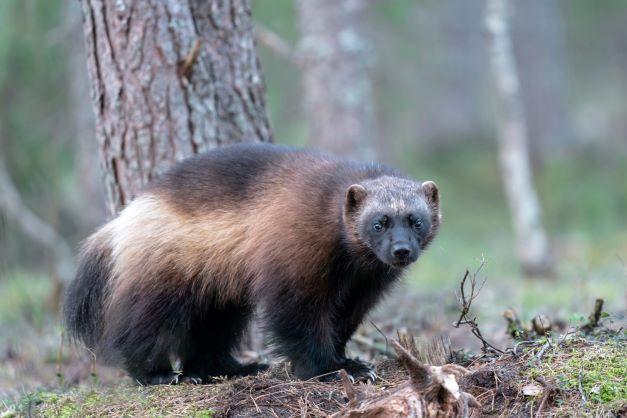 | |
The U.S. Fish and Wildlife Service has finalized the listing of the distinct population segment of the North American wolverine in the contiguous U.S. as a threatened species under the Endangered Species Act Accompanying this decision is an interim rule under ESA section 4(d), tailored to the conservation needs of the wolverine. The rule includes exemptions for research activities, lawful trapping for other species, and forest management activities related to wildfire risk reduction. These exemptions are designed to address the unique circumstances surrounding wolverine conservation.
This decision follows an updated 2018 species status assessment in September 2023, considering factors such as climate change, habitat connectivity, trapping, snow, population density, and genetic diversity. The North American wolverine, a medium sized carnivore, is found in the Northern Rocky Mountains, North Cascade Mountains, and various regions in Alaska and Canada. The announcement concluded a series of evaluations, including a 2013 proposal to list the wolverine, a 2020 determination that listing was not warranted, and a subsequent legal mandate in 2022 for reconsideration. The proposed and final rules, along with comments received, can be found at the link below.
|
|
|
Matthew Viohl
Federal Policy, Director
| |
|
Erin Huston
Federal Policy, Consultant
| |
|
Isabella Quinonez
Public Policy Coordinator
| | | | |




